
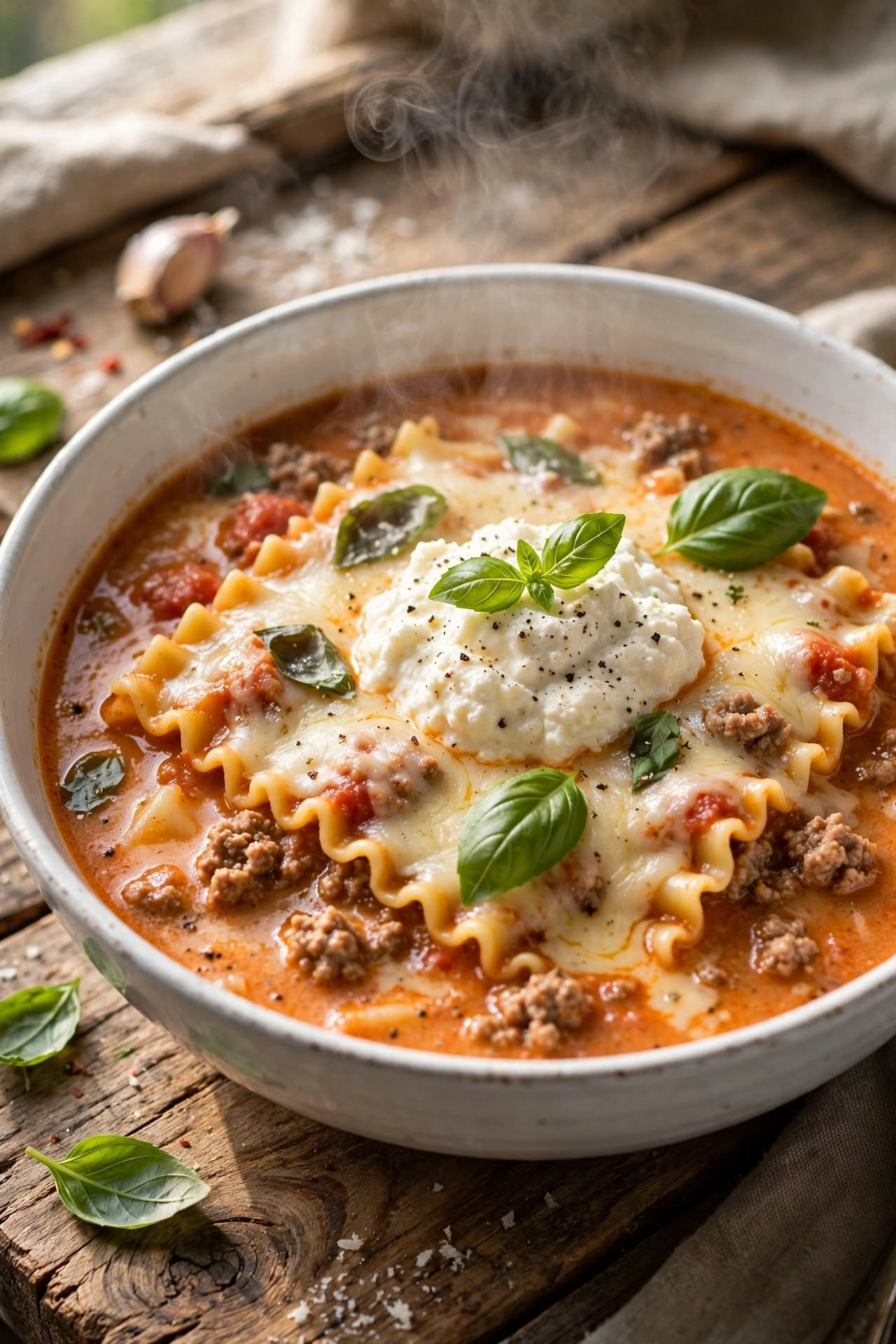
Lasagna Soup (One Pot, 40 Minutes, Rich Tomato Broth)

Lasagna soup delivers everything you love about the original — rich tomato broth, seasoned ground beef, broken pasta, and three cheeses — in a single pot with no layering, no baking, and no fuss — a true deconstructed lasagna in bowl form. The texture is silky and substantial: the noodles absorb the broth just enough to feel like lasagna sheets without turning to mush. This pasta soup recipe delivers all that baked-pasta flavor in a cheesy lasagna soup format, done in under 40 minutes from start to bowl.
This recipe is built as a quick weeknight soup for busy nights when a proper lasagna is out of the question but a comfort food dinner is not negotiable. It works equally well for meal preppers who want a make-ahead soup that tastes better on day two, and for anyone feeding four to six people on a budget without sacrificing flavor.
Made this already? Scroll down and leave a ⭐⭐⭐⭐⭐ rating below — it helps more than you know.
Master one technique here and the rest of the recipe falls into place.
QUICK STATS BOX
| ⏱ Prep Time | 10 minutes |
| 🕐 Cook Time | 25–30 minutes |
| ⏳ Total Time | 40 minutes |
| 🍽 Servings | 6 |
| 📊 Difficulty | Easy |
| 💰 Cost/Serving | ~$2.80 |
| 🥩 Main Item | Ground beef or Italian sausage |
Table of Contents
Why This Recipe Works
- Ready in 40 minutes, start to finish. There is no oven preheating, no baking time, and no resting window. Everything cooks in one pot on the stovetop — dinner is on the table in the same time it takes most lasagna recipes just to preheat.
- One pot, minimal cleanup. You sear the meat, build the sauce, simmer the noodles, and finish with cheese all in the same Dutch oven or stockpot. One pot to wash. That is the whole operation.
- Beginner-proof by design. There are no tricky steps and no doneness judgment calls that require experience. When the noodles are cooked through, the soup is done.
- Exceptional leftover value. Lasagna soup reheats cleanly and the flavor deepens overnight as the broth absorbs into the pasta. A single batch feeds six at dinner and provides two to three solid leftover portions for lunch the next day.
- Better balance than most baked lasagnas. The broth-to-pasta ratio keeps this one-pot pasta soup lighter than a traditional baked version, and the ricotta goes on as a topping rather than a baked-in layer — which means you control the richness of every bowl individually.
Understanding the Key Ingredient (What to Buy and What to Avoid)

Why Lasagna Noodles Are the Right Choice
Regular dried lasagna noodles — the flat, wide, ridged kind — are the ingredient that makes this soup taste like actual lasagna rather than generic pasta soup. The ridged edges and wide surface area trap the tomato broth, and the dense pasta thickness gives you the same bite you expect from a baked sheet. Breaking them into 2-inch pieces before adding means each spoonful gets noodle, broth, and meat together. No-boil noodles work in a pinch, but they absorb too much liquid and leave the broth thin by the time they cook through.
Lasagna Noodle Comparison Guide
| Option | Quality | Texture | Verdict | Why |
|---|---|---|---|---|
| Standard dried lasagna noodles (ridged) | Best | Firm, holds bite | ✅ Use this | Ideal thickness and surface area |
| Oven-ready / no-boil noodles | Acceptable | Soft, over-absorbs | ⚠️ Use with caution | Thin the broth — add ½ cup extra liquid |
| Fresh lasagna sheets | Good | Silky, delicate | ✅ Works well | Reduce cook time to 8–10 minutes |
| Wide egg noodles | Subpar | Too soft, no chew | ❌ Avoid | Wrong texture for this dish |
| Rigatoni or penne | Poor substitute | Wrong shape | ❌ Avoid | Loses the lasagna feel entirely |
How to Choose the Best at the Store
- Check for ridges. Ridged (wavy-edge) noodles grip the broth. Flat-edge noodles slide right through it. Always choose ridged.
- Look at thickness. The noodle should be visibly thicker than regular spaghetti when held up to light. Thin noodles turn paste-soft before the broth builds depth.
- Check for breakage in the box. Shattered noodles produce uneven piece sizes. Choose an unbroken box for consistent results.
- Fresh vs. dried. Dried noodles are the better everyday choice — consistent, shelf-stable, and available everywhere. Fresh sheets work beautifully if you have them.
- Whole wheat versions work — but they absorb more liquid. Add an extra ½ cup of broth when using them to maintain the right soup consistency.
How Much Do You Need?
| Servings | Noodles Needed | Notes |
|---|---|---|
| 2 | 3 dried noodles | Break into rough 2-inch pieces |
| 4 | 6 dried noodles | Half batch |
| 6 | 8–9 dried noodles | Standard recipe batch |
| 8+ | 12 noodles | Use a 6-quart pot minimum |
Always size up by one noodle — pasta always looks like more before it cooks than after.
Double Batch — How to Scale This Recipe
Doubling works well. Use a 6-quart or 8-quart Dutch oven — anything smaller will not hold the liquid volume safely at a boil. Cook time stays the same regardless of batch size. However, double the liquid proportionally — two batches need twice the broth and tomatoes, not 1.5 times. For storage, portion into freezer-safe containers immediately after cooking so the noodles don’t continue absorbing broth overnight. Freeze in individual or two-serving containers for the most efficient meal prep reheating.
Ingredients You’ll Need

This recipe uses five categories of ingredients: a protein base, aromatics, a tomato broth, dried pasta, and a three-cheese finish.
Main Ingredients
Ground beef, 85/15 lean (1 lb) — The fat content is essential here. Leaner beef (90/10 or higher) produces a drier, grainier texture in the broth. The fat from 85/15 blends into the sauce and adds body. If you use Italian sausage instead, reduce added salt by half — sausage arrives pre-seasoned.
Lasagna noodles, dried (8–9 noodles, broken) — Break each noodle into 4–5 rough pieces directly over the pot. Irregular sizing is fine. Aim for pieces roughly 2 inches wide.
Ricotta cheese, whole-milk (¾ cup) — Whole-milk ricotta is thicker and creamier than part-skim. It holds its shape when dropped onto hot soup and doesn’t dissolve into the broth. This is a topping, not a stirred-in ingredient.
Crushed tomatoes (28 oz can) — San Marzano style if available — sweeter and less acidic than standard. A regular can works fine; add a small pinch of sugar if the broth tastes sharp.
Beef broth, low-sodium (4 cups) — Low-sodium is the safer starting point. You’ll season throughout the cook, and full-sodium broth makes it easy to over-salt before the pasta even goes in.
Supporting Ingredients
Yellow onion, medium (1, diced small) — Forms the flavor base. Dice it small so it softens completely into the broth by serving time.
Garlic cloves (4, minced) — Add after the onion softens. Garlic added too early burns against the hot pot surface and turns bitter.
Tomato paste (2 tablespoons) — Cook directly in the pot for 90 seconds before adding liquid. This blooming step concentrates the tomato flavor and adds depth that plain crushed tomatoes can’t match on their own.
Dried Italian seasoning (2 teaspoons) — A blend of oregano, basil, and thyme. If using individual dried herbs, use 1 teaspoon oregano plus ½ teaspoon each basil and thyme.
Dried basil (1 teaspoon) — Reinforces the Italian herb profile. Fresh basil is better as a garnish than as a cooked-in herb here.
Red pepper flakes (¼ teaspoon) — Adds a low-level background heat that makes the soup taste layered, not flat. Increase to ½ teaspoon for noticeable heat.
Mozzarella, shredded (1 cup) — Goes directly on each bowl to melt from the heat of the soup. Block mozzarella shredded yourself melts better than pre-shredded.
Parmesan, freshly grated (¼ cup) — A finishing layer. Pre-grated canister Parmesan is dry, salty, and doesn’t melt properly.
Olive oil (2 tablespoons) — For searing the beef and sautéing the aromatics.
Salt and black pepper — Season in layers: lightly with the beef, again with the tomatoes, final taste-and-adjust before serving.
Optional Additions
| Ingredient | What It Adds | When to Add | Pairs Best With |
|---|---|---|---|
| Baby spinach (2 cups) | Color, nutrients, earthy note | Last 2 minutes of cook | Italian sausage version |
| Zucchini, diced (1 medium) | Bulk, mild vegetable base | With onions | Ground beef version |
| Mushrooms, sliced (8 oz) | Umami depth, meaty texture | After browning beef | Ground beef version |
| White wine (¼ cup) | Acidity, complexity | Deglaze after beef | Either protein |
Complete Substitutions Reference
“No ground beef? Use Italian sausage (hot or mild). Here’s what changes: much richer, more seasoned flavor — reduce added salt by half and skip the red pepper flakes if using hot sausage.”
“No crushed tomatoes? Use a 28 oz can of whole peeled tomatoes, crushed by hand. Here’s what changes: chunkier texture — works great.”
“No ricotta? Use a 50/50 blend of cottage cheese and cream cheese. Here’s what changes: slightly tangier, less creamy — just okay compared to whole-milk ricotta.”
“No beef broth? Use chicken broth. Here’s what changes: slightly lighter-tasting base — works great.”
“No Parmesan? Use Pecorino Romano. Here’s what changes: sharper, saltier finish — works great.”
“No dried lasagna noodles? Use broken pappardelle or thick wide pasta. Here’s what changes: slightly different chew — works great. Do not use thin pasta like angel hair or vermicelli.”
What NOT to Add
❌ Cream or milk stirred into the pot — Dairy added to acidic tomato broth curdles on contact. Ricotta and mozzarella provide all the creaminess this recipe needs as toppings.
❌ Pre-cooked pasta — Already-cooked noodles continue cooking in the hot broth and go mushy within minutes. Always add dry, broken noodles directly to the boiling soup.
❌ Jarred pasta sauce as the only base — Too thick, too sweet, too salty. Use crushed tomatoes and broth as the base and build your own flavor.
❌ American cheese or processed cheese — It melts into the broth and makes it greasy. Use real mozzarella and Parmesan only.
❌ Basil pesto stirred into the broth — It discolors the broth and the oil breaks. Save pesto as an individual bowl drizzle only.
❌ Too much pasta — More than 10–11 noodles for a 6-serving batch means the pasta absorbs all the broth by day two, leaving a thick paste instead of soup.
Equipment You’ll Need
Choosing the Right Equipment
| Recipe Size | Equipment Size/Type | Notes |
|---|---|---|
| 2–3 servings | 3-quart saucepan | Works for small batches only |
| 4–6 servings (standard) | 5-quart Dutch oven or stockpot | Ideal — even heat distribution |
| 8+ servings (double batch) | 7–8 quart pot | Required — smaller vessel will overflow |
| Any size | Heavy-bottomed pot | Thin-bottomed pots scorch the tomato base easily |
A Dutch oven is the right tool for this recipe. Heavy cast-iron or enameled cast-iron distributes heat evenly and holds temperature steadily, which prevents the tomato base from catching on the bottom.
Other Tools That Actually Matter
- Wooden spoon or silicone spatula — For scraping up the fond after searing. That browned residue is pure flavor — get all of it.
- Wide, deep ladle — A shallow ladle won’t catch the pasta pieces. Get the right size.
- Microplane or fine grater — For freshly grating Parmesan directly onto each bowl.
- Sharp chef’s knife — You’re dicing one onion. A sharp knife makes this a 90-second job.
No Dutch Oven? Alternatives That Work
Large nonstick stockpot:
- Works exactly the same way
- Watch: nonstick coatings don’t sear meat as effectively — pat beef completely dry before browning
- Key tip: don’t exceed medium-high heat with nonstick
- Watch out for: thinner bases may scorch the tomato paste — stir constantly during the blooming step
Slow cooker:
- Brown the beef and aromatics in a skillet first, then transfer everything except noodles to the slow cooker
- Cook on LOW 6–8 hours or HIGH 3–4 hours
- Add broken noodles in the final 30 minutes on HIGH only
- Watch out for: mushy noodles if you add them too early
Instant Pot (pressure cooker):
- Use the sauté function to brown beef and soften aromatics
- Add all ingredients except noodles and ricotta, pressure cook HIGH 5 minutes, quick release
- Stir in noodles and sauté for 8–10 minutes until cooked
- Watch out for: the thick tomato base can trigger a burn notice — deglaze thoroughly before sealing
How to Make Lasagna Soup — Step by Step
8 steps. Most take under two minutes each. Here is exactly what to do — and why each step matters.
Step 1 — Brown the Beef (Building the Flavor Foundation)
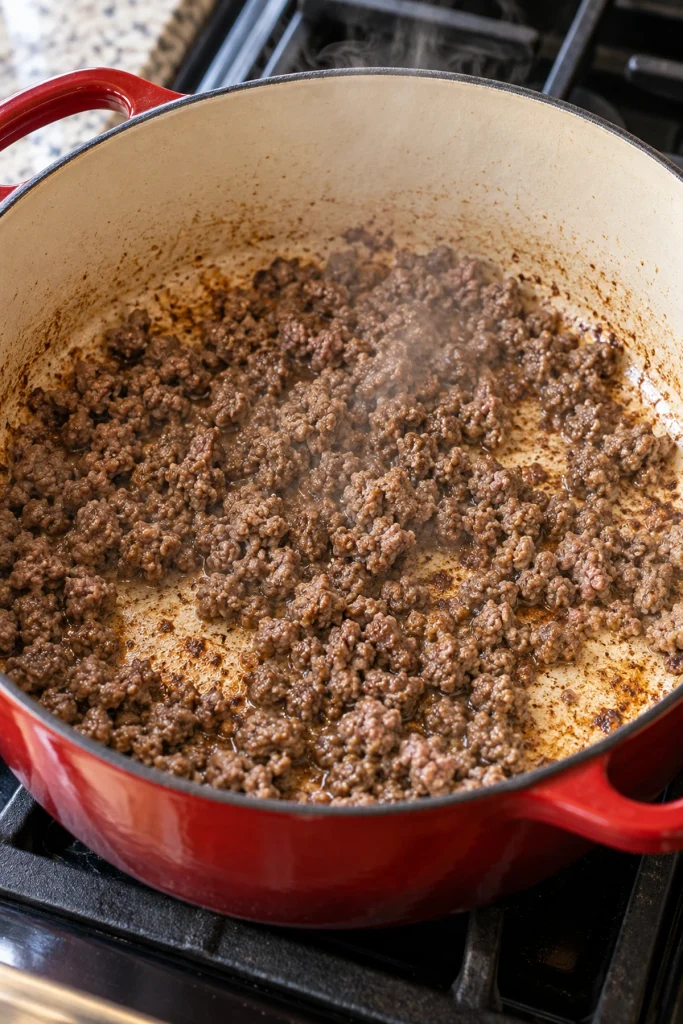
Heat the olive oil in your Dutch oven over medium-high heat until shimmering. Add the ground beef in a single layer — resist the urge to immediately stir. Let it sit undisturbed for 2 minutes to develop a brown sear on the bottom. Then break it into small crumbles and cook until no pink remains, 5–6 minutes total. Drain excess fat if there is more than about 1 tablespoon pooled in the pot — a small amount stays and carries flavor.
Why this step matters: browning the beef creates the Maillard reaction — the chemical change that produces hundreds of new flavor compounds. Pale-gray beef adds almost nothing to the broth. Properly browned beef builds the flavor backbone the entire soup depends on.
What happens if skipped: grey, steamed meat and a broth that tastes thin and one-dimensional.
💡 Pro Tip: Pat the ground beef dry with a paper towel before it hits the pan. Moisture is the enemy of a good sear — wet beef steams instead of browns. Thirty seconds of prep makes a real difference to the final depth of flavor.
Step 2 — Soften Aromatics (Onion and Garlic)

Reduce heat to medium. Add the diced onion directly to the pot with the beef and cook, stirring occasionally, for 3–4 minutes until the onion turns translucent and the edges begin to soften. Then add the minced garlic and cook for exactly 60 more seconds, stirring constantly. One minute is enough — garlic cooks fast and burns faster.
Why this step matters: raw onion in finished soup is sharp and harsh. Properly softened onion is sweet and melts into the broth invisibly. Garlic cooked for the right amount of time adds pungent depth; burned garlic adds bitterness that cannot be corrected.
What happens if skipped: raw, harsh allium flavors that fight the tomato rather than supporting it.
💡 Pro Tip: Most recipes skip this, but scraping up the browned fond from the beef sear while you add the onion is the move that separates a good soup from a great one. The moisture from the onion naturally lifts those brown bits — get your wooden spoon under them.
Step 3 — Bloom the Tomato Paste
Push the beef and onion mixture to the sides of the pot, clearing a small space in the center. Add the 2 tablespoons of tomato paste directly to that clear space and let it cook, undisturbed, for 60 to 90 seconds until it darkens slightly — from bright red to a deeper brick red. Then stir it into the meat mixture until evenly combined.
Why this step matters: raw tomato paste is acidic and flat-tasting. Cooking it briefly in the dry pot caramelizes its natural sugars and removes the raw, metallic edge. This is a 90-second step that adds what feels like hours of simmer-time flavor.
What happens if skipped: the tomato base tastes bright but thin — missing the deep, rounded richness that makes this soup stand apart.
💡 Pro Tip: Here’s the truth: this is the single most skipped step in every home cook’s version of this recipe — and the one step that most directly determines the depth of the finished broth. Do not skip it.
Step 4 — Add Broth and Tomatoes (Building the Broth)
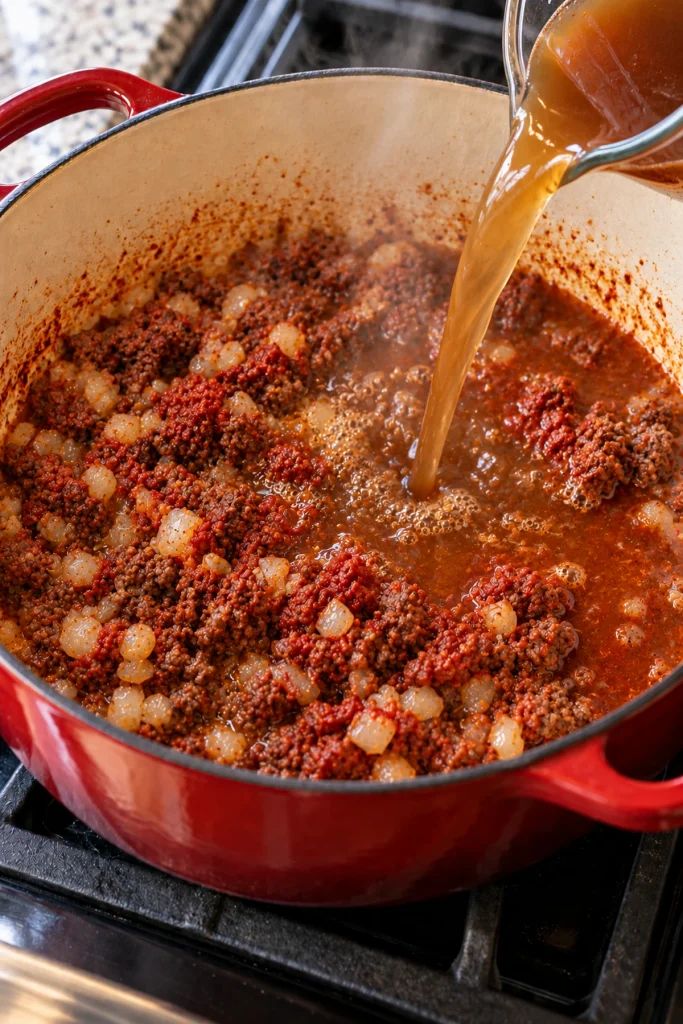
Pour in the beef broth, scraping the bottom of the pot as you pour to deglaze any remaining fond. Add the entire can of crushed tomatoes, the dried Italian seasoning, the dried basil, and the red pepper flakes. Stir everything together and bring the soup to a steady boil over medium-high heat. Taste the broth at this point and add a generous pinch of salt and several cracks of black pepper.
Why this step matters: deglazing with the broth picks up all the caramelized flavor from the previous steps and incorporates it into the liquid base. Tasting here gives you a baseline — you will taste again before serving.
What happens if skipped (the deglazing): a scorched layer on the bottom of the pot that can break free and add bitter notes to the finished soup.
💡 Pro Tip: This matters more than most people realize — season the broth before adding the pasta, not after. Pasta absorbs salt as it cooks, so what tastes perfectly seasoned now will taste flat in 10 minutes. Season slightly more aggressively at this stage than feels natural.
Step 5 — Add Broken Noodles
Once the broth reaches a full boil, break the dried lasagna noodles into 2-inch pieces directly over the pot and stir them into the broth. Reduce the heat to a steady simmer — you want consistent small bubbles, not a rolling boil, which will break the pasta apart. Stir every 3–4 minutes to prevent sticking, especially in the first few minutes before the pasta surface hydrates.
Why this step matters: adding noodles to insufficient heat produces gummy, starchy pasta. A full boil before adding ensures the noodles cook evenly from the outside in.
What happens if skipped: noodles added to liquid that isn’t boiling will stick together in clumps and cook unevenly.
💡 Pro Tip: Tested this 15+ times — the noodles benefit from one good stir right after you add them, and another stir at the 5-minute mark. After that, they hold their shape and don’t need constant attention.
Step 6 — Simmer Until Noodles Are Cooked
Simmer the lasagna soup, uncovered, for 10–12 minutes, stirring occasionally. The noodles are done when they are tender all the way through with a slight chew. Taste one noodle by removing it and biting it in half — if the center is still opaque and stiff, give it 2 more minutes; if it bends easily and is uniform in texture, the pasta is done.
Why this step matters: lasagna soup pasta continues cooking from residual heat even after the pot leaves the burner. Catching it at just barely done means it reaches perfect texture by the time you ladle it into bowls.
What happens if skipped: five extra unattended minutes produces overcooked, starchy noodles and a broth thickened from excess starch release.
💡 Pro Tip: Uncovered simmering is intentional — it allows some liquid to reduce, concentrating the broth slightly. If the soup looks too thick midway, add ½ cup of broth or water and continue.
Step 7 — Final Taste and Seasoning Adjustment
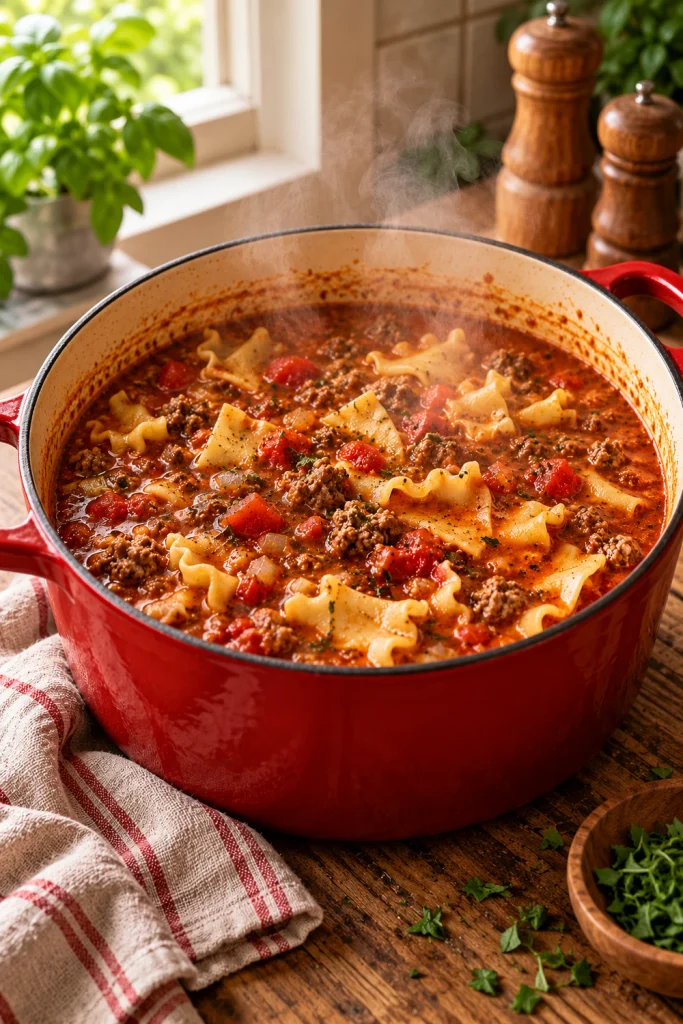
Remove the lasagna soup from heat. Taste the broth one final time and adjust for salt — this is your last opportunity before serving. Add a crack of fresh black pepper. If the broth tastes flat, a small pinch of sugar will balance excess acidity from the tomatoes. If it tastes too acidic, a ½ teaspoon of butter stirred in will round the flavor immediately.
Why this step matters: seasoning at the end corrects for the salt absorbed by the pasta and any reduction in the broth volume. A soup that was correctly seasoned before adding pasta often needs a second pinch at the end.
What happens if skipped: underseasoned soup that tastes one-dimensional despite perfect technique everywhere else.
💡 Pro Tip: The honest answer — most people under-salt. If the soup tastes “almost right,” it needs more salt, not more herbs or more tomato paste.
Step 8 — Finishing and Serving

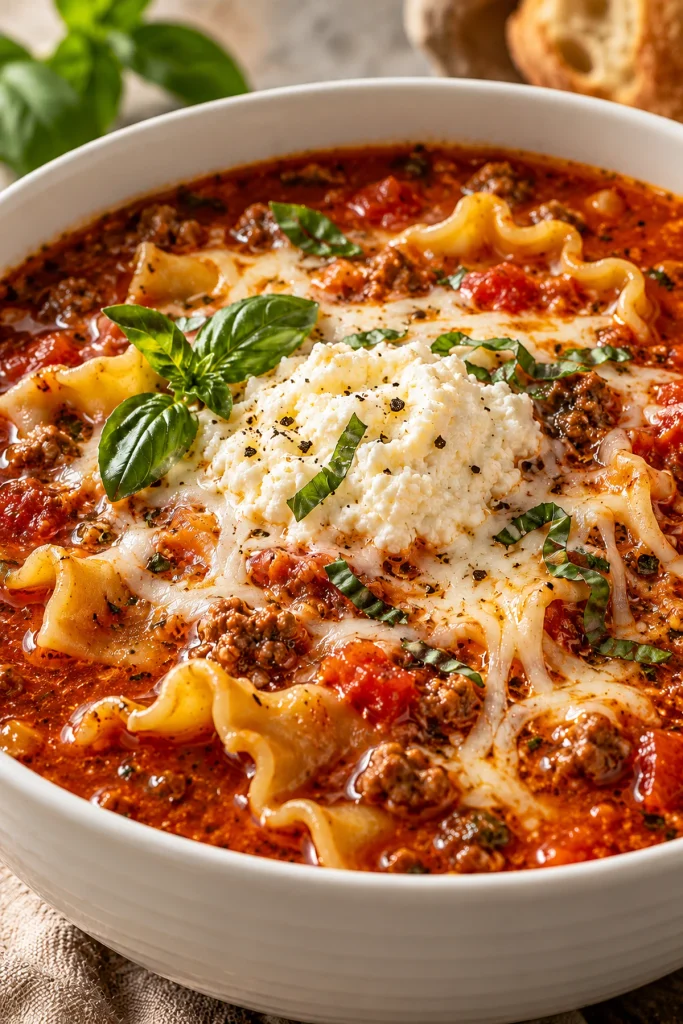
Ladle the lasagna soup into wide, deep bowls. most importantly, drop a generous dollop of whole-milk ricotta directly in the center of each bowl — 2 tablespoons per serving minimum. Add a small handful of shredded mozzarella on top, letting it melt from the heat of the soup. Finish with freshly grated Parmesan and a few leaves of fresh basil. Serve immediately.
The ricotta is not optional garnish — it is a structural element. As you eat, stir it into the bowl gradually. It melts into the broth, creating pockets of creamy richness that replicate the ricotta layer in traditional baked lasagna. Serve with crusty garlic bread for the full experience.
How to Tell When Lasagna Soup Is Done
Primary Doneness Test
Fork-pierce a single noodle piece and remove it from the lasagna soup. Bite it in half. A done noodle bends without resistance and is uniform in color and texture all the way through — no white, stiff center. The most common mistake is pulling the pot too early (noodles still have a chalky core) or too late (noodles have collapsed into the broth and the soup is visibly thick and starchy).
Doneness Guide
| Indicator | What It Means | What to Do |
|---|---|---|
| Noodles stiff and opaque at center | Underdone | Simmer 2–3 more minutes, test again |
| Noodles bend easily, uniform texture | Perfect — done | Remove from heat immediately |
| Broth looks thickened and starchy | Pasta slightly overcooked | Thin with ½ cup broth, serve quickly |
| Noodles falling apart | Significantly overcooked | See rescue steps below |
Visual Signs It’s Done
- The lasagna soup broth has reduced slightly from its original volume — visible as a waterline mark on the sides of the pot.
- Lasagna soup noodle pieces float freely rather than clumping together at the bottom.
- The surface of the broth has a slight sheen from the fat rendered during the beef sear.
- Noodle edges are slightly translucent rather than opaque white.
- The lasagna soup broth smells deeply of tomato, garlic, and herbs — no longer raw or sharp.
It’s Not Right — What to Do Now
Noodles overcooked and broth thick: Add ½ to 1 cup of additional hot broth and stir well. The soup will loosen. Serve immediately — do not return to heat or the noodles will continue cooking.
Noodles undercooked: Return to a simmer for 2-minute intervals, testing after each. Reduce heat immediately upon reaching doneness — residual heat continues the cook even off the burner.
Broth too thin: Simmer uncovered for 5 additional minutes after pasta is done. Alternatively, stir 1 tablespoon of tomato paste into a small amount of hot broth until dissolved, then stir back in.
How to Make the Lasagna Soup Broth (Finish Guide)

The broth is what makes lasagna soup unique — and by the time the pasta finishes cooking, you have a deeply seasoned, tomato-based liquid that has absorbed the fat from the beef, the sweetness of the onion, and the caramelized depth of bloomed tomato paste. The broth can be finished at different levels of richness depending on your preference and the time you have.
Method 1 — Simplest Finish (Serve As-Is)
After pasta reaches doneness, taste the broth and adjust salt. Add a ½ teaspoon of butter for a silkier texture if desired. Ladle into bowls immediately. The broth will be rich and tomatoey with a clean beef finish. This is the straight weeknight version — no extra steps, no extra time.
- Too thick: Stir in ¼ to ½ cup of hot beef broth.
- Too thin: Simmer uncovered for 5 minutes after pasta is done.
- Too bland: Add a pinch of salt, a crack of pepper, and ½ teaspoon of red wine vinegar for acidity.
Method 2 — Elevated Finish (Best Flavor)
After removing from heat, stir 2 tablespoons of heavy cream into the broth. The cream rounds the acidity of the crushed tomatoes and softens the red pepper heat, creating a tomato-cream broth that feels significantly richer without requiring additional cook time. Additionally, a tablespoon of freshly grated Parmesan stirred directly into the hot broth thickens it slightly and adds a sharp, salty depth.
Why this method wins: the combination of cream in the broth and ricotta on top creates a layered dairy richness that closely mirrors the cream-and-cheese balance in traditional baked lasagna. Therefore, if you have the extra two minutes and the ingredients, this is the version worth making.
Method 3 — Classic Red (Purist Method)
Build and simmer the lasagna soup broth for 5 extra minutes without pasta before adding the noodles. This extended simmer concentrates the tomato base and builds a deeper, more complex red-sauce flavor. the result is a bolder, more intensely simmered tomato broth with less liquid volume — add ½ cup of broth back in before the pasta to compensate. This is the best version for people who want the soup to taste like a Sunday-style tomato sauce got together with a bowl of pasta.
Troubleshooting Quick Reference
| Problem | Cause | Fix |
|---|---|---|
| Broth too thin | Insufficient reduction | Simmer uncovered 5 minutes |
| Broth too thick | Noodles over-absorbed | Add ½ cup hot broth, stir well |
| Broth too acidic | Canned tomatoes, no balance | Add pinch of sugar or ½ tsp butter |
| Broth too salty | Full-sodium ingredients | Add 1 cup unsalted broth + diced raw potato, simmer 10 min, discard potato |
| Broth tastes flat | Under-seasoned | Salt, plus a splash of red wine vinegar |
What to Serve With Lasagna Soup
Classic Pairings That Always Work
- Crusty Italian bread or garlic bread — Essential. The broth demands something to soak it up. [LINK HERE: “easy homemade garlic bread”]
- Caesar salad — The sharp, briny dressing cuts through the richness of the tomato broth and cheese. One of the cleanest pairings for this soup.
- Simple green salad with red wine vinaigrette — Provides acidity and freshness against the hearty broth. Pairs especially well with the Italian sausage variation.
- Roasted asparagus — The slight bitterness of roasted asparagus contrasts the sweetness of the tomato base cleanly. [LINK HERE: “oven roasted asparagus”]
- Focaccia — Thick enough to hold up to the broth without disintegrating. The olive oil in the bread also complements the soup’s Italian herb profile.
Comfort Food Pairings
- Cheesy pull-apart bread — Doubles the cheese profile of the meal, which works perfectly for a full comfort-food dinner.
- Roasted broccoli — The caramelized edges and slight char add texture contrast to the soft noodles and rich broth. Stir a few florets into each bowl at serving.
- Buttered dinner rolls — Simple, quick, and effective for a family dinner.
- Cornbread — An unexpected pairing that works well. The subtle sweetness offsets the acidity of the tomato broth cleanly.
- Mashed potatoes on the side — Works for people who want an exceptionally filling plate.
Low-Carb Options
- Zucchini noodles — Replace the broken lasagna noodles with spiralized zucchini added in the last 3 minutes of cook time. The broth and meat are unchanged.
- Spaghetti squash — Roast separately, then add strands to bowls at serving time. Absorbs the broth well.
- Cauliflower rice — Stir in ½ cup per bowl at serving. Pairs cleanly with the tomato-beef base and keeps the bowl low-carb.
- Plain side salad with olive oil and lemon — Keeps the overall meal light without modifying the soup itself.
6 Ways to Use Leftovers

Leftover lasagna soup is often better than the original bowl. The broth deepens overnight and the pasta absorbs just enough flavor to taste like a properly sauced noodle. Here are 6 meals that prove it.
1 — Lasagna Soup Tacos (Wrap Version)
- What you need: Flour tortillas, leftover soup (drained of most broth), shredded lettuce
- How to assemble: Warm the tortilla in a dry skillet. Drain the meat and noodle solids from the leftover soup with a slotted spoon and pile them into the tortilla. Add a dollop of ricotta, a handful of shredded mozzarella, and a drizzle of the warmed broth on the side.
- Tip that makes it better: A few drops of hot sauce on top of the ricotta turns this from “interesting” to actually craveable.
2 — Lasagna Minestrone (Soup Version)
- What you need: Leftover soup, 1 can of cannellini beans, 1 cup chicken or beef broth
- How to assemble: Add the beans and extra broth to the leftover soup and reheat gently over medium-low. The beans add protein and bulk; the extra broth restores the volume the noodles absorbed overnight. Finish with fresh basil and Parmesan.
- Tip that makes it better: Drop a Parmesan rind into the pot while it heats — it melts flavor into the broth in about 15 minutes and adds a depth that’s hard to replicate otherwise.
3 — Pasta e Carne Bowl (Grain Bowl Version)
- What you need: Leftover soup, cooked farro or white rice
- How to assemble: Spoon warm leftover soup over a base of cooked farro in a wide bowl. The grain absorbs the remaining broth like a risotto and adds a nuttiness that complements the tomato base.
- Tip that makes it better: A fried egg on top completes this as a full meal.
4 — Lasagna Soup Scramble (Breakfast Version)
- What you need: Leftover meat and noodles (drained), 3 eggs, shredded mozzarella
- How to assemble: Warm the drained leftovers in a nonstick pan over medium heat. Crack 3 eggs over the top and scramble together until just set. Top with mozzarella and serve straight from the pan.
- Tip that makes it better: A shake of red pepper flakes and a handful of baby spinach stirred in just before the eggs set adds color and a clean bite.
5 — Open-Face Lasagna Soup Toast (Sandwich Version)
- What you need: Thick-cut sourdough or Italian bread, leftover soup solids (drained), mozzarella
- How to assemble: Toast the bread under the broiler until golden. Spoon the drained meat and noodle mixture over the toast, top with mozzarella, and return to the broiler for 2–3 minutes until the cheese is bubbly and spotted brown.
- Tip that makes it better: Rub the warm toast with a halved raw garlic clove before adding the topping — 5 seconds of effort that transforms the base.
6 — Stuffed Bell Peppers (Stuffed/Loaded Version)
- What you need: 3 large bell peppers, leftover soup solids (drained), shredded mozzarella
- How to assemble: Halve the peppers and remove seeds. Fill each half with the drained soup solids. Top with mozzarella and bake at 375°F for 20 minutes until peppers are tender and cheese is golden and bubbling.
- Tip that makes it better: A spoonful of ricotta pressed into the center before the mozzarella layer makes these taste remarkably close to stuffed pasta shells. [LINK HERE: “easy stuffed bell peppers”]
Storage, Freezing and Reheating Guide
Refrigerator Storage (Up to 3 Days)
Store lasagna soup in an airtight container in the refrigerator. Glass containers with tight-fitting lids work better than plastic for tomato-based soups — they don’t stain and they hold no residual odor. The noodles will continue absorbing broth in the refrigerator, so add 2–4 tablespoons of broth or water per serving when reheating to restore the original consistency. Cool the soup to room temperature within 2 hours of cooking before refrigerating. After day two, the pasta will be noticeably softer — still good, but beginning to lose structure.
Can You Make This Ahead of Time?
Yes — and the flavor actually improves after a night in the refrigerator. For make-ahead prep: brown the beef, build the broth, and refrigerate everything before adding the noodles. The next day, bring the broth back to a boil and add the pasta fresh — cook time remains the same. Alternatively, make the entire soup up to 2 days ahead and reheat with additional broth. The noodles will be softer on reheat, but the flavor depth of a day-old tomato broth is worth the trade-off for most cooks.
Freezer Storage (Up to 2 Months)
The lasagna soup broth and meat base freeze beautifully. The noodles do not — they turn mushy and waterlogged when thawed. The correct approach: freeze the broth and beef mixture only, without cooked noodles, and cook fresh pasta when reheating. Portion into 2-cup freezer-safe containers for individual servings. Vacuum-sealing extends freezer life to 3–4 months and eliminates freezer burn entirely. Label format: “Lasagna Soup Broth — [date] — [X] servings — add fresh noodles.”
This Works as a Freezer Meal
For a true make-ahead lasagna soup freezer meal, combine the raw ground beef, diced onion, canned crushed tomatoes, broth, dried herbs, garlic, and tomato paste in a large zip-top freezer bag — everything except the pasta and cheese. Freeze flat for up to 3 months. When ready to cook: thaw overnight in the refrigerator, pour the contents into your Dutch oven, bring to a boil, add broken noodles, and cook as normal. Label format: “Lasagna Soup — Raw Freezer Meal — [date] — Thaw overnight — Add 8 noodles — Cook 10–12 min after boiling.” This is one of the most efficient meal-prep hacks for this recipe.
How to Reheat Without Ruining It
| Method | Time | Add Moisture? | Result Quality | Key Tip |
|---|---|---|---|---|
| Stovetop (medium-low) | 5–7 minutes | Yes — 2–4 tbsp broth | ✅ Best | Stir frequently; don’t let it boil |
| Microwave | 2–3 minutes | Yes — 2 tbsp broth | ✅ Good | Cover loosely; stir halfway through |
| Oven (350°F) | 15 minutes covered | Yes — ¼ cup broth | ⚠️ Only for large batches | Unnecessary for single portions |
| Air fryer | Not applicable | — | ❌ Avoid | Not suitable for broth-based soups |
| Original Dutch oven | 5–7 minutes | Yes — ¼ cup broth | ✅ Best for large batch | Low heat only; gentle simmer |
Weekly Meal Prep Strategy
One batch of lasagna soup covers dinner for a family of four plus two leftover lunches the following day — that is 6 meals from one 40-minute cook. Total ingredient cost runs approximately $16–18 for the full batch, working out to roughly $2.80 per serving. For meal preppers: make the broth base on Sunday, refrigerate, and cook fresh noodles on Tuesday and Thursday as needed. The pasta is always at ideal texture, and the broth deepens in flavor between cooks.
Recipe Variations Worth Trying
Same lasagna soup technique. Completely different flavor profiles. Master the base recipe first — then try one of these.
Italian Sausage Lasagna Soup (Most Popular Variation)
- What changes: Replace ground beef with 1 lb of mild or hot Italian sausage, removed from casings
- Flavor result: Richer, more deeply seasoned, with a fennel and herb character that makes the soup taste like it simmered all day
- Best use: Weeknight dinner when you want maximum flavor with no additional herbs or spices — the sausage does the seasoning work
- One tip: Brown sausage over medium heat, not medium-high — it has more fat than ground beef and will splatter if the heat is too aggressive
White Lasagna Soup (International / Regional Variation)
- What changes: Replace crushed tomatoes and beef broth with 4 cups chicken broth; add 1 cup heavy cream, 2 cups baby spinach, and use ground chicken or Italian chicken sausage
- Flavor result: Creamy, pale, herb-forward — a white lasagna in soup form with a silky cream-garlic-spinach broth that tastes completely unlike the original
- Best use: Guests who prefer lighter, cream-based flavors; pairs especially well with crusty sourdough
- One tip: Add the cream completely off heat at the very end to prevent any risk of curdling
Veggie Lasagna Soup (Low-Carb / Lighter Version)
- What changes: Replace meat entirely with 2 cups diced zucchini, 1 cup sliced mushrooms, and 1 cup green or brown lentils; use chickpea lasagna noodles or zucchini ribbons added in the last 5 minutes
- Flavor result: Earthy, hearty, and surprisingly filling — the lentils provide enough protein and body that you won’t miss the meat
- Best use: Meatless Monday, vegetarian households, or anyone reducing red meat
- One tip: Add a tablespoon of soy sauce to the broth for umami depth the meat would normally supply.
20-Minute Shortcut Lasagna Soup (Quick Weeknight Version)
- What changes: Use pre-browned frozen ground beef (crumbled, frozen in batches), skip the tomato paste bloom, and use no-boil lasagna noodles
- Flavor result: Slightly less deep, but fully recognizable and legitimately fast — this is the “I have 20 minutes and four hungry people” emergency version
- Best use: Weeknight emergencies; still satisfying and filling despite the shortcuts
- One tip: Add 1 teaspoon of smoked paprika to compensate for the depth lost by skipping the bloom step
Herb Garden Lasagna Soup (Fresh Herb / Elevated Version)
- What changes: Replace all dried herbs with fresh — 2 tablespoons fresh basil, 1 tablespoon fresh oregano, 1 tablespoon fresh thyme — added in the last 5 minutes of simmering; add a Parmesan rind to the broth while it simmers
- Flavor result: Bright, aromatic, and noticeably more complex — this is the version you make when you have good ingredients and time to let them shine
- Best use: Weekend dinner, guests, or any time you want to elevate the weeknight formula
- One tip: Reserve a few fresh basil leaves to tear directly into each bowl at serving — raw herb fragrance alongside the cooked version creates a layered freshness that’s impossible to get from dried herbs alone
Nutrition Information
Per Serving Breakdown
| Nutrient | Amount | % Daily Value |
|---|---|---|
| Calories | 420 | — |
| Protein | 28g | 56% |
| Carbohydrates | 38g | 14% |
| Total Fat | 16g | 21% |
| Saturated Fat | 6g | 30% |
| Fiber | 4g | 14% |
| Sodium | 780mg | 34% |
| Iron | 3.8mg | 21% |
| Potassium | 690mg | 15% |
| Sugar | 9g | — |
Nutrition calculated using 85/15 ground beef, whole-milk ricotta, and low-sodium beef broth. Using Italian sausage increases calories by approximately 60–80 per serving and sodium by 180–200mg. Using no-sodium broth reduces sodium to approximately 480mg per serving.
Dietary Compatibility
- ❌ Gluten-free — Standard lasagna noodles contain wheat. Use certified gluten-free lasagna noodles (available at most major grocery stores) and verify that broth and canned tomatoes are labeled gluten-free.
- ✅ Dairy-free — Skip ricotta, mozzarella, and Parmesan. Replace with cashew-based dairy-free ricotta and nutritional yeast. Flavor changes significantly but the soup remains good.
- ❌ Paleo — Pasta and cheese are not paleo-compatible. Replace noodles with zucchini ribbons and skip all cheese toppings for a compliant version.
- ⚠️ Keto / Low-carb — 38g carbs per serving is too high for strict keto. Use zucchini noodles instead of pasta to bring carbs down to approximately 12–14g per serving.
- ❌ Vegetarian — Contains ground beef. Use the Veggie Lasagna Soup variation above for a fully vegetarian version.
- ❌ Vegan — Contains beef and dairy. Both the veggie variation and the dairy-free substitutions above are required.
Sodium reduction tip: Use no-sodium beef broth (saves approximately 180mg per serving) and rinse canned crushed tomatoes briefly before using (saves another 40–50mg). Result: approximately 550mg sodium per serving.
8 Mistakes That Ruin Lasagna Soup (And Exactly How to Fix Them)
Every one of these lasagna soup mistakes is fixable. Know them before you start — not after the cook goes wrong.
❌ Mistake 1: Using the Wrong Pasta Why it happens: Any wide pasta looks like it should work. What goes wrong: Thin or small pasta turns to mush in the broth while you’re building flavor; egg noodles lose all structural identity within minutes. The fix: Use only standard dried lasagna noodles broken into pieces, or fresh lasagna sheets cut by hand. The width and thickness are what make this taste like lasagna.
❌ Mistake 2: Not Browning the Meat Properly Why it happens: Stirring too soon and cooking at too low a temperature. What goes wrong: Grey, steamed ground beef contributes almost no flavor to the lasagna soup broth — as a result, the soup tastes boiled and flat no matter how well you season it afterward. The fix: High heat, no stirring for the first 2 minutes, and allow a visible fond to develop before breaking the meat up and continuing.
❌ Mistake 3: Adding Pasta to Cold or Insufficiently Hot Broth Why it happens: Rushing through the build to get to the simmer phase. What goes wrong: Pasta added to broth below a full boil cooks unevenly — starchy and gummy on the outside, raw in the center. The fix: Wait for a confirmed full rolling boil before adding noodles. No exceptions.
❌ Mistake 4: Seasoning Only at the End Why it happens: Concern about over-salting, especially with canned tomatoes already in the pot. What goes wrong: Salt added only at the end sits on top of the lasagna soup rather than being absorbed into it — the result tastes flat even when it is technically salted. The fix: Season in three stages — with the beef, with the broth, and a final adjustment before serving. Each layer builds on the last.
❌ Mistake 5: Wrong Liquid Ratio Why it happens: Not accounting for how much liquid the noodles absorb during the 10–12 minute simmer. What goes wrong: Too little broth at the start leaves you with a thick, paste-like soup by serving time. Too much broth produces a watery, thin result with no body. The fix: Start with 4 cups of broth for a 6-serving batch. If the soup looks too thick midway, add ½ cup at a time. Additionally, always check broth levels again after the pasta reaches doneness.
❌ Mistake 6: Skipping the Tomato Paste Bloom Why it happens: Most recipes don’t explain why this step exists, so it gets treated as optional. What goes wrong: Raw tomato paste added directly to liquid tastes bright, acidic, and thin. There is no depth or roundness in the finished broth. The fix: Cook the tomato paste in the dry pot for 90 seconds until it darkens to brick-red before adding any liquid. This is the non-negotiable step.
❌ Mistake 7: Stirring the Ricotta Into the Pot Why it happens: Natural instinct to mix everything together and make the soup uniformly creamy. What goes wrong: Ricotta stirred into hot tomato broth breaks into tiny white curds distributed through the soup — texturally unpleasant and visually messy. The fix: Ricotta always goes on top of individual bowls as a dollop, never into the pot. Diners fold it into their own bowl gradually as they eat.
❌ Mistake 8: Throwing Away the Extra Broth Why it happens: The soup thickens after sitting in the pot and some broth gets left behind or discarded. What goes wrong: That remaining broth is concentrated, deeply seasoned cooking liquid. Discarding it means throwing away the best part of the recipe. The fix: Reserve every drop of extra broth in a separate container. Use it to thin reheated leftovers, as a base for another soup this week, or as an instant pasta sauce by adding a handful of Parmesan and tossing with cooked noodles.
Frequently Asked Questions
Can I use regular lasagna noodles in lasagna soup?
Yes — regular dried lasagna noodles are the standard and preferred choice for this recipe. Break them into 2-inch pieces before adding to the boiling broth. Ridged noodles (wavy edges) are preferred over flat-edge because they grip the broth and hold their texture better during the simmer. Avoid no-boil noodles if possible — they over-absorb the liquid and leave the broth too thin by the time they are soft.
What kind of meat works best in lasagna soup?
85/15 ground beef is the baseline choice for lasagna soup — the fat content builds body in the broth and adds flavor. Italian sausage (mild or hot, removed from casings) is the most popular alternative and produces a richer, more deeply seasoned result with far less effort on your part. Ground turkey works as a lighter option but needs an extra teaspoon of Italian seasoning and a tablespoon of olive oil to compensate for the lower fat content. Ground pork also works cleanly and pairs well with the tomato base.
Can I make lasagna soup in a slow cooker or Instant Pot?
Yes to both for lasagna soup. Slow cooker: brown the meat and aromatics in a skillet first, transfer everything except noodles to the slow cooker, and cook on LOW 6–8 hours or HIGH 3–4 hours. Add broken noodles in the final 30 minutes on HIGH only — adding them earlier produces mush. Instant Pot: use the sauté function to brown the beef and build the base, pressure cook on HIGH for 5 minutes with a quick release, then add noodles and sauté 8–10 minutes until cooked through.
How do I prevent the noodles from getting mushy in lasagna soup?
Two strategies for perfect lasagna soup noodles. First: cook them to just barely done — al dente — and serve immediately. The noodles continue cooking from residual heat, so pulling the pot off heat a minute early is correct, not premature. Second: if making ahead, cook the broth and meat base completely, refrigerate without noodles, and add fresh-cooked pasta when reheating. This is the only guaranteed method for perfect noodle texture in reheated portions.
Can I make lasagna soup ahead of time?
Yes — lasagna soup can be made ahead with one adjustment. Make the entire broth base — beef, aromatics, tomatoes, seasoning — up to 2 days ahead and refrigerate. Cook fresh noodles directly in the reheated broth when serving. Alternatively, cook the full recipe and refrigerate — just know the noodles will be noticeably softer on day two. The flavor, however, will be noticeably deeper. The broth base alone (without pasta) freezes well for up to 2 months.
What do you put on top of lasagna soup?
The standard lasagna soup topping set: a 2-tablespoon dollop of whole-milk ricotta directly in the center of each bowl, a small handful of shredded whole-milk mozzarella (which melts from the heat of the soup), and freshly grated Parmesan. Fresh basil leaves and a crack of black pepper finish the bowl. The ricotta is the most important topping — it is what makes lasagna soup taste like lasagna rather than tomato pasta soup. Do not stir it into the pot.
Can I freeze lasagna soup?
Freeze the lasagna soup broth and meat base only — do not freeze with noodles already cooked in. Cooked pasta does not freeze well and turns soft and waterlogged upon thawing. Freeze in airtight containers for up to 2 months. The best approach: assemble a raw freezer meal bag (beef, aromatics, tomatoes, broth — all uncooked) and freeze for up to 3 months. Thaw overnight in the refrigerator, cook as normal, add fresh noodles to the boiling broth.
How do I thicken lasagna soup?
The quickest way to thicken lasagna soup: simmer uncovered for 5 additional minutes after the pasta reaches doneness — the extra reduction concentrates the broth naturally. For a richer thickness: whisk 1 tablespoon of tomato paste with ¼ cup of hot broth from the pot and stir back in. For a starchy thickness without changing flavor: mash or briefly blend about 1 cup of the noodles and stir the resulting paste back into the soup.
Is lasagna soup the same as pasta e fagioli?
No — lasagna soup and pasta e fagioli are distinct dishes. Pasta e fagioli is an Italian bean and pasta soup built on a lighter broth base, typically made with small pasta like ditalini, and relies on white beans for body and protein. Lasagna soup is specifically designed to replicate the flavor profile of baked lasagna: ground meat, rich tomato broth, wide broken noodles, and a three-cheese topping. They share a category — hearty Italian pasta soup — but taste completely different.
Can I make lasagna soup without ricotta?
Yes — lasagna soup is still excellent without ricotta. The best substitutes: cream cheese (2 tablespoons per bowl, softened — adds richness without graininess), a 50/50 blend of cottage cheese and cream cheese blended smooth, or simply skipping the creamy element and using extra Parmesan. The honest answer: nothing replicates whole-milk ricotta exactly. The flavor and texture it adds — slightly sweet, creamy, mild — is specific to ricotta. However, the soup remains very good without it.
You Might Also Like
Recipe Card

Lasagna Soup
Ingredients
Equipment
Method
- Step 1 — Brown the Beef: Heat olive oil in a 5-quart Dutch oven over medium-high until shimmering. Add ground beef in a single layer, let sit undisturbed 2 minutes, then break into crumbles and cook until no pink remains, 5–6 minutes total. Drain excess fat, leaving about 1 tablespoon in the pot.
- Step 2 — Soften Aromatics: Reduce heat to medium. Add diced onion and cook 3–4 minutes, scraping up any browned fond from the beef. Add minced garlic and stir constantly for exactly 60 seconds.
- Step 3 — Bloom Tomato Paste: Clear a space in the center of the pot. Add tomato paste and cook undisturbed 90 seconds until it darkens to brick-red. Stir thoroughly into the meat mixture until evenly combined.
- Step 4 — Build the Broth: Pour in beef broth, scraping the pot bottom to deglaze. Add crushed tomatoes, Italian seasoning, dried basil, and red pepper flakes. Bring to a full boil and season with salt and pepper.
- Step 5 — Add Noodles: Once at a full rolling boil, break lasagna noodles directly into the pot. Reduce to a steady simmer. Cook uncovered 10–12 minutes, stirring every 3–4 minutes, until noodles are tender with a slight chew.
- Step 6 — Final Seasoning: Remove from heat. Taste and adjust salt. Add a crack of black pepper. Add a pinch of sugar if the broth tastes sharp; add ½ tsp butter if it needs rounding.
- Step 7 — Serve: Ladle into wide bowls. Add a 2-tablespoon dollop of ricotta to each bowl, a handful of shredded mozzarella on top, and a generous grating of Parmesan.
- Step 8 — Garnish: Finish with fresh basil and optional drizzle of olive oil. Serve immediately with crusty bread. Stir the ricotta into your own bowl gradually as you eat.
Notes
- ⚠️ Do not stir the ricotta into the pot — it breaks into curds. Always dollop onto individual bowls.
- ✅ Bloom the tomato paste in the dry pot for 90 seconds — this single step is responsible for the broth’s depth of flavor.
- 🔄 Italian sausage swaps 1:1 for ground beef — reduce added salt by half.
- ❄️ Freeze the broth base only — cooked noodles turn mushy when frozen and thawed.
- 📌 Season the broth more aggressively before adding pasta — the noodles absorb a significant amount of salt as they cook.




8 Comments