Best Swedish Meatballs (Rich Gravy, Ready in 35 Minutes)
⭐⭐⭐⭐⭐ Rate this recipe

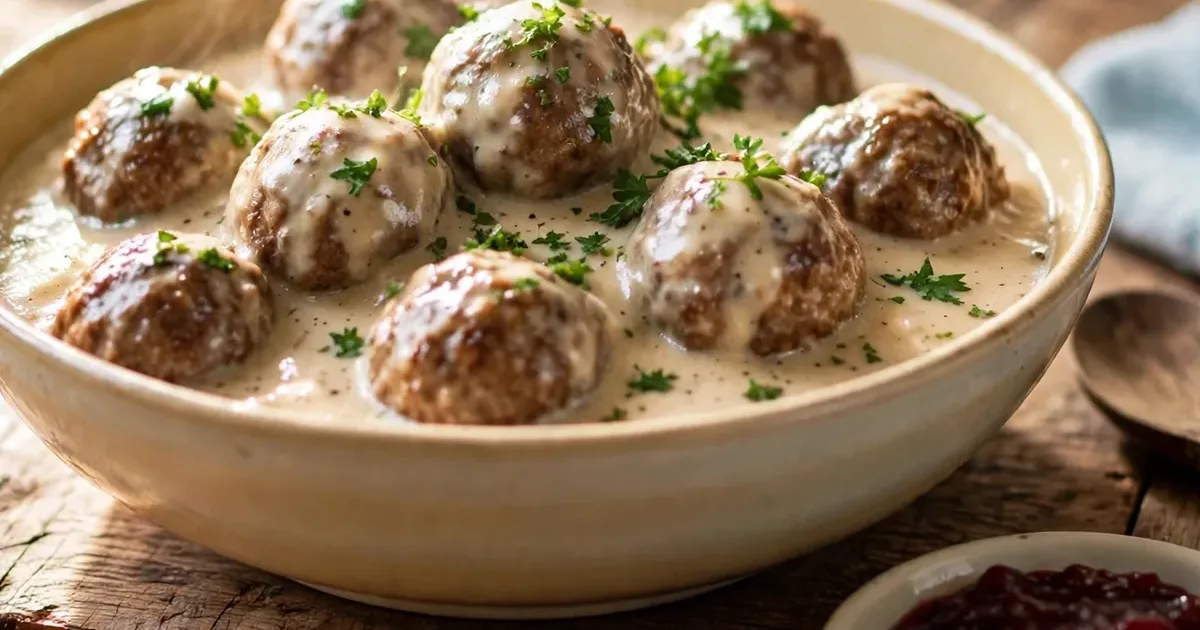
Swedish meatballs done right are tender all the way through, deeply browned on the outside, and coated in a rich, savory cream gravy — not dense, dry balls of meat sitting in a thin, flavorless sauce. This Swedish meatballs recipe uses a proper panade (a bread-and-milk mixture folded into the meat) plus a specific gravy-building technique that keeps everything smooth instead of grainy or separated. The entire dish comes together in one skillet in just 35 minutes.
This recipe is built for anyone who’s ended up with dense, dry meatballs or a thin, forgettable gravy and wants a version that turns out right every time. If you’ve ever had the gravy break into a greasy mess, or meatballs that fell apart in the pan — every one of those problems has a specific fix here. It works for a weeknight family dinner, a holiday appetizer spread, or a cold-weather comfort meal that holds up well for leftovers.
Made this already? Scroll down and leave a ⭐⭐⭐⭐⭐ rating below — it helps more than you know.
Once the technique for Swedish meatballs clicks, the frozen store-bought bag stops making sense.
⏱ Prep Time: 15 minutes
🕐 Cook Time: 20 minutes
⏳ Total Time: 35 minutes
🍽 Servings: 4
📊 Difficulty: Easy
💰 Estimated Cost: ~$13 total / ~$3.25 per serving
🍖 Main Item: Tender ground beef and pork meatballs in a creamy gravy
Table of Contents
Why This Swedish Meatballs Recipe Works
- A proper panade instead of dry breadcrumbs alone. Most recipes mix dry breadcrumbs straight into the meat, which absorbs moisture during cooking and leaves the texture dense. This recipe soaks the breadcrumbs in milk first, creating a panade that keeps the meatballs tender throughout.
- A blend of beef and pork, not beef alone. Pork contributes fat and a milder flavor that balances the beef’s richness, producing a more tender bite than either meat used on its own.
- Browning in batches, then building the gravy in the same pan. Here’s the truth: overcrowding the pan steams the meatballs instead of browning them, and skipping the fond left behind means losing a significant amount of flavor the gravy depends on.
- A roux cooked before any liquid is added. This recipe cooks butter and flour together first, which thickens the gravy smoothly instead of leaving lumps of raw flour throughout.
- Sour cream stirred in off heat, at the very end. Adding dairy to a still-boiling gravy is the fastest way to curdle it. Stirring it in once the heat is reduced keeps the texture smooth and glossy.
👉 another easy comfort food recipe here
Understanding the Key Ingredient

The one step worth never skipping in this recipe, no matter how rushed the night is, is the key technique in Step 1. Skipping it is the most common reason homemade meatballs come out dense and dry instead of tender. Followed properly, the result comes out right every time.
Why the Panade Is the Right Choice
A panade — breadcrumbs soaked in milk until soft and pasty — distributes moisture evenly through the ground meat, which is exactly what prevents this recipe from turning dense once it hits the heat. Dry breadcrumbs added directly to meat absorb moisture from the meat itself as it cooks, pulling liquid away from the texture rather than contributing to it. Additionally, the panade helps bind the mixture together gently, without requiring excessive mixing that can toughen the meat through overworking.
Panade Comparison Guide
| Method | Moisture Retention | Texture Result | Best For |
|---|---|---|---|
| Breadcrumbs soaked in milk (panade) | High | Tender, moist | Best overall result |
| Dry breadcrumbs, no soaking | Low | Denser, drier | Not recommended |
| Fresh breadcrumbs, no soaking | Medium | Slightly better than dry, still firmer | Acceptable in a pinch |
| Crushed crackers soaked in milk | High | Similar to bread panade | Good substitute |
How to Choose the Best at the Store
- Use plain, unseasoned breadcrumbs for the panade. Seasoned varieties can throw off the overall spice balance of this recipe.
- Whole milk works best for soaking. It carries more fat than skim, which helps the panade stay richer.
- Fresh breadcrumbs, if available, work slightly better than dried. They absorb milk a bit more evenly.
- Buy ground beef and pork with moderate fat content. Extra-lean meat produces a drier result even with a proper panade.
- Check that the milk hasn’t expired. Soured milk can throw off the flavor of the finished meatballs.
How Much Do You Need?
| Servings | Ground Beef | Ground Pork |
|---|---|---|
| 2 | ¼ lb | ¼ lb |
| 4 | ½ lb | ½ lb |
| 6 | ¾ lb | ¾ lb |
| 8 | 1 lb | 1 lb |
Double Batch — How to Scale This Swedish Meatballs Recipe
Doubling works cleanly as long as you brown the meatballs in more batches rather than overcrowding one pan — overcrowding remains the biggest risk at any scale. Make the gravy in a single larger batch once all the meatballs are browned, rather than trying to double every gravy ingredient separately. Baking time in the oven, if finishing that way, stays roughly the same regardless of quantity.
Ingredients You’ll Need

This recipe uses straightforward pantry and fresh ingredients. Here is everything broken down.
Main Ingredients
- Ground beef — ½ lb. The base of the meatballs. Blended with pork for a more tender result.
- Ground pork — ½ lb. Adds fat and a milder flavor that balances the beef.
- Breadcrumbs — ⅓ cup, plain. Soaked in milk to form the panade that keeps the meatballs tender.
- Whole milk — ¼ cup, for the panade, plus more for the gravy. Soaks the breadcrumbs and later thins the gravy.
- Egg — 1 large. Binds the meatball mixture together.
- Yellow onion — ¼ cup, finely diced. Adds aromatic sweetness throughout.
- Allspice — ½ teaspoon. The defining warm spice in traditional Swedish meatballs.
- Nutmeg — ¼ teaspoon. Adds a subtle warmth that pairs with the allspice.
Supporting Ingredients
- Butter — 3 tablespoons, divided. Used for browning the meatballs and building the roux.
- Flour — 2 tablespoons. Thickens the gravy smoothly when cooked into a roux first.
- Beef broth — 1½ cups. The liquid base of the gravy.
- Sour cream — ¼ cup. Added off heat for richness and tang.
- Salt and black pepper — to taste.
- Lingonberry jam — for serving.
Optional Additions Table
| Add-In | Amount | Effect |
|---|---|---|
| Worcestershire sauce | 1 tsp | Adds deeper savory depth to the gravy |
| Fresh dill, chopped | 1 tbsp | Adds a fresh, herbal note on top |
| Ground ginger | ¼ tsp | A traditional addition in some family recipes |
| Heavy cream, extra | 2 tbsp | Makes the gravy even richer |
| Garlic, minced | 1 clove | Adds a subtle savory depth |
Complete Substitutions Reference
| Original | Substitution | Notes |
|---|---|---|
| Ground pork | Ground turkey | Leaner, slightly milder result |
| Sour cream | Heavy cream | Less tangy, still rich |
| Beef broth | Chicken broth | Works fine, lighter flavor |
| Breadcrumbs | Panko | Similar result once soaked in milk |
| Lingonberry jam | Cranberry sauce | Similar tart-sweet balance |
What NOT to Add to This Swedish Meatballs Recipe
❌ Dry breadcrumbs with no soaking step — the single most common cause of dense, dry meatballs
❌ Overworking the meat mixture — toughens the texture; mix just until combined
❌ Overcrowding the pan when browning — steams the meatballs instead of browning them
❌ Boiling the gravy after sour cream is added — causes the dairy to curdle and separate
❌ Flour added directly to hot liquid without a roux — clumps instead of dissolving smoothly
❌ Skipping the fond left in the pan after browning — this is where a significant amount of the gravy’s flavor comes from
Equipment You’ll Need
Choosing the Right Equipment for Swedish Meatballs
| Tool | Purpose | Best For |
|---|---|---|
| Large stainless steel skillet | Browning and gravy-building | Good fond development, even heat |
| Cast iron skillet | Browning and gravy-building | Excellent heat retention |
| Cookie scoop | Portioning meatballs | Even, consistent sizing |
| Whisk | Making the roux | Smooth, lump-free gravy |
Other Tools That Actually Matter
A stainless steel or cast iron skillet develops better browning on the meatballs than a nonstick surface, which matters since that browned fond is what the gravy’s flavor depends on. A cookie scoop produces evenly sized meatballs that cook through at the same rate, which prevents some from being underdone while others overcook. A whisk is essential for the roux step, working the butter and flour together far more smoothly than a spoon.
No Cookie Scoop? Alternatives That Work for This Swedish Meatballs Recipe
- Tablespoon measure — scoop with a standard tablespoon and roll by hand for similarly sized meatballs
- Two spoons — use one to scoop and the other to help shape and release the mixture
- Wet hands — simply roll portions by hand, keeping your hands lightly wet to prevent sticking
How to Make Swedish Meatballs — Step by Step
Five steps. Most take under ten minutes each.
Step 1 — Make the Panade and Mix the Meatballs (The Key Step)

Combine the breadcrumbs and milk in a small bowl and let sit for 5 minutes until soft and pasty. In a large bowl, combine the ground beef, ground pork, soaked panade, egg, diced onion, allspice, nutmeg, salt, and pepper. Mix gently with your hands just until combined — overworking the mixture at this stage is what toughens the texture. Most recipes skip the panade step entirely, but it’s exactly what keeps this recipe tender instead of dense once cooked.
💡 Pro Tip: Mix with a light touch and stop as soon as everything is evenly combined — the moment the mixture starts to feel sticky and uniform, it’s ready to shape.
Step 2 — Shape and Brown the Meatballs
Shape the mixture into 1-inch meatballs using a cookie scoop for even sizing. Melt 2 tablespoons of butter in a large skillet over medium-high heat. Brown the meatballs in batches, without overcrowding the pan, for 2–3 minutes per side until deeply browned on the outside. Remove to a plate — they don’t need to be fully cooked through yet, since they’ll finish in the gravy.
💡 Pro Tip: Resist moving the meatballs too soon once they’re in the pan — letting them sit undisturbed for the first minute or two is what builds real browning instead of a pale, steamed exterior.
Step 3 — Build the Roux
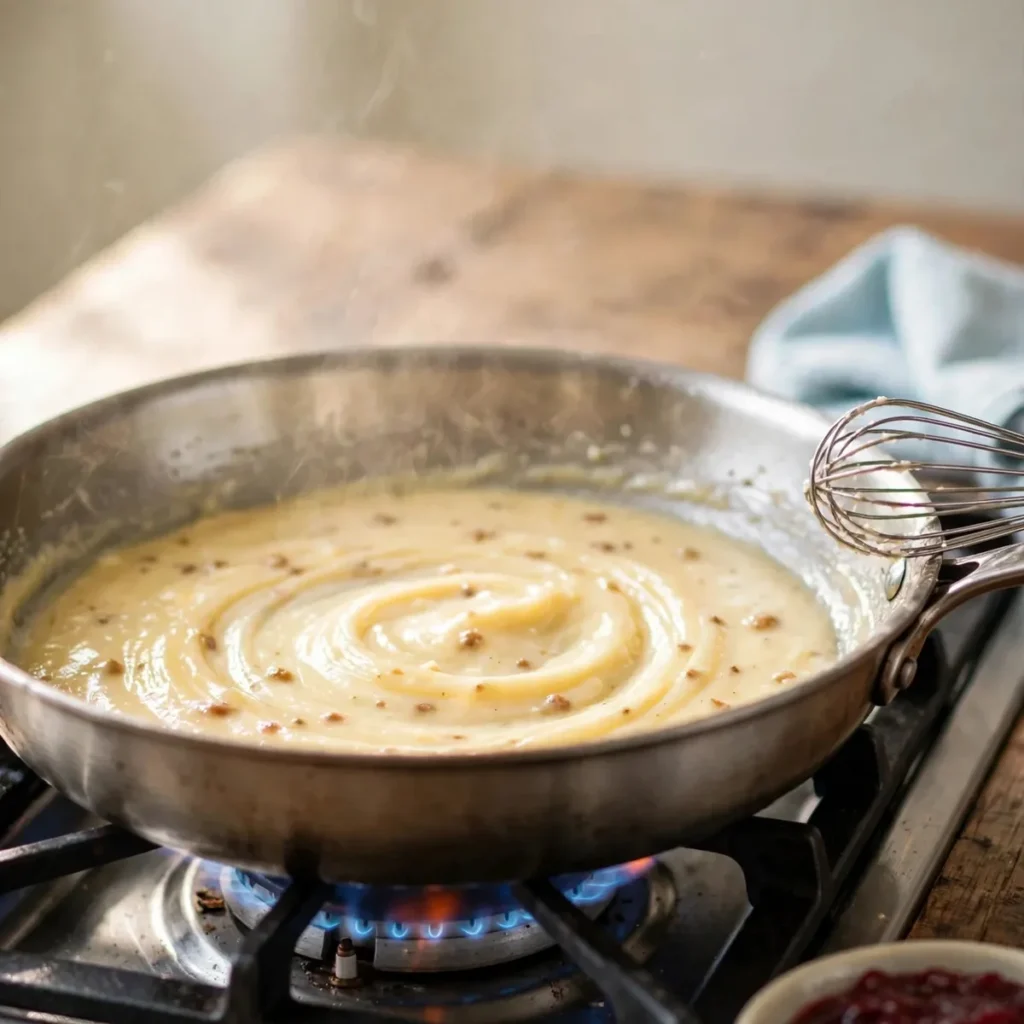
In the same skillet, melt the remaining butter over medium heat, scraping up any browned bits left from the meatballs. Whisk in the flour and cook for 1–2 minutes, stirring constantly, until it smells slightly nutty and turns a pale golden color.
👉 another easy family dinner here
As a result, building the roux directly in the same pan used for the meatballs captures all the flavor left behind from browning, rather than discarding it.
💡 Pro Tip: Cook the roux just until it smells toasty, not deeply browned — a lightly golden roux thickens effectively without adding an overly dark flavor to the gravy.
Step 4 — Add Broth and Simmer
Gradually whisk in the beef broth, a little at a time, until the gravy is smooth with no lumps. Bring to a simmer, then return the browned meatballs to the pan. Cover and simmer for 8–10 minutes, until the meatballs are fully cooked through and the gravy has thickened.
💡 Pro Tip: Whisking the broth in gradually rather than all at once is what keeps the roux from seizing into clumps as the liquid is added.
Step 5 — Finish with Sour Cream

Remove the pan from heat and stir in the sour cream until smooth. Taste and adjust salt and pepper as needed. Serve immediately with lingonberry jam on the side.
How to Tell When It’s Done
Every stove runs a little differently, so start checking 1–2 minutes early on the first attempt with this recipe. Once it’s been made once, the exact timing for that specific stove becomes easy to predict.
Primary Doneness Test
The meatballs are done when they reach an internal temperature of 165°F and no longer show any pink in the center. The gravy is ready when it coats the back of a spoon in an even layer and looks smooth and glossy rather than thin or lumpy.
Doneness Guide
| Indicator | What It Means | What to Do |
|---|---|---|
| Meatballs still pink inside | Under-cooked | Simmer a few more minutes in the gravy |
| Meatballs reach 165°F, no pink | Perfectly done | Remove from heat and finish with sour cream |
| Gravy looks thin, watery | Not simmered long enough | Simmer a bit longer to thicken |
| Gravy coats a spoon evenly | Perfectly done | Finish with sour cream and serve |
| Gravy looks grainy or separated | Boiled after sour cream was added | Reduce heat immediately; whisk to try to recombine |
| Gravy too thick | Reduced too much | Thin with a splash more broth |
Visual Signs It’s Done
- The meatballs have turned from pink and raw-looking to a uniform brown with no pink remaining in the center
- The gravy has thickened from thin and watery to a glossy, coating consistency
- The surface of the gravy looks smooth, with no visible lumps of flour
- A spoon dragged through the gravy leaves a brief trail rather than filling back in immediately
- The aroma has shifted from raw onion and spice to a warm, savory, slightly sweet smell
It’s Not Right — What to Do Now
- Meatballs turned out dense: Panade step was skipped or the mixture was overworked — always soak breadcrumbs in milk first and mix gently
- Gravy turned grainy: Sour cream was added while the gravy was still boiling — always reduce heat first
- Gravy stayed thin: Roux wasn’t cooked long enough or wasn’t given time to simmer with the broth — simmer a bit longer to thicken
- Meatballs fell apart in the pan: Mixture was too wet, or they were flipped too early before a crust formed — let them brown undisturbed longer before turning
How to Make the Gravy

The gravy is what defines this dish, and getting it right comes down to technique more than any single ingredient. There are three approaches depending on your preference.
Method 1 — Classic Roux-Based Gravy (Standard Recipe)
Build a roux in the same pan used for browning, whisk in broth gradually, then finish with sour cream off heat. This is the method used throughout this recipe and produces the most traditional, restaurant-style result.
Method 2 — Cream-Based Gravy (Richer Version)
Skip the roux and instead reduce the beef broth by half, then stir in ½ cup of heavy cream in place of the sour cream. This produces a noticeably richer, silkier gravy without the slight tang that sour cream contributes.
Method 3 — Cornstarch Slurry Method (Gluten-Free Alternative)
Skip the flour-based roux entirely and thicken the finished broth with a cornstarch slurry — 1 tablespoon cornstarch whisked with 1 tablespoon cold water, stirred in during the last few minutes of simmering. This keeps the recipe gluten-free while still producing a nicely thickened gravy.
Troubleshooting Quick Reference
| Problem | Cause | Fix |
|---|---|---|
| Grainy, broken texture | Sour cream added while gravy was boiling | Reduce heat before adding dairy next time |
| Too thin | Roux under-cooked or not simmered long enough | Simmer longer or make a small extra batch of roux |
| Too thick | Too much roux used | Thin with a splash more broth |
| Lumpy texture | Flour added without a proper roux | Always cook butter and flour together first |
What to Serve With It
Classic Pairings That Always Work
- Egg noodles — the most traditional pairing, soaking up the gravy beautifully
- Mashed potatoes — a classic alternative base that holds the gravy just as well
- Lingonberry jam — the traditional Swedish condiment that balances the richness
- Pickled cucumbers — a tangy, crisp contrast to the creamy gravy
- Steamed green beans — a simple vegetable side that doesn’t compete with the flavor
Comfort Food Pairings
- Buttered rye bread — perfect for scooping up extra gravy
- Roasted root vegetables — a hearty, Scandinavian-leaning side
- Creamy coleslaw — adds crunch alongside the soft texture of the meatballs
- Dill potato salad — another traditional Scandinavian pairing
Lighter Options
- Cauliflower mash instead of potatoes — keeps the meal lower in carbohydrates
- A simple green salad — adds freshness without competing with the rich gravy
- Smaller portions with extra vegetables — balances the richness of the dish
6 Ways to Use Leftover Swedish Meatballs
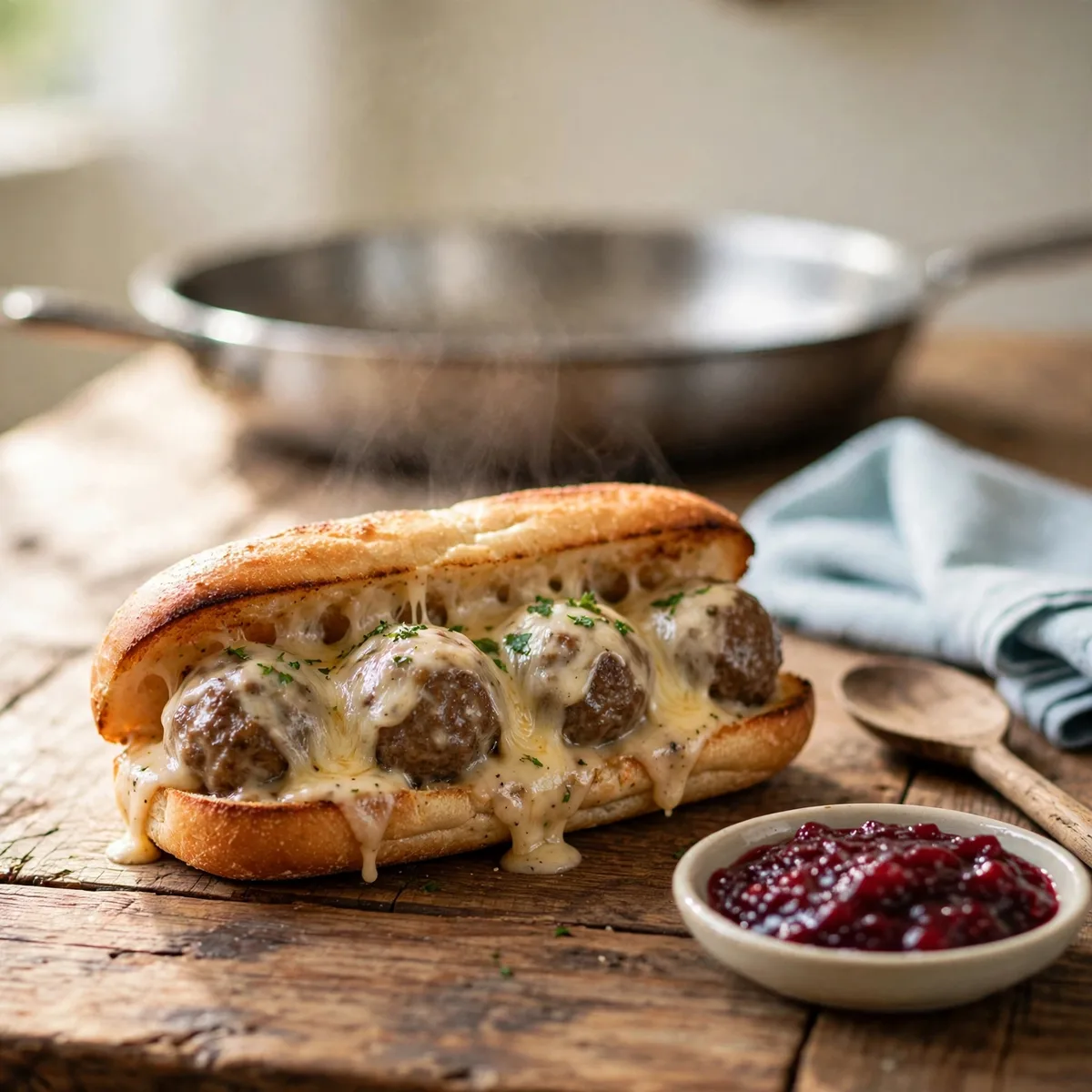
Leftover Swedish meatballs can become several completely different meals. Here are 6 ways to use them.
Swedish Meatball Sub Sandwich
What you need: Leftover meatballs and gravy, sandwich rolls, shredded cheese.
How to assemble: Split rolls, fill with leftover meatballs and a spoonful of gravy, top with cheese, and broil for 2–3 minutes until melted.
One tip: Drain any excess gravy first — too much liquid makes the bread soggy.
Swedish Meatball Soup
What you need: Leftover meatballs and gravy, 3 cups beef broth.
How to assemble: Simmer leftover meatballs and gravy with extra beef broth for 8–10 minutes to turn it into a hearty soup.
One tip: This stretches a small amount of leftovers into a full second meal almost effortlessly.
Swedish Meatball Baked Potato Topping
What you need: Leftover meatballs and gravy, baked potatoes.
How to assemble: Split open baked potatoes and spoon the leftover meatballs and gravy directly over the top.
👉 try another easy comfort food dinner here
One tip: Chop the meatballs into smaller pieces first so each bite of potato gets some filling.
Swedish Meatball Pasta Bake
What you need: Leftover meatballs and gravy, cooked pasta, extra cheese.
How to assemble: Toss cooked pasta with leftover meatballs and gravy, transfer to a baking dish, top with cheese, and bake at 375°F for 15 minutes until bubbly.
One tip: This transforms a smaller amount of leftovers into a completely different, heartier meal with very little extra effort.
Swedish Meatball Skewers
What you need: Leftover meatballs, small skewers.
How to assemble: Thread cold leftover meatballs onto small skewers and serve with the reserved gravy as a dip.
One tip: This works well as a quick appetizer if reheating the full dish feels like too much for a smaller gathering.
Swedish Meatball Rice Bowl
What you need: Leftover meatballs and gravy, cooked rice.
How to assemble: Spoon reheated leftover meatballs and gravy over a bowl of warm rice instead of the original noodles or potatoes.
One tip: The rice soaks up the gravy beautifully, making this version feel like a completely different meal.
Storage, Freezing and Reheating Guide
Refrigerator Storage (Up to 4 Days)
This recipe stores in the refrigerator for up to 4 days in an airtight container. The gravy thickens further once chilled, which is completely normal — gentle reheating with a splash of broth restores the original consistency.
Can You Make This Ahead of Time?
Yes — this recipe reheats well, making it a solid make-ahead option. Make the full batch up to 2 days before you need it, refrigerate, and reheat gently on the stovetop, stirring frequently and adding a splash of broth if needed.
Freezer Storage (Up to 3 Months)
This recipe freezes well for up to 3 months. For the best texture, freeze the browned meatballs and gravy together in an airtight container, leaving room for expansion. Thaw overnight in the refrigerator before reheating.
This Recipe Works as a Freezer Meal
Make a double batch specifically for the freezer. Portion into labeled containers before freezing so you can pull exactly what’s needed for a quick dinner or appetizer spread later.
👉 see more easy freezer meal ideas here
How to Reheat Without Ruining It
| Method | Setting | Time | Notes |
|---|---|---|---|
| Stovetop | Low | 8–10 min | Best method; stir frequently and add a splash of broth |
| Microwave | 50% power | 2–3 min | Stir every 60 seconds to prevent separation |
| Oven | 325°F | 20 min | Covered; good for larger batches |
Weekly Prep Strategy
Make a full batch at the start of the week and portion into containers for quick reheating. This recipe reheats well enough within a few days to be a genuinely practical dinner for multiple nights without remaking it from scratch.
Recipe Variations Worth Trying
Same technique. Completely different flavor profiles. Master this base recipe first — then try one of these.
Most Popular — Extra Creamy Swedish Meatballs
Increase the sour cream to ½ cup and add 2 tablespoons of heavy cream alongside it off heat. The extra richness makes this one of the most requested variations of this recipe for anyone who prefers a thicker, more indulgent gravy.
International — Danish-Style Frikadeller Twist
Add 2 tablespoons of finely grated onion directly into the meat mixture rather than just diced, and swap the allspice for a pinch of ground cloves, following the Danish approach to a similar meatball tradition. The result leans slightly sweeter and more aromatic than the standard Swedish version.
Lighter — Reduced Cream Version
Replace the sour cream with plain Greek yogurt and reduce the butter in the roux to 2 tablespoons. Therefore, you get a noticeably lighter version that still tastes rich and satisfying for this recipe without quite as much saturated fat.
Quick Shortcut — Oven-Baked Meatball Version
Bake the shaped meatballs at 400°F for 15–18 minutes instead of pan-browning them in batches, then transfer to the gravy to finish simmering. This skips the need to brown in multiple batches, though the meatballs won’t develop quite as much fond for the gravy.
Fresh and Elevated — Swedish Meatballs with Browned Butter
Brown the butter used in the roux first: melt in a light-colored pan over medium heat, stirring constantly, until golden and nutty-smelling, about 3–4 minutes. The browned butter adds a deep, caramel-like complexity that elevates this comfort food classic into something genuinely more refined.
Nutrition Information
Per Serving Breakdown (Based on 4 Servings)
| Nutrient | Amount | % Daily Value |
|---|---|---|
| Calories | ~420 | — |
| Total Fat | 28g | 36% |
| Saturated Fat | 13g | 65% |
| Cholesterol | 140mg | 47% |
| Sodium | 620mg | 27% |
| Total Carbohydrates | 14g | 5% |
| Dietary Fiber | 1g | 4% |
| Total Sugars | 3g | — |
| Protein | 26g | 52% |
| Iron | 15% DV | — |
According to USDA FoodData Central, a blend of beef and pork provides a meaningful source of iron and B vitamins per serving — meaning this Swedish meatballs recipe contributes real nutritional value alongside its rich, savory flavor.
Dietary Compatibility
| Diet | Compatible | Notes |
|---|---|---|
| Gluten-Free | ❌ | Use the cornstarch slurry method above and gluten-free breadcrumbs to adapt |
| Dairy-Free | ❌ | Requires dairy-free milk, butter, and sour cream substitutes to adapt |
| Paleo | ❌ | Breadcrumbs, flour, and dairy all excluded |
| Keto | ❌ | Omit breadcrumbs and use a low-carb thickener to adapt |
| Vegetarian | ❌ | Replace meat with a plant-based ground meat substitute |
| Vegan | ❌ | Same substitution plus dairy-free gravy ingredients needed |
To reduce sodium in this Swedish meatballs recipe, use low-sodium beef broth and reduce the added salt — the allspice and nutmeg already carry plenty of flavor on their own.
8 Mistakes That Ruin Swedish Meatballs
Every mistake with Swedish meatballs is fixable. Know them before you start — not after.
❌ Mistake 1: Skipping the Panade
Why it happens: Not realizing dry breadcrumbs behave differently than soaked ones. What goes wrong: Dry breadcrumbs absorb moisture from the meat during cooking, leaving the texture dense and dry. The fix: Always soak breadcrumbs in milk first to form a proper panade.
❌ Mistake 2: Overworking the Meat Mixture
Why it happens: Mixing thoroughly to make sure everything is combined. What goes wrong: Excessive mixing toughens the meat proteins, producing a denser, less tender bite. The fix: Mix gently, just until combined, and stop as soon as the mixture looks uniform.
❌ Mistake 3: Overcrowding the Pan
Why it happens: Trying to brown all the meatballs at once to save time. What goes wrong: A crowded pan steams the meatballs instead of browning them, missing out on flavor and color. The fix: Brown in batches, giving each meatball room to develop a real sear.
❌ Mistake 4: Boiling the Gravy After Adding Sour Cream
Why it happens: Not adjusting the heat down after adding dairy. What goes wrong: High heat causes the sour cream to curdle and separate, ruining the smooth texture. The fix: Always remove from heat or reduce to low before stirring in sour cream.
❌ Mistake 5: Skipping the Roux
Why it happens: Trying to thicken with flour added directly to the liquid. What goes wrong: Flour added straight to hot broth clumps instead of dissolving smoothly, leaving lumps throughout. The fix: Always cook butter and flour together into a proper roux first.
❌ Mistake 6: Flipping the Meatballs Too Early
Why it happens: Impatience while browning. What goes wrong: Meatballs flipped before a proper crust forms tend to stick and fall apart in the pan. The fix: Let them brown undisturbed for the first 1–2 minutes before attempting to turn them.
❌ Mistake 7: Discarding the Fond Instead of Building the Gravy on It
Why it happens: Wiping out the pan before starting the gravy. What goes wrong: The browned bits left behind from searing the meatballs carry a significant amount of flavor that’s lost if the pan is cleaned first. The fix: Build the roux directly in the same pan, scraping up those browned bits as you go.
❌ Mistake 8: Not Tasting Before Serving
Why it happens: Assuming the recipe amounts are automatically balanced. What goes wrong: Depending on the specific broth and meat used, the dish can taste under or over-seasoned. The fix: Always taste the finished gravy and adjust salt or pepper before serving.
Frequently Asked Questions
Why are my Swedish meatballs tough?
The most common cause is skipping the panade step, since dry breadcrumbs added directly to the meat absorb moisture during cooking rather than contributing to it, leaving the texture dense. Overworking the meat mixture while combining it is the second major cause, since excessive handling toughens the proteins. Soaking breadcrumbs in milk first and mixing gently, just until combined, solves this issue in nearly every batch.
What is the difference between Swedish meatballs and Italian meatballs?
Swedish meatballs are typically smaller, made with a blend of beef and pork, and seasoned with warm spices like allspice and nutmeg rather than the garlic, oregano, and basil common in Italian versions. They’re also traditionally served in a creamy gravy rather than a tomato-based sauce, and often paired with lingonberry jam, egg noodles, or mashed potatoes instead of pasta. The overall flavor profile leans warm and savory-sweet rather than herbaceous and tangy.
Can you make Swedish meatballs ahead of time?
Yes — this recipe reheats reasonably well, making it a solid option for making ahead. Make the full batch up to 2 days before you need it, store covered in the refrigerator, and reheat gently on the stovetop over low heat, stirring frequently and adding a splash of broth if the gravy has thickened too much.
What do you serve with Swedish meatballs?
Egg noodles are the most traditional pairing, soaking up the gravy well, though mashed potatoes work just as beautifully as a base. Lingonberry jam is the classic condiment that balances the richness of the dish, and pickled cucumbers add a tangy contrast. For a heartier spread, buttered rye bread or roasted root vegetables round out a complete Scandinavian-inspired meal.
Can you freeze Swedish meatballs?
Yes — this recipe freezes well for up to 3 months. For the best texture, freeze the browned meatballs together with the gravy in an airtight container, leaving a little room for expansion. Thaw overnight in the refrigerator and reheat gently on the stovetop, stirring frequently.
How long do Swedish meatballs last in the fridge?
This Swedish meatballs recipe lasts up to 4 days in the refrigerator stored in an airtight container. The gravy thickens further once chilled, which is completely normal, and gentle reheating with a splash of extra broth restores most of its original consistency.
Why did my gravy turn grainy or break?
This almost always means the sour cream was stirred in while the gravy was still boiling, since high heat causes the dairy proteins to curdle and separate from the fat. Removing the pan from heat, or at minimum reducing to the lowest setting, before adding sour cream prevents this issue in nearly every batch. If a gravy does break, whisking vigorously off heat sometimes helps bring it back together, though prevention is far more reliable.
Can you make Swedish meatballs without cream?
Yes — plain Greek yogurt works as a substitute for the sour cream, producing a slightly tangier but still rich result. Heavy cream also works in place of sour cream for an even richer, less tangy gravy. Either substitute should still be added off heat, following the same precaution against curdling that applies to the sour cream.
What spices go in Swedish meatballs?
Allspice and nutmeg are the two defining spices in traditional Swedish meatballs, giving the meat mixture its characteristic warm, slightly sweet undertone. Some variations also include a small pinch of ground ginger or cloves, though allspice and nutmeg remain the most essential and recognizable combination. These spices are what set Swedish meatballs apart from other meatball traditions that lean more heavily on garlic and herbs.
Why do my Swedish meatballs fall apart while cooking?
This usually means the mixture was too wet, often from using an overly lean meat blend without enough binding from the egg and panade, or that the meatballs were flipped too early before a proper crust had formed. Letting them brown undisturbed for the first minute or two before attempting to turn them helps them hold together better in the pan. Using the recommended blend of beef and pork, rather than an extra-lean substitute, also helps maintain enough structure to stay intact.
You Might Also Like
Best Chicken Fried Rice
Swedish Meatballs — Recipe Card
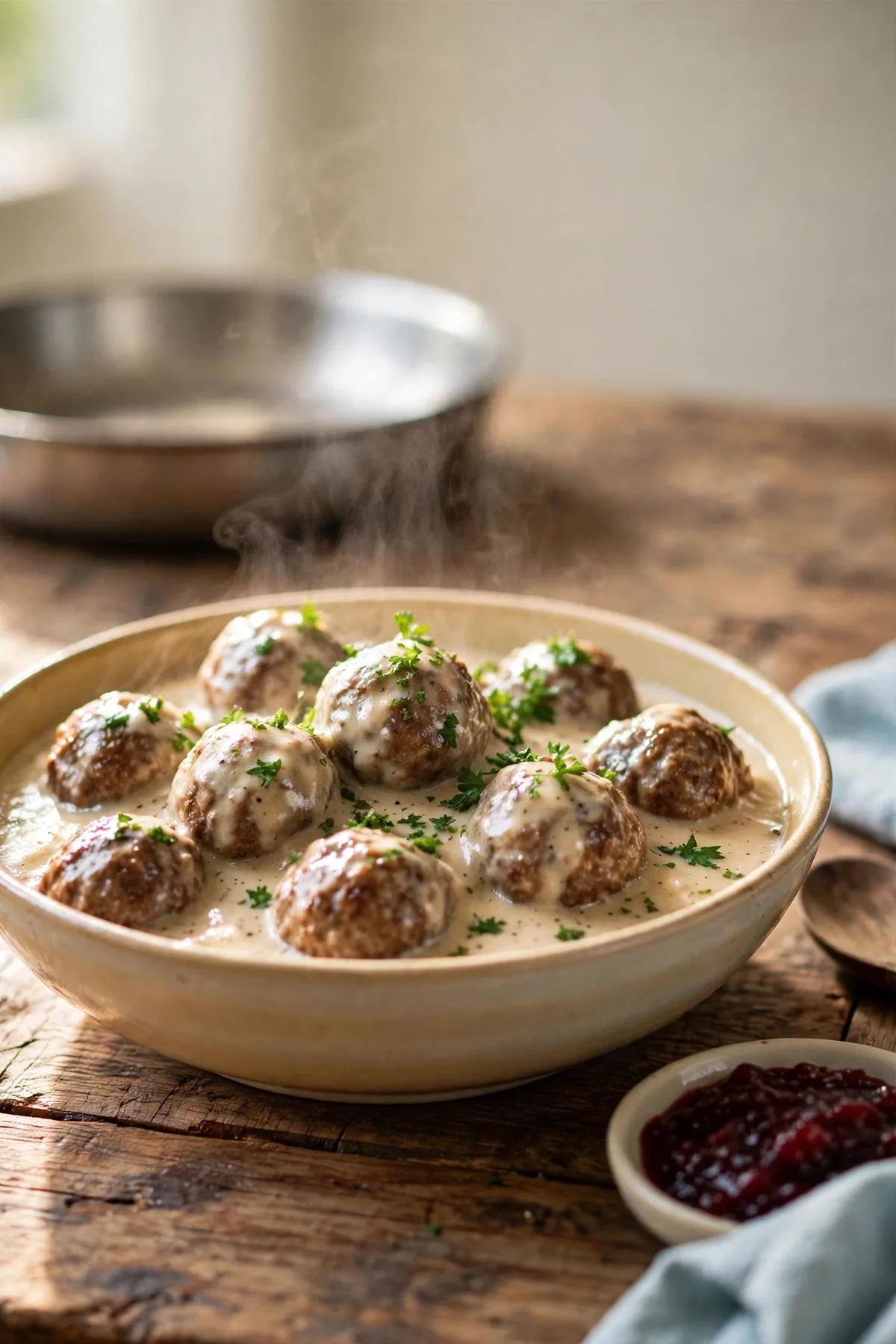
🍽 SWEDISH MEATBALLS
Ingredients
Equipment
Method
- Soak breadcrumbs in milk 5 minutes. Combine with beef, pork, egg, onion, allspice, nutmeg, salt, and pepper. Mix gently just until combined.
- Shape into 1-inch meatballs. Brown in batches in 2 tbsp butter over medium-high heat, 2–3 minutes per side. Remove to a plate.
- In the same pan, melt remaining butter, scraping up browned bits. Whisk in flour, cook 1–2 minutes until lightly golden.
- Gradually whisk in beef broth. Return meatballs to the pan. Cover and simmer 8–10 minutes until cooked through and gravy thickens.
- Remove from heat. Stir in sour cream. Taste and adjust seasoning. Serve with lingonberry jam.
Notes
Make up to 2 days ahead and refrigerate; reheat gently on low with a splash of broth. Freeze meatballs and gravy together up to 3 months; thaw overnight before reheating. Nutrition Per Serving
Calories: ~420 | Protein: 26g | Fat: 28g | Carbs: 14g | Fiber: 1g | Sodium: ~620mg Dietary Info
❌ Gluten-Free | ❌ Dairy-Free | ❌ Paleo | ❌ Keto | ❌ Vegetarian | ❌ Vegan Did You Make This? Tag @thegildedskillet and leave a ⭐⭐⭐⭐⭐ rating below.
— David | The Gilded Skillet