
Best Potato Soup (Creamy, Thick, Ready in 40 Minutes)
⭐⭐⭐⭐⭐ Rate this recipe

Potato soup done right is thick and genuinely creamy, with tender potato chunks throughout and a base that never turns gluey, gummy, or watery — not a thin, bland liquid with a few potato pieces floating in it. This potato soup recipe uses a specific partial-mashing technique plus a proper roux that thickens the base smoothly without ever breaking the dairy. The entire pot comes together in one Dutch oven in just 40 minutes.
This recipe is built for anyone who’s ended up with a watery, flavorless batch and wants a version that turns out thick and genuinely comforting every single time. If you’ve ever had a soup separate into an oily mess once the cream went in, or one that tasted like plain boiled potatoes — every one of those problems has a specific fix here. It works for a cold weeknight dinner, a cozy family meal, or a potluck dish that always disappears first.
Made this already? Scroll down and leave a ⭐⭐⭐⭐⭐ rating below — it helps more than you know.
Once the thickening technique in this recipe clicks, it becomes a permanent part of the cold-weather dinner rotation.
⏱ Prep Time: 15 minutes
🕐 Cook Time: 25 minutes
⏳ Total Time: 40 minutes
🍽 Servings: 6
📊 Difficulty: Easy
💰 Estimated Cost: ~$10 total / ~$1.67 per serving
🥔 Main Item: Creamy potato soup loaded with bacon and cheddar
Table of Contents
Why This Potato Soup Recipe Works
- Partially mashing the potatoes instead of leaving them whole or blending them completely. Most recipes go one extreme or the other, either leaving large chunks that never thicken the broth or blending everything smooth and losing all texture. This recipe mashes about half the potatoes right in the pot, which thickens the base naturally while keeping real chunks throughout.
👉 another easy comfort food recipe here
- A proper roux cooked before adding liquid. Here’s the truth: flour stirred directly into hot broth clumps and never fully dissolves. Cooking butter and flour together first produces a smooth, lump-free base.
- Cream and cheese added off heat, gradually. Dumping cold dairy into boiling soup is the fastest way to curdle it. Reducing the heat and adding it slowly keeps the texture smooth and glossy.
- Cooking the bacon separately and using its rendered fat. This builds a smoky depth into the soup’s base that plain butter alone can’t replicate.
- Simmering the potatoes just until fork-tender, not longer. Overcooked potatoes break down too much and can make the final texture pasty instead of pleasantly thick.
Understanding the Key Ingredient

The one step worth never skipping in this recipe, no matter how rushed the night is, is the key technique in Step 3. Skipping it is the most common reason the soup stays thin instead of properly thick. Followed properly, the result comes out right every time.
Why Russet Potatoes Are the Right Choice
Russet potatoes contain significantly more starch than waxy varieties, and that starch is exactly what helps thicken the soup naturally once a portion of the potatoes are mashed directly in the pot. Their dry, fluffy texture when cooked also breaks down smoothly into the broth rather than staying firm and chunky the way a waxier potato would. Additionally, russets absorb the surrounding broth and seasoning well, so even the chunks that stay whole end up carrying plenty of flavor rather than tasting bland.
Potato Comparison Guide
| Type | Starch Content | Texture Result | Best For |
|---|---|---|---|
| Russet | High | Thickens naturally, tender chunks | Best overall result |
| Yukon Gold | Medium | Creamier, slightly less thickening power | Good alternative |
| Red potatoes | Low | Waxy, stays firm, doesn’t thicken well | Not recommended as the main potato |
| Fingerling | Low-medium | Firmer, more rustic | Works for a chunkier style |
How to Choose the Best at the Store
- Look for firm potatoes with no soft spots. Soft or sprouting potatoes can taste slightly off once cooked.
- Choose similarly sized potatoes. This helps them all cook through at the same rate once diced.
- Starchy varieties feel lighter for their size. A dense, heavy-feeling potato often carries more moisture than starch.
- Avoid any with green tinges. Green spots indicate light exposure and can taste bitter.
- Buy slightly more than the recipe calls for. A little extra ensures the soup has plenty of body.
How Much Do You Need?
| Servings | Russet Potatoes | Chicken Broth |
|---|---|---|
| 4 | 2 lbs | 4 cups |
| 6 | 3 lbs | 6 cups |
| 8 | 4 lbs | 8 cups |
| 10+ | 5 lbs | 10 cups |
Double Batch — How to Scale This Potato Soup Recipe
Doubling works cleanly as long as you use a large enough pot — an 8-quart Dutch oven or stockpot handles a doubled batch without overflowing. Make the roux in the same proportional increase, since the thickening ratio doesn’t change with volume. Mash slightly less than half the potatoes proportionally if doubling, tasting the texture as you go, since a larger batch can thicken a bit differently than a single batch.
Ingredients You’ll Need

This recipe uses straightforward pantry and fresh ingredients. Here is everything broken down.
Main Ingredients
- Russet potatoes — 3 lbs, peeled and diced. The star of the dish. High starch content thickens the base naturally.
- Bacon — 6 slices, diced. Adds smoky depth and a crispy topping.
- Butter — 4 tablespoons. Used for the roux that thickens the soup.
- All-purpose flour — ¼ cup. Combined with butter to create a smooth, lump-free thickener.
- Chicken broth — 6 cups. The liquid base. Low-sodium preferred so you control salt.
- Heavy cream — 1 cup. Added at the end for the rich, creamy finish.
- Yellow onion — ½ cup, diced. Builds the aromatic base alongside the celery.
- Celery — ¼ cup, diced. Adds subtle aromatic depth.
Supporting Ingredients
- Garlic — 2 cloves, minced. Adds depth alongside the onion and celery.
- Shredded cheddar cheese — 1½ cups. Melts into the soup for a classic loaded flavor.
- Salt and black pepper — to taste.
- Sour cream, sliced green onion, and extra cheddar — for garnish.
Optional Additions Table
| Add-In | Amount | Effect |
|---|---|---|
| Diced ham | 1 cup | Adds extra protein and a smokier flavor |
| Fresh chives | 2 tbsp | Adds a fresh, herbal garnish |
| Hot sauce | 1 tsp | Adds mild heat throughout |
| Worcestershire sauce | 1 tsp | Adds deeper savory umami |
| Corn kernels | 1 cup | Adds sweetness and texture contrast |
Complete Substitutions Reference
| Original | Substitution | Notes |
|---|---|---|
| Heavy cream | Half-and-half | Lighter, still creamy result |
| Bacon | Turkey bacon | Leaner, slightly milder smoky flavor |
| Russet potatoes | Yukon gold potatoes | Slightly creamier, less thickening power |
| Chicken broth | Vegetable broth | Works fine for a vegetarian version with the bacon omitted |
| Cheddar cheese | Monterey Jack or a blend | Similar meltability, milder flavor |
What NOT to Add to This Potato Soup Recipe
❌ Blending the soup completely smooth — loses the hearty, chunky texture that defines this style of soup
❌ Leaving all the potatoes whole with none mashed — the soup stays thin and watery without any natural thickening
❌ Boiling the soup after cream and cheese are added — causes the dairy to curdle and separate
❌ Flour added directly to hot broth without a roux — clumps instead of dissolving smoothly
❌ Overcooking the potatoes past fork-tender — produces a pasty, less appealing texture once mashed in
❌ Skipping the bacon fat and using plain butter only — misses out on a meaningful layer of smoky flavor
Equipment You’ll Need
Choosing the Right Equipment for Potato Soup
| Tool | Purpose | Best For |
|---|---|---|
| Dutch oven | Cooking everything | Even heat, holds a full batch easily |
| Large stockpot | Cooking everything | Works just as well for larger batches |
| Potato masher | Partially mashing | Quick, controlled texture |
| Whisk | Making the roux | Smooth, lump-free thickening |
Other Tools That Actually Matter
A Dutch oven holds heat evenly, which matters for cooking the roux without scorching it. A potato masher gives better control over how much of the soup gets mashed compared to an immersion blender, which can easily over-blend and remove all the texture. A whisk is essential for working the roux smoothly before any broth is added.
No Potato Masher? Alternatives That Work for This Potato Soup Recipe
- Large fork — mash a portion of the potatoes directly against the side of the pot
- Immersion blender, used briefly — pulse for just a few seconds in one spot rather than blending the entire pot
- Back of a wooden spoon — press potatoes against the pot’s side to break some of them down
How to Make Potato Soup — Step by Step
Six steps. Most take under five minutes each.
Step 1 — Cook the Bacon

Cook the diced bacon in a Dutch oven over medium heat for 6–7 minutes, until crispy. Remove with a slotted spoon to a paper-towel-lined plate, leaving the rendered fat in the pot. Using this fat as the base for the next step, rather than draining it and starting with plain butter, is what builds real smoky depth into the soup.
💡 Pro Tip: Don’t rush the bacon — fully crisp pieces hold their crunch better as a topping than ones pulled slightly underdone.
Step 2 — Sauté the Vegetables and Make the Roux
Add the diced onion and celery to the bacon fat and cook for 4–5 minutes until softened. Add the garlic and cook 30 seconds more. Add the butter to melt, then whisk in the flour and cook for 1–2 minutes, stirring constantly, until it smells slightly nutty and turns pale golden.
💡 Pro Tip: Cook the roux just until it smells toasty, not deeply browned — a lightly golden roux thickens effectively without adding a bitter flavor.
Step 3 — Add Broth and Potatoes, Then Partially Mash (The Key Step)
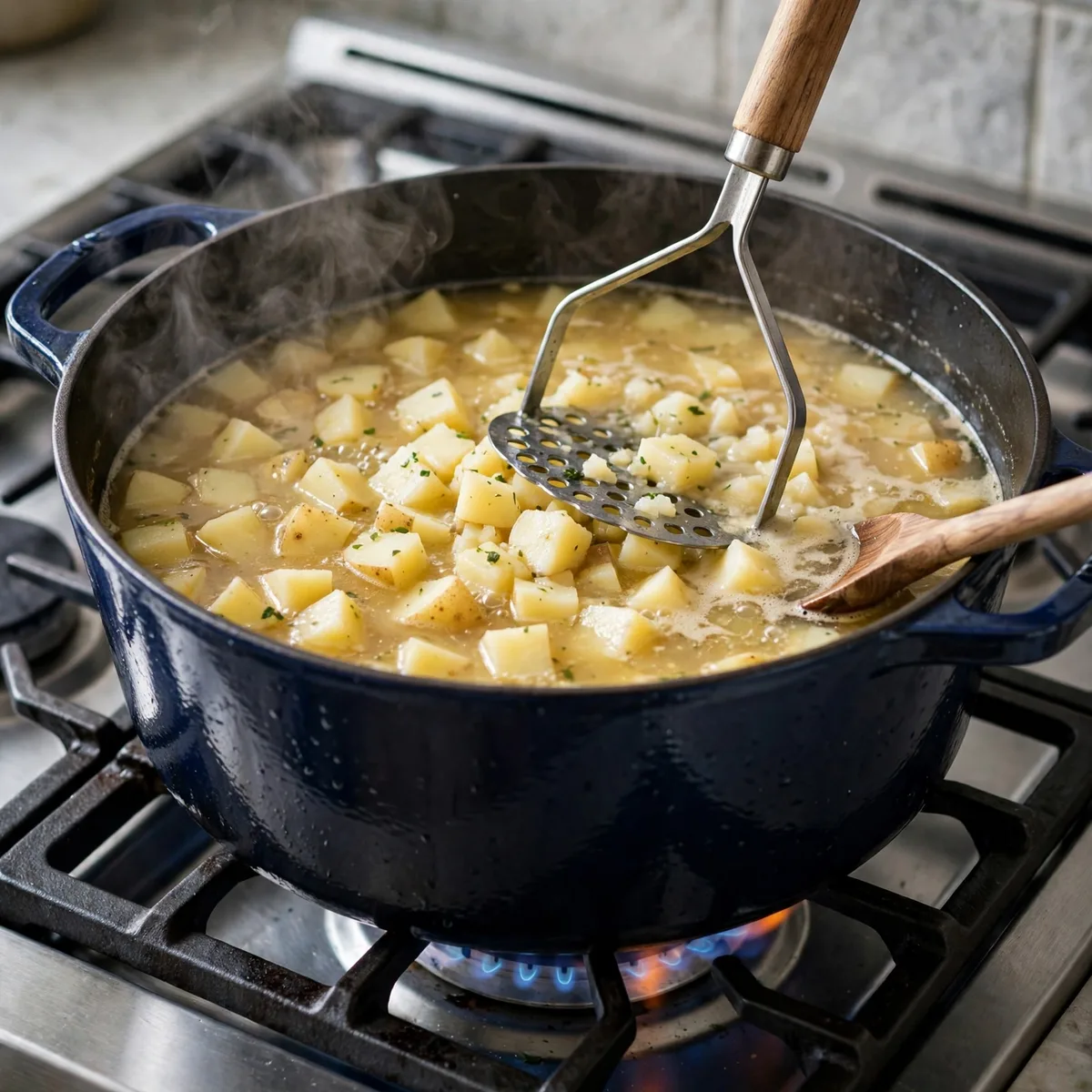
Gradually whisk in the chicken broth until smooth. Add the diced potatoes, bring to a boil, then reduce to a simmer and cook for 15–18 minutes, until fork-tender. Using a potato masher, mash about half the potatoes directly in the pot, leaving the rest in distinct chunks. Most recipes skip this step entirely, but this partial mashing is exactly what thickens the soup naturally while still leaving real texture throughout. Every batch where all the potatoes were left whole came out noticeably thinner and less satisfying.
👉 another easy family dinner here
💡 Pro Tip: Mash directly against the side of the pot rather than lifting potatoes out first — this keeps the process quick and doesn’t dirty an extra bowl.
Step 4 — Add Cream and Cheese
Reduce the heat to low. Stir in the heavy cream, then add the shredded cheddar gradually, in small handfuls, stirring until each addition melts before adding more. Adding the dairy off a low simmer rather than a full boil is what keeps the soup smooth instead of curdled.
💡 Pro Tip: Keep the heat genuinely low here — rushing this step is the fastest way to end up with a grainy, separated texture.
Step 5 — Season and Taste
Taste the soup and adjust salt and pepper as needed. The flavor concentrates as the soup simmers, so tasting at this final stage catches anything that needs adjusting before serving.
Step 6 — Ladle and Garnish

Ladle into bowls and top generously with the reserved crispy bacon, extra shredded cheddar, sliced green onion, and a dollop of sour cream. Serve immediately while hot.
How to Tell When It’s Done
Every stove runs a little differently, so check the potatoes closely on the first attempt with this recipe. Once it’s been made once, the exact timing for that specific stove becomes easy to predict.
Primary Doneness Test
The potatoes are done when a fork slides in with no resistance. The soup itself is ready once the cheese has fully melted into a smooth texture and the overall consistency coats the back of a spoon rather than running off thin.
Doneness Guide
| Indicator | What It Means | What to Do |
|---|---|---|
| Potatoes still firm in the center | Under-cooked | Simmer 3–5 more minutes |
| Potatoes fork-tender | Perfectly done | Proceed to mashing a portion |
| Soup still thin after mashing | Not enough potatoes mashed | Mash a bit more directly in the pot |
| Soup coats the back of a spoon | Perfectly done | Finish with cream and cheese |
| Cheese looks grainy or clumped | Added too fast or heat too high | Reduce heat and stir patiently |
| Soup too thick | Too much potato mashed or reduced too long | Thin with a splash more broth |
Visual Signs It’s Done
- The potatoes look tender and slightly translucent at the edges rather than opaque and firm
- The broth has visibly thickened once a portion of potatoes is mashed in
- The cheese has melted into a completely smooth, glossy texture with no visible graininess
- The soup coats a spoon in an even layer rather than running off thin
- The aroma has shifted from raw onion and celery to a warm, cheesy, savory smell
It’s Not Right — What to Do Now
- Soup turned out thin: Not enough potatoes were mashed, or the roux wasn’t cooked long enough — mash more potatoes directly in the pot
- Soup curdled: Dairy was boiled after being added — always keep heat low once cream and cheese go in
- Potatoes are mushy throughout: Simmered too long before mashing — check doneness a few minutes earlier next time
- Flavor tastes flat: Not enough salt, or the bacon fat wasn’t used as the cooking base — taste and adjust, and always start with bacon fat for the vegetables
How to Get the Right Consistency

Getting the right thick, chunky consistency comes down to the mashing technique more than any single ingredient. There are three approaches depending on your preference.
Method 1 — Partial Mash Method (Standard Recipe)
Mash about half the potatoes directly in the pot, leaving the rest in distinct chunks. This is the method used throughout this recipe and produces the most balanced texture, thick but still chunky.
Method 2 — Fully Smooth Method (No Chunks)
Blend the entire pot of cooked potatoes and broth with an immersion blender before adding the dairy, producing a completely smooth, velvety soup. This works well for anyone who prefers a creamier, more uniform texture without any potato pieces.
Method 3 — Chunky Method (Minimal Mashing)
Mash only a small portion, roughly a quarter of the potatoes, leaving most of the soup noticeably chunkier. This produces a heartier, more stew-like result that’s less thickened than the standard version.
Troubleshooting Quick Reference
| Problem | Cause | Fix |
|---|---|---|
| Too thin | Not enough potato mashed, or roux under-cooked | Mash more potato directly in the pot |
| Too thick | Too much potato mashed or reduced too long | Thin with a splash more broth |
| Grainy, broken texture | Cheese or cream added too fast at too high heat | Reduce heat, add slowly |
| Flat flavor | Bacon fat wasn’t used for the base, or under-salted | Always start with bacon fat and taste before serving |
What to Serve With It
Classic Pairings That Always Work
- Crusty bread or dinner rolls — perfect for scooping up every last bit of the creamy soup
- A simple green salad — adds freshness alongside the rich, hearty soup
- Grilled cheese sandwiches — a classic, indulgent pairing for a cheesy soup
- Oyster crackers — a traditional, crunchy addition to any creamy soup
- Extra bacon on the side — for anyone who wants even more of the smoky flavor
Comfort Food Pairings
- Cornbread — a slightly sweet pairing that balances the savory soup
- BLT sandwiches — leans into the same bacon flavor already in the soup
- Baked potato wedges — a hearty, starchy pairing alongside an already potato-rich meal
- Buttermilk biscuits — a Southern-leaning comfort pairing
Lighter Options
- Steamed green beans — a simple vegetable side that doesn’t compete with the rich flavor
- A side of fresh fruit — balances the richness with something light and sweet
- Smaller portions with extra salad — a simple way to lighten the overall meal
6 Ways to Use Leftover Potato Soup

Leftover soup can become several completely different meals. Here are 6 ways to use it.
Potato Soup Baked Potato Topping
What you need: Leftover soup, baked potatoes.
How to assemble: Split open baked potatoes and ladle the leftover soup directly over the top.
One tip: Chop any large potato chunks in the leftovers smaller first — it distributes more evenly over the split potato.
Potato Soup Casserole
What you need: Leftover soup, cooked egg noodles, extra cheese.
How to assemble: Combine leftover soup with cooked noodles in a baking dish, top with extra cheese, and bake at 375°F for 20 minutes until bubbly.
One tip: This transforms the soup into a heartier, more filling dish with very little extra effort.
Potato Soup Dip
What you need: Leftover soup, tortilla chips or crackers.
How to assemble: Reheat leftover soup until thick, then serve warm as a dip alongside sturdy chips or crackers.
👉 try another easy appetizer recipe here
One tip: The thicker the leftovers, the better this works — a thin batch won’t cling to the chips well.
Potato Soup Shepherd’s Pie Base
What you need: Leftover soup, ground beef, shredded cheese.
How to assemble: Brown ground beef, layer leftover soup over it in a baking dish, top with cheese, and bake at 375°F for 20 minutes.
One tip: Drain any excess liquid from the leftovers first if they’ve thinned out in storage.
Potato Soup Stuffed Bread Bowl
What you need: Leftover soup, round bread loaves, hollowed.
How to assemble: Hollow out small round bread loaves and ladle warmed leftover soup directly inside.
One tip: Toast the hollowed bread bowl briefly before filling to help it hold up to the warm soup longer.
Potato Soup Pasta Sauce
What you need: Leftover soup, cooked pasta.
How to assemble: Toss leftover soup with hot cooked pasta, thinning with a splash of milk if needed to coat evenly.
One tip: This transforms a smaller amount of leftovers into a completely different, heartier meal with very little extra effort.
Storage, Freezing and Reheating Guide
Refrigerator Storage (Up to 4 Days)
This recipe stores in the refrigerator for up to 4 days in an airtight container. The soup thickens further once chilled, which is completely normal — gentle reheating with a splash of broth restores the original creamy consistency.
Can You Make This Ahead of Time?
Yes — this recipe reheats well, making it a solid make-ahead option. Make the full batch up to 2 days before you need it, refrigerate, and reheat gently on the stovetop, stirring frequently and adding a splash of broth if needed.
Freezer Storage (Not Recommended)
This recipe does not freeze particularly well, since the dairy-based broth can separate and turn grainy once thawed, and the potatoes themselves can take on a slightly mealy texture. If freezing is necessary, freeze the soup before adding the cream and cheese, then add those fresh during reheating for a better final texture.
This Recipe Works Best Made Fresh or Reheated Within a Few Days
Unlike some soups, this one genuinely holds its texture best within the first few days after cooking rather than after an extended freezer stay. For meal prep, making a batch early in the week and portioning it into the fridge works more reliably than freezing.
👉 see more easy make-ahead dinners here
How to Reheat Without Ruining It
| Method | Setting | Time | Notes |
|---|---|---|---|
| Stovetop | Low | 8–10 min | Best method; stir frequently and add a splash of broth |
| Microwave | 50% power | 2–3 min | Stir every 60 seconds to prevent separation |
| Slow cooker | Low | 1–2 hrs | Good for keeping a large batch warm |
Weekly Prep Strategy
Make a full batch at the start of the week and portion into containers for quick reheating. This recipe reheats well enough within a few days to be a genuinely practical dinner for multiple nights without remaking it from scratch.
Recipe Variations Worth Trying
Same technique. Completely different flavor profiles. Master this base recipe first — then try one of these.
Most Popular — Loaded Baked Potato Soup
Increase the bacon, cheese, and sour cream garnish quantities significantly, essentially mimicking a fully loaded baked potato in soup form. This fully loaded version makes this one of the most requested variations of this recipe at any family gathering.
International — Irish Colcannon-Inspired Potato Soup
Stir in 2 cups of sautéed shredded cabbage or kale along with the potatoes, following the flavor profile of the traditional Irish colcannon dish adapted into soup form. This version adds a heartier, more vegetable-forward dimension to the classic creamy base.
Lighter — Reduced Cream Version
Replace the heavy cream with whole milk and use a reduced-fat cheddar. Therefore, you get a noticeably lighter version that still tastes creamy and satisfying for this recipe without quite as much richness.
Quick Shortcut — Instant Potato Shortcut
Use 2 cups of frozen diced hash browns instead of fresh potatoes, adding them directly to the broth — they cook through faster than raw diced potatoes. This cuts the simmer time down by several minutes while still delivering a hearty, potato-forward result.
Fresh and Elevated — Potato Soup with Caramelized Onions
Caramelize the diced onion slowly over low heat for 15–20 minutes before proceeding with the rest of the recipe, rather than a quick 4–5 minute sauté. The deeply caramelized onion adds a rich, sweet complexity that elevates this comfort food classic into something more sophisticated.
Nutrition Information
Per Serving Breakdown (Based on 6 Servings)
| Nutrient | Amount | % Daily Value |
|---|---|---|
| Calories | ~420 | — |
| Total Fat | 26g | 33% |
| Saturated Fat | 14g | 70% |
| Cholesterol | 85mg | 28% |
| Sodium | 720mg | 31% |
| Total Carbohydrates | 32g | 12% |
| Dietary Fiber | 3g | 11% |
| Total Sugars | 4g | — |
| Protein | 16g | 32% |
| Vitamin C | 20% DV | — |
According to USDA FoodData Central, potatoes provide a meaningful source of potassium and vitamin C per serving — meaning this recipe contributes real nutritional value alongside its rich, comforting flavor.
Dietary Compatibility
| Diet | Compatible | Notes |
|---|---|---|
| Gluten-Free | ❌ | Use a cornstarch slurry in place of the flour roux to adapt |
| Dairy-Free | ❌ | Requires dairy-free cream and cheese substitutes to adapt |
| Paleo | ❌ | Flour, dairy, and potatoes all excluded |
| Keto | ❌ | Omit potatoes and use cauliflower, plus a low-carb thickener |
| Vegetarian | ❌ | Omit the bacon and use olive oil, replacing chicken broth with vegetable broth |
| Vegan | ❌ | Same substitution plus dairy-free cream and cheese needed |
To reduce sodium in this recipe, use low-sodium chicken broth and reduce the added salt — the cheddar cheese and bacon already carry meaningful sodium on their own.
8 Mistakes That Ruin Potato Soup
Every mistake with this potato soup recipe is fixable. Know them before you start — not after.
❌ Mistake 1: Leaving All the Potatoes Whole
Why it happens: Not realizing mashing a portion matters for thickness. What goes wrong: The soup stays thin and watery without any natural thickening from the potato starch. The fix: Mash about half the potatoes directly in the pot once they’re fork-tender.
❌ Mistake 2: Boiling the Soup After Dairy Is Added
Why it happens: Not adjusting the heat down after adding cream and cheese. What goes wrong: High heat causes the dairy to curdle or separate, ruining the smooth texture. The fix: Always reduce to low heat before adding cream and cheese, and keep it there.
❌ Mistake 3: Skipping the Roux
Why it happens: Trying to thicken with flour added directly to the liquid. What goes wrong: Flour added straight to hot liquid clumps instead of dissolving smoothly, leaving lumps throughout. The fix: Always cook butter and flour together into a proper roux before adding any liquid.
❌ Mistake 4: Draining the Bacon Fat Instead of Using It
Why it happens: Trying to make the dish leaner. What goes wrong: The soup misses out on a meaningful layer of smoky flavor that plain butter alone can’t provide. The fix: Sauté the onion and celery in the reserved bacon fat instead of draining it away.
❌ Mistake 5: Overcooking the Potatoes
Why it happens: Not checking doneness before moving to the next step. What goes wrong: Potatoes that are already fully soft turn pasty once mashed, rather than producing a pleasantly thick texture. The fix: Check potatoes at the fork-tender stage and move to mashing promptly.
❌ Mistake 6: Using Pre-Shredded Cheese
Why it happens: Convenience, since it’s already shredded. What goes wrong: The anti-caking starch coating on bagged cheese produces a slightly grainy melt instead of a smooth one. The fix: Grate a block of cheese yourself right before using it.
❌ Mistake 7: Not Seasoning Adequately
Why it happens: Assuming the bacon and cheese will carry enough flavor on their own. What goes wrong: Under-seasoned broth tastes flat even with flavorful toppings on top. The fix: Taste the soup directly before adding toppings and adjust salt and pepper as needed.
❌ Mistake 8: Reheating at Too High a Temperature
Why it happens: Wanting leftovers hot quickly. What goes wrong: High heat reheating can cause the previously smooth cheese and cream to separate and turn grainy. The fix: Reheat gently over low heat, stirring frequently, rather than blasting it on high.
Frequently Asked Questions
Why is my potato soup gluey instead of creamy?
The most common cause is blending or mashing too many of the potatoes too aggressively, which releases excess starch and produces a gluey, paste-like texture instead of a pleasantly thick one. Using an immersion blender for too long throughout the entire pot, rather than mashing just a portion with a potato masher, is the typical culprit. Mashing only about half the potatoes, directly with a masher rather than a blender, solves this issue in nearly every batch of this potato soup recipe.
Should you mash or blend potato soup?
Mashing a portion of the potatoes directly in the pot, rather than fully blending the entire batch, produces the best balance of thickness and texture for this recipe. Fully blending removes all the chunky texture that makes potato soup feel hearty and satisfying, while leaving everything whole means the soup never thickens naturally. A potato masher gives more control over exactly how much gets broken down compared to a blender.
What potatoes are best for potato soup?
Russet potatoes are the best choice for this recipe since their high starch content helps thicken the soup naturally once a portion is mashed, while their fluffy texture breaks down smoothly rather than staying firm. Yukon gold potatoes work as a substitute and produce a slightly creamier result, though with somewhat less natural thickening power. Waxy potatoes like red potatoes are not recommended as the main potato, since they stay firm and don’t contribute to thickening the broth.
Can you make potato soup ahead of time?
Yes — this potato soup recipe reheats reasonably well, making it a solid option for making ahead. Make the full batch up to 2 days before you need it, store covered in the refrigerator, and reheat gently on the stovetop over low heat, stirring frequently and adding a splash of broth if the texture has thickened too much.
What do you serve with potato soup?
Crusty bread or dinner rolls are the most classic pairing, perfect for scooping up every bit of the creamy soup. A simple green salad adds freshness alongside the rich, hearty flavor. For a more indulgent spread, grilled cheese sandwiches or extra bacon on the side both lean fully into the comfort food theme that inspired the soup in the first place.
Can you freeze potato soup?
Freezing isn’t ideal for this recipe once it’s fully made, since the dairy-based broth can separate and turn grainy after thawing, and the potatoes themselves can take on a slightly mealy texture. If freezing is necessary, the best approach is to freeze the soup before adding the cream and cheese, then stir those in fresh during reheating for a noticeably better final texture than freezing the complete dish.
How long does potato soup last in the fridge?
This potato soup recipe lasts up to 4 days in the refrigerator stored in an airtight container. The soup thickens further once chilled, which is completely normal, and gentle reheating with a splash of extra broth restores most of its original creamy consistency.
Can you make potato soup in a slow cooker?
Yes — cook the bacon and make the roux on the stovetop first, since a slow cooker doesn’t handle either of those steps well, then transfer everything including the broth and potatoes to the slow cooker. Cook on low for 6–7 hours until the potatoes are tender, then mash a portion directly in the slow cooker and stir in the cream and cheese gradually during the last 30 minutes on low heat.
Why does my potato soup taste bland?
The most common cause is not tasting and seasoning the broth itself before adding toppings, since salt and pepper whisked directly into the soup distribute far more evenly than seasoning sprinkled only on top. Draining away the bacon fat instead of using it to sauté the vegetables also removes a meaningful layer of flavor that plain butter alone can’t replace. Tasting the soup before serving and starting with bacon fat both help catch a bland batch before it’s too late to fix.
You Might Also Like
Best Breakfast Casserole

🍽 POTATO SOUP
Ingredients
Equipment
Method
- Cook the diced bacon in a Dutch oven over medium heat for 6–7 minutes, until crispy. Remove with a slotted spoon to a paper-towel-lined plate, leaving the rendered fat in the pot.
- Add the diced onion and celery to the bacon fat and cook for 4–5 minutes until softened. Add the garlic and cook 30 seconds more. Add the butter to melt, then whisk in the flour and cook for 1–2 minutes, stirring constantly, until it smells slightly nutty and turns pale golden.
- Gradually whisk in the chicken broth until smooth. Add the diced potatoes, bring to a boil, then reduce to a simmer and cook for 15–18 minutes, until fork-tender. Using a potato masher, mash about half the potatoes directly in the pot, leaving the rest in distinct chunks.
- Reduce the heat to low. Stir in the heavy cream, then add the shredded cheddar gradually, in small handfuls, stirring until each addition melts before adding more.
- Taste the soup and adjust salt and pepper as needed.
- Ladle into bowls and top generously with the reserved crispy bacon, extra shredded cheddar, sliced green onion, and a dollop of sour cream. Serve immediately while hot.