Best French Onion Soup (Rich Broth, Ready in 75 Minutes)
⭐⭐⭐⭐⭐ Rate this recipe

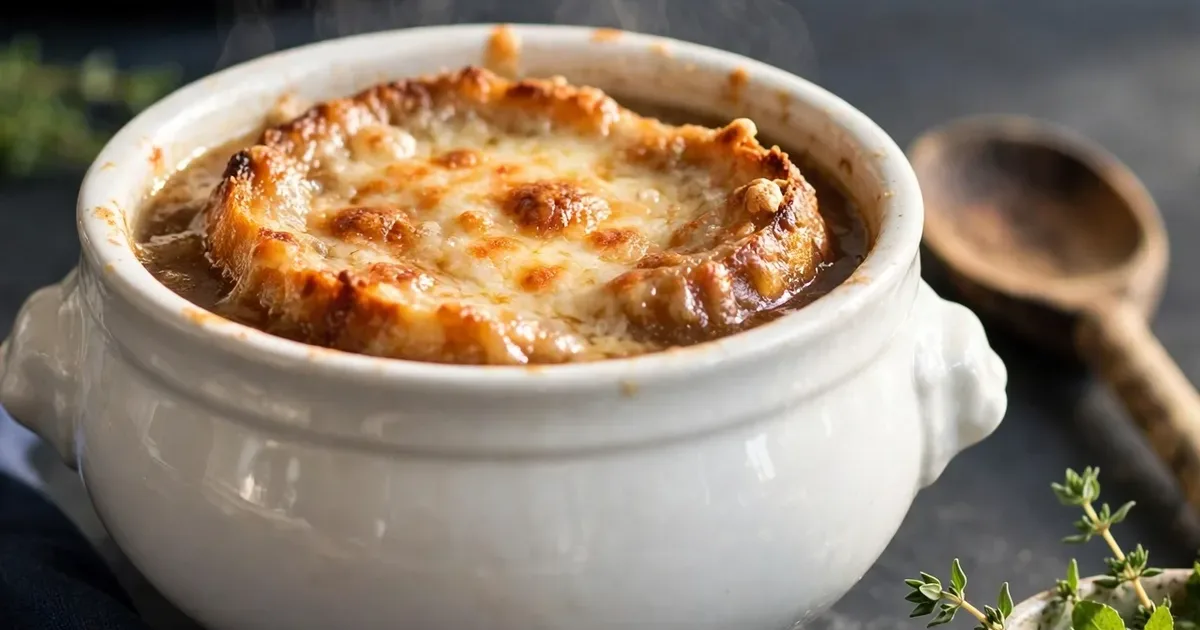
French onion soup done right has a deeply caramelized, almost mahogany-colored onion base, a rich beef broth with real depth, and a broiled gruyere topping that’s genuinely bubbly and golden — not pale, undercooked onions in a thin, forgettable broth with a sad slice of melted cheese on top. This French onion soup recipe uses a specific low, patient caramelization method plus a proper deglazing technique that builds flavor in layers instead of relying on broth alone. The process takes about 75 minutes total, most of it hands-off time while the onions slowly break down.
This recipe is built for anyone who’s rushed the onions and ended up with a flat, watery soup instead of the deep, savory bowl served at a good bistro. If you’ve ever pulled a pot of pale, undercooked onions off the heat too early, or watched cheese slide right off a soggy piece of bread — every one of those problems has a specific fix here. It works for a cold-weather dinner party starter, a cozy weeknight main, or a make-ahead dish that only improves with a day in the fridge.
Made this already? Scroll down and leave a ⭐⭐⭐⭐⭐ rating below — it helps more than you know.
Once the caramelization step is done right, the thin, brown-colored version most places serve stops being acceptable.
⏱ Prep Time: 15 minutes
🕐 Cook Time: 60 minutes
⏳ Total Time: 75 minutes
🍽 Servings: 4
📊 Difficulty: Moderate
💰 Estimated Cost: ~$11 total / ~$2.75 per serving
🧅 Main Item: Deeply caramelized onions in rich beef broth topped with broiled gruyere
Table of Contents
Why This French Onion Soup Recipe Works
- Low, slow caramelization instead of rushing with high heat. Most people crank the heat to speed things along, which browns the onions unevenly and can scorch them before they’re actually sweet. This recipe uses medium-low heat and real patience, which is what builds genuine depth instead of a bitter, half-caramelized result.
- Deglazing with wine partway through caramelization, not just at the end. A splash of wine stirred in midway loosens the fond building up on the pot and prevents it from burning onto the bottom, while adding acidity that balances the eventual sweetness.
- A combination of beef and chicken broth. Here’s the truth: beef broth alone can taste one-dimensional, while chicken broth alone is too light. Combining both produces a more balanced, layered flavor than either on its own.
- Toasting the baguette separately before it ever touches the soup. Bread added raw turns to mush almost instantly in hot broth. Toasting it first gives it enough structure to survive broiling without disintegrating.
- Broiling just until bubbly and spotted brown, never longer. This recipe watches closely at the broiler stage, since cheese goes from perfectly melted to burnt in under a minute.
👉 another easy cold weather recipe here
Understanding the Key Ingredient
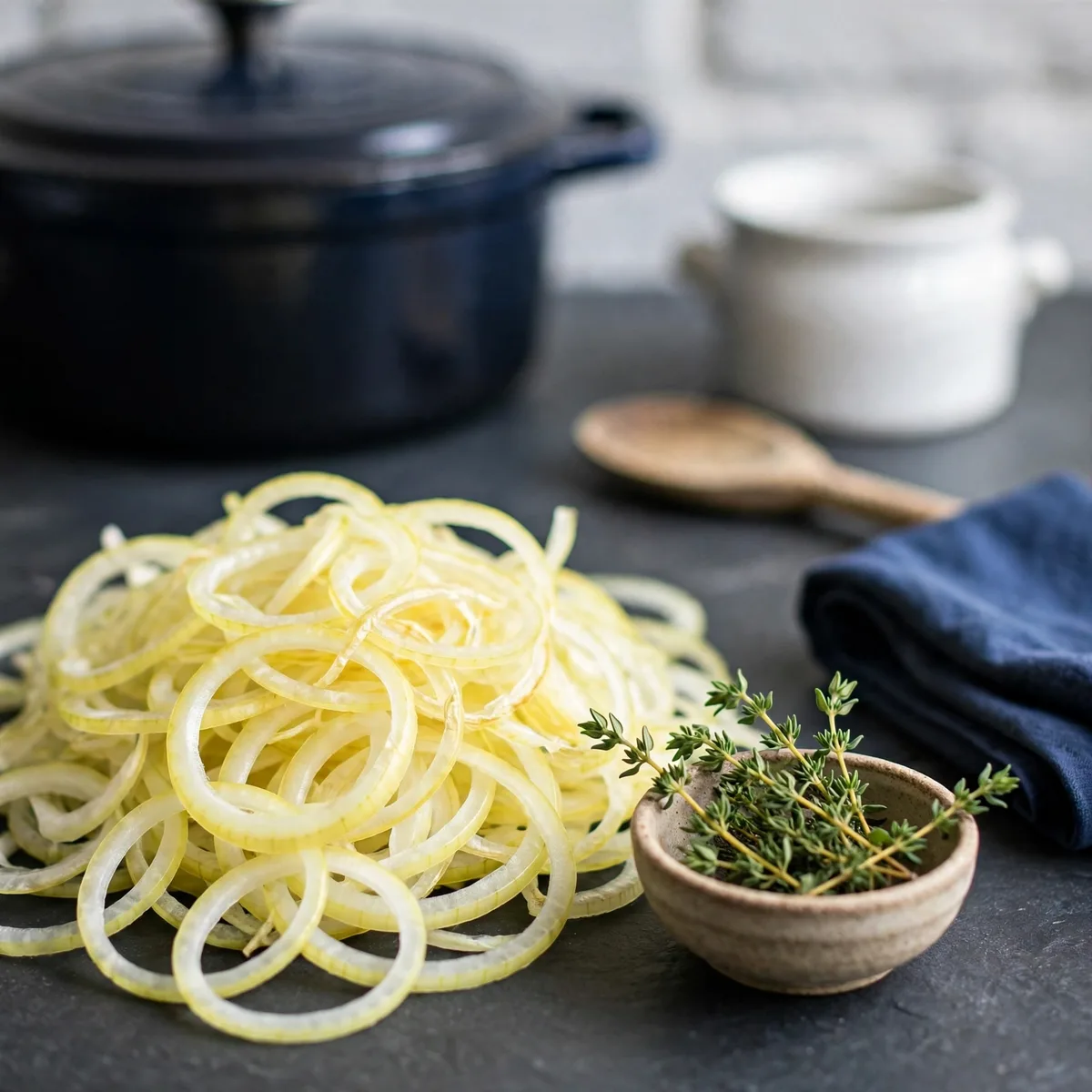
The one step worth never skipping in this recipe, no matter how rushed the evening is, is the key technique in Step 1. Skipping it is the most common reason this soup falls short of the version served at a good bistro. Followed properly, the result comes out right every time.
Why Yellow Onions Are the Right Choice
Yellow onions carry a naturally higher sugar content than red or white varieties, which is exactly what allows them to caramelize into the deep, sweet, almost jam-like texture this recipe depends on. Their structure also holds up well through the long, slow cooking process, breaking down gradually rather than turning to mush too quickly. Additionally, yellow onions have a more neutral, balanced flavor once caramelized, letting the beef broth and thyme come through rather than fighting against a sharper onion variety.
Onion Comparison Guide
| Type | Sugar Content | Caramelization Result | Best For |
|---|---|---|---|
| Yellow onions | High | Deep, sweet, balanced | Best overall result |
| Sweet onions (Vidalia) | Very high | Sweeter, slightly softer | Good alternative, less structure |
| White onions | Medium | Sharper, less complex | Acceptable but less traditional |
| Red onions | Low-medium | Can turn bitter when caramelized | Not recommended |
How to Choose the Best at the Store
- Look for firm onions with no soft spots. Soft or sprouting onions can taste slightly bitter once cooked.
- Buy a mix of sizes if needed. Larger onions yield more usable slices per piece, which can simplify the slicing step.
- Avoid pre-sliced bagged onions. These tend to dry out faster and don’t caramelize as evenly as freshly sliced ones.
- A papery, dry outer skin is a good sign. It indicates the onion has cured properly and will have better flavor.
- Buy slightly more than the recipe calls for. Onions shrink dramatically as they cook down, so starting with extra avoids coming up short.
How Much Do You Need?
| Servings | Yellow Onions | Beef Broth |
|---|---|---|
| 2 | 2 large | 2 cups |
| 4 | 4 large | 4 cups |
| 6 | 6 large | 6 cups |
| 8 | 8 large | 8 cups |
Double Batch — How to Scale This French Onion Soup Recipe
Doubling works cleanly as long as you use a large enough Dutch oven or stockpot, since a crowded pot of onions caramelizes unevenly and takes considerably longer. The caramelization time itself doesn’t shorten with a larger batch — if anything, it can take a bit longer since there’s more volume to break down. Simmering time with the broth stays roughly the same regardless of quantity.
Ingredients You’ll Need

This recipe uses straightforward pantry and fresh ingredients. Here is everything broken down.
Main Ingredients
- Yellow onions — 4 large, thinly sliced. The heart of the dish. Caramelized low and slow for real depth.
- Butter — 4 tablespoons. Used for caramelizing the onions, adding richness throughout.
- Dry white wine — ½ cup. Deglazes the pot midway through cooking and adds acidity.
- Beef broth — 4 cups. The primary liquid base, providing most of the savory depth.
- Chicken broth — 2 cups. Lightens and balances the beef broth so it doesn’t taste one-dimensional.
- Fresh thyme — 2 sprigs. A subtle herbal note that’s traditional in this soup.
- Gruyere cheese — 1½ cups, shredded. The classic melting cheese for the broiled topping.
- Baguette — 4 slices, toasted. The base for the cheese topping, toasted first for structure.
Supporting Ingredients
- Garlic — 2 cloves, minced. Added partway through for extra aromatic depth.
- All-purpose flour — 1 tablespoon. A light thickener stirred in near the end.
- Salt and black pepper — to taste.
- Bay leaf — 1 (optional). Adds a subtle background depth while simmering.
Optional Additions Table
| Add-In | Amount | Effect |
|---|---|---|
| Brandy or cognac | 2 tbsp | Adds a deeper, slightly sweet complexity |
| Worcestershire sauce | 1 tsp | Adds additional savory umami |
| Balsamic vinegar | 1 tsp | Adds brightness that balances the richness |
| Parmesan, extra | ¼ cup | Blended with gruyere for a sharper finish |
| Fresh parsley, chopped | 1 tbsp | Fresh garnish on top before serving |
Complete Substitutions Reference
| Original | Substitution | Notes |
|---|---|---|
| Gruyere cheese | Swiss cheese | Milder flavor, similar melt |
| Dry white wine | Dry sherry | Traditional alternative with similar acidity |
| Beef broth | Rich beef stock | Even deeper flavor if homemade stock is available |
| Fresh thyme | Dried thyme (½ tsp) | Less bright but still works |
| Baguette | Any crusty French bread | Works identically once toasted |
What NOT to Add to This French Onion Soup Recipe
- ❌ High heat to rush caramelization — scorches the onions before they develop real sweetness
- ❌ Raw, untoasted bread straight into the hot broth — turns to mush almost instantly
- ❌ Pre-shredded cheese from a bag — the anti-caking starch produces a less smooth melt under the broiler
- ❌ Skipping the deglazing step — leaves built-up fond to burn onto the bottom of the pot
- ❌ Broiling unattended — cheese can go from perfectly melted to burnt in under a minute
- ❌ Using only one type of broth — beef alone tastes one-dimensional; a combination produces a more balanced result
Equipment You’ll Need
Choosing the Right Equipment for French Onion Soup
| Tool | Purpose | Best For |
|---|---|---|
| Dutch oven | Caramelizing and simmering | Even heat, holds a full batch easily |
| Large heavy-bottomed pot | Caramelizing and simmering | Works just as well as a Dutch oven |
| Oven-safe soup crocks | Broiling and serving | Classic presentation, can go under the broiler |
| Sharp knife | Slicing onions | Even, consistent slices |
Other Tools That Actually Matter
A Dutch oven or other heavy-bottomed pot distributes heat evenly, which matters enormously during the long caramelization step — thin pots develop hot spots that scorch the onions unevenly. Oven-safe soup crocks are genuinely worth having for this dish, since broiling the cheese directly in individual bowls is what creates the classic bubbly, golden topping. A sharp knife makes slicing a large quantity of onions far faster and more even than a dull one.
No Oven-Safe Crocks? Alternatives That Work for This French Onion Soup Recipe
- Oven-safe ramekins — work just as well for individual broiling, just slightly smaller than traditional crocks
- A single oven-safe casserole dish — ladle the soup in, top with bread and cheese, and broil the whole dish at once
- Standard bowls with cheese toasted separately — toast the bread and cheese together on a baking sheet, then float the finished topping on top of the soup in regular bowls
How to Make French Onion Soup — Step by Step
Five steps. The caramelization step takes the longest, but the rest moves quickly.
Step 1 — Caramelize the Onions (The Key Step)
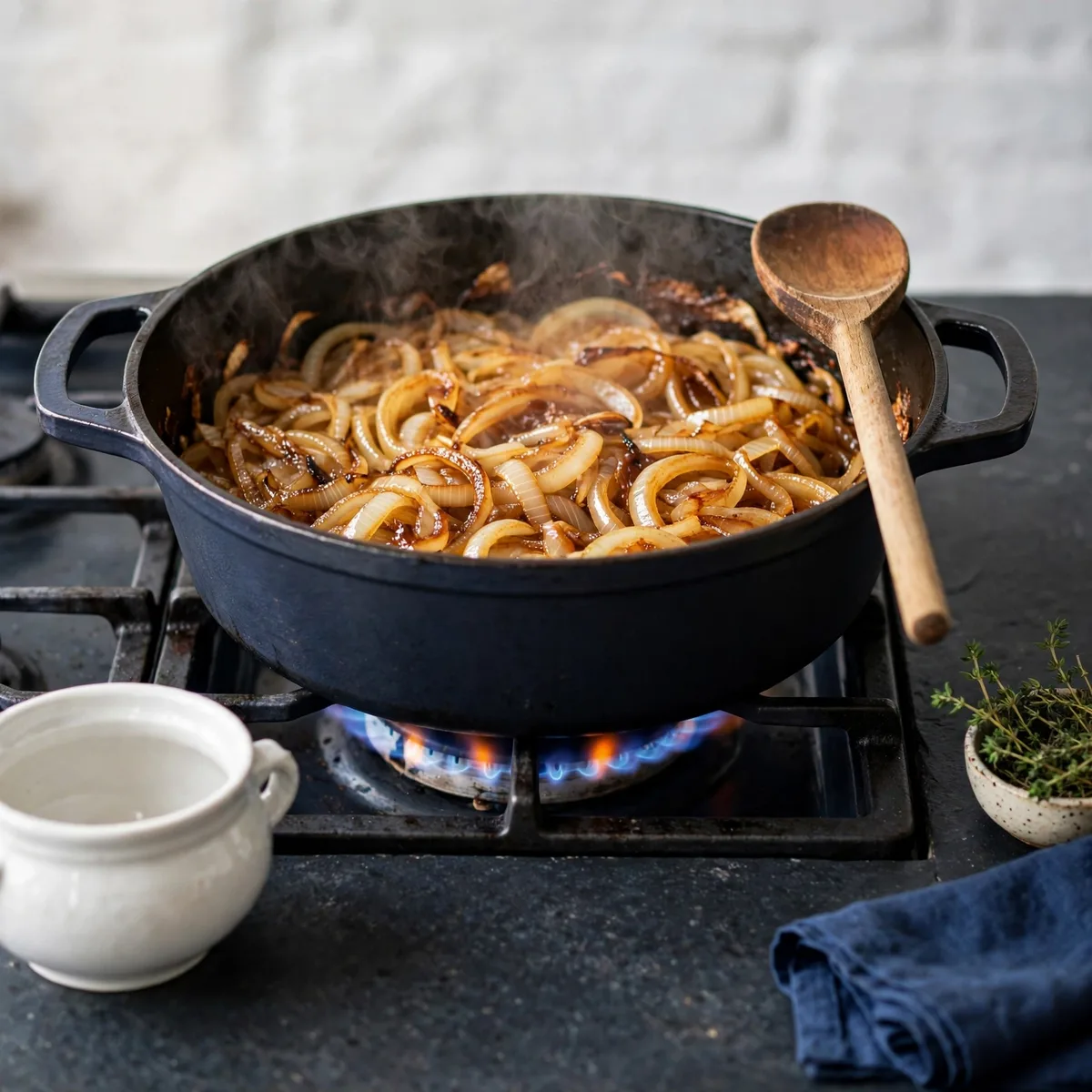
Melt the butter in a Dutch oven over medium-low heat. Add the sliced onions and a pinch of salt, stirring to coat. Cook for 45–50 minutes, stirring every 5–10 minutes, until the onions turn a deep mahogany brown and have reduced significantly in volume. Most recipes rush this step with high heat, but this French onion soup recipe depends on that long, patient caramelization for real depth of flavor that simply can’t be achieved any faster. Every batch where the heat was pushed higher to save time came out tasting flatter and slightly bitter in places.
💡 Pro Tip: If the onions start sticking or browning too fast in spots, splash in a tablespoon of water or broth to loosen the fond and even out the cooking.
Step 2 — Deglaze and Add Garlic
Partway through caramelization, around the 30-minute mark, pour in half the white wine to deglaze the pot, scraping up any browned bits stuck to the bottom. Continue cooking until the onions finish caramelizing. Add the minced garlic in the final 2 minutes of this step.
💡 Pro Tip: Deglazing midway rather than only at the very end prevents a thick layer of fond from building up and burning onto the pot over the full caramelization time.
Step 3 — Add Broth and Simmer
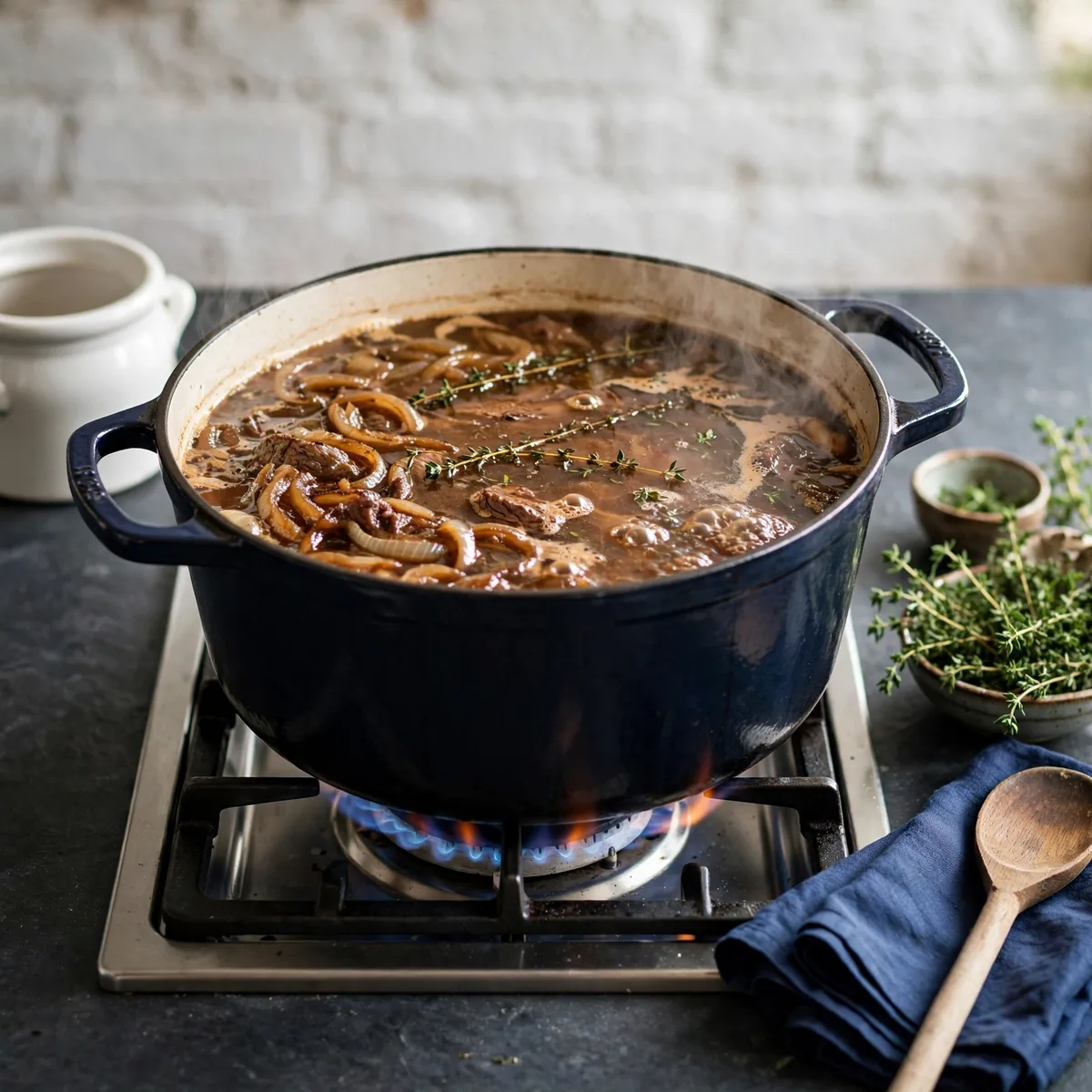
Sprinkle the flour over the caramelized onions and stir for 1 minute. Pour in the remaining wine, beef broth, and chicken broth, then add the thyme sprigs and bay leaf if using. Bring to a simmer, then reduce heat and cook uncovered for 20–25 minutes.
👉 another cozy winter soup here
As a result, this simmering time allows the broth to meld fully with the caramelized onion flavor rather than tasting like two separate components.
💡 Pro Tip: Taste the broth around the 15-minute mark and adjust salt — the flavor concentrates further the longer it simmers, so it’s easy to under-season early on.
Step 4 — Toast the Baguette
While the soup simmers, arrange baguette slices on a baking sheet and toast at 400°F for 6–8 minutes, flipping once, until golden and crisp on both sides. Toasting the bread first, rather than adding it raw, is what keeps it from dissolving into mush once it’s floated on top of the hot soup.
💡 Pro Tip: Rub a cut garlic clove over the toasted bread while it’s still warm for an extra layer of flavor that pairs naturally with the soup.
Step 5 — Assemble and Broil
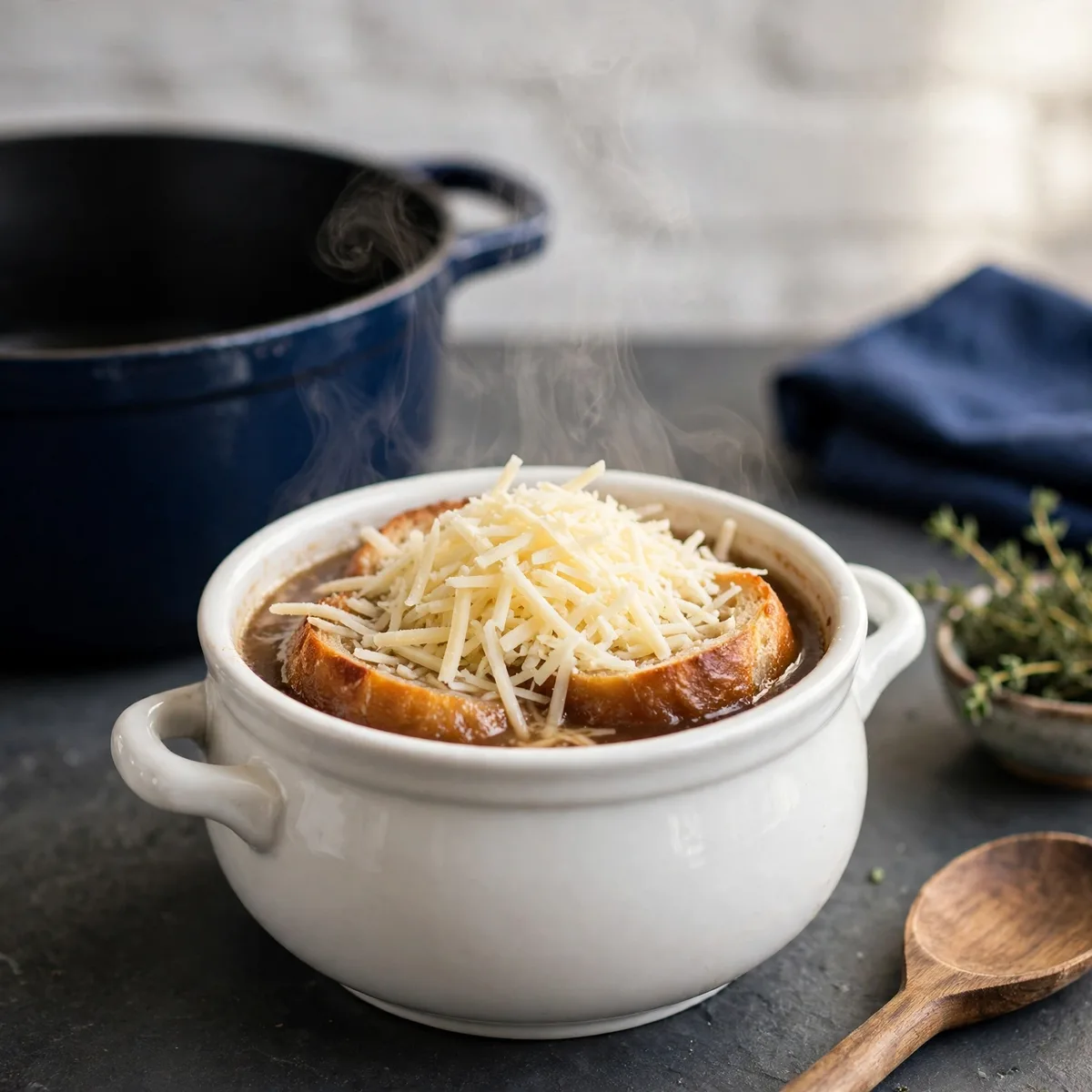
Remove the thyme sprigs and bay leaf. Ladle the soup into oven-safe crocks, float a toasted baguette slice on top of each, and cover generously with shredded gruyere. Broil for 2–3 minutes, watching closely, until the cheese is bubbly and spotted golden brown. Serve immediately.
How to Tell When It’s Done
Every stove and oven runs a little differently, so start checking the onions 5–10 minutes early on the first attempt with this recipe. Once it’s been made once, the exact timing for that specific stove becomes easy to predict.
Primary Doneness Test
The onions are properly caramelized when they’ve turned a deep mahogany brown throughout, with no pale or translucent pieces remaining, and have reduced to roughly a third of their original volume. The cheese topping is done the moment it looks fully melted, bubbling, and spotted brown in places — not just melted flat and pale.
Doneness Guide
| Indicator | What It Means | What to Do |
|---|---|---|
| Onions pale, translucent | Under-caramelized | Continue cooking 15–20 more minutes over low heat |
| Onions deep brown, reduced significantly | Perfectly done | Proceed to deglazing and broth |
| Onions dark, bitter-smelling | Over-caramelized or burnt | Scrape away any blackened bits; may need to start over |
| Broth tastes thin, watery | Needs more simmer time | Continue simmering 10 more minutes |
| Cheese melted flat, pale | Not broiled long enough | Return to broiler for 30–60 more seconds |
| Cheese bubbly, spotted brown | Perfectly done | Remove and serve immediately |
Visual Signs It’s Done
- The onions have shrunk dramatically in volume and turned a deep, even brown color
- The broth has taken on a rich, dark amber color from the caramelized onions
- The toasted baguette looks golden and crisp, not pale or soft
- The cheese topping has formed visible bubbles and golden-brown spots under the broiler
- The aroma has shifted from sharp, raw onion to a warm, sweet, deeply savory smell
It’s Not Right — What to Do Now
- Onions never caramelized properly: Heat was too high, causing them to brown unevenly before softening — reduce heat and add more time rather than rushing
- Soup tastes flat: Only one type of broth was used, or not enough simmering time was given — combine beef and chicken broth and taste before serving
- Bread turned to mush: It wasn’t toasted first, or sat in the hot broth too long before broiling — always toast separately and add just before broiling
- Cheese burned under the broiler: Left unattended for too long — watch closely and check every 30 seconds once it starts bubbling
How to Get the Perfect Cheese Topping

The cheese topping is what makes this dish instantly recognizable, and getting it right comes down to technique more than the cheese alone. There are three approaches depending on your setup.
Method 1 — Broiler Method (Standard Recipe)
Assemble the soup in oven-safe crocks with toasted bread and shredded gruyere, then broil for 2–3 minutes until bubbly and spotted brown. This is the method used throughout this recipe and produces the most classic, bistro-style result.
Method 2 — Torch Method (No Oven Needed)
Assemble the topping the same way, then use a kitchen torch to melt and lightly brown the cheese directly, moving the flame constantly to avoid burning any one spot. This works well for a smaller batch or when oven space is limited.
Method 3 — Oven-Baked Method (Hands-Off Alternative)
Instead of broiling, bake the assembled crocks at 450°F for 8–10 minutes until the cheese is fully melted and just beginning to brown. This method requires less direct attention than broiling, though it won’t develop quite the same deep golden spots.
Troubleshooting Quick Reference
| Problem | Cause | Fix |
|---|---|---|
| Cheese burned in spots | Broiler too close or left unattended | Move the rack down slightly and watch constantly |
| Cheese didn’t melt fully | Not enough time under the broiler | Return for another 30–60 seconds, checking frequently |
| Bread sank into the broth | Not toasted enough, or cut too thin | Toast until genuinely crisp; use a thicker slice |
| Cheese slid off the bread | Bread wasn’t a good fit for the bowl size | Trim bread to match the diameter of the crock |
What to Serve With It
Classic Pairings That Always Work
- A simple green salad with vinaigrette — adds freshness that balances the rich, savory soup
- Crusty French bread on the side — for anyone who wants more than just the floating slice
- A glass of the same dry white wine used in the recipe — a natural pairing at the table
- Roasted chicken — a light main course that doesn’t compete with the soup’s richness
- Steak frites — a classic French bistro pairing for a heartier meal
Comfort Food Pairings
- Grilled cheese sandwiches — leans further into the cheese-forward theme
- Quiche — a classic French pairing for a light lunch alongside the soup
- Roasted root vegetables — a hearty, cold-weather side dish
- Beef bourguignon — for a full, indulgent French-inspired dinner spread
Lighter Options
- A smaller portion as a starter — common in French bistros before a lighter main course
- Steamed green beans — a simple vegetable side that doesn’t compete with the rich flavor
- Skip the bread and cheese topping — serve just the broth and onions for a lighter version
6 Ways to Use Leftover French Onion Soup

Leftover soup can become several completely different dishes. Here are 6 ways to use it.
French Onion Pasta Sauce
What you need: Leftover soup (strained of bread), heavy cream, cooked pasta.
How to assemble: Simmer leftover soup with a splash of heavy cream until slightly reduced, then toss with hot cooked pasta.
One tip: Strain out any soggy bread pieces first — they don’t break down well into a smooth sauce.
French Onion Soup Casserole
What you need: Leftover soup, cooked rice or egg noodles, shredded gruyere.
How to assemble: Combine leftover soup with cooked rice or noodles in a baking dish, top with extra cheese, and bake at 375°F for 20 minutes until bubbly.
One tip: This transforms the soup into a heartier, more filling dish with very little extra effort.
French Onion Grilled Cheese
What you need: Leftover caramelized onions (strained from the broth), bread, gruyere.
How to assemble: Spread strained leftover onions between slices of bread with cheese and grill in butter until golden on both sides.
👉 try another easy comfort food recipe here
One tip: Press gently while grilling to help the onions and cheese meld together evenly between the bread.
French Onion Soup Risotto
What you need: Leftover broth (strained of onions and bread), arborio rice.
How to assemble: Use the strained leftover broth in place of standard stock when making a basic risotto, stirring in the broth gradually.
One tip: The deep, savory flavor of the broth adds significant depth to a simple risotto with very little extra work.
French Onion Soup Shepherd’s Pie Base
What you need: Leftover soup (onions and broth, strained of bread), ground beef, mashed potatoes.
How to assemble: Use the strained leftover onions and a portion of the broth as the flavor base for a shepherd’s pie filling, topping with mashed potatoes before baking.
One tip: This works especially well since the deeply caramelized onions add far more flavor than plain sautéed onions would.
French Onion Soup Dip
What you need: Leftover caramelized onions (strained), sour cream, cream cheese.
How to assemble: Mix strained leftover onions with softened cream cheese and sour cream for a rich, savory dip.
One tip: Chill the dip for at least an hour before serving — this lets the flavors meld together fully.
Storage, Freezing and Reheating Guide
Refrigerator Storage (Up to 5 Days)
This soup stores in the refrigerator for up to 5 days in an airtight container, without the bread and cheese topping. The flavor actually deepens by day 2, as the onions and broth have more time to meld.
Can You Make This Ahead of Time?
Yes — this recipe is genuinely one of the best soups for making ahead, since the flavor only improves with a day or two of resting. Make the broth and onion base up to 3 days before serving, refrigerate, then reheat gently and assemble the bread and cheese topping fresh right before broiling.
Freezer Storage (Up to 3 Months)
This French onion soup recipe freezes exceptionally well for up to 3 months, as long as it’s frozen without the bread and cheese topping. Cool completely, then freeze in individual portions in airtight containers, leaving room for expansion. Thaw overnight in the refrigerator before reheating.
This Recipe Works as a Freezer Meal
Make a double batch of just the onion and broth base specifically for the freezer. Portion into labeled containers before freezing so you can pull exactly what’s needed and simply add fresh bread and cheese before broiling on a future night.
👉 see more easy freezer meal ideas here
How to Reheat Without Ruining It
| Method | Setting | Time | Notes |
|---|---|---|---|
| Stovetop | Medium-low | 8–10 min | Best method; stir occasionally |
| Microwave | 70% power | 2–3 min | Reheat the broth only, add fresh bread and cheese after |
| Oven | 350°F | 15 min | Good for reheating a full assembled crock before a final broil |
Weekly Prep Strategy
Make the onion and broth base ahead on a weekend and refrigerate. This French onion soup recipe becomes a genuinely fast weeknight dinner when the hardest, most time-consuming step is already done in advance.
Recipe Variations Worth Trying
Same technique. Completely different flavor profiles. Master this base French onion soup recipe first — then try one of these.
Most Popular — French Onion Soup with Brandy
Add 2 tablespoons of brandy or cognac along with the white wine during deglazing. The deeper, slightly sweet complexity makes this one of the most requested variations of this French onion soup recipe among people who want an extra layer of richness.
International — Lyonnaise-Style Onion Soup
Finish the soup with a raw egg yolk whisked into each bowl just before serving, following the traditional Lyonnaise approach to onion soup. The egg yolk adds a silky richness that’s distinct from the standard gratinéed, cheese-topped version found in most French bistros.
Lighter — Vegetarian Version
Replace the beef broth entirely with additional vegetable broth and a splash of soy sauce for added umami depth. Therefore, you get a meat-free version that still carries real savory complexity for this French onion soup recipe, without sacrificing much of the overall flavor.
Quick Shortcut — Slow Cooker Caramelization
Caramelize the onions in a slow cooker on low for 8–10 hours instead of on the stovetop, which requires far less active attention even though the total time is longer. This works especially well for preparing the most time-consuming step overnight or during a workday.
Fresh and Elevated — French Onion Soup with Roasted Garlic
Roast a whole head of garlic wrapped in foil at 400°F for 40 minutes, then squeeze the softened cloves directly into the broth during Step 3 in place of raw minced garlic. The roasted garlic adds a mellow, deeper sweetness that elevates this classic into something even more complex.
Nutrition Information
Per Serving Breakdown (Based on 4 Servings)
| Nutrient | Amount | % Daily Value |
|---|---|---|
| Calories | ~380 | — |
| Total Fat | 19g | 24% |
| Saturated Fat | 11g | 55% |
| Cholesterol | 50mg | 17% |
| Sodium | 890mg | 39% |
| Total Carbohydrates | 30g | 11% |
| Dietary Fiber | 3g | 11% |
| Total Sugars | 9g | — |
| Protein | 18g | 36% |
| Vitamin C | 10% DV | — |
According to USDA FoodData Central, onions contain meaningful levels of antioxidant compounds that develop further during the caramelization process — meaning this French onion soup recipe offers a bit of nutritional benefit alongside its rich, savory flavor.
Dietary Compatibility
| Diet | Compatible | Notes |
|---|---|---|
| Gluten-Free | ❌ | Use gluten-free bread and flour to adapt |
| Dairy-Free | ❌ | Omit the cheese topping and use a dairy-free butter substitute |
| Paleo | ❌ | Bread, flour, and cheese all excluded |
| Keto | ❌ | High in natural sugars from the caramelized onions |
| Vegetarian | ❌ | Use the vegetarian variation above with vegetable broth |
| Vegan | ❌ | Same vegetable broth substitution plus a dairy-free cheese alternative needed |
To reduce sodium in this French onion soup recipe, use low-sodium beef and chicken broth and reduce the added salt — the caramelized onions and gruyere already carry substantial flavor on their own.
8 Mistakes That Ruin French Onion Soup
Every mistake with French onion soup is fixable. Know them before you start — not after.
❌ Mistake 1: Rushing the Caramelization with High Heat
Why it happens: Wanting to save time on a long process. What goes wrong: High heat browns the onions unevenly and can scorch them before they develop real sweetness, leaving a bitter edge. The fix: Use medium-low heat and allow the full 45–50 minutes for proper caramelization.
❌ Mistake 2: Using Only One Type of Broth
Why it happens: Not having both beef and chicken broth on hand. What goes wrong: Beef broth alone tastes one-dimensional, while chicken broth alone is too light to carry the dish. The fix: Combine both for a more balanced, layered flavor.
❌ Mistake 3: Skipping the Deglazing Step
Why it happens: Not realizing how much fond builds up during caramelization. What goes wrong: Built-up browned bits can burn onto the bottom of the pot, adding a bitter taste to the finished soup. The fix: Deglaze partway through with a splash of wine or broth.
❌ Mistake 4: Adding Raw, Untoasted Bread
Why it happens: Skipping what seems like an unnecessary extra step. What goes wrong: Raw bread turns to mush almost instantly once it hits the hot broth. The fix: Always toast the baguette slices separately before assembling.
❌ Mistake 5: Using Pre-Shredded Cheese
Why it happens: Convenience, since it’s already shredded. What goes wrong: The anti-caking starch coating on bagged cheese produces a less smooth, slightly grainier melt under the broiler. The fix: Grate a block of gruyere yourself right before using it.
❌ Mistake 6: Leaving the Broiler Unattended
Why it happens: Assuming a few minutes of broiling is low-risk. What goes wrong: Cheese can go from perfectly melted and golden to burnt in under a minute under direct broiler heat. The fix: Stay close and check every 30 seconds once the cheese starts bubbling.
❌ Mistake 7: Under-Seasoning Before Simmering
Why it happens: Assuming the broth will season itself as it cooks. What goes wrong: The flavor concentrates as the soup simmers, so under-seasoning early leads to a flat finished dish. The fix: Taste partway through simmering and adjust salt as needed.
❌ Mistake 8: Not Reducing the Onions Enough
Why it happens: Pulling them off the heat too early, assuming they look “brown enough.” What goes wrong: Under-caramelized onions leave the broth tasting thinner and less complex than it should. The fix: Continue cooking until the onions have reduced to roughly a third of their original volume and turned a deep, even brown.
Frequently Asked Questions
Why won’t my onions caramelize properly?
The most common cause is cooking at too high a heat, which browns the exterior of the onions before the interior has time to soften and release its natural sugars, often leading to a bitter, unevenly cooked result. The second major cause is not allowing enough time — true caramelization for this French onion soup recipe genuinely takes 45–50 minutes at medium-low heat, and there’s no reliable shortcut that produces the same depth. Patience and consistent stirring every 5–10 minutes solve this issue in nearly every batch.
What is the best cheese for French onion soup?
Gruyere is the traditional and best choice for this recipe, since it melts smoothly and develops an appealing golden-brown color under the broiler without becoming greasy. Swiss cheese works as a milder substitute with a similar melting quality. A blend of gruyere and parmesan also works well for anyone who wants a slightly sharper, more complex flavor in the topping.
Can you make French onion soup ahead of time?
Yes — this recipe is genuinely one of the best soups for making ahead, since the flavor only improves with a day or two of resting in the refrigerator. Make the broth and onion base up to 3 days before serving, store covered, and reheat gently on the stovetop before assembling fresh bread and cheese and broiling right before eating.
What do you serve with French onion soup?
A simple green salad with vinaigrette adds freshness that balances the rich, savory broth. Crusty French bread on the side gives anyone who wants more than the single floating slice something extra to work with. For a heartier French-inspired dinner, roasted chicken or steak frites both pair well without overwhelming the soup’s flavor.
Can you freeze French onion soup?
Yes — this French onion soup recipe freezes exceptionally well for up to 3 months, as long as it’s frozen without the bread and cheese topping, which doesn’t hold up through freezing and thawing. Cool completely before freezing in individual portions, and thaw overnight in the refrigerator before reheating and assembling the topping fresh.
How long does French onion soup last in the fridge?
This French onion soup recipe lasts up to 5 days in the refrigerator stored in an airtight container, without the bread and cheese topping added. The flavor actually deepens by the second day as the onions and broth continue to meld together.
Why does my French onion soup taste bland?
The most common cause is under-caramelized onions, since the depth of flavor in this dish depends almost entirely on that long, slow browning process developing real sweetness and complexity. Using only one type of broth, or not tasting and adjusting salt partway through simmering, can also leave the finished soup tasting flatter than intended. Giving the onions their full cooking time and combining beef and chicken broth both help build the layered flavor this soup is known for.
Can you make French onion soup without wine?
Yes — replace the white wine with an equal amount of additional broth plus a small splash of vinegar or lemon juice to approximate the acidity wine would normally provide. The result is slightly less complex in flavor, but it’s a reasonable substitute for anyone avoiding alcohol, and the long caramelization time still carries most of the dish’s depth regardless.
What type of onions are best for French onion soup?
Yellow onions are the best choice for this recipe since their naturally higher sugar content allows them to caramelize into a deep, sweet, almost jam-like texture over the long cooking time. Sweet onions like Vidalia work as a good alternative, though they can turn slightly softer during the extended cooking process. Red onions are not recommended, since they tend to turn bitter rather than sweet when caramelized for this long.
Why is my bread soggy in French onion soup?
This almost always means the baguette wasn’t toasted thoroughly enough before being added, or it sat in the hot broth for too long before going under the broiler. Toasting the bread until genuinely crisp and golden on both sides, and assembling the bowls just before broiling rather than letting them sit, both help the bread hold its structure far better against the hot liquid.
You Might Also Like
Best Swedish Meatballs

🍽 FRENCH ONION SOUP
Ingredients
Equipment
Method
- Melt the butter in a Dutch oven over medium-low heat. Add the sliced onions and a pinch of salt, stirring to coat. Cook for 45–50 minutes, stirring every 5–10 minutes, until the onions turn a deep mahogany brown and have reduced significantly in volume. Most recipes rush this step with high heat, but this French onion soup recipe depends on that long, patient caramelization for real depth of flavor that simply can’t be achieved any faster. Every batch where the heat was pushed higher to save time came out tasting flatter and slightly bitter in places.
- Partway through caramelization, around the 30-minute mark, pour in half the white wine to deglaze the pot, scraping up any browned bits stuck to the bottom. Continue cooking until the onions finish caramelizing. Add the minced garlic in the final 2 minutes of this step.
- Sprinkle the flour over the caramelized onions and stir for 1 minute. Pour in the remaining wine, beef broth, and chicken broth, then add the thyme sprigs and bay leaf if using. Bring to a simmer, then reduce heat and cook uncovered for 20–25 minutes.
- While the soup simmers, arrange baguette slices on a baking sheet and toast at 400°F for 6–8 minutes, flipping once, until golden and crisp on both sides. Toasting the bread first, rather than adding it raw, is what keeps it from dissolving into mush once it’s floated on top of the hot soup.
- Remove the thyme sprigs and bay leaf. Ladle the soup into oven-safe crocks, float a toasted baguette slice on top of each, and cover generously with shredded gruyere. Broil for 2–3 minutes, watching closely, until the cheese is bubbly and spotted golden brown. Serve immediately.