
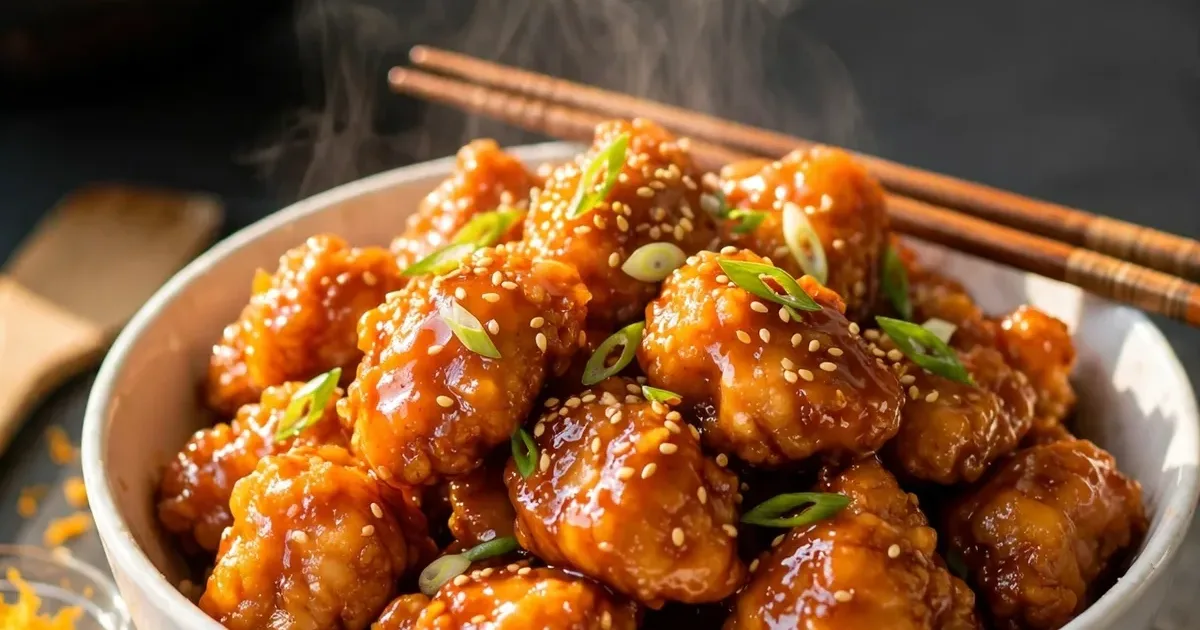
Best Orange Chicken Recipe (Crispy, Ready in 35 Minutes)
⭐⭐⭐⭐⭐ Rate this recipe
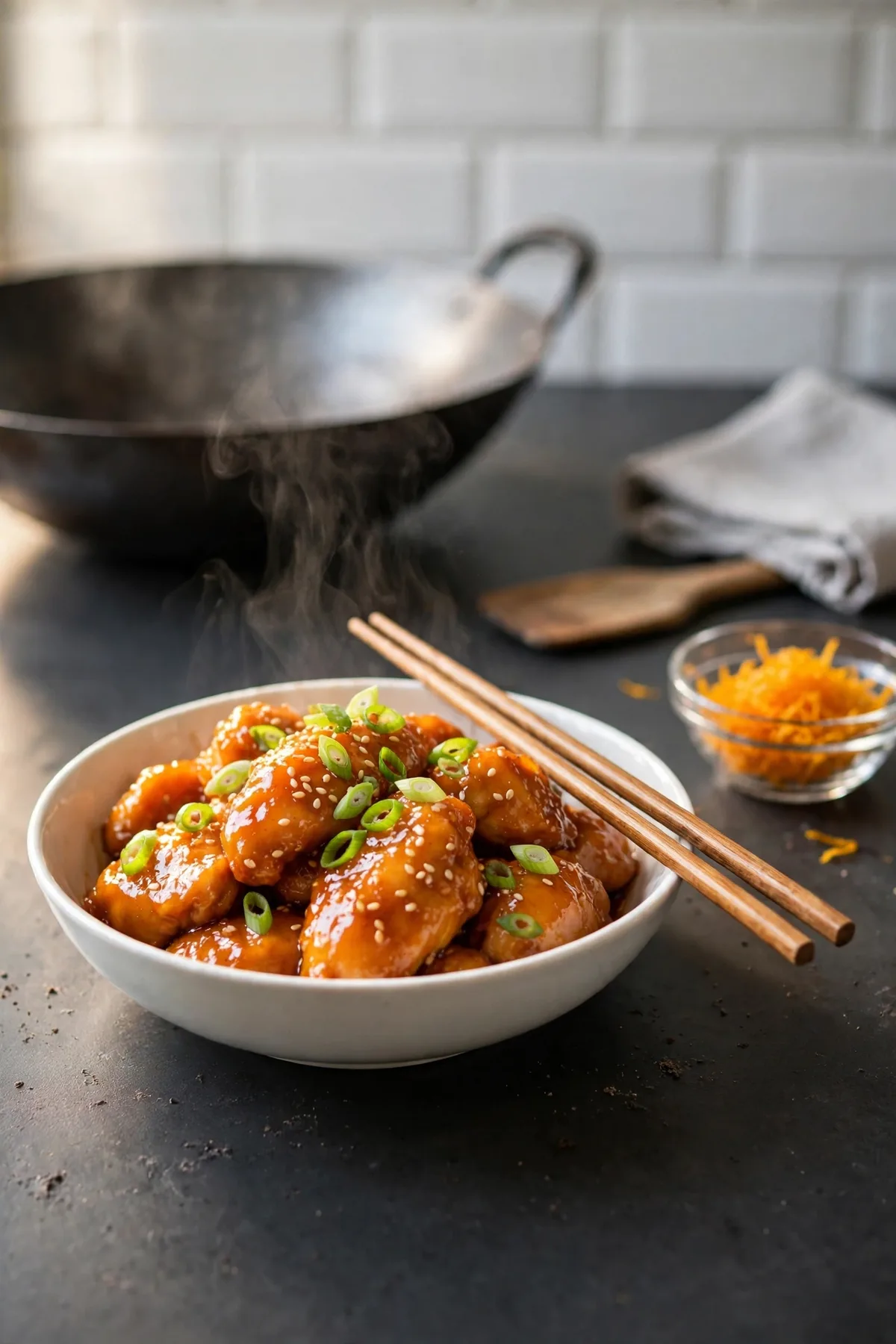
This orange chicken recipe delivers genuinely crispy chicken pieces coated in a sticky, tangy-sweet orange glaze — not soggy, steamed chicken drowning in a thin, overly sweet sauce that tastes like orange juice concentrate. This orange chicken recipe uses a specific cornstarch coating technique plus a fresh orange reduction that keeps the chicken crispy even after it’s tossed in sauce. The entire dish comes together in one wok in just 35 minutes.
This orange chicken recipe is built for anyone who’s ended up with soggy chicken or a cloyingly sweet sauce and wants a version that stays crispy and genuinely balanced. If you’ve ever made a batch that turned limp the moment sauce touched it, or tasted like straight sugar — every one of those problems has a specific fix here. It works for a quick weeknight dinner, a genuine substitute for delivery, or a meal-prep staple that reheats better than most fried dishes.
Made this already? Scroll down and leave a ⭐⭐⭐⭐⭐ rating below — it helps more than you know.
Once the crisping technique in this orange chicken recipe clicks, the soggy delivery version stops making sense.
⏱ Prep Time: 15 minutes
🕐 Cook Time: 20 minutes
⏳ Total Time: 35 minutes
🍽 Servings: 4
📊 Difficulty: Moderate
💰 Estimated Cost: ~$11 total / ~$2.75 per serving
🍊 Main Item: Crispy diced chicken in a sticky fresh orange glaze
Table of Contents
Why This Orange Chicken Recipe Works
- A cornstarch-only coating, not a wet batter. Most recipes dip chicken in a wet batter, which traps moisture and steams instead of crisping. This orange chicken recipe coats the chicken in seasoned cornstarch alone, which fries into a genuinely crisp, thin shell.
👉 another quick weeknight dinner here
- Fresh orange juice and zest, not bottled juice. Bottled orange juice tastes flat and one-dimensional once reduced into a sauce. Fresh juice and zest together build real citrus depth that bottled juice simply can’t replicate.
- Tossing the chicken in sauce right before serving, not simmering it in the sauce. Here’s the truth: letting crispy chicken sit in sauce for too long softens the coating almost immediately. A quick toss right at the end keeps the crunch intact.
- Double-frying the chicken pieces. A first fry cooks the chicken through, and a second, hotter fry crisps the exterior further — this two-step process produces a noticeably crunchier result than a single fry.
- Reducing the sauce separately before combining. Cooking the orange sauce down on its own first concentrates the flavor and thickens it properly, rather than diluting it by adding raw chicken drippings into a thin liquid.
Understanding the Key Ingredient

The one step worth never skipping in this orange chicken recipe, no matter how rushed the night is, is the key technique in Step 4. Skipping it is the most common reason the sauce tastes flat instead of genuinely bright. Followed properly, the result comes out right every time.
Why Fresh Orange Juice and Zest Are the Right Choice
Fresh orange zest contains the fruit’s aromatic oils, which carry a brightness that bottled juice loses entirely during processing, and that difference is exactly what separates this orange chicken recipe from a flat, one-note version. Fresh-squeezed juice also reduces into a more concentrated, naturally sweet glaze without the slightly metallic aftertaste that bottled juice can develop once cooked down. Additionally, using both the zest and juice together layers the citrus flavor throughout the sauce rather than relying on sweetness alone to carry it.
Orange Comparison Guide
| Type | Flavor | Sweetness | Best For |
|---|---|---|---|
| Fresh oranges, juiced and zested | Bright, complex | Naturally balanced | Best overall result |
| Bottled orange juice | Flat, one-note | Often overly sweet | Acceptable in a genuine pinch |
| Frozen concentrate, reconstituted | Milder, slightly artificial | Very sweet | Not recommended |
| Orange marmalade | Sweet, slightly bitter | High | Good for an extra-thick glaze variation |
How to Choose the Best at the Store
- Choose oranges that feel heavy for their size. This usually indicates more juice inside.
- Navel oranges work especially well. They’re easy to zest and juice, with a balanced sweetness.
- Avoid oranges with soft spots or mold. These indicate the fruit is past its best.
- Buy slightly more than the recipe calls for. Juice yield varies between individual oranges.
- Zest before juicing, never after. It’s far easier to zest a whole, firm orange than one that’s already been squeezed.
How Much Do You Need?
| Servings | Chicken Thighs | Fresh Orange Juice |
|---|---|---|
| 2 | ½ lb | ⅓ cup |
| 4 | 1 lb | ⅔ cup |
| 6 | 1½ lbs | 1 cup |
| 8 | 2 lbs | 1⅓ cups |
Double Batch — How to Scale This Orange Chicken Recipe
Doubling works best by frying the chicken in more batches rather than overcrowding the oil, since overcrowding drops the oil temperature and produces soggy, greasy results instead of crisp pieces. Make the sauce in a single larger batch once all the chicken is fried, rather than trying to double every sauce ingredient separately while also managing more frying. Reducing time for a larger sauce batch stays roughly the same.
Ingredients You’ll Need
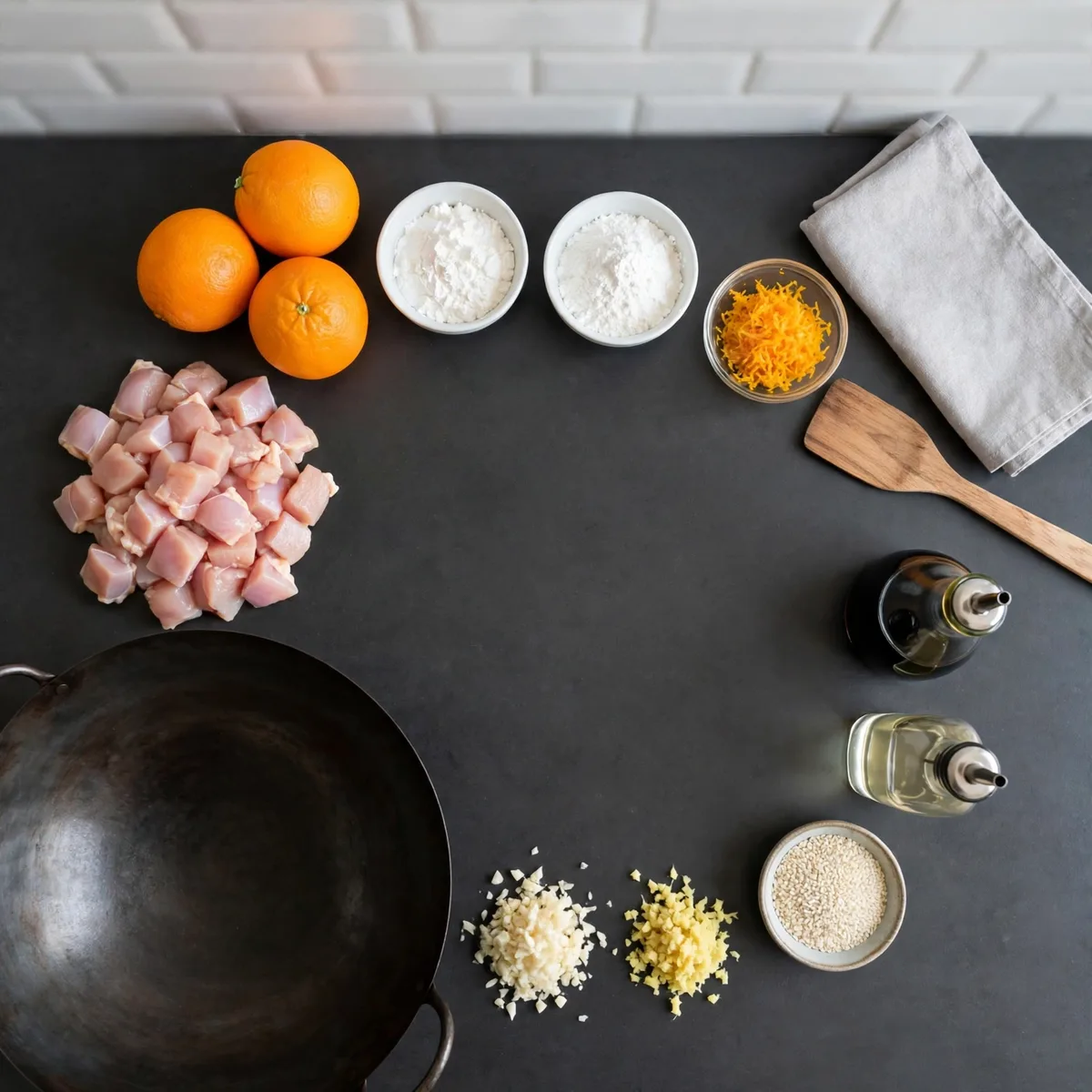
This orange chicken recipe uses straightforward pantry and fresh ingredients. Here is everything broken down.
Main Ingredients
- Chicken thighs — 1 lb, diced into bite-sized pieces. The protein base. Thighs stay juicier through frying than breast meat.
- Cornstarch — ½ cup, for coating. Creates the crispy shell once fried. No wet batter needed.
- Fresh orange juice — ⅔ cup. The primary flavor and sweetness base of the sauce.
- Fresh orange zest — 1 tablespoon. Adds bright, aromatic depth that juice alone can’t provide.
- Soy sauce — 2 tablespoons. The savory counterpart that balances the sauce’s sweetness.
- Rice vinegar — 1 tablespoon. Adds a tangy brightness that cuts through the richness.
- Garlic — 3 cloves, minced. Adds aromatic depth throughout the sauce.
- Fresh ginger — 1 teaspoon, minced. A warm, slightly sharp note essential to the flavor profile.
Supporting Ingredients
- Brown sugar — 2 tablespoons. Rounds out the sauce’s sweetness alongside the orange juice.
- Vegetable oil — for frying, about 2 cups.
- Sesame seeds and sliced green onion — for garnish.
- Salt and black pepper — to taste.
Optional Additions Table
| Add-In | Amount | Effect |
|---|---|---|
| Red pepper flakes | ¼ tsp | Adds a subtle background heat |
| Orange marmalade | 2 tbsp | Thickens the glaze and adds extra citrus sweetness |
| Sriracha | 1 tbsp | Adds noticeable heat throughout |
| Steamed broccoli | 1 cup | Adds a vegetable component to the finished dish |
| Toasted sesame oil | 1 tsp | Adds a finishing nutty aroma |
Complete Substitutions Reference
| Original | Substitution | Notes |
|---|---|---|
| Chicken thighs | Chicken breast, diced | Leaner; watch frying time to avoid drying out |
| Fresh orange juice | Bottled orange juice | Less bright; use fresh zest regardless |
| Rice vinegar | White vinegar | Slightly sharper, still works |
| Soy sauce | Coconut aminos | Good gluten-free substitute, slightly sweeter |
| Cornstarch | Potato starch | Similar crisping result |
What NOT to Add to This Orange Chicken Recipe
- ❌ A wet batter instead of dry cornstarch — traps moisture and steams rather than crisping
- ❌ Overcrowding the frying oil — drops the temperature and produces soggy, greasy chicken
- ❌ Simmering the chicken in the sauce for an extended time — softens the crispy coating almost immediately
- ❌ Bottled orange juice with no fresh zest — produces a flat, one-dimensional sauce
- ❌ Skipping the second fry — the chicken stays noticeably less crispy without this extra step
- ❌ Adding sauce to the chicken too far ahead of serving — the coating loses its crunch the longer it sits in sauce
Equipment You’ll Need
Choosing the Right Equipment for Orange Chicken
| Tool | Purpose | Best For |
|---|---|---|
| Large wok | Frying and sauce-building | Traditional shape, even high heat |
| Deep, heavy-bottomed pot | Frying | Good alternative to a wok |
| Candy or deep-fry thermometer | Checking oil temperature | Most precise, prevents soggy or burnt chicken |
| Wire rack | Draining fried chicken | Keeps the crispy coating from going soggy |
Other Tools That Actually Matter
A deep-fry or candy thermometer takes the guesswork out of oil temperature, which matters enormously for this orange chicken recipe since oil that’s too cool produces greasy, soggy chicken while oil that’s too hot burns the coating before the inside cooks through. A wire rack set over a baking sheet drains excess oil without letting the chicken sit in its own grease, which a paper-towel-lined plate alone can’t do as effectively. A wok with high sides contains splattering oil better than a shallow pan.
No Deep-Fry Thermometer? Alternatives That Work for This Orange Chicken Recipe
- Wooden chopstick test — dip a wooden chopstick into the oil; steady bubbles forming around it indicate it’s hot enough
- Small piece of bread — drop in a small cube of bread; it should turn golden in about 60 seconds at the right temperature
- A single test piece of chicken — fry one piece first and check its color and texture before committing the rest of the batch
How to Make Orange Chicken — Step by Step
Five steps. Most take under ten minutes each.
Step 1 — Coat and First-Fry the Chicken
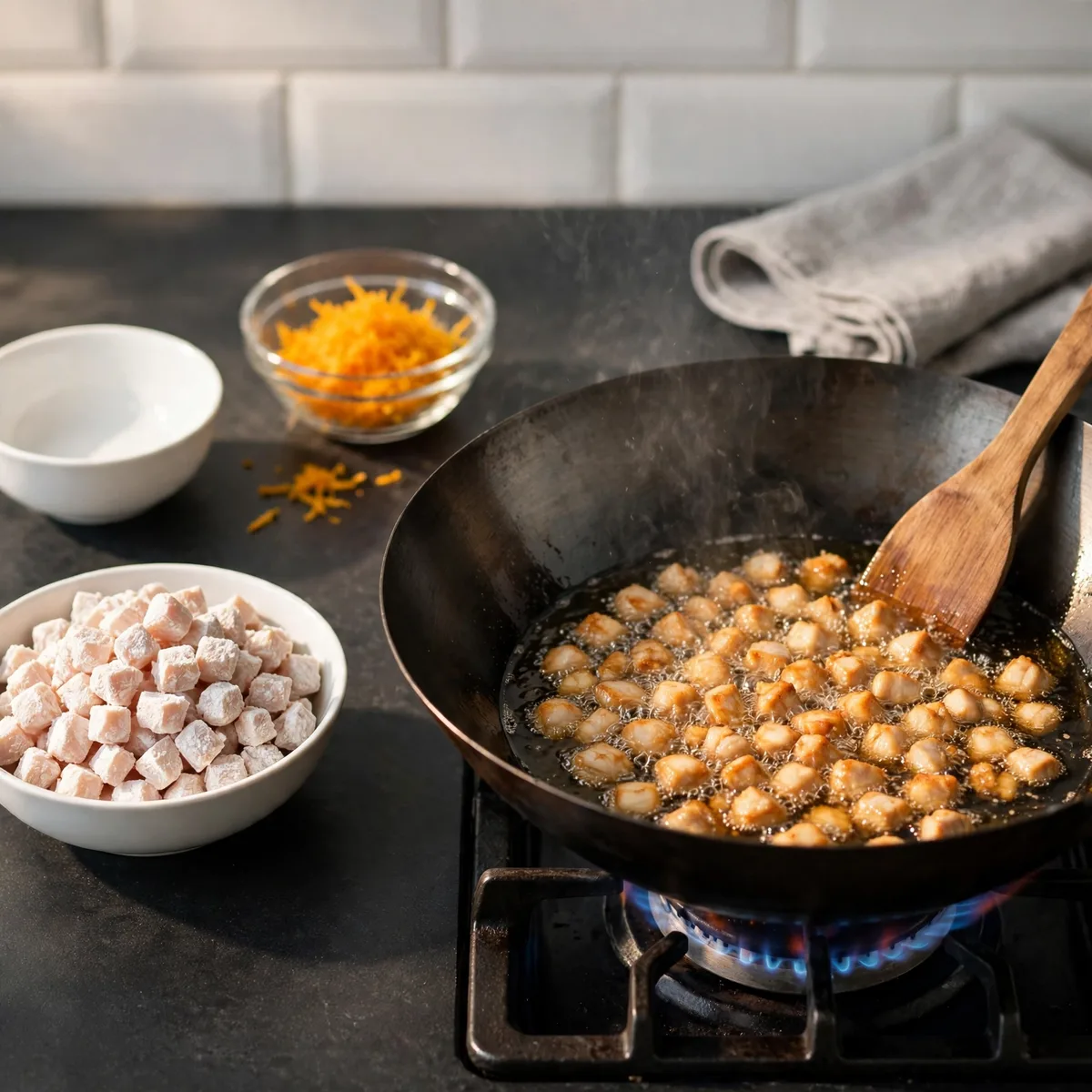
Toss the diced chicken with salt and pepper, then coat thoroughly in the cornstarch, shaking off any excess. Heat the oil to 325°F in a wok or deep pot. Fry the chicken in batches for 4–5 minutes, until cooked through and lightly golden. Remove to a wire rack. Most recipes stop at a single fry, but this orange chicken recipe uses this first pass specifically to cook the chicken through gently before a hotter second fry builds real crispness.
💡 Pro Tip: Don’t skip shaking off excess cornstarch before frying — too much coating clumps together and produces an uneven, patchy crust instead of a smooth, crisp shell.
Step 2 — Second-Fry for Extra Crispness (The Key Step)
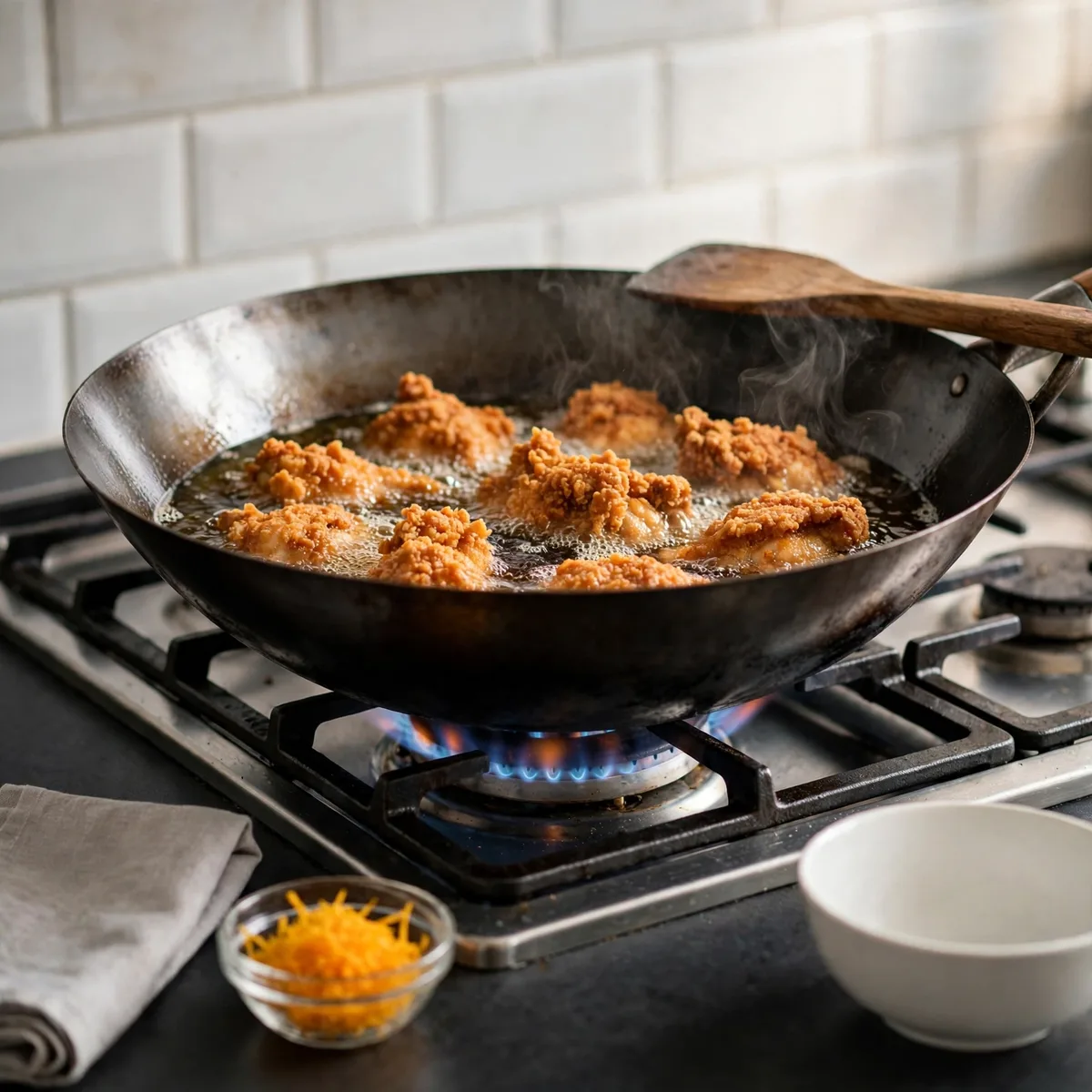
Increase the oil temperature to 375°F. Return the chicken to the hot oil in batches and fry for an additional 1–2 minutes, until deeply golden and genuinely crisp. Remove to the wire rack again. Every batch where this second fry was skipped came out noticeably softer once tossed in sauce, since the coating from a single fry alone isn’t quite sturdy enough to hold up.
💡 Pro Tip: Let the oil fully return to temperature between batches — frying in oil that’s too cool from the previous batch undoes much of the crispness this step is meant to build.
Step 3 — Build the Orange Sauce
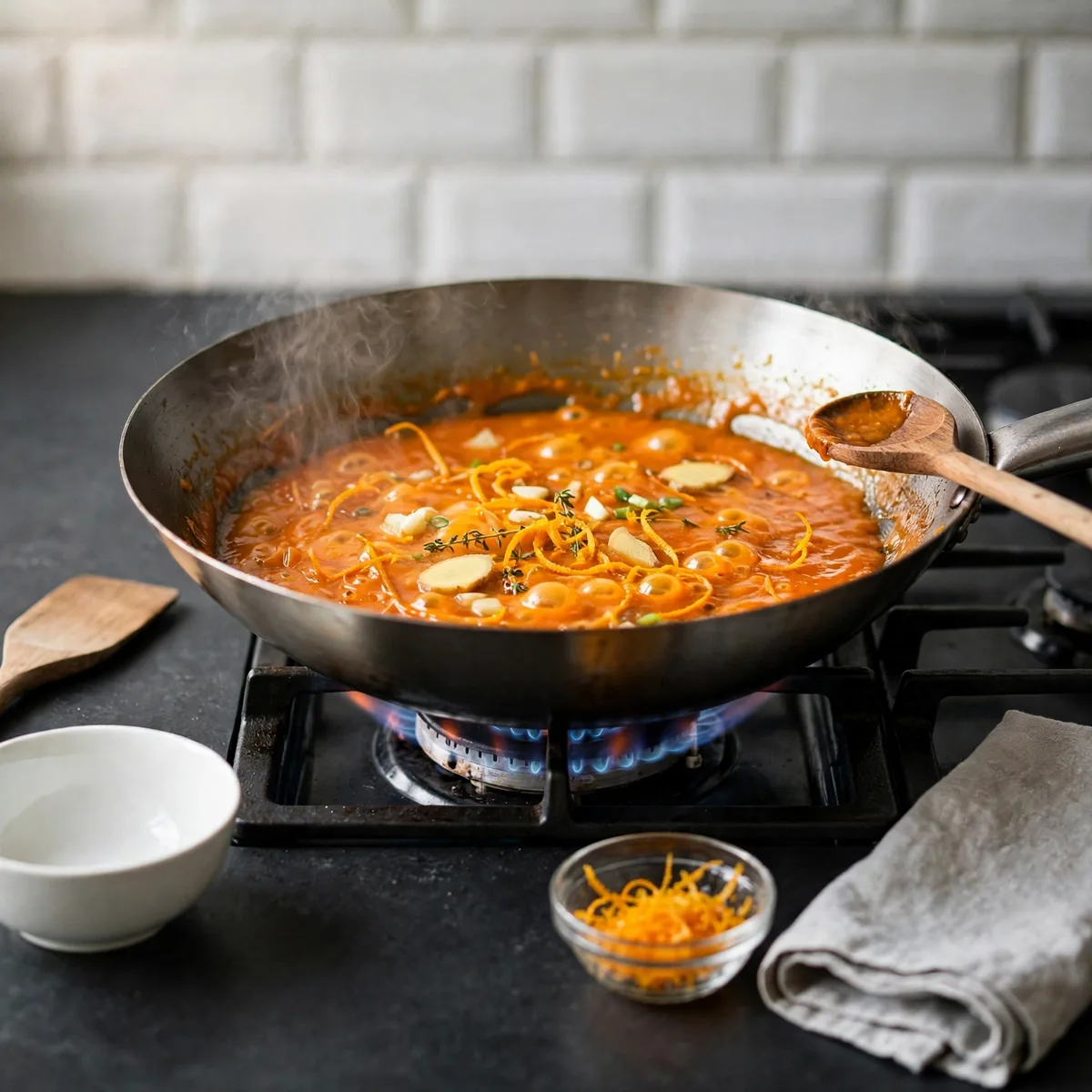
In a clean section of the wok or a separate saucepan, combine the orange juice, zest, soy sauce, rice vinegar, garlic, ginger, and brown sugar. Simmer over medium heat for 5–6 minutes, until reduced and slightly thickened.
👉 another easy stir-fry recipe here
As a result, reducing the sauce on its own first, before the chicken ever touches it, concentrates the citrus flavor far more than simmering everything together from the start in this orange chicken recipe.
💡 Pro Tip: Taste the sauce as it reduces and adjust the balance of sweet, tangy, and savory before combining it with the chicken — it’s much easier to fix at this stage than after everything is tossed together.
Step 4 — Toss the Chicken in Sauce
Add the crispy chicken to the reduced sauce and toss quickly, just until every piece is coated. Work fast here, since the longer the chicken sits in the sauce, the more the crispy coating softens in this orange chicken recipe.
💡 Pro Tip: Toss gently with a wide spatula rather than stirring vigorously — rough handling at this stage can knock some of the crisp coating loose.
Step 5 — Garnish and Serve
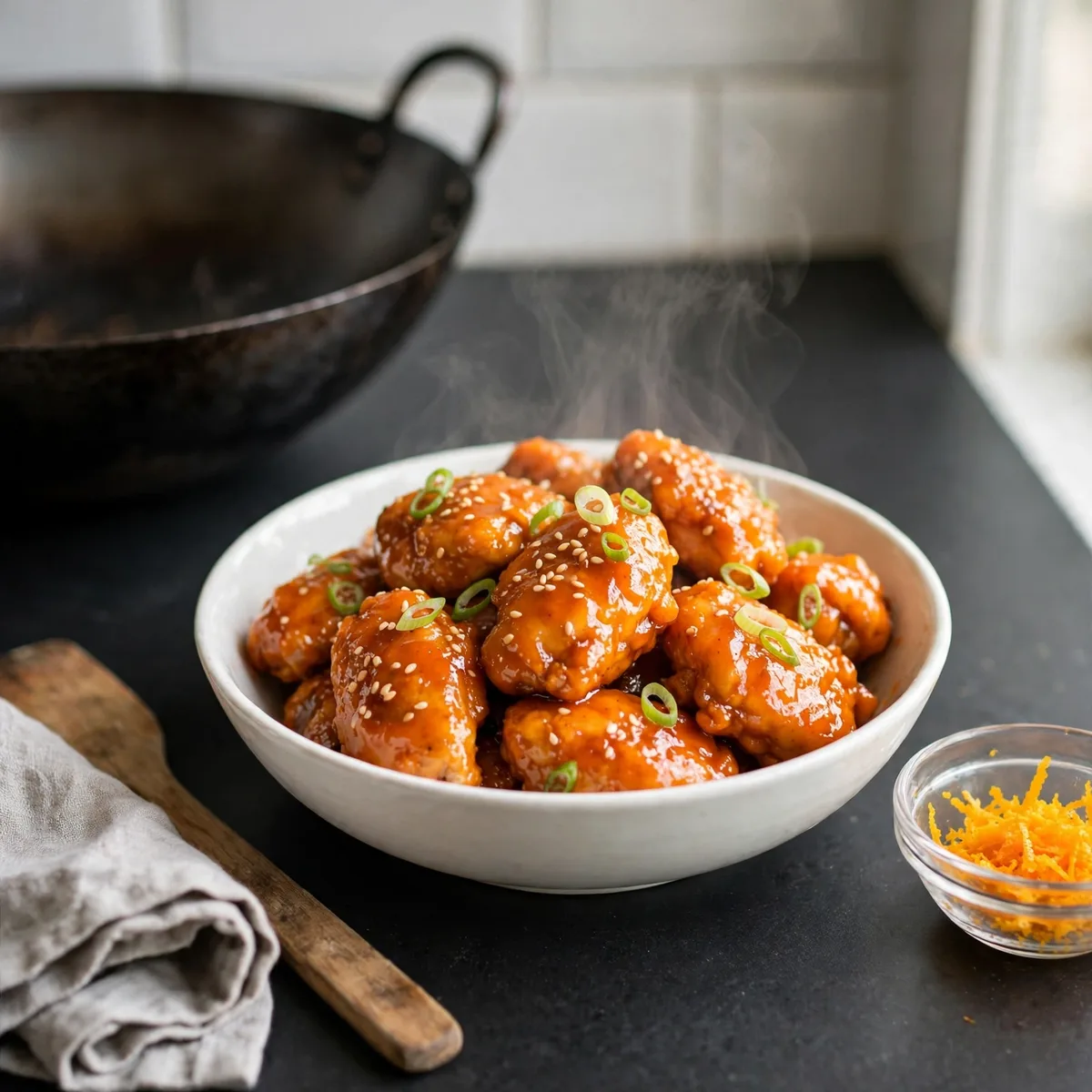
Transfer to a serving bowl and garnish with sesame seeds and sliced green onion. Serve immediately while the chicken is still at its crispiest in this orange chicken recipe.
How to Tell When It’s Done
Every stove and fryer runs a little differently, so start checking the oil temperature a bit early on the first attempt with this orange chicken recipe. Once it’s been made once, the exact timing for that specific setup becomes easy to predict.
Primary Doneness Test
The chicken is done frying when it reaches an internal temperature of 165°F and the coating looks deeply golden and genuinely crisp, not pale or soft. The sauce is ready when it’s reduced enough to coat the back of a spoon in a glossy, slightly thickened layer for this orange chicken recipe.
Doneness Guide
| Indicator | What It Means | What to Do |
|---|---|---|
| Chicken coating pale, soft | Oil too cool or under-fried | Increase oil temperature and fry longer |
| Chicken coating deep golden, crisp | Perfectly done | Remove to the wire rack |
| Chicken coating very dark, burnt | Oil too hot | Reduce temperature slightly for the next batch |
| Sauce thin, watery | Not reduced enough | Simmer a few more minutes |
| Sauce glossy, coats a spoon | Perfectly done | Toss with chicken immediately |
| Sauce too thick, gluey | Reduced too long | Thin with a small splash of water or orange juice |
Visual Signs It’s Done
- The chicken coating has turned from pale white-gold to a deep, even golden brown
- A thermometer inserted into a piece reads 165°F with no resistance
- The sauce has visibly reduced in volume and looks glossy rather than thin and watery
- Tossed chicken pieces glisten evenly with sauce rather than looking dry in patches
- The aroma has shifted from raw citrus to a warm, caramelized, slightly tangy smell
It’s Not Right — What to Do Now
- Chicken turned out soggy: Oil wasn’t hot enough, or the second fry was skipped — always double-fry and check oil temperature with a thermometer
- Sauce tastes bitter: Zest included too much white pith, or the sauce reduced too far and scorched — zest only the colored outer layer and watch the reduction closely
- Sauce stayed thin: Not simmered long enough — continue reducing a few more minutes until it coats a spoon
- Chicken turned soft after saucing: Sat in the sauce too long before serving — toss and serve immediately next time
How to Make the Orange Glaze

The glaze is what defines this dish, and getting it right comes down to technique more than any single ingredient. There are three approaches depending on your preference for this orange chicken recipe.
Method 1 — Fresh Orange Reduction (Standard Recipe)
Simmer fresh orange juice, zest, soy sauce, vinegar, and aromatics until reduced and glossy. This is the method used throughout this orange chicken recipe and produces the most balanced, genuinely bright flavor.
Method 2 — Marmalade-Boosted Glaze (Thicker, Sweeter)
Stir 2 tablespoons of orange marmalade into the standard sauce during the last minute of reducing. This produces a thicker, sweeter glaze with little flecks of orange peel throughout, closer to what some takeout restaurants serve.
Method 3 — Cornstarch Slurry Method (Faster Thickening)
If the sauce isn’t thickening quickly enough through reduction alone, whisk 1 teaspoon of cornstarch with 1 tablespoon of cold water and stir it in during the last minute of simmering. This speeds up thickening without needing to reduce the liquid as much.
Troubleshooting Quick Reference
| Problem | Cause | Fix |
|---|---|---|
| Sauce tastes bitter | Too much white pith zested along with the colored peel | Zest only the colored outer layer next time |
| Sauce too sweet | Too much brown sugar relative to vinegar and soy sauce | Add a small splash more vinegar to balance |
| Sauce too thin | Not reduced long enough | Simmer longer, or use the cornstarch slurry method |
| Sauce scorched | Heat too high during reduction | Use medium heat and stir occasionally |
What to Serve With It
Classic Pairings That Always Work
- Steamed white rice — the most classic pairing that turns this into a complete, filling meal
- Fried rice — for a heartier, more indulgent version of the meal
- Steamed broccoli — a classic vegetable side that balances the richness
- Egg drop soup — a light starter that complements the main dish
- Spring rolls — a crispy appetizer that rounds out a full Chinese-American inspired spread
Comfort Food Pairings
- Lo mein noodles instead of rice — a heartier base that soaks up the sauce
- Crab rangoon — an indulgent appetizer pairing at many Chinese-American restaurants
- Sesame chicken on the side — for anyone wanting a full double-protein spread
- Fried wontons — a crispy, classic addition to any takeout-style dinner
Low-Carb Options
- Serve over cauliflower rice — keeps the whole meal lower in carbohydrates
- Skip the rice entirely — this dish is flavorful enough to stand on its own with extra vegetables
- Add steamed green beans or snap peas — increases volume without significant carbohydrates
6 Ways to Use Leftover Orange Chicken

Leftover orange chicken can become several completely different meals. Here are 6 ways to use it.
Orange Chicken Fried Rice
What you need: Leftover orange chicken, 2 cups cooked rice, 1 egg, extra soy sauce.
How to assemble: Scramble the egg in a hot pan, add rice and chopped leftover chicken, stir-fry together for 3–4 minutes with a splash more soy sauce.
One tip: Day-old rice works far better than fresh — it fries up without clumping together.
Orange Chicken Lettuce Wraps
What you need: Leftover orange chicken, butter lettuce or romaine leaves.
How to assemble: Reheat the leftover chicken and spoon into individual lettuce leaves like a wrap.
One tip: Pat the lettuce leaves dry first — excess water makes the wrap fall apart faster.
Orange Chicken Noodle Bowl
What you need: Leftover orange chicken, cooked lo mein noodles.
How to assemble: Toss leftover chicken with warm cooked noodles, adding a splash of extra soy sauce or sesame oil if needed.
👉 try another easy takeout-style dinner here
One tip: Reheat the chicken separately first to avoid overcooking the noodles when combined.
Orange Chicken Stuffed Baked Potato
What you need: Leftover orange chicken, baked potatoes.
How to assemble: Split open baked potatoes and spoon the leftover orange chicken directly over the top.
One tip: This works especially well with a thicker leftover batch that’s reduced slightly after a day in the fridge.
Orange Chicken Soup
What you need: Leftover orange chicken, 4 cups chicken broth.
How to assemble: Simmer leftover orange chicken in chicken broth for 5–8 minutes to turn it into a quick, savory-sweet soup.
One tip: This stretches a small amount of leftovers into a full second meal almost effortlessly.
Orange Chicken Salad Topper
What you need: Leftover orange chicken, mixed greens, mandarin orange segments.
How to assemble: Toss leftover chicken over a bed of greens with mandarin orange segments for a cold, refreshing meal.
One tip: A light vinaigrette ties the salad together without overwhelming the orange chicken’s existing sauce.
Storage, Freezing and Reheating Guide
Refrigerator Storage (Up to 4 Days)
This orange chicken recipe stores in the refrigerator for up to 4 days in an airtight container. The crispy coating softens considerably in storage, which is completely normal — reheating in a hot pan or air fryer restores some of the original crunch.
Can You Make This Ahead of Time?
Partially — the chicken can be fried ahead and the sauce made separately, both refrigerated for up to a day, but the dish is genuinely best when the two are combined and served fresh. Combining them too far ahead softens the crispy coating before anyone gets to eat it in this orange chicken recipe.
Freezer Storage (Up to 2 Months)
This orange chicken recipe freezes reasonably well for up to 2 months, though the crispy coating won’t fully return after freezing and reheating. Freeze the fried chicken and sauce separately for the best results, combining them fresh after thawing and reheating the chicken.
This Recipe Works as a Freezer Meal
Freeze just the fried, unsauced chicken in a single layer on a baking sheet before transferring to a bag, which keeps the pieces from clumping together. Make a fresh batch of sauce when ready to serve, then reheat the chicken in the oven or air fryer before tossing them together.
👉 see more easy freezer meal ideas here
How to Reheat Without Ruining It
| Method | Setting | Time | Notes |
|---|---|---|---|
| Air fryer | 375°F | 5–6 min | Best method; restores the most crispness |
| Oven | 400°F | 10 min | Good alternative; use a wire rack on the baking sheet |
| Microwave | 70% power | 1–2 min | Fastest but softens the coating the most |
Weekly Prep Strategy
Fry a batch of chicken ahead and store it unsauced in the fridge, making fresh sauce each time you want to serve a portion. This orange chicken recipe stays far crispier through the week this way than storing it already combined with sauce.
Recipe Variations Worth Trying
Same technique. Completely different flavor profiles. Master this base orange chicken recipe first — then try one of these.
Most Popular — Spicy Orange Chicken
Add 1 tablespoon of sriracha or ½ teaspoon of red pepper flakes to the sauce during Step 3. The building heat makes this one of the most requested variations of this orange chicken recipe for anyone who wants an extra kick alongside the citrus sweetness.
International — General Tso’s Inspired Version
Increase the soy sauce slightly and add 1 teaspoon of hoisin sauce along with a touch more garlic and ginger, following the flavor profile of the related General Tso’s chicken tradition. The result leans slightly more savory and complex than the standard sweet orange glaze.
Low-Carb — Baked Version Without Frying
Skip the frying entirely and toss the raw diced chicken with cornstarch, then bake at 425°F on a wire rack for 20–25 minutes, flipping halfway through, until cooked through and lightly crisp. Therefore, you get a lighter version of this orange chicken recipe with significantly less oil, though the texture won’t be quite as crisp as the fried version.
Quick Shortcut — Pre-Cooked Chicken Version
Use already-cooked, diced rotisserie chicken tossed in cornstarch and quickly pan-fried in a bit of oil until the coating crisps, skipping the full frying process from raw. This cuts the total cook time down significantly, though the texture is slightly less crisp than starting from raw in this orange chicken recipe.
Fresh and Elevated — Orange Chicken with Candied Orange Peel
Simmer thin strips of orange peel in a simple syrup for 10 minutes until slightly candied, then scatter them over the finished dish along with the sesame seeds. The candied peel adds a chewy, intensely orange garnish that elevates this simple takeout classic into something more restaurant worthy for this orange chicken recipe.
Nutrition Information
Per Serving Breakdown (Based on 4 Servings)
| Nutrient | Amount | % Daily Value |
|---|---|---|
| Calories | ~450 | — |
| Total Fat | 18g | 23% |
| Saturated Fat | 3g | 15% |
| Cholesterol | 95mg | 32% |
| Sodium | 680mg | 30% |
| Total Carbohydrates | 42g | 15% |
| Dietary Fiber | 1g | 4% |
| Total Sugars | 18g | — |
| Protein | 26g | 52% |
| Vitamin C | 60% DV | — |
According to USDA FoodData Central, fresh orange juice provides a significant source of vitamin C per serving — meaning this orange chicken recipe delivers real nutritional value alongside its sticky-sweet, savory flavor.
Dietary Compatibility
| Diet | Compatible | Notes |
|---|---|---|
| Gluten-Free | ❌ | Use tamari or coconut aminos instead of regular soy sauce |
| Dairy-Free | ✅ | No dairy in this recipe |
| Paleo | ❌ | Cornstarch, sugar, and soy sauce all excluded |
| Keto | ❌ | See baked version above and reduce sugar to adapt |
| Vegetarian | ❌ | Replace chicken with extra-firm tofu, coated and fried the same way |
| Vegan | ❌ | Same tofu substitution needed |
To reduce sugar in this orange chicken recipe, cut the brown sugar to 1 tablespoon and rely more on the natural sweetness of the fresh orange juice — the dish still tastes balanced with less added sugar.
8 Mistakes That Ruin Orange Chicken
Every mistake with this orange chicken recipe is fixable. Know them before you start — not after.
❌ Mistake 1: Using a Wet Batter
Why it happens: Assuming a wet batter produces the crispiest result. What goes wrong: Wet batter traps moisture inside, steaming the chicken instead of letting it crisp properly. The fix: Coat the chicken in dry cornstarch alone, shaking off any excess.
❌ Mistake 2: Overcrowding the Frying Oil
Why it happens: Trying to fry everything at once to save time. What goes wrong: Too much chicken dropped in at once drops the oil temperature sharply, producing greasy, soggy results. The fix: Fry in batches, giving each piece room to crisp properly.
❌ Mistake 3: Skipping the Second Fry
Why it happens: Assuming one fry is enough. What goes wrong: A single fry doesn’t build quite enough structural crispness to survive being tossed in sauce. The fix: Always double-fry — once at a lower temperature to cook through, once hotter to crisp.
❌ Mistake 4: Using Bottled Orange Juice With No Zest
Why it happens: Convenience, especially when fresh oranges aren’t on hand. What goes wrong: Bottled juice alone produces a flat, one-dimensional sauce missing the bright aromatic quality fresh zest provides. The fix: Always use fresh orange zest regardless of whether the juice is fresh or bottled.
❌ Mistake 5: Zesting Too Deep Into the Pith
Why it happens: Not being careful while zesting. What goes wrong: The white pith underneath the colored peel tastes noticeably bitter and can throw off the whole sauce. The fix: Zest only the thin, colored outer layer of the orange.
❌ Mistake 6: Letting Chicken Sit in Sauce Too Long
Why it happens: Making the dish ahead of when it’s actually served. What goes wrong: The crispy coating softens the longer it sits in the sticky sauce. The fix: Toss the chicken in sauce right before serving, never far in advance.
❌ Mistake 7: Not Monitoring Oil Temperature
Why it happens: Guessing instead of using a thermometer. What goes wrong: Oil that’s too cool produces greasy chicken, while oil that’s too hot burns the coating before the inside cooks through. The fix: Use a deep-fry thermometer to stay within the recommended ranges for each fry.
❌ Mistake 8: Reducing the Sauce Too Far
Why it happens: Wanting an extra-thick glaze. What goes wrong: Over-reduced sauce can scorch and turn bitter, or become so thick it clumps unevenly on the chicken. The fix: Stop reducing once the sauce coats the back of a spoon in an even layer.
Frequently Asked Questions
Why isn’t my orange chicken crispy?
The most common cause is using a wet batter instead of a dry cornstarch coating, since wet batter traps moisture and steams the chicken rather than letting it crisp. Skipping the second fry is the next most common cause, since a single fry doesn’t build enough structural crispness to hold up once tossed in sauce. Coating the chicken in dry cornstarch and double-frying solves this issue in nearly every batch of this orange chicken recipe.
What gives orange chicken its sticky texture?
The sticky texture comes from the reduced orange sauce, which concentrates as it simmers and thickens into a glossy, clinging glaze rather than a thin liquid. The natural sugars in the fresh orange juice, along with the added brown sugar, caramelize slightly during reduction, which is what gives the sauce its characteristic sticky, glossy quality once tossed with the crispy chicken.
Can you use chicken breast instead of thighs for orange chicken?
Yes, though chicken breast is leaner and dries out more easily during the double-fry process than thighs. If using breast meat, watch the frying time closely and consider pulling it slightly earlier during the first fry to avoid overcooking before the second, hotter fry. Thighs remain the more forgiving choice for this orange chicken recipe, especially for anyone new to the double-frying technique.
Can you make orange chicken ahead of time?
Partially — the chicken can be fried ahead and the sauce made separately, both stored in the refrigerator for up to a day, but the two are best combined and served fresh. Combining them too far in advance softens the crispy coating, so holding off on that final toss until right before serving preserves the texture this dish is known for.
What do you serve with orange chicken?
Steamed white rice is the most classic pairing and turns this into a complete, filling meal. Steamed broccoli or other vegetables round out the plate with a lighter contrast to the rich, sticky sauce. For a heartier spread, fried rice or lo mein noodles both work well alongside this orange chicken recipe.
Can you freeze orange chicken?
Yes, though the crispy coating won’t fully return after freezing and reheating. For the best results, freeze the fried, unsauced chicken separately from the sauce, then make a fresh batch of sauce and reheat the chicken in the oven or air fryer before combining them when ready to serve.
How long does orange chicken last in the fridge?
This orange chicken recipe lasts up to 4 days in the refrigerator stored in an airtight container. The crispy coating softens considerably in storage, which is completely normal, and reheating in a hot pan, oven, or air fryer restores some of the original crunch.
Why does my orange sauce taste bitter?
This almost always means too much white pith was zested along with the colored outer peel, since the pith carries a noticeably bitter flavor that can throw off the entire sauce. Scorching the sauce during an overly long or too-hot reduction can also introduce a bitter, burnt taste. Zesting only the colored outer layer and watching the sauce closely as it reduces solves this issue in nearly every batch.
Can you bake orange chicken instead of frying it?
Yes — toss the raw diced chicken with cornstarch, then bake at 425°F on a wire rack set over a baking sheet for 20–25 minutes, flipping halfway through, until cooked through and lightly crisp. This produces a lighter version of this orange chicken recipe with significantly less oil, though the texture won’t develop quite the same deep crispness as the double-fried version.
Why does my orange chicken taste bland?
The most common cause is using bottled orange juice without any fresh zest, which misses the bright, aromatic quality that defines the sauce’s flavor. Under-seasoning the chicken coating itself, or not tasting and adjusting the sauce’s balance of sweet, tangy, and savory before combining, can also leave the dish tasting flatter than intended. Using fresh zest and tasting the sauce as it reduces usually catches whatever a bland batch is missing.
You Might Also Like
Best Chicken Tacos
🍽 ORANGE CHICKEN RECIPE
Ingredients
Equipment
Method
- Toss the diced chicken with salt and pepper, then coat thoroughly in the cornstarch, shaking off any excess. Heat the oil to 325°F in a wok or deep pot. Fry the chicken in batches for 4–5 minutes, until cooked through and lightly golden. Remove to a wire rack. Most recipes stop at a single fry, but this orange chicken recipe uses this first pass specifically to cook the chicken through gently before a hotter second fry builds real crispness.
- Increase the oil temperature to 375°F. Return the chicken to the hot oil in batches and fry for an additional 1–2 minutes, until deeply golden and genuinely crisp. Remove to the wire rack again. Every batch where this second fry was skipped came out noticeably softer once tossed in sauce, since the coating from a single fry alone isn't quite sturdy enough to hold up.
- In a clean section of the wok or a separate saucepan, combine the orange juice, zest, soy sauce, rice vinegar, garlic, ginger, and brown sugar. Simmer over medium heat for 5–6 minutes, until reduced and slightly thickened.
- Add the crispy chicken to the reduced sauce and toss quickly, just until every piece is coated. Work fast here, since the longer the chicken sits in the sauce, the more the crispy coating softens.
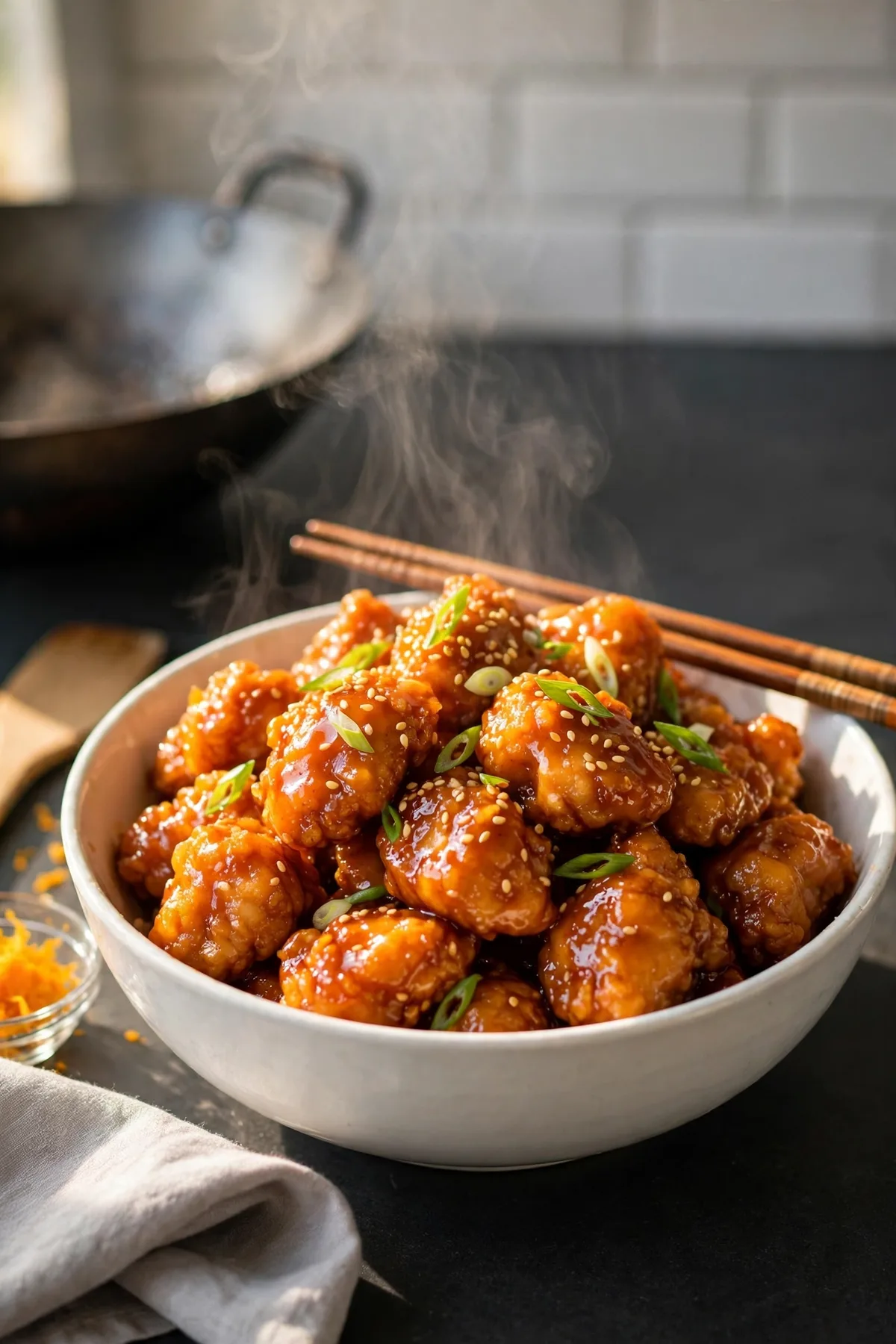
- Transfer to a serving bowl and garnish with sesame seeds and sliced green onion. Serve immediately while the chicken is still at its crispiest.



One Comment