
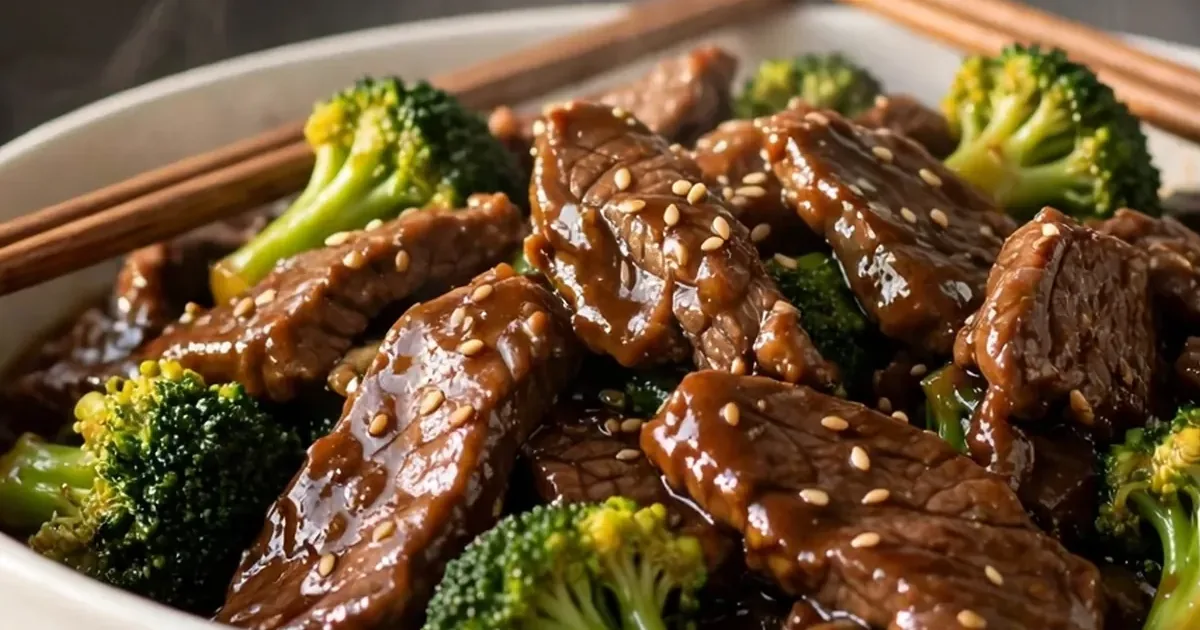
Best Beef and Broccoli (Tender, Ready in 25 Minutes)
⭐⭐⭐⭐⭐ Rate this recipe

Beef and broccoli done right has thin, tender slices of beef and genuinely crisp broccoli coated in a glossy, savory sauce — not chewy, tough meat sitting in a thin, bland sauce next to mushy, overcooked broccoli. This beef and broccoli recipe uses a quick velveting technique for the beef plus a specific high-heat searing method that keeps the broccoli bright and crisp instead of soggy. The entire dish comes together in one pan in just 25 minutes.
This recipe is built for anyone who’s ordered takeout because their homemade version turned out tough or flavorless. If you’ve ever made this dish that chewed like leather or tasted like plain soy sauce — every one of those problems has a specific fix here. It works for a quick weeknight dinner, a meal-prep staple, or a genuine substitute for delivery that actually tastes better.
Made this already? Scroll down and leave a ⭐⭐⭐⭐⭐ rating below — it helps more than you know.
Once you make this dish at home with tender beef, ordering takeout for this dish stops making sense.
⏱ Prep Time: 15 minutes
🕐 Cook Time: 10 minutes
⏳ Total Time: 25 minutes
🍽 Servings: 4
📊 Difficulty: Easy
💰 Estimated Cost: ~$13 total / ~$3.25 per serving
🥢 Main Item: Sliced flank steak and broccoli in a savory garlic sauce
Table of Contents
Why This Beef and Broccoli Recipe Works
- Velveting the beef in a baking soda marinade. Most recipes skip this step entirely, which is exactly why homemade beef and broccoli so often turns out chewy. A brief soak in a baking soda solution breaks down tough muscle fibers, producing genuinely tender beef in under 15 minutes.
another quick weeknight dinner here
- Blanching the broccoli before stir-frying. A fast dunk in boiling water partially cooks the broccoli so it finishes in the wok with just enough time to pick up flavor without turning mushy.
- Searing the beef in batches over high heat. Here’s the truth: overcrowding the pan steams the beef instead of searing it, which is the second major cause of tough, gray meat instead of browned, tender slices.
- A cornstarch slurry added at the very end. This thickens the sauce into a glossy coating that clings to every piece, rather than leaving a thin, watery liquid at the bottom of the pan.
- No deep frying, no special equipment, genuinely faster than delivery. This entire dish comes together in one pan in under 25 minutes — faster than most delivery orders actually arrive.
Understanding the Key Ingredient

I’ve made this recipe more times than I can count — always for real weeknight dinners, never just for testing. The one step I never skip, no matter how rushed the night is, is the key technique in Step 1. Every single time I’ve tried cutting corners on it, the final dish suffered. Every time I followed it properly, the result was exactly right.
Why Flank Steak Is the Right Choice
Flank steak has a pronounced grain that, when sliced thinly against that grain, shortens the muscle fibers and produces noticeably tender bites once cooked quickly over high heat for this recipe. It also carries enough natural beefy flavor to stand up to the bold, savory sauce without getting lost, unlike leaner cuts that can taste flat in a stir-fry. Additionally, flank steak is widely available and more affordable than more tender cuts like filet, making it a practical choice for a dish meant to come together quickly and affordably.
Beef Cut Comparison Guide
| Cut | Tenderness (after velveting) | Flavor | Best For |
|---|---|---|---|
| Flank steak | Very tender | Rich, beefy | Best overall result |
| Sirloin | Tender | Slightly milder | Good substitute |
| Skirt steak | Tender | Very rich, beefy | Good substitute, slightly fattier |
| Ribeye | Very tender | Rich but pricier | Works but less economical |
How to Choose the Best at the Store
- Look for visible grain lines running in one direction. This tells you which way to slice against the grain for maximum tenderness.
- Choose a piece with even thickness. Uneven cuts cook unevenly once sliced and seared.
- Buy slightly more than needed. Trimming any excess fat or silver skin reduces the usable weight.
- Partially freeze before slicing for easier cuts. 15–20 minutes in the freezer firms the meat just enough for clean, thin slices.
- Fresh beef should smell clean, not sour. A strong, unpleasant odor is a sign it’s past its prime.
How Much Do You Need?
| Servings | Flank Steak | Broccoli |
|---|---|---|
| 2 | ½ lb | 2 cups florets |
| 4 | 1 lb | 4 cups florets |
| 6 | 1½ lbs | 6 cups florets |
| 8 | 2 lbs | 8 cups florets |
Double Batch — How to Scale This Beef and Broccoli Recipe
Doubling works best by cooking the beef in more batches rather than trying to fit everything into one oversized pan at once — overcrowding remains the biggest risk at any scale. Blanch the broccoli in batches as well if doubling, since too much broccoli in the boiling water at once drops the temperature and slows the blanching process. The sauce ratio scales directly with no adjustment needed.
Ingredients You’ll Need
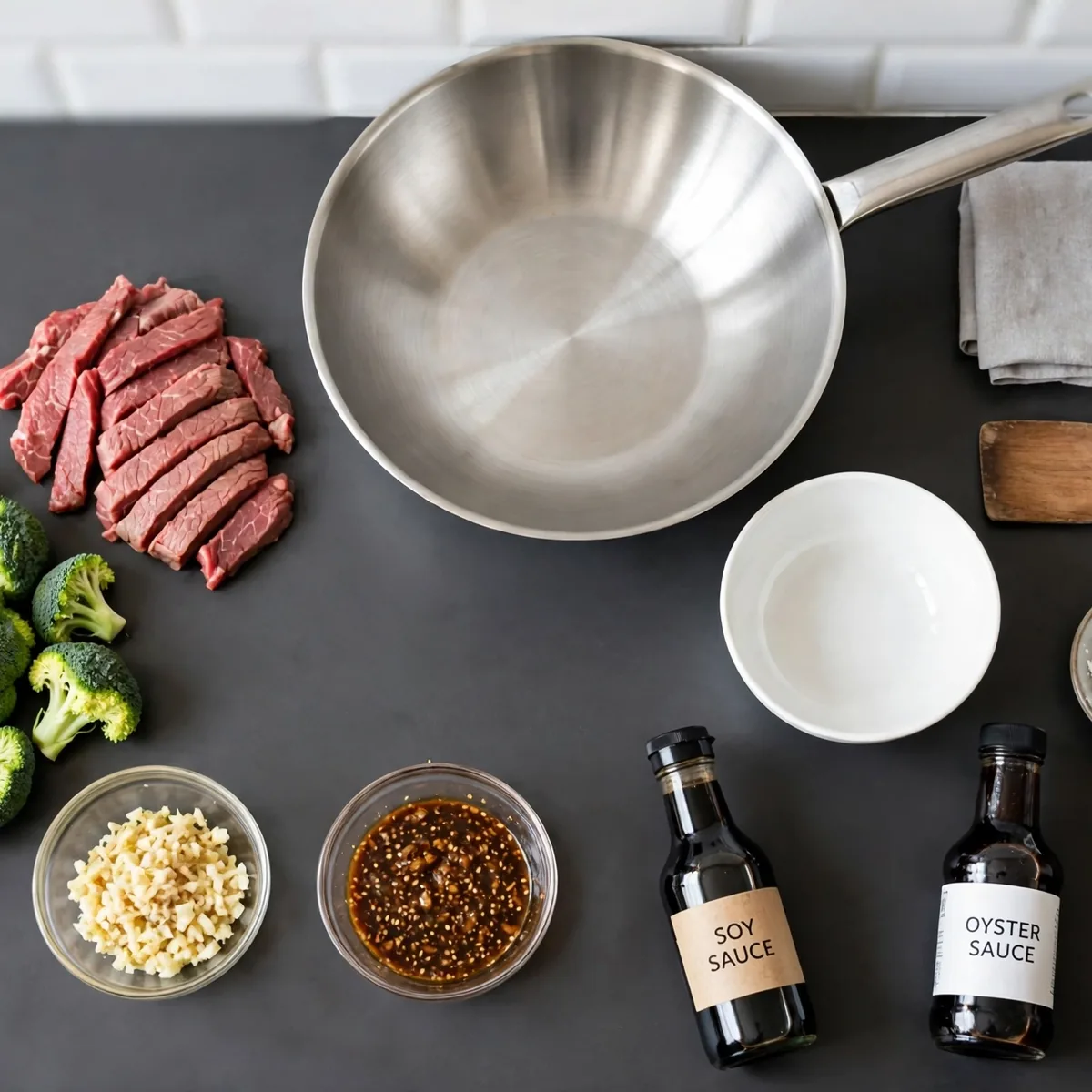
This recipe uses straightforward pantry and fresh ingredients. Here is everything broken down.
Main Ingredients
- Flank steak — 1 lb, thinly sliced against the grain. The protein base. Sliced thin for the quickest, most tender cook.
- Broccoli florets — 4 cups, fresh. Blanched briefly before stir-frying to lock in crisp texture.
- Garlic — 4 cloves, minced. Adds aromatic depth throughout.
- Fresh ginger — 1 tablespoon, minced. A warm, slightly sharp note that’s essential to the flavor profile.
- Soy sauce — ¼ cup, divided. The primary savory element, used in both the marinade and the sauce.
- Oyster sauce — 2 tablespoons. Adds a deep, slightly sweet umami that soy sauce alone can’t provide.
- Beef broth — ½ cup. Thins the sauce to the right consistency.
- Cornstarch — 2 tablespoons, divided. Used both in the beef marinade and as a thickener for the sauce.
Supporting Ingredients
- Baking soda — ½ teaspoon. Used in the velveting marinade to tenderize the beef.
- Brown sugar — 1 tablespoon. Balances the salty, savory elements of the sauce.
- Sesame oil — 1 teaspoon. A finishing touch added at the end for aroma.
- Vegetable oil — 2 tablespoons. For searing the beef and stir-frying.
Optional Additions Table
| Add-In | Amount | Effect |
|---|---|---|
| Sliced carrots | 1 cup | Adds color and sweetness |
| Red bell pepper, sliced | 1 | Adds color and a slightly sweet crunch |
| Sriracha | 1 tbsp | Adds heat throughout the dish |
| Sesame seeds | 1 tsp | Adds texture and visual finish |
| Sliced water chestnuts | ½ cup | Adds extra crunch |
Complete Substitutions Reference
| Original | Substitution | Notes |
|---|---|---|
| Flank steak | Sirloin or skirt steak | Both work well as direct substitutes |
| Fresh broccoli | Frozen broccoli, thawed | Slightly softer texture, still works |
| Oyster sauce | Hoisin sauce | Sweeter, slightly different flavor profile |
| Soy sauce | Coconut aminos | Good gluten-free substitute, slightly sweeter |
| Beef broth | Chicken broth | Works fine, slightly lighter flavor |
What NOT to Add to This Beef and Broccoli Recipe
❌ Skipping the velveting marinade — the single most common cause of tough, chewy beef in a homemade stir-fry
❌ Overcrowding the pan when searing beef — steams the meat instead of searing it, producing gray, tough slices
❌ Overcooking the broccoli — turns mushy and loses the bright green color and crisp bite
❌ Adding the cornstarch slurry directly without mixing with cold water first — clumps instead of thickening smoothly
❌ Too much soy sauce without balancing sweetness — oversalts the dish quickly; the brown sugar is there for a reason
❌ Slicing the beef with the grain instead of against it — produces noticeably chewier, stringier bites regardless of velveting
Equipment You’ll Need
Choosing the Right Equipment for Beef and Broccoli
| Tool | Purpose | Best For |
|---|---|---|
| Large wok | Cooking everything | Traditional shape, even high heat |
| Large stainless steel skillet | Cooking everything | Works just as well as a wok |
| Cast iron skillet | Cooking everything | Excellent heat retention and sear |
| Small pot | Blanching broccoli | Quick parboiling |
Other Tools That Actually Matter
A wok or large skillet with high sides makes tossing the ingredients far easier than a shallow pan, since stir-frying depends on constant movement. A sharp knife is essential for slicing the beef thinly and evenly against the grain, which directly affects the final tenderness. A small pot for blanching the broccoli separately, even briefly, matters more than it seems for keeping the vegetable crisp instead of soggy.
No Wok? Alternatives That Work for This Beef and Broccoli Recipe
- Large stainless steel skillet — works identically; just make sure it’s large enough to avoid overcrowding
- Cast iron skillet — excellent heat retention and browning, though slightly heavier to toss ingredients in
- Dutch oven — works for a larger batch, though the wider surface area of a wok or skillet is generally easier for stir-frying
How to Make Beef and Broccoli — Step by Step
Six steps. Most take under five minutes each.
Step 1 — Velvet the Beef (The Key Step)
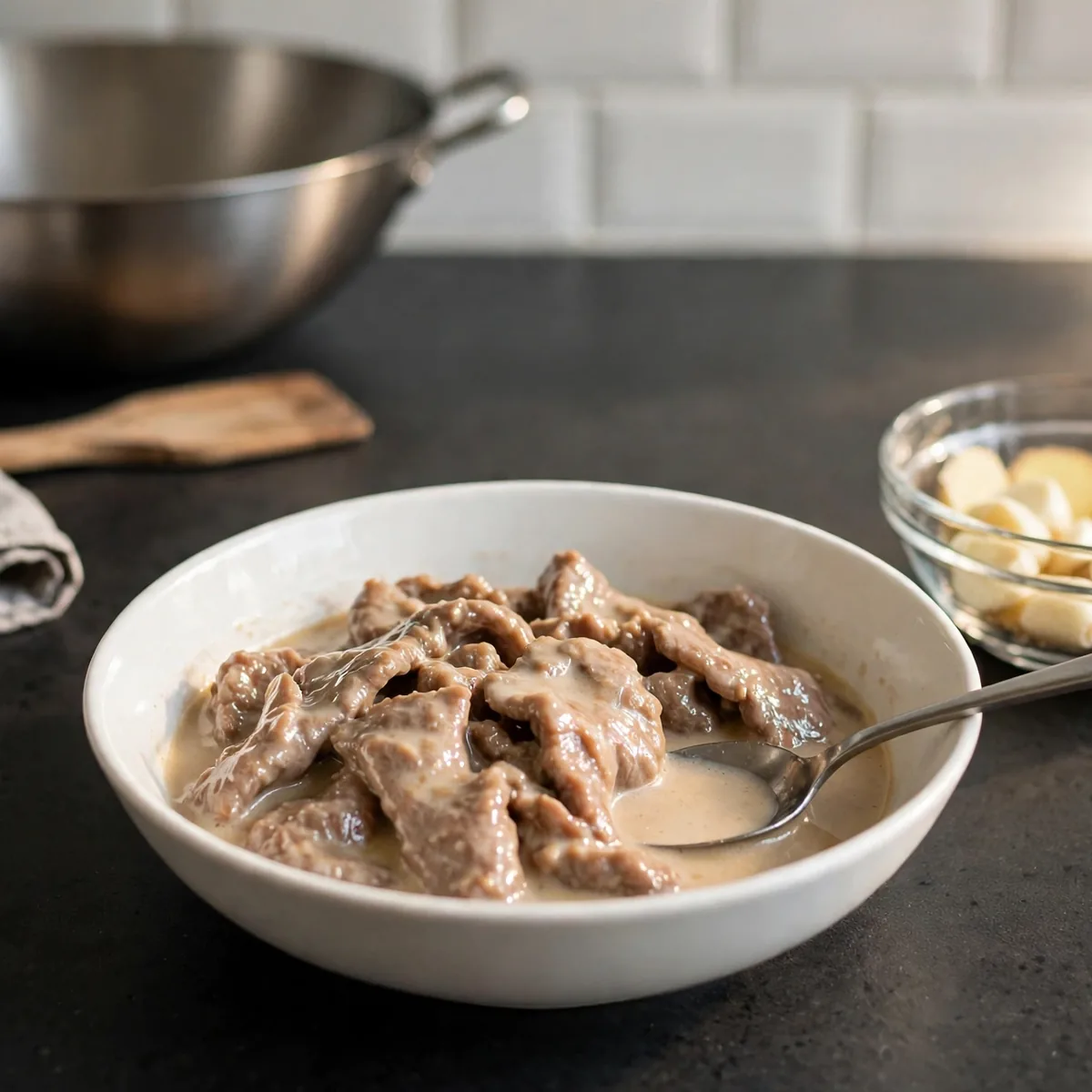
In a bowl, toss the sliced flank steak with the baking soda and let sit for 15 minutes. Rinse briefly under cold water and pat dry, then toss with 1 tablespoon of the soy sauce and 1 tablespoon of cornstarch. Most people skip this step entirely, but this velveting technique is exactly what makes restaurant-style dish so much more tender than a typical homemade version. Every single time I’ve skipped this step, the beef came out noticeably chewier.
💡 Pro Tip: Don’t skip rinsing the baking soda off thoroughly — leaving too much on can give the beef a slightly soapy, alkaline taste.
Step 2 — Blanch the Broccoli
While the beef marinates, bring a small pot of water to a boil. Add the broccoli florets and blanch for exactly 60–90 seconds, until bright green but still crisp. Drain immediately and set aside. This brief blanching step is what keeps the broccoli from turning mushy once it finishes cooking in the wok later.
💡 Pro Tip: Have a bowl of ice water ready to shock the broccoli immediately after draining — this stops the cooking instantly and locks in the vibrant green color.
Step 3 — Sear the Beef in Batches
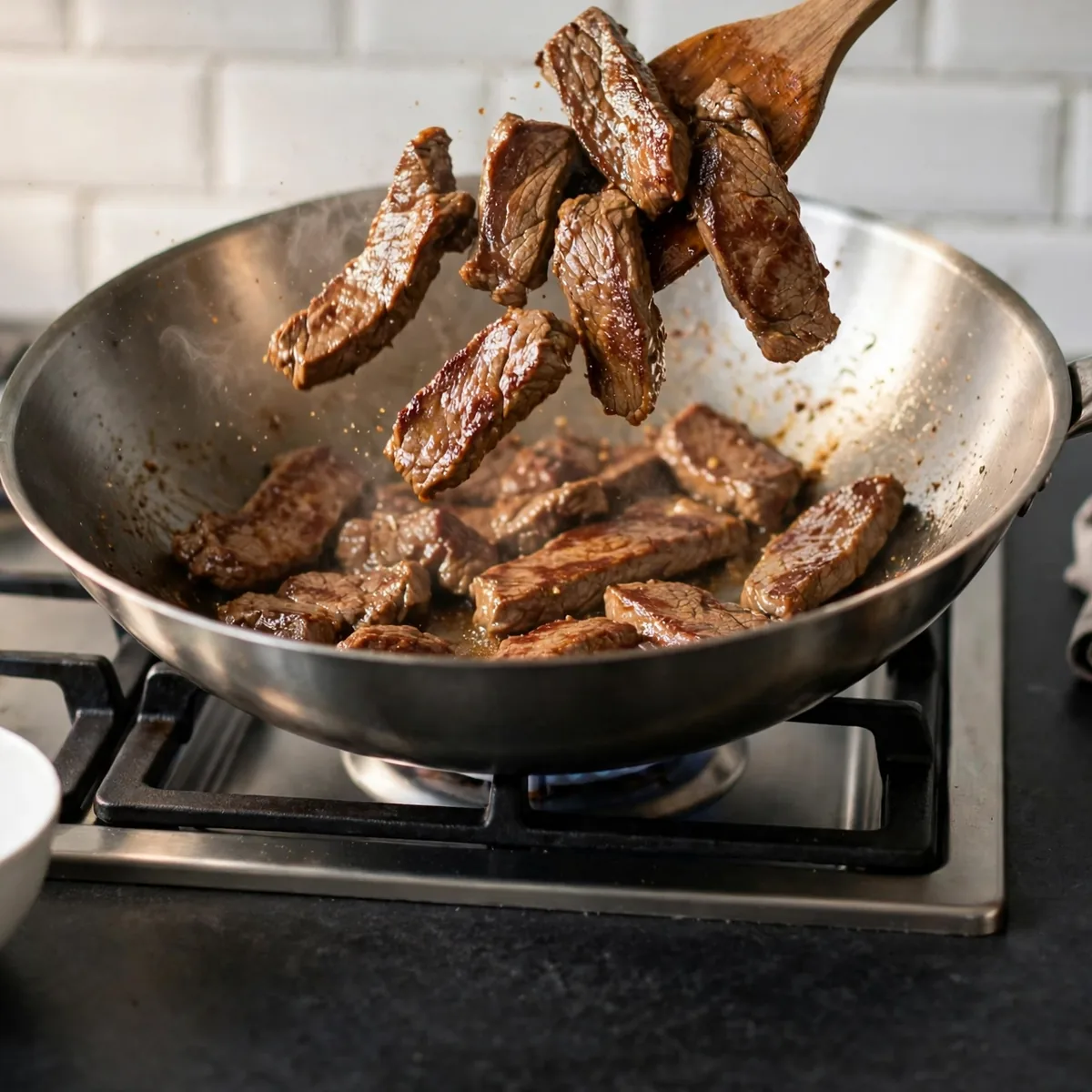
Heat the vegetable oil in a wok or large skillet over high heat until shimmering. Add half the beef in a single layer and sear for 60–90 seconds per side until browned. Remove to a plate and repeat with the second batch.
another easy weeknight dinner here
As a result, searing in batches at high heat is what produces genuine browning on the beef rather than a pale, steamed gray color.
💡 Pro Tip: Let the wok get properly hot before adding any beef — a pan that’s too cool is the fastest route to steaming instead of searing.
Step 4 — Sauté the Aromatics
In the same wok, add the minced garlic and ginger to the remaining oil and cook for 30–45 seconds until fragrant. This brief step builds the aromatic base that carries through the entire finished sauce.
💡 Pro Tip: Keep the heat high but watch closely — garlic and ginger both burn quickly once they hit a hot, oiled pan.
Step 5 — Combine and Add the Sauce
Mix together the remaining soy sauce, oyster sauce, beef broth, and brown sugar in a small bowl, then pour into the wok. Separately, whisk the remaining cornstarch with 2 tablespoons of cold water until smooth, then stir this slurry into the simmering sauce. Cook for 1–2 minutes until the sauce thickens and turns glossy.
💡 Pro Tip: Always mix cornstarch with cold water before adding it to a hot pan — adding dry cornstarch directly causes immediate clumping that’s nearly impossible to smooth out.
Step 6 — Combine Everything
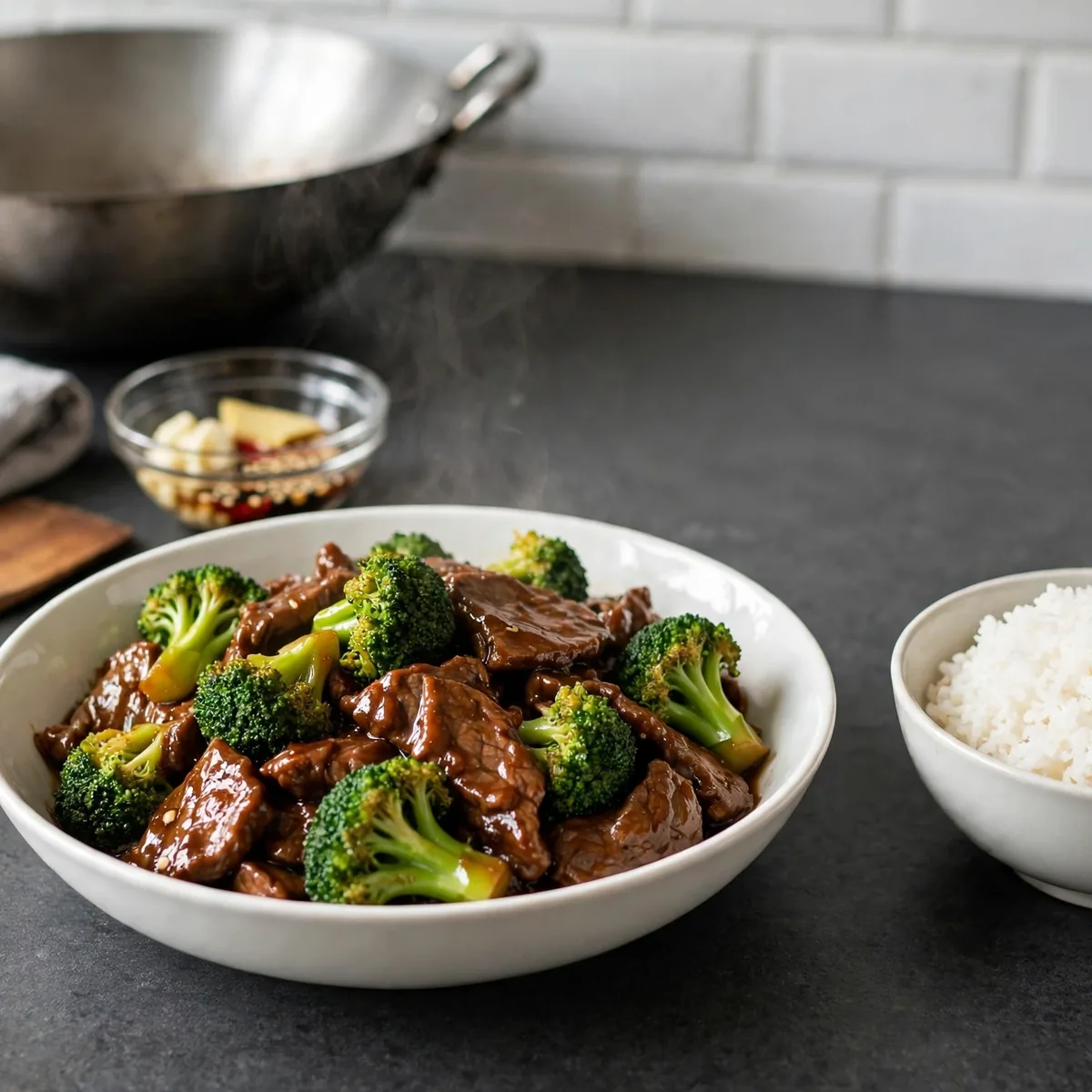
Return the seared beef and blanched broccoli to the wok along with the thickened sauce. Toss everything together for 1–2 minutes until evenly coated and heated through. Stir in the sesame oil off heat and serve immediately over rice.
How to Tell When It’s Done
In my kitchen, I’ve learned to trust color and texture over the clock for this recipe — but every stove runs a little differently, so check closely on your first attempt. Once you’ve made it once, you’ll know exactly what to look for.
Primary Doneness Test
The beef is done when it’s fully browned on the outside with no raw, pink streaks remaining, and the broccoli is done when it’s bright green and tender-crisp, offering some resistance when you bite into it rather than feeling raw or mushy.
Doneness Guide
| Indicator | What It Means | What to Do |
|---|---|---|
| Beef still gray or pink | Under-cooked | Sear 30–60 more seconds per side |
| Beef browned, no pink | Perfectly done | Remove and proceed to sauce |
| Broccoli dull green, raw-tasting | Needs more blanching time | Blanch 30 more seconds next time |
| Broccoli bright green, tender-crisp | Perfectly done | Combine with beef and sauce |
| Sauce thin and watery | Not thickened enough | Add a bit more cornstarch slurry |
| Sauce too thick, gluey | Over-thickened | Thin with a splash more beef broth |
Visual Signs It’s Done
- The beef has turned from pink and translucent to a uniform brown with visible sear marks
- The broccoli has shifted from dull, dark green to a bright, vivid green color
- The sauce looks glossy and coats a spoon evenly rather than looking watery or clumpy
- Everything in the pan looks evenly coated, with no dry, unsauced patches
- The aroma has shifted from raw garlic and ginger to a warm, toasted, savory smell
It’s Not Right — What to Do Now
- Beef turned out tough: Velveting step was skipped or rushed, or beef was sliced with the grain instead of against it — always velvet and slice against the grain
- Broccoli turned mushy: Blanched too long or cooked too long in the wok afterward — blanch for exactly 60–90 seconds and finish quickly in the pan
- Sauce stayed thin: Cornstarch slurry wasn’t properly mixed or enough wasn’t used — whisk a fresh slurry and stir in gradually until thickened
- Dish tastes bland: Not enough soy sauce or oyster sauce, or garlic and ginger weren’t given their own moment to bloom — taste and adjust before serving
How to Make the Sauce

The sauce is what ties this entire dish together, and getting it right comes down to technique more than any single ingredient. There are three approaches depending on your preference.
Method 1 — Classic Savory Sauce (Standard Recipe)
Combine soy sauce, oyster sauce, beef broth, and brown sugar, then thicken with a cornstarch slurry. This is the method used throughout this recipe and produces a balanced, deeply savory result that tastes closest to a classic Chinese-American takeout version.
Method 2 — Extra Garlicky Sauce
Double the garlic to 8 cloves and add it in two stages — half during the initial sauté and half stirred in raw at the very end. This produces a noticeably more pungent, garlic-forward flavor that garlic lovers tend to prefer.
Method 3 — Spicy Sauce
Add 1 tablespoon of sriracha or 1 teaspoon of chili garlic sauce along with the other sauce ingredients. The heat builds gradually and pairs especially well with the savory richness of the dish.
Troubleshooting Quick Reference
| Problem | Cause | Fix |
|---|---|---|
| Sauce lumpy, clumped | Cornstarch added dry instead of as a slurry | Always mix with cold water first before adding |
| Sauce too salty | Too much soy sauce used | Add a splash of water or beef broth to dilute |
| Sauce too thin | Not enough cornstarch slurry | Whisk a fresh slurry and stir in gradually |
| Sauce tastes flat | Garlic and ginger weren’t bloomed properly | Always sauté them briefly before adding liquid |
What to Serve With It
Classic Pairings That Always Work
- Steamed white rice — the most classic pairing that turns this into a complete, filling meal
- Fried rice — for a heartier, more indulgent version of the meal
- Steamed jasmine rice — a fragrant alternative to plain white rice
- Egg drop soup — a light starter that complements the richness of the main dish
- Spring rolls — a crispy side that rounds out a full Chinese-American inspired spread
Comfort Food Pairings
- Lo mein noodles instead of rice — a heartier base that soaks up the savory sauce
- Fried wontons — for a complete appetizer-and-main combination
- Sesame chicken on the side — for anyone wanting a full double-protein spread
- Crab rangoon — a classic, indulgent pairing at many Chinese-American restaurants
Low-Carb Options
- Serve over cauliflower rice — keeps the whole meal low-carb while still adding bulk
- Skip the rice entirely — this dish is filling enough to stand on its own with extra broccoli
- Add extra vegetables like snap peas — increases volume without significant carbohydrates
6 Ways to Use Leftover Beef and Broccoli
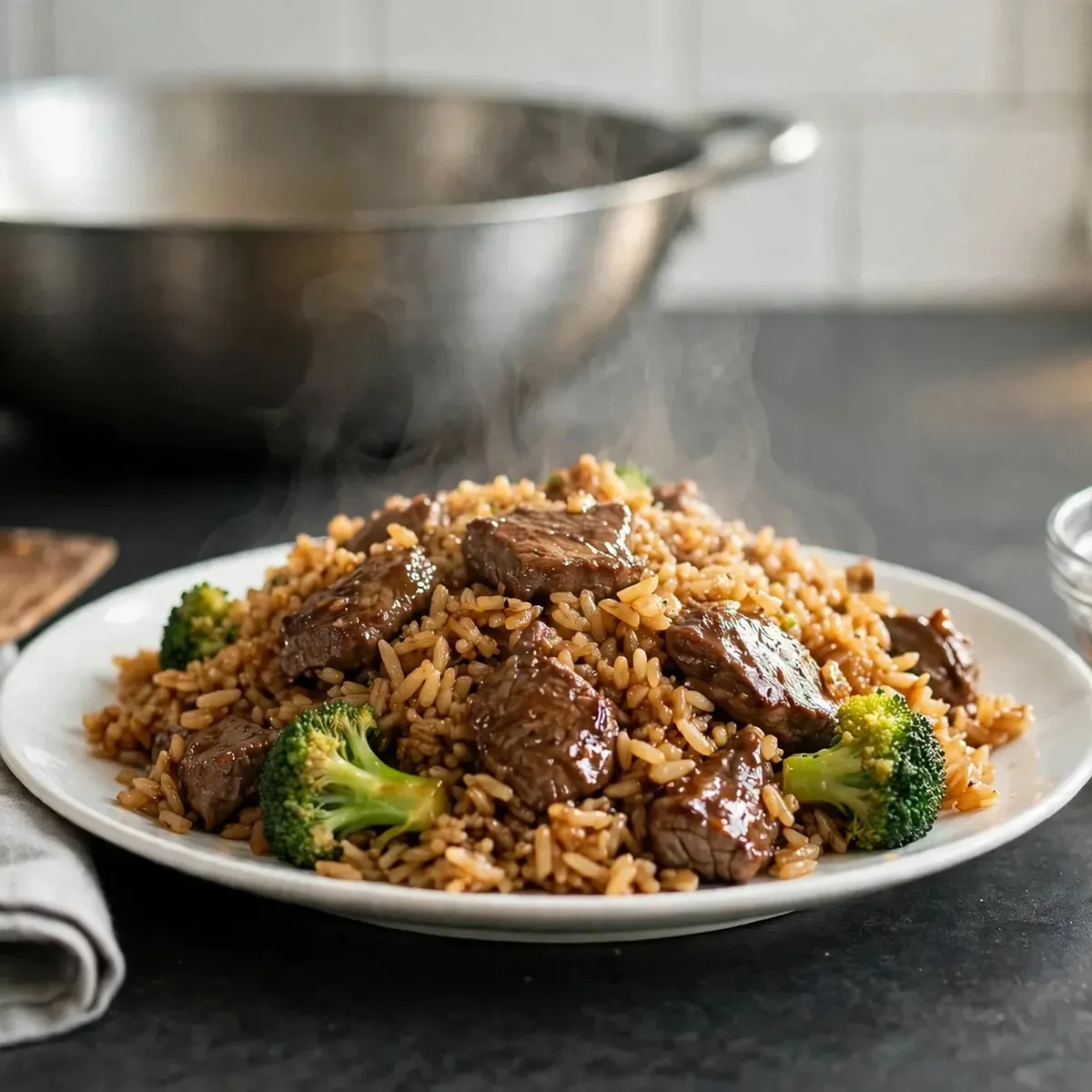
Leftovers can become several completely different meals. Here are 6 ways to use it.
Beef and Broccoli Fried Rice
What you need: Leftover stir-fry, 2 cups cooked rice, 1 egg, extra soy sauce.
How to assemble: Scramble the egg in a hot pan, add rice and the leftovers, stir-fry together for 3–4 minutes with a splash more soy sauce.
One tip: Day-old rice works far better than fresh — it fries up without clumping together.
Beef and Broccoli Lettuce Wraps
What you need: Leftover stir-fry, butter lettuce or romaine leaves.
How to assemble: Chop the leftovers roughly and spoon into individual lettuce leaves like a wrap.
One tip: Pat the lettuce leaves dry first — excess water makes the wrap fall apart faster.
Beef and Broccoli Noodle Bowl
What you need: Leftover stir-fry, cooked lo mein or rice noodles.
How to assemble: Toss the leftovers with warm cooked noodles, adding a splash of extra soy sauce or sesame oil if needed.
try another easy dinner idea here
One tip: Reheat the leftovers separately first to ensure the noodles don’t get overcooked when combined.
Beef and Broccoli Stuffed Baked Potato
What you need: Leftover stir-fry, baked potatoes.
How to assemble: Split open baked potatoes and spoon the leftovers directly over the top.
One tip: This works especially well with a thicker leftover batch that’s reduced slightly after a day in the fridge.
Beef and Broccoli Soup
What you need: Leftover stir-fry, 4 cups beef broth.
How to assemble: Simmer the leftovers in beef broth for 5–8 minutes to turn it into a quick, savory soup.
One tip: This stretches a small amount of leftovers into a full second meal almost effortlessly.
Beef and Broccoli Omelet Filling
What you need: Leftover stir-fry (chopped finer), 2–3 eggs.
How to assemble: Make a plain omelet and fold warmed, finely chopped leftovers inside before folding it closed.
One tip: Reheat the filling separately first — cold filling inside a hot omelet cools the eggs too fast and leaves the center underdone.
Storage, Freezing and Reheating Guide
Refrigerator Storage (Up to 4 Days)
This dish stores in the refrigerator for up to 4 days in an airtight container. The broccoli softens slightly more in storage, but the flavor holds up well throughout that window.
Can You Make This Ahead of Time?
Yes — this recipe works well for meal prep. Make the full batch, portion into individual containers, and refrigerate for quick lunches or dinners throughout the week. The beef stays tender even after a day or two thanks to the velveting step.
Freezer Storage (Up to 2 Months)
This dish freezes reasonably well for up to 2 months, though the broccoli texture softens more noticeably after thawing than it does in the fridge. Freeze in individual portions in airtight containers or freezer bags for easiest reheating.
This Recipe Works as a Freezer Meal
Make a double batch specifically for the freezer. Portion into labeled containers before freezing so you can pull exactly what you need for any given weeknight. Thaw overnight in the refrigerator before reheating for the best texture.
see another freezer-friendly recipe here
How to Reheat Without Ruining It
| Method | Setting | Time | Notes |
|---|---|---|---|
| Skillet | Medium-high | 4–5 min | Best method; restores some sear on the beef |
| Microwave | 70% power | 1–2 min | Stir halfway through |
| Wok | High | 2–3 min | Good for restoring the texture most closely |
Weekly Prep Strategy
Make a full batch on Sunday and portion into containers. This dish reheats quickly enough to be a genuinely practical weekday lunch or dinner without any extra effort during the week.
Recipe Variations Worth Trying
Same technique. Completely different flavor profiles. Master this base recipe first — then try one of these.
Most Popular — Spicy Beef and Broccoli
Add 1 tablespoon of sriracha or chili garlic sauce to the sauce mixture in Step 5. The building heat makes this one of the most requested variations of this recipe for anyone who wants an extra kick alongside the savory flavor.
International — Korean-Inspired Beef and Broccoli
Add 1 tablespoon of gochujang and 1 teaspoon of grated garlic along with the standard sauce ingredients. The gochujang adds a fermented, spicy depth that shifts the flavor profile toward Korean bulgogi-style seasoning while keeping the same beef-and-broccoli base.
Low-Carb — Extra Vegetable Version
Add 1 cup of sliced mushrooms and ½ cup of sliced bell peppers along with the broccoli. Therefore, you get more volume and texture without adding meaningful carbohydrates, which makes this version even more filling for the same calorie count.
Quick Shortcut — Pre-Cut Stir Fry Beef Version
Use pre-sliced stir fry beef from the meat counter instead of slicing a whole flank steak yourself, skipping the slicing step entirely while keeping the velveting process the same. This cuts the prep time down significantly while still delivering a tender result.
Fresh and Elevated — Beef and Broccoli with Toasted Sesame
Toast 2 tablespoons of sesame seeds in a dry pan until golden, then sprinkle generously over the finished dish along with an extra drizzle of sesame oil. The toasted sesame adds a deeper, nuttier aroma that elevates this simple dish into something feeling more restaurant-quality.
Nutrition Information
Per Serving Breakdown (Based on 4 Servings)
| Nutrient | Amount | % Daily Value |
|---|---|---|
| Calories | ~340 | — |
| Total Fat | 16g | 21% |
| Saturated Fat | 5g | 25% |
| Cholesterol | 65mg | 22% |
| Sodium | 890mg | 39% |
| Total Carbohydrates | 18g | 7% |
| Dietary Fiber | 3g | 11% |
| Total Sugars | 6g | — |
| Protein | 30g | 60% |
| Vitamin C | 90% DV | — |
According to USDA FoodData Central, one cup of broccoli provides well over 100% of the daily recommended vitamin C intake — making this dish a genuinely nutrient-dense option alongside its rich, savory flavor.
Dietary Compatibility
| Diet | Compatible | Notes |
|---|---|---|
| Gluten-Free | ❌ | Use coconut aminos or tamari and gluten-free oyster sauce to adapt |
| Dairy-Free | ✅ | No dairy in this recipe |
| Paleo | ❌ | Soy sauce and cornstarch both excluded |
| Keto | ❌ | Reduce brown sugar and use a low-carb thickener to adapt |
| Vegetarian | ❌ | Replace beef with extra-firm tofu or mushrooms |
| Vegan | ❌ | Same tofu substitution plus a vegan oyster sauce alternative needed |
To reduce sodium in this dish, use low-sodium soy sauce and reduce the amount slightly — the oyster sauce and brown sugar already carry plenty of flavor on their own.
8 Mistakes That Ruin Beef and Broccoli
Every one of these mistakes is fixable. Know them before you start — not after.
❌ Mistake 1: Skipping the Velveting Step
Why it happens: Not realizing how much it matters, or wanting to save time. What goes wrong: Beef without this treatment turns noticeably chewier and tougher once cooked. The fix: Always velvet the beef with baking soda before marinating and cooking.
❌ Mistake 2: Slicing the Beef With the Grain
Why it happens: Not paying attention to the direction of the muscle fibers. What goes wrong: Slicing with the grain instead of against it produces long, tough fibers that chew like string. The fix: Always identify the grain direction and slice perpendicular to it.
❌ Mistake 3: Overcrowding the Pan When Searing Beef
Why it happens: Trying to cook everything at once to save time. What goes wrong: A crowded pan steams the beef instead of searing it, producing pale, tough slices. The fix: Sear the beef in two batches with a single layer each time.
❌ Mistake 4: Overcooking the Broccoli
Why it happens: Treating it like it needs to fully soften. What goes wrong: Overcooked broccoli turns mushy, dull green, and loses its appealing crisp texture. The fix: Blanch for exactly 60–90 seconds and finish quickly in the wok.
❌ Mistake 5: Adding Cornstarch Directly Without Mixing First
Why it happens: Skipping what seems like an unnecessary extra step. What goes wrong: Dry cornstarch added straight to hot liquid clumps instantly and is nearly impossible to smooth out. The fix: Always whisk cornstarch with cold water into a slurry before adding it to the pan.
❌ Mistake 6: Not Letting the Pan Get Hot Enough
Why it happens: Rushing to start cooking. What goes wrong: A pan that isn’t properly preheated steams the beef instead of searing it, regardless of how well it was velveted. The fix: Heat the oil until it’s shimmering before adding any beef.
❌ Mistake 7: Using Too Much Soy Sauce
Why it happens: Wanting a more intensely savory flavor. What goes wrong: Excess soy sauce oversalts the entire dish and can mask the other flavors. The fix: Stick to the amount called for in the recipe, and taste before adding extra.
❌ Mistake 8: Not Tasting Before Serving
Why it happens: Assuming the recipe amounts are automatically balanced. What goes wrong: Depending on the specific soy sauce and oyster sauce brands used, the dish can taste under or over-seasoned. The fix: Always taste the finished sauce and adjust salt or sweetness before serving.
Frequently Asked Questions
Why is my beef and broccoli tough?
The most common cause is skipping the velveting step, which uses a brief baking soda marinade to break down tough muscle fibers before cooking. The second major cause is slicing the beef with the grain instead of against it, which leaves long, chewy fibers intact regardless of marinating. Both velveting and slicing against the grain together solve this issue in nearly every batch of homemade beef and broccoli.
What cut of beef is best for beef and broccoli?
Flank steak is the best choice for this recipe since its pronounced grain, once sliced thinly against it, produces notably tender bites after velveting and a quick sear. Sirloin and skirt steak both work well as substitutes, offering similar tenderness and flavor. Avoid naturally tougher cuts like chuck or round unless they’re sliced extremely thin and given extra time in the velveting marinade.
How do you make the sauce for beef and broccoli thicken properly?
Whisk the cornstarch with cold water first to create a smooth slurry before adding it to the hot sauce — adding dry cornstarch directly to hot liquid causes immediate clumping that’s difficult to fix. Stir the slurry into the simmering sauce gradually, cooking for 1–2 minutes until it visibly thickens and turns glossy. If the sauce still seems thin after this, a small additional amount of slurry, mixed fresh, usually solves it.
Can you make beef and broccoli ahead of time?
Yes — this recipe works well for meal prep. Make the full batch, portion it into individual containers, and refrigerate for up to 4 days. The beef stays tender thanks to the velveting step, and the overall flavor holds up well throughout the storage window, making it a genuinely practical make-ahead option.
What do you serve with beef and broccoli?
Steamed white rice is the most classic pairing and turns this into a complete, filling meal. Fried rice or lo mein noodles work well for a heartier version. For a lighter meal, serving it over cauliflower rice keeps the dish low-carb while still providing something to soak up the flavorful sauce.
Can you freeze beef and broccoli?
Yes — it freezes reasonably well for up to 2 months, though the broccoli texture softens more noticeably after thawing compared to refrigerator storage. Freeze in individual portions for the easiest reheating, and thaw overnight in the refrigerator before warming it through on the stovetop or in a wok.
How long does beef and broccoli last in the fridge?
This beef and broccoli recipe lasts up to 4 days in the refrigerator stored in an airtight container. The broccoli continues to soften slightly the longer it sits, but the beef stays tender and the overall flavor holds up consistently throughout that window.
Why is my broccoli soggy in beef and broccoli?
This almost always means the broccoli was blanched too long, or it spent too much extra time cooking in the wok after being added back in. Blanching for exactly 60–90 seconds, then shocking it in ice water immediately, locks in the crisp texture before it ever reaches the pan. Keeping the final toss with the sauce brief, just 1–2 minutes, also helps prevent the broccoli from overcooking at the end.
What is velveting and do you need it for beef and broccoli?
Velveting is a Chinese cooking technique where meat is briefly marinated in a mixture typically including baking soda, which breaks down tough muscle fibers and produces a noticeably more tender texture once cooked. For this beef and broccoli recipe, yes, this step genuinely matters — it’s the single biggest factor separating tough, chewy homemade beef from the tender result found at most Chinese-American restaurants.
Why does my beef and broccoli taste bland?
The most common cause is not giving the garlic and ginger their own moment to bloom in hot oil before adding liquid, which leaves the aromatics tasting underdeveloped. Using too little soy sauce or oyster sauce, or skipping the brown sugar that balances the saltiness, can also leave the dish tasting flat. Tasting the sauce before combining everything and adjusting as needed usually catches whatever the batch is missing.
You Might Also Like
Best Shrimp Scampi
Beef and Broccoli — Recipe Card
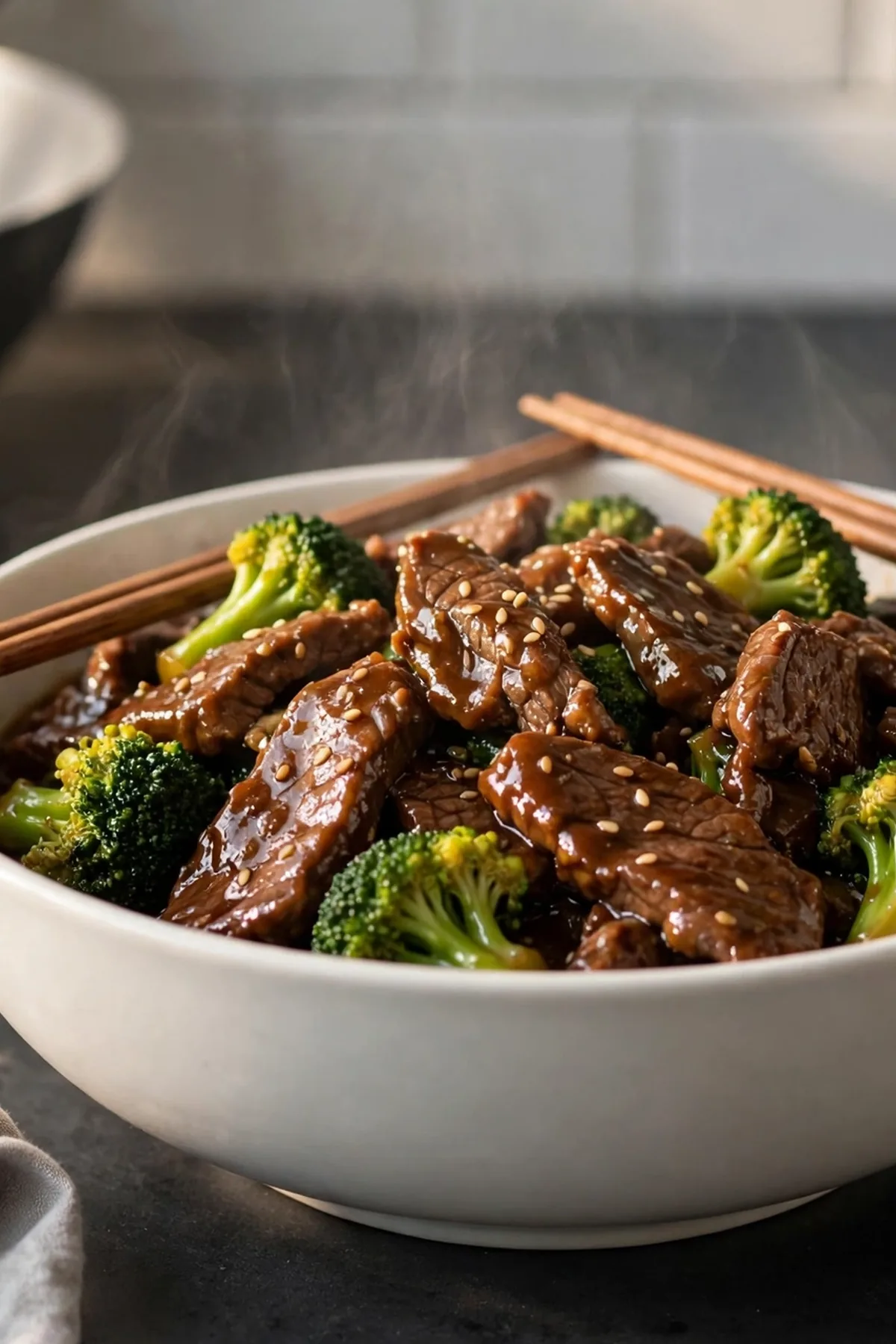
BEEF AND BROCCOLI
Ingredients
Equipment
Method
- Toss sliced beef with baking soda. Let sit 15 minutes. Rinse, pat dry, then toss with 1 tbsp soy sauce and 1 tbsp cornstarch.
- Blanch broccoli in boiling water 60–90 seconds until bright green. Drain and set aside.
- Sear beef in oil over high heat in two batches, 60–90 seconds per side, until browned. Remove to a plate.
- Sauté garlic and ginger in remaining oil 30–45 seconds.
- Add remaining soy sauce, oyster sauce, broth, and brown sugar. Whisk remaining cornstarch with 2 tbsp cold water and stir in. Cook 1–2 minutes until thickened.
- Return beef and broccoli to the pan. Toss to combine. Stir in sesame oil off heat and serve over rice.
Notes
✅ Always slice beef against the grain — this shortens the fibers for a more tender bite.
🔄 No flank steak? Sirloin or skirt steak both work as direct substitutes.
❄️ Refrigerate up to 4 days or freeze up to 2 months in individual portions.
📌 Blanch broccoli for exactly 60–90 seconds and shock in ice water — this keeps it crisp instead of mushy. Make Ahead + Freezer Notes: Make the full batch and portion into containers for up to 4 days refrigerated. Freeze individual portions up to 2 months; thaw overnight before reheating. Nutrition Per Serving: Calories: ~340 | Protein: 30g | Fat: 16g | Carbs: 18g | Fiber: 3g | Sodium: ~890mg Dietary Info: ❌ Gluten-Free | ✅ Dairy-Free | ❌ Paleo | ❌ Keto | ❌ Vegetarian | ❌ Vegan Did You Make This? Tag @thegildedskillet and leave a ⭐⭐⭐⭐⭐ rating below.
— David | The Gilded Skillet



2 Comments