

Best Chicken Fried Rice (Smoky, Savory, Ready in 20 Minutes)
⭐⭐⭐⭐⭐ Rate this recipe
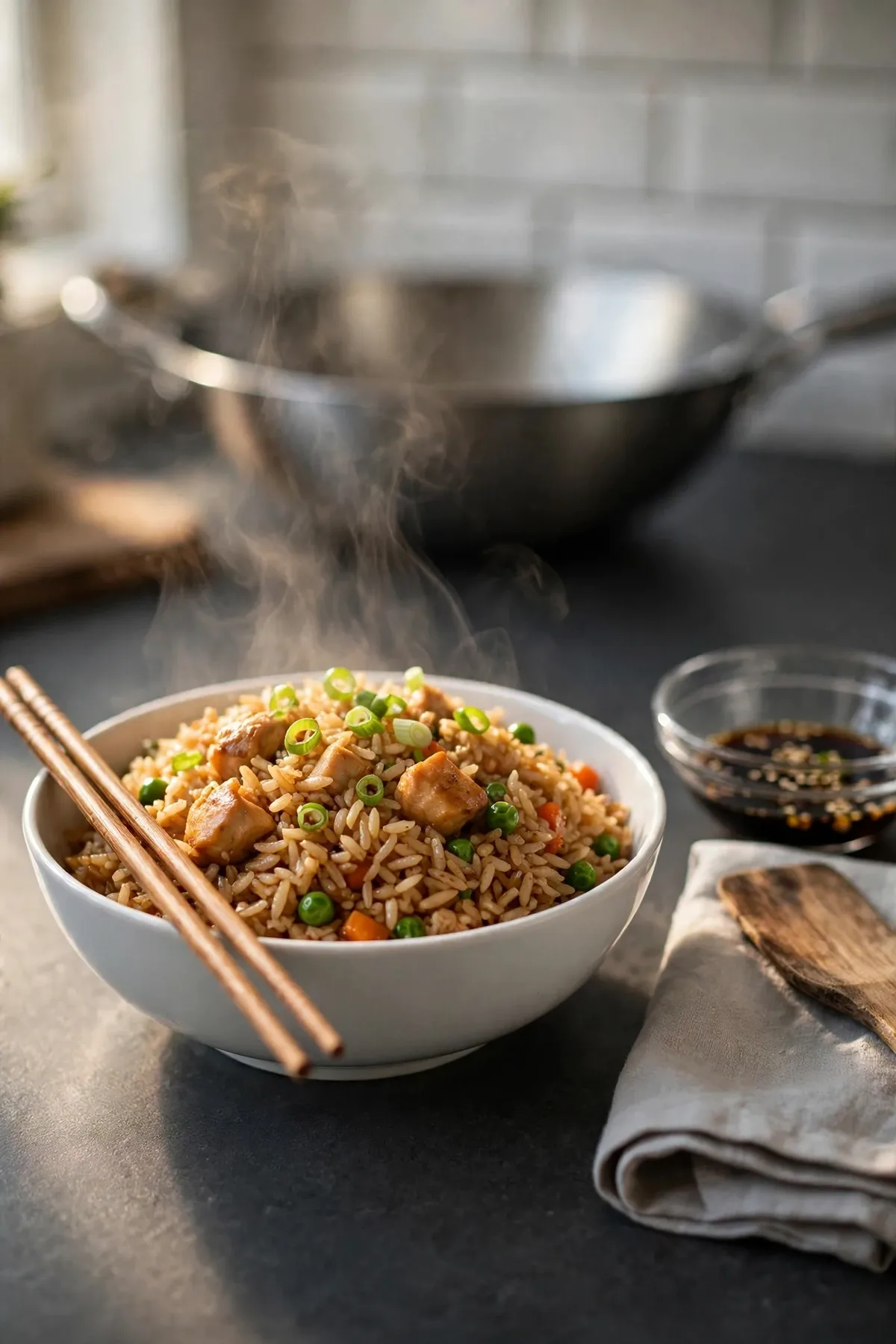
Chicken fried rice done right has genuinely separate, golden-brown grains with real smoky depth — not a sticky, clumped mass that tastes like plain rice with soy sauce dumped on top. This chicken fried rice recipe uses day-old rice and a specific high-heat wok technique that produces the same slightly smoky flavor found at good Chinese-American restaurants. The entire dish comes together in one pan in just 20 minutes.
This recipe is built for anyone who’s made a mushy, clumped batch and wants a version that turns out crisp and flavorful every single time. If you’ve ever ended up with gummy rice or bland, watery results — every one of those problems has a specific fix here. It works for a quick weeknight dinner, a way to use up leftover rice, or a genuine substitute for delivery that actually tastes better.
Made this already? Scroll down and leave a ⭐⭐⭐⭐⭐ rating below — it helps more than you know.
Once you make this dish with properly dried-out rice, the clumpy homemade version stops being a problem.
⏱ Prep Time: 10 minutes
🕐 Cook Time: 10 minutes
⏳ Total Time: 20 minutes
🍽 Servings: 4
📊 Difficulty: Easy
💰 Estimated Cost: ~$8 total / ~$2.00 per serving
🍚 Main Item: Golden-brown rice with diced chicken, egg, and vegetables
Table of Contents
Why This Chicken Fried Rice Recipe Works
- Day-old rice, not freshly cooked. Most people reach for warm, freshly made rice, which is exactly why homemade fried rice so often turns out mushy. Day-old rice has dried out and firmed up in the fridge, which is what lets it fry into separate, distinct grains instead of clumping together.
- Scrambling the egg separately first. Cooking egg directly in the same pan as everything else produces small, unevenly cooked curds mixed throughout. Scrambling it on its own and setting it aside keeps the texture clean and distinct.
- High heat, with everything moving constantly. Here’s the truth: low heat steams the rice instead of frying it, which is the second major cause of a soft, gummy texture instead of crisp, separate grains.
- Soy sauce added at the very end, around the edges of the pan. This technique lets the soy sauce briefly caramelize against the hot metal before being tossed through, building a smoky depth that simply pouring it over the rice can’t replicate.
- Diced chicken cooked and seasoned on its own. Plain, unseasoned chicken tossed in at the last minute tastes flat no matter how flavorful the rice is. Seasoning it while it cooks builds flavor all the way through.
👉 another quick weeknight dinner here
Understanding the Key Ingredient
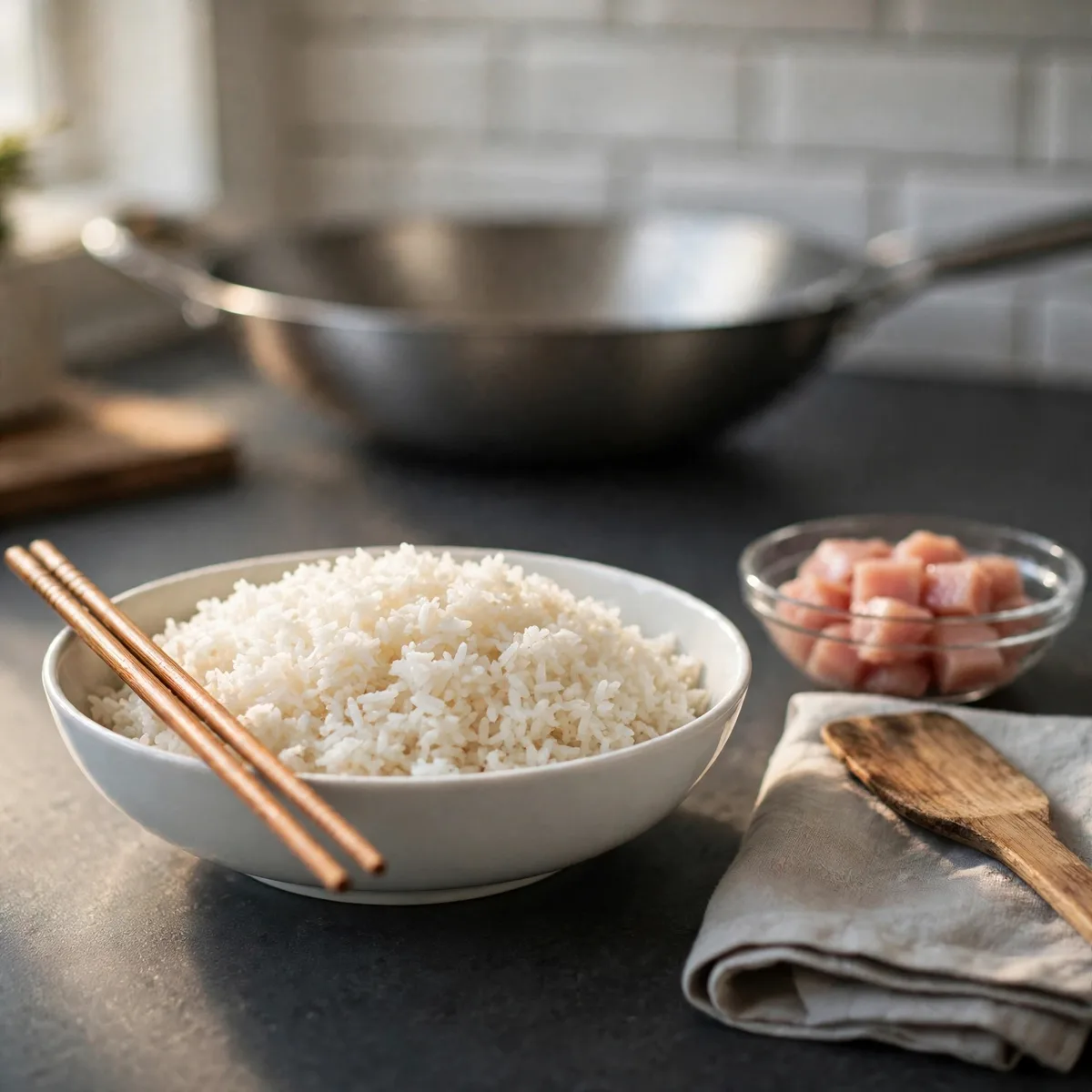
I’ve made this chicken fried rice recipe in my own kitchen more times than I can count — always for real weeknight dinners, never just for testing. The one step I never skip, no matter how rushed the night is, is the key technique in Step 1. Every single time I’ve tried cutting corners on it, the final dish suffered. Every time I followed it properly, the result was exactly right.
Why Day-Old Rice Is the Right Choice
Freshly cooked rice carries a significant amount of surface moisture that hasn’t had time to evaporate, and that excess moisture is exactly what causes fresh rice to turn gummy and clump together the moment it hits a hot pan for this recipe. Rice that’s been refrigerated overnight loses much of that surface moisture as the starches firm up, which lets each grain fry independently instead of sticking to its neighbors. Additionally, day-old rice holds its shape better during the vigorous tossing this dish requires, staying intact rather than breaking down into mush.
Rice Age Comparison Guide
| Rice Age | Moisture Level | Texture Result | Best For |
|---|---|---|---|
| Day-old, refrigerated | Low | Separate, distinct grains | Best overall result |
| Freshly cooked, cooled completely | Medium | Slightly stickier but workable | Acceptable in a pinch |
| Freshly cooked, still warm | High | Clumps together, turns mushy | Avoid entirely |
| Rice cooked specifically for frying, spread thin to dry | Low | Nearly as good as day-old | Good shortcut if no leftovers on hand |
How to Choose the Best at the Store
- Buy long-grain white rice specifically for this recipe. Its lower starch content fries up more distinctly than short-grain varieties.
- Cook rice a day ahead on purpose if you don’t have leftovers. Spread it on a baking sheet to cool and dry out faster than it would in a covered container.
- Avoid pre-seasoned rice mixes. These already contain their own salt and spice blend that throws off this recipe’s balance.
- Jasmine rice works as a substitute. It has a slightly different aroma but fries up with a similarly distinct texture.
- Store leftover rice uncovered briefly before refrigerating. This lets some initial steam escape before it goes into an airtight container.
How Much Do You Need?
| Servings | Cooked Rice | Diced Chicken |
|---|---|---|
| 2 | 2 cups | ½ lb |
| 4 | 4 cups | 1 lb |
| 6 | 6 cups | 1½ lbs |
| 8 | 8 cups | 2 lbs |
Double Batch — How to Scale This Chicken Fried Rice Recipe
Doubling works best by cooking in two separate batches rather than trying to fit everything into one oversized pan — overcrowding is the single biggest risk at any scale for this dish. Scramble a double portion of egg in one go, since that step scales easily, but fry the rice and chicken separately to maintain the proper high heat and constant movement. The sauce ratio scales directly with no adjustment needed.
Ingredients You’ll Need

This recipe uses straightforward pantry and fresh ingredients. Here is everything broken down.
Main Ingredients
- Cooked white rice — 4 cups, cold, day-old. The base of the dish. Cold and dried out for the best fried texture.
- Chicken breast — 1 lb, diced small. The protein. Seasoned and cooked separately for the deepest flavor.
- Eggs — 2, lightly beaten. Scrambled separately for clean, distinct curds throughout.
- Frozen peas and carrots — 1 cup. Adds color and texture without needing to prep fresh vegetables.
- Soy sauce — 3 tablespoons. The primary savory element, added at the very end.
- Sesame oil — 1 tablespoon. Adds the distinct nutty aroma associated with this flavor profile.
- Garlic — 3 cloves, minced. Adds aromatic depth throughout.
- Green onion — 3, sliced, divided. Used both in cooking and as a fresh garnish on top.
Supporting Ingredients
- Vegetable oil — 3 tablespoons, divided. For cooking the chicken, egg, and rice separately.
- Salt and black pepper — to taste.
- White pepper — ¼ teaspoon (optional). A traditional addition in many Chinese-American fried rice recipes.
Optional Additions Table
| Add-In | Amount | Effect |
|---|---|---|
| Diced ham or char siu | ½ cup | Adds a traditional combination-style flavor |
| Bean sprouts | ½ cup | Adds extra crunch and freshness |
| Sriracha | 1 tbsp | Adds heat throughout the dish |
| Oyster sauce | 1 tbsp | Adds a deeper, more savory umami |
| Sesame seeds | 1 tsp | Adds texture and visual finish |
Complete Substitutions Reference
| Original | Substitution | Notes |
|---|---|---|
| Chicken breast | Chicken thighs, diced | Slightly richer, juicier result |
| Soy sauce | Coconut aminos | Good gluten-free substitute, slightly sweeter |
| Frozen peas and carrots | Fresh diced vegetables | Works fine, needs a brief sauté first |
| Vegetable oil | Avocado oil | Similar high smoke point, milder flavor |
| White rice | Brown rice | Chewier texture, longer initial cook time |
What NOT to Add to This Chicken Fried Rice Recipe
❌ Freshly cooked, warm rice — the single most common cause of mushy, clumped fried rice
❌ Overcrowding the pan with all ingredients at once — steams everything instead of frying, producing soft, pale results
❌ Pouring soy sauce directly over the center of the rice — misses the chance to caramelize against the hot pan edges
❌ Cold eggs scrambled too far in advance — they dry out and turn rubbery by the time they’re tossed back in
❌ Too much soy sauce without balancing other seasonings — oversalts the dish and masks the other flavors
❌ Low heat throughout cooking — steams rather than fries the rice, leaving it soft instead of crisp
Equipment You’ll Need
Choosing the Right Equipment for Chicken Fried Rice
| Tool | Purpose | Best For |
|---|---|---|
| Large wok | Cooking everything | Traditional shape, even high heat |
| Large stainless steel skillet | Cooking everything | Works just as well as a wok |
| Cast iron skillet | Cooking everything | Excellent heat retention and browning |
| Rice paddle or wooden spatula | Tossing | Breaks up clumps without mashing grains |
Other Tools That Actually Matter
A wok or large skillet with high sides makes tossing the ingredients far easier than a shallow pan, since this dish depends on constant movement over high heat. A rice paddle or flat wooden spatula helps break up any clumps of rice without crushing the individual grains the way a spoon might. A sharp knife for dicing the chicken evenly ensures everything cooks through at the same rate.
No Wok? Alternatives That Work for This Chicken Fried Rice Recipe
- Large stainless steel skillet — works identically; just make sure it’s large enough to avoid overcrowding
- Cast iron skillet — excellent heat retention and browning, though slightly heavier to toss ingredients in
- Two smaller pans — cook the rice in one and the chicken in another simultaneously, then combine at the end
How to Make Chicken Fried Rice — Step by Step
Six steps. Most take under five minutes each.
Step 1 — Cook and Season the Chicken
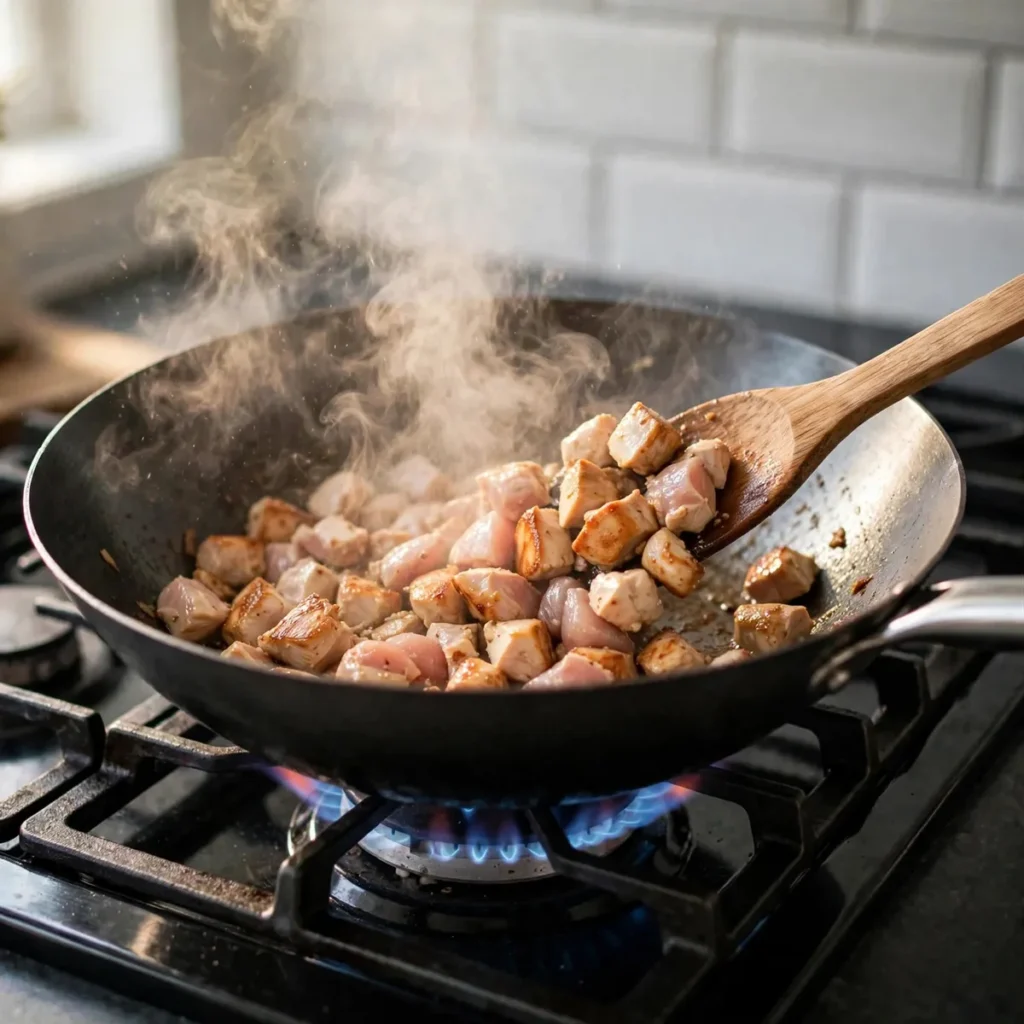
Heat 1 tablespoon of oil in the wok over high heat. Add the diced chicken, season with salt and pepper, and cook for 5–6 minutes, stirring occasionally, until fully cooked through and lightly browned. Remove to a plate. Seasoning the chicken while it cooks, rather than relying on the final soy sauce alone, is what keeps every bite of this dish tasting flavorful rather than flat.
💡 Pro Tip: Dice the chicken into small, even pieces — this ensures everything cooks through quickly and at the same rate over high heat.
Step 2 — Scramble the Egg Separately
In the same wok, add a small splash of oil and pour in the beaten eggs. Scramble quickly for 30–45 seconds until just set, then remove to the same plate as the chicken. Most recipes cook the egg directly with everything else, but scrambling it separately keeps the curds distinct and prevents them from turning rubbery through extra cooking later.
💡 Pro Tip: Don’t overcook the egg at this stage — it will get a brief second cook when tossed back in with the rice, so slightly underdone is actually ideal here.
Step 3 — Sauté the Aromatics
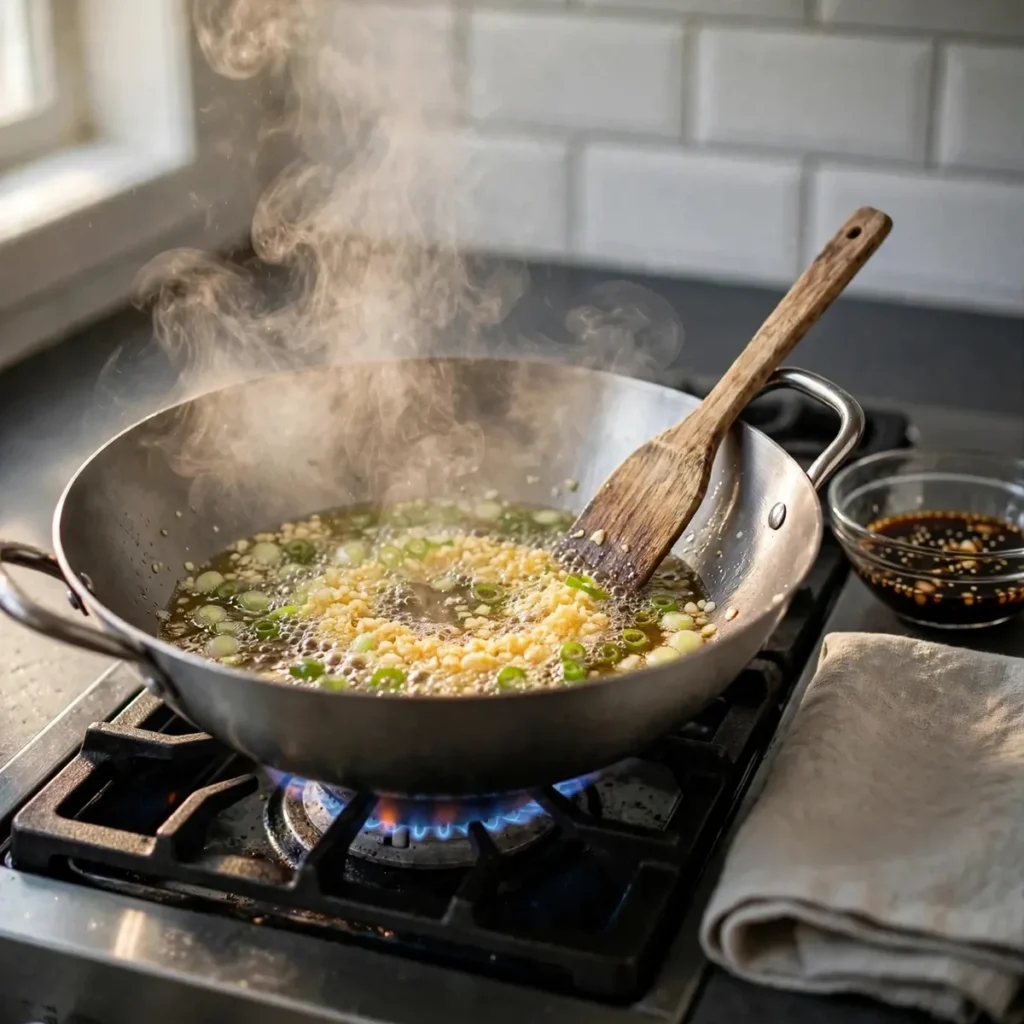
Add the remaining oil to the wok along with the minced garlic and half the sliced green onion. Sauté for 30–45 seconds until fragrant.
👉 another easy stir-fry recipe here
As a result, this brief step builds the aromatic foundation that carries through the entire finished dish.
💡 Pro Tip: Keep the heat high but watch closely — garlic burns quickly once it hits a hot, oiled pan.
Step 4 — Fry the Rice (The Key Step)
Add the cold, day-old rice to the wok, breaking up any clumps with the spatula. Stir-fry over high heat for 4–5 minutes, tossing constantly, until the rice is heated through and starting to turn lightly golden in spots. Most people skip straight to adding sauce here, but this high-heat frying step with constant movement is exactly what produces genuinely crisp, separate grains instead of a soft, steamed texture. Every single time I’ve used lower heat or stirred less frequently, the rice came out noticeably softer and less distinct.
💡 Pro Tip: Resist the urge to turn the heat down even if things look like they’re moving fast — high heat the entire time is what builds real texture here.
Step 5 — Add the Vegetables and Sauce
Add the frozen peas and carrots to the wok and toss for 1–2 minutes until heated through. Push the rice to one side, pour the soy sauce and sesame oil around the edges of the pan where it’s hottest, let it sizzle for a few seconds, then toss everything together.
💡 Pro Tip: Pouring the soy sauce against the hot metal edges rather than directly over the rice lets it briefly caramelize, building a smokier flavor than simply drizzling it on top.
Step 6 — Combine Everything

Return the cooked chicken and scrambled egg to the wok. Toss everything together for 1–2 minutes until evenly combined and heated through. Garnish with the remaining sliced green onion and serve immediately.
How to Tell When It’s Done
In my kitchen, I’ve learned to trust color and texture over the clock for this chicken fried rice recipe — but every stove runs a little differently, so check closely on your first attempt. Once you’ve made it once, you’ll know exactly what to look for.
Primary Doneness Test
The rice is done when it looks lightly golden in spots with visibly separate, distinct grains, rather than a soft, uniform pale color. The chicken is done when it’s fully opaque with no pink remaining and has developed some light browning on the edges.
Doneness Guide
| Indicator | What It Means | What to Do |
|---|---|---|
| Rice looks pale, soft, clumped | Under-fried or heat too low | Continue frying over higher heat, tossing constantly |
| Rice looks golden, grains separate | Perfectly done | Add vegetables and sauce |
| Chicken still pink in places | Under-cooked | Continue cooking, breaking up further |
| Chicken opaque, lightly browned | Perfectly done | Remove and proceed to egg |
| Egg looks rubbery, overcooked | Cooked too long before removing | Scramble for less time next batch |
| Dish tastes smoky and savory | Perfectly done | Garnish and serve |
Visual Signs It’s Done
- The rice has shifted from pale white to a lightly golden color with visible separate grains
- The chicken has turned from pink and translucent to a uniform opaque color with light browning
- The egg looks like small, distinct curds rather than one solid mass
- Everything in the pan looks evenly coated in a light, glossy sheen rather than wet or dry patches
- The aroma has shifted from raw garlic and soy to a warm, toasted, slightly smoky smell
It’s Not Right — What to Do Now
- Rice turned out mushy: Freshly cooked rice was used instead of day-old, or heat was too low — always use properly dried-out rice and keep the heat high
- Dish tastes bland: Not enough soy sauce, or the aromatics weren’t given their own moment to bloom — taste and adjust before serving
- Rice stuck to the pan: Pan wasn’t hot enough before adding rice, or wasn’t preheated with enough oil — let the wok get properly hot first
- Chicken turned dry: Overcooked while browning — pull it as soon as it’s opaque with no pink remaining
How to Get the Right Texture
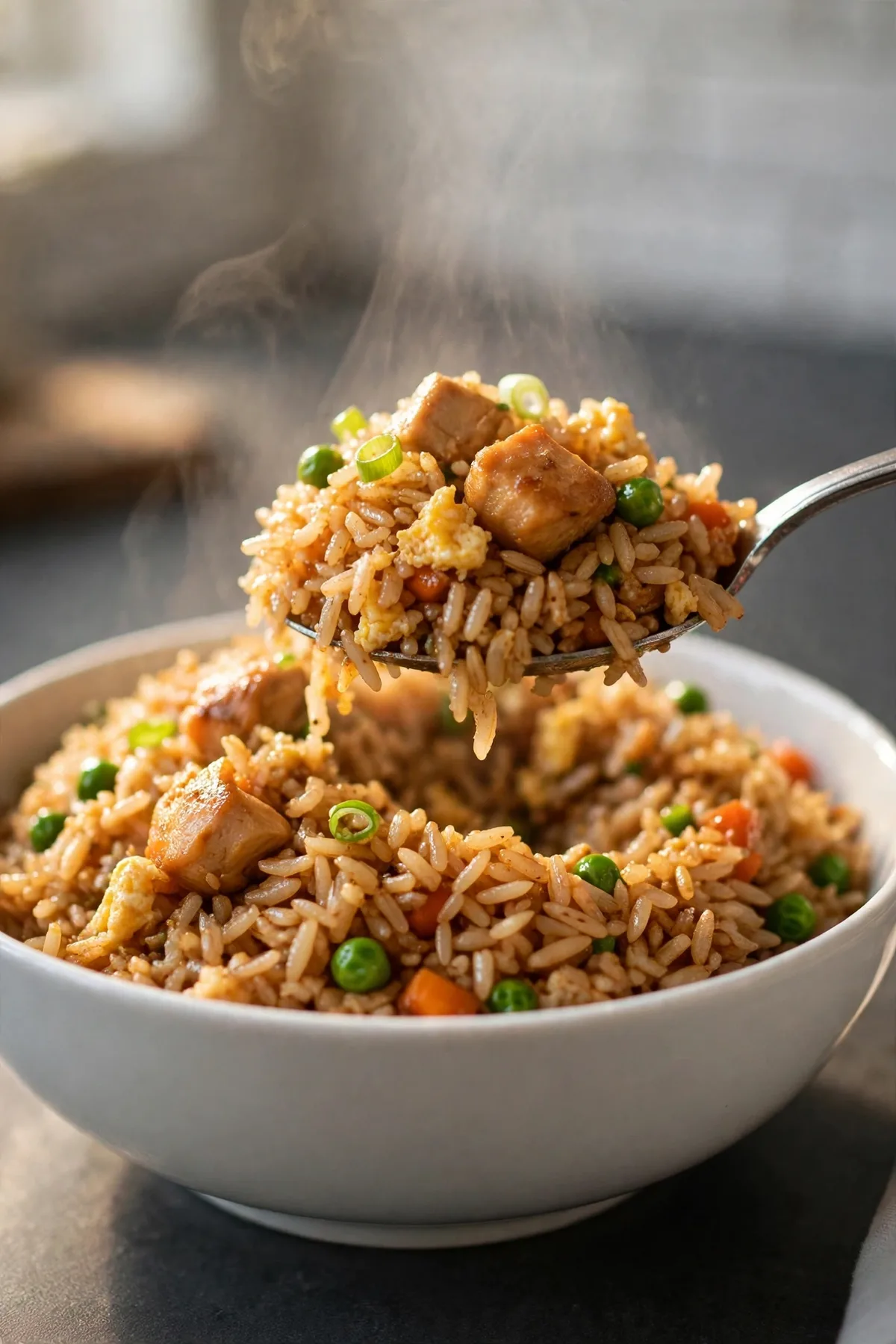
Getting genuinely crisp, separate grains comes down to technique more than any single ingredient. There are three approaches depending on your situation.
Method 1 — Day-Old Rice Method (Standard Recipe)
Use rice that’s been refrigerated overnight, fried over high heat with constant tossing. This is the method used throughout this recipe and produces the most reliably crisp, separate-grain texture.
Method 2 — Same-Day Dried Rice Method (No Leftovers on Hand)
Cook rice specifically for this recipe, then spread it in a thin layer on a baking sheet and let it cool and dry out for 20–30 minutes before using. This shortcut approximates the texture of true day-old rice when no leftovers are available.
Method 3 — Oven-Dried Rice Method (Fastest Alternative)
Spread freshly cooked rice on a baking sheet and place it in a 200°F oven for 10–15 minutes to dry out the surface moisture quickly. This works well when time is short and genuinely speeds up the drying process compared to simply cooling at room temperature.
Troubleshooting Quick Reference
| Problem | Cause | Fix |
|---|---|---|
| Mushy, clumped texture | Fresh, warm rice used instead of day-old | Use properly dried-out rice next time |
| Rice sticking to the pan | Pan not hot enough or not enough oil | Preheat the wok thoroughly before adding rice |
| Bland flavor | Soy sauce added too early or not enough used | Add soy sauce at the very end, around the pan edges |
| Rubbery egg | Egg cooked too long before setting aside | Scramble briefly, just until barely set |
What to Serve With It
Classic Pairings That Always Work
- Egg drop soup — a light starter that complements the richness of the main dish
- Spring rolls — a crispy side that rounds out a full Chinese-American inspired spread
- Steamed dumplings — a classic pairing found at most Chinese-American restaurants
- Sweet and sour chicken — for anyone wanting a full double-protein spread
- Hot and sour soup — a flavorful starter that balances the richness of the rice
Comfort Food Pairings
- Crab rangoon — an indulgent appetizer pairing at many Chinese-American restaurants
- General Tso’s chicken on the side — for a heartier, more indulgent meal
- Lo mein noodles — for anyone wanting an even more filling spread
- Fried wontons — a crispy, classic addition to any takeout-style dinner
Lighter Options
- A simple cucumber salad — adds freshness alongside the rich, savory rice
- Steamed broccoli on the side — a light vegetable addition without competing flavors
- Smaller portions with extra vegetables mixed in — balances the richness with more volume
6 Ways to Use Leftover Chicken Fried Rice
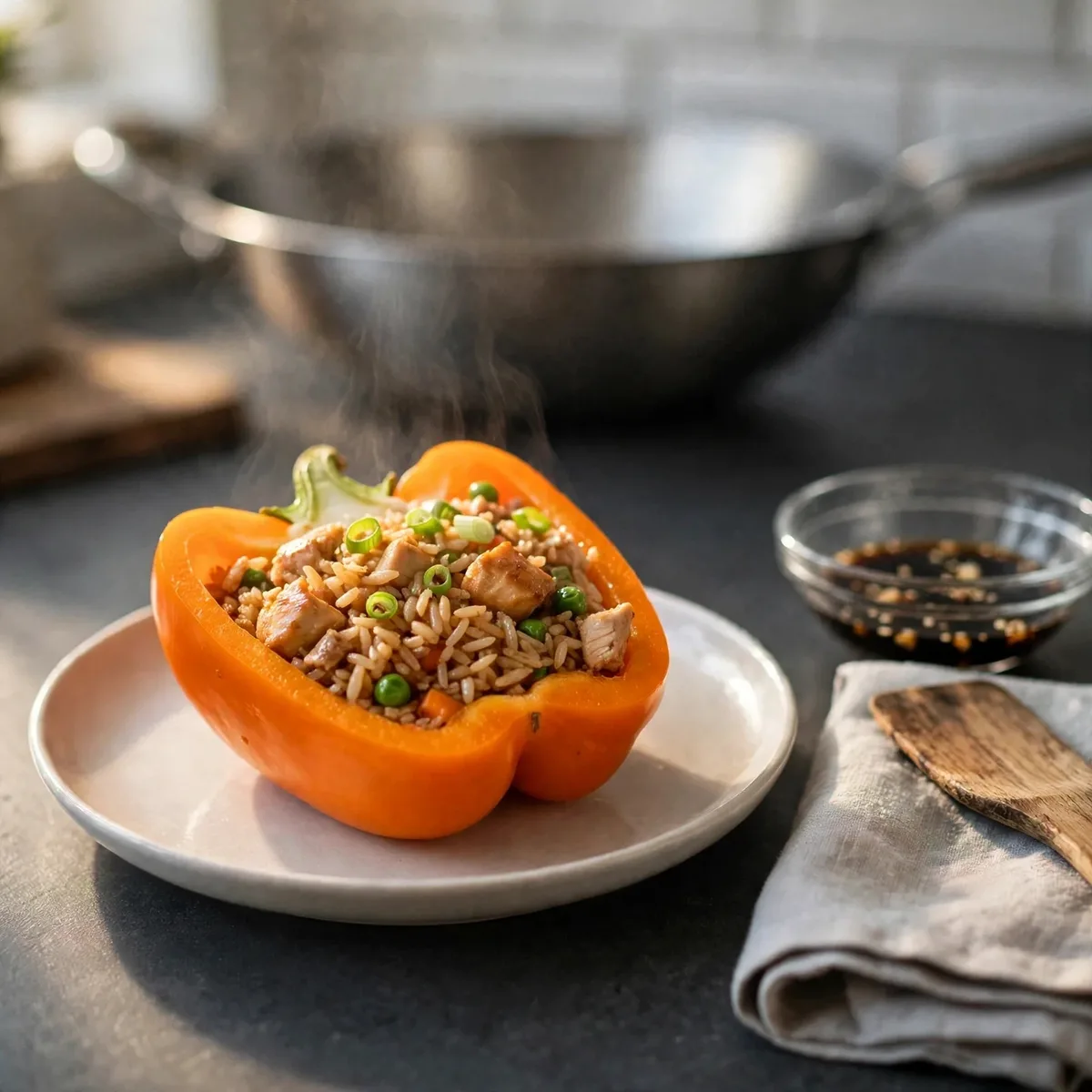
Leftover chicken fried rice can become several completely different meals. Here are 6 ways to use it.
Chicken Fried Rice Stuffed Peppers
What you need: Leftover fried rice, bell peppers, halved and seeded.
How to assemble: Fill pepper halves with leftover fried rice and bake at 375°F for 20 minutes until the peppers are tender.
One tip: Top with a little shredded cheese for the last 5 minutes if you want a melty finish.
Chicken Fried Rice Soup
What you need: Leftover fried rice, 4 cups chicken broth.
How to assemble: Simmer leftover fried rice in chicken broth for 5–8 minutes to turn it into a quick, savory soup.
One tip: This stretches a small amount of leftovers into a full second meal almost effortlessly.
Chicken Fried Rice Omelet Filling
What you need: Leftover fried rice, 2–3 eggs.
How to assemble: Make a plain omelet and fold warmed leftover fried rice inside before folding it closed.
👉 try another easy breakfast recipe here
One tip: Reheat the fried rice separately first — cold filling inside a hot omelet cools the eggs too fast and leaves the center underdone.
Chicken Fried Rice Lettuce Wraps
What you need: Leftover fried rice, butter lettuce or romaine leaves.
How to assemble: Reheat the leftover fried rice and spoon into individual lettuce leaves like a wrap.
One tip: Pat the lettuce leaves dry first — excess water makes the wrap fall apart faster.
Chicken Fried Rice Breakfast Bowl
What you need: Leftover fried rice, 1 fried egg.
How to assemble: Reheat the leftover fried rice and top each bowl with a fried egg, letting the yolk run through.
One tip: A runny yolk mixed through the rice adds richness that makes this feel like a completely different meal from dinner the night before.
Chicken Fried Rice Patties
What you need: Leftover fried rice, 1 egg, extra flour if needed.
How to assemble: Mix leftover fried rice with a beaten egg, form into small patties, and pan-fry in oil until crispy on both sides.
One tip: Chill the formed patties for 10 minutes before frying — this helps them hold together better in the hot pan.
Storage, Freezing and Reheating Guide
Refrigerator Storage (Up to 4 Days)
This chicken fried rice recipe stores in the refrigerator for up to 4 days in an airtight container. The texture firms up slightly when cold, which is completely normal — reheating restores most of its original texture.
Can You Make This Ahead of Time?
Yes — this recipe works well for meal prep. Make the full batch, portion into individual containers, and refrigerate for quick lunches or dinners throughout the week. The flavor holds up well and some people actually prefer it after a day in the fridge.
Freezer Storage (Up to 2 Months)
This chicken fried rice recipe freezes reasonably well for up to 2 months. Cool completely, then freeze in individual portions in airtight containers or freezer bags for easiest reheating. Thaw overnight in the refrigerator before reheating.
This Recipe Works as a Freezer Meal
Make a double batch specifically for the freezer. Portion into labeled containers before freezing so you can pull exactly one serving at a time. Thaw overnight in the refrigerator before reheating for the best texture.
👉 see more easy freezer meal ideas here
How to Reheat Without Ruining It
| Method | Setting | Time | Notes |
|---|---|---|---|
| Wok or skillet | High | 3–4 min | Best method; restores some crisp texture |
| Microwave | 70% power | 1–2 min | Stir halfway through |
| Oven | 350°F | 10 min | Good for larger batches |
Weekly Prep Strategy
Make a full batch on Sunday and portion into 4 containers. This chicken fried rice recipe reheats quickly enough to be a genuinely practical weekday lunch or dinner without any extra effort during the week.
Recipe Variations Worth Trying
Same technique. Completely different flavor profiles. Master this base chicken fried rice recipe first — then try one of these.
Most Popular — Shrimp Fried Rice
Swap the diced chicken for peeled, deveined shrimp, cooking it the same way until just opaque. This is one of the most popular variations of this chicken fried rice recipe, offering a seafood-forward alternative with the same overall technique.
International — Korean-Inspired Kimchi Fried Rice
Add ½ cup of chopped kimchi along with the rice in Step 4, and finish with an extra drizzle of sesame oil. The kimchi adds a fermented, spicy tang that shifts the flavor profile toward Korean-inspired cooking while keeping the same fried rice base.
Low-Carb — Cauliflower Rice Version
Replace the cooked rice entirely with riced cauliflower, reducing the cook time slightly since cauliflower cooks faster than rice. Therefore, you get a similar flavor profile with a fraction of the carbohydrates, though the texture is noticeably different from traditional grain-based rice.
Quick Shortcut — Rotisserie Chicken Version
Use shredded rotisserie chicken instead of raw diced chicken breast, skipping the initial cooking step and adding it directly when combining everything near the end. This cuts the total cook time down since there’s no raw chicken to cook through.
Fresh and Elevated — Chicken Fried Rice with Char Siu
Add ½ cup of diced Chinese barbecue pork (char siu) along with the chicken for a traditional combination-style version. The sweet, smoky pork adds a layer of flavor that elevates this simple dish into something closer to a restaurant combination plate.
Nutrition Information
Per Serving Breakdown (Based on 4 Servings)
| Nutrient | Amount | % Daily Value |
|---|---|---|
| Calories | ~410 | — |
| Total Fat | 14g | 18% |
| Saturated Fat | 2.5g | 13% |
| Cholesterol | 150mg | 50% |
| Sodium | 780mg | 34% |
| Total Carbohydrates | 48g | 17% |
| Dietary Fiber | 2g | 7% |
| Total Sugars | 2g | — |
| Protein | 28g | 56% |
| Vitamin A | 40% DV | — |
According to USDA FoodData Central, chicken breast provides a lean source of complete protein with relatively low fat — meaning this chicken fried rice recipe delivers real nutritional value alongside its smoky, savory flavor.
Dietary Compatibility
| Diet | Compatible | Notes |
|---|---|---|
| Gluten-Free | ❌ | Use tamari or coconut aminos instead of regular soy sauce |
| Dairy-Free | ✅ | No dairy in this recipe |
| Paleo | ❌ | Rice and soy sauce both excluded |
| Keto | ❌ | See cauliflower rice variation above to adapt |
| Vegetarian | ❌ | Replace chicken with extra scrambled egg or tofu |
| Vegan | ❌ | Same tofu substitution plus omitting the egg needed |
To reduce sodium in this chicken fried rice recipe, use low-sodium soy sauce and reduce the amount slightly — the sesame oil and aromatics already carry plenty of flavor on their own.
8 Mistakes That Ruin Chicken Fried Rice
Every one of these mistakes is fixable. Know them before you start — not after.
❌ Mistake 1: Using Freshly Cooked, Warm Rice
Why it happens: Not planning ahead or not having leftovers on hand. What goes wrong: Fresh rice carries too much surface moisture, causing it to clump and turn mushy instead of frying into separate grains. The fix: Use rice that’s been refrigerated overnight, or dry out freshly cooked rice on a baking sheet first.
❌ Mistake 2: Cooking Over Low Heat
Why it happens: Worrying about burning the ingredients. What goes wrong: Low heat steams the rice instead of frying it, producing a soft, gummy texture instead of crisp, separate grains. The fix: Keep the heat high throughout, tossing constantly to prevent sticking.
❌ Mistake 3: Overcrowding the Pan
Why it happens: Trying to cook everything at once to save time. What goes wrong: A crowded pan traps steam and prevents proper frying, leading to soft, pale results. The fix: Cook components separately — chicken, then egg, then rice — rather than all at once.
❌ Mistake 4: Pouring Soy Sauce Directly Over the Rice
Why it happens: Simplicity of just pouring it in the middle. What goes wrong: This misses the chance to let the soy sauce briefly caramelize against the hot pan, losing out on extra smoky depth. The fix: Pour the soy sauce around the edges of the pan where it’s hottest before tossing it through.
❌ Mistake 5: Overcooking the Scrambled Egg
Why it happens: Cooking it too long before setting it aside. What goes wrong: Overcooked egg turns rubbery, and it gets a second brief cook once tossed back in with the rice. The fix: Scramble just until barely set, then remove immediately.
❌ Mistake 6: Not Seasoning the Chicken Separately
Why it happens: Assuming the soy sauce at the end will carry enough flavor. What goes wrong: Unseasoned chicken tastes flat throughout the finished dish, even with flavorful rice around it. The fix: Season the chicken with salt and pepper while it cooks, before it’s ever combined with anything else.
❌ Mistake 7: Using Too Much Soy Sauce
Why it happens: Wanting a more intensely savory flavor. What goes wrong: Excess soy sauce oversalts the entire dish and can mask the other flavors, including the sesame oil. The fix: Stick to the amount called for, and taste before adding extra.
❌ Mistake 8: Not Preheating the Pan Enough
Why it happens: Rushing to start cooking. What goes wrong: Rice added to a pan that isn’t hot enough sticks and steams instead of frying and developing color. The fix: Let the wok or skillet get properly hot before adding any rice.
Frequently Asked Questions
Why is my fried rice mushy?
The most common cause is using freshly cooked, warm rice instead of day-old rice, since fresh rice carries excess surface moisture that causes clumping the moment it hits a hot pan. The second major cause is cooking over heat that’s too low, which steams the rice rather than frying it. Using properly dried-out, refrigerated rice and keeping the heat high throughout solves this issue in nearly every batch of homemade chicken fried rice.
Do you have to use day-old rice for fried rice?
Technically no, but it genuinely makes a significant difference for this chicken fried rice recipe. If day-old rice isn’t available, spreading freshly cooked rice on a baking sheet and letting it cool and dry out for 20–30 minutes, or even placing it briefly in a low oven, approximates the texture closely enough to still produce good results.
What is the best oil for fried rice?
A neutral oil with a high smoke point, such as vegetable, canola, or avocado oil, works best for the high-heat cooking this recipe requires. Sesame oil is used separately, added at the very end for its distinct aroma, rather than as the primary cooking oil, since its lower smoke point makes it prone to burning if used for the main frying step.
Can you make chicken fried rice ahead of time?
Yes — this recipe works well for meal prep. Make the full batch, portion it into individual containers, and refrigerate for up to 4 days. The flavor holds up well, and many people find the dish tastes just as good, if not better, the next day once the flavors have had time to meld.
What do you serve with chicken fried rice?
Egg drop soup and spring rolls both make classic light pairings that round out a full Chinese-American inspired meal. For something heartier, sweet and sour chicken or lo mein noodles work well alongside the rice. A simple cucumber salad on the side adds freshness without competing with the dish’s savory flavor.
Can you freeze chicken fried rice?
Yes — it freezes reasonably well for up to 2 months. Cool completely before freezing in individual portions for the easiest reheating, and thaw overnight in the refrigerator before warming it through in a wok, skillet, or microwave.
How long does chicken fried rice last in the fridge?
This chicken fried rice recipe lasts up to 4 days in the refrigerator stored in an airtight container. The texture firms up slightly when cold, which is completely normal, and reheating in a hot pan restores most of the original texture.
Why is my fried rice bland?
The most common cause is adding soy sauce too early, or not using enough of it, which doesn’t allow the savory flavor to properly coat every grain. Skipping the step of seasoning the chicken separately while it cooks also leaves the dish tasting flatter overall. Tasting the finished dish and adjusting soy sauce or salt at the end usually catches whatever a bland batch is missing.
Can you make fried rice without a wok?
Yes — a large stainless steel or cast iron skillet works just as well as a wok for this recipe. The key factor is having a pan large enough to avoid overcrowding, rather than the specific shape of a traditional wok, so any wide, heavy-bottomed pan can produce similar results.
Why does my fried rice stick to the pan?
This almost always means the pan wasn’t properly preheated before the rice was added, or there wasn’t enough oil coating the surface. Letting the wok or skillet get genuinely hot, with a thin layer of oil shimmering across the surface, before adding any rice prevents this sticking issue in nearly every case.
You Might Also Like
Best Mashed Potatoes
Chicken Fried Rice — Recipe Card

CHICKEN FRIED RICE
Ingredients
Equipment
Method
- Heat 1 tbsp oil in a wok over high heat. Cook diced chicken, seasoned with salt and pepper, 5–6 minutes until browned. Remove to a plate.
- Add a splash of oil and scramble the eggs 30–45 seconds until just set. Remove to the same plate.
- Add remaining oil, garlic, and half the green onion. Sauté 30–45 seconds until fragrant.
- Add cold rice, breaking up clumps. Stir-fry over high heat 4–5 minutes until lightly golden.
- Add peas and carrots, toss 1–2 minutes. Push rice aside, pour soy sauce and sesame oil around the pan edges, let sizzle, then toss through.
- Return chicken and egg to the wok. Toss to combine. Garnish with remaining green onion and serve.
Notes
Make the full batch and portion into containers for up to 4 days refrigerated. Freeze individual portions up to 2 months; thaw overnight before reheating. Nutrition Per Serving
Calories: ~410 | Protein: 28g | Fat: 14g | Carbs: 48g | Fiber: 2g | Sodium: ~780mg Dietary Info
❌ Gluten-Free | ✅ Dairy-Free | ❌ Paleo | ❌ Keto | ❌ Vegetarian | ❌ Vegan Did You Make This? Tag @thegildedskillet and leave a ⭐⭐⭐⭐⭐ rating below.
— David | The Gilded Skillet



One Comment