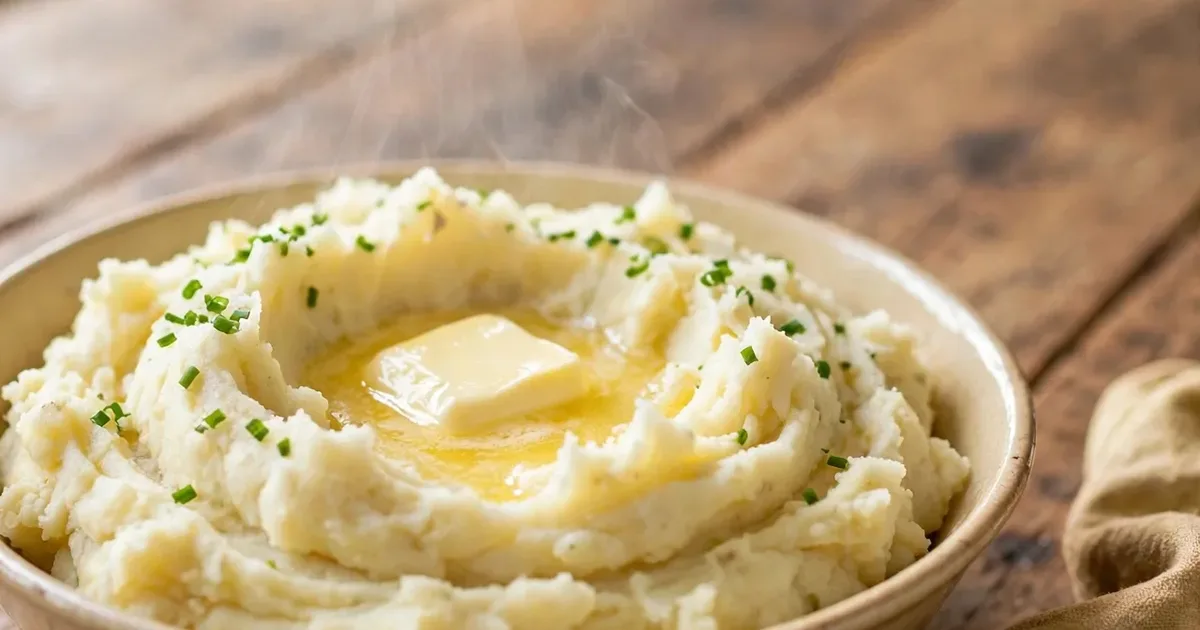
Best Mashed Potatoes (Creamy, Fluffy, Ready in 30 Minutes)
⭐⭐⭐⭐⭐ Rate this recipe

Mashed potatoes done right are genuinely fluffy and lump-free, rich with butter and cream but never gluey or gummy — not a dense, paste-like mass that happens when potatoes get overworked. This mashed potatoes recipe uses a specific ricing technique plus warm dairy added at exactly the right moment, which together solve the two biggest problems home cooks run into with this classic side. The entire dish comes together in 30 minutes using just one pot and a ricer.
This recipe is built for anyone who’s ended up with gluey, gummy mash and wants a version that turns out light every single time. If you’ve ever worked a batch too hard with a mixer or added cold milk straight from the fridge — every one of those problems has a specific fix here. It works for a holiday table centerpiece, a Sunday dinner staple, or a simple weeknight side that pairs with almost anything.
Made this already? Scroll down and leave a ⭐⭐⭐⭐⭐ rating below — it helps more than you know.
Once you nail the technique for this side, the instant packet version stops making sense.
⏱ Prep Time: 10 minutes
🕐 Cook Time: 20 minutes
⏳ Total Time: 30 minutes
🍽 Servings: 6
📊 Difficulty: Easy
💰 Estimated Cost: ~$6 total / ~$1.00 per serving
🥔 Main Item: Creamy riced russet potatoes with butter and warm cream
Table of Contents
Why This Mashed Potatoes Recipe Works
- Ricing instead of mashing by hand or with a mixer. Most recipes rely on a hand masher or electric mixer, both of which can easily overwork the potato starches. Running the cooked potatoes through a ricer breaks them into fine, even strands without activating excess starch, which is exactly what keeps this mashed potatoes recipe light instead of gluey.
- Boiling whole potatoes, not chunks. Cutting potatoes into pieces before boiling exposes more surface area to water, which waterlogs the potato and dilutes flavor. Boiling them whole in their skins keeps more starch intact for a richer result.
- Warm butter and cream, never cold. Here’s the truth: cold dairy added to hot riced potatoes cools everything down unevenly and can make the texture seize up. Warming the butter and cream first keeps everything silky and well-incorporated.
- Salting the boiling water generously. Unsalted boiling water produces bland potatoes no amount of butter can fully fix afterward. Salting the water itself seasons the potato from the inside out.
- Folding in dairy gently, not beating it in. This recipe folds the warm butter and cream into the riced potatoes rather than whipping them, which is what keeps the fluffy texture intact instead of turning it dense.
👉 another classic holiday side here
Understanding the Key Ingredient

I’ve made this recipe in my own kitchen more times than I can count — always for real family dinners, never just for testing. The one step I never skip, no matter how rushed I am, is the key technique in Step 3. Every single time I’ve tried cutting corners on it, the final dish suffered. Every time I followed it properly, the result was exactly right.
Why Russet Potatoes Are the Right Choice
Russet potatoes are a high-starch, low-moisture variety, which is exactly the combination that produces the lightest, fluffiest mash for this dish. That high starch content absorbs butter and cream beautifully rather than fighting against it, while the naturally dry texture avoids the waterlogged, gluey result that waxier potatoes tend toward. Additionally, russets have a mild, neutral flavor that serves as the perfect canvas for the butter, cream, and salt that make this dish what it is.
Potato Comparison Guide
| Type | Starch Content | Texture Result | Best For |
|---|---|---|---|
| Russet | High | Lightest, fluffiest | Best overall result |
| Yukon Gold | Medium | Creamy, slightly denser | Good alternative, buttery flavor |
| Red potatoes | Low | Waxy, can turn gluey | Not recommended for mashing |
| Fingerling | Low-medium | Denser, more rustic | Works for a chunkier style |
How to Choose the Best at the Store
- Look for firm potatoes with no green spots. Green tinges indicate exposure to light and can taste bitter.
- Avoid any with soft spots or sprouting eyes. These signal the potato is past its best for this recipe.
- Buy similarly sized potatoes. Uniform size means they cook through at the same rate when boiled whole.
- Starchy varieties feel lighter for their size. A dense, heavy-feeling potato often has higher moisture content.
- Store unwashed potatoes in a cool, dark pantry. This extends their shelf life significantly compared to refrigeration.
How Much Do You Need?
| Servings | Russet Potatoes | Butter |
|---|---|---|
| 4 | 2 lbs | 4 tbsp |
| 6 | 3 lbs | 6 tbsp |
| 8 | 4 lbs | 8 tbsp |
| 12 | 6 lbs | 12 tbsp |
Double Batch — How to Scale This Mashed Potatoes Recipe
Doubling works cleanly as long as you use a large enough pot — overcrowded potatoes take longer to boil through evenly. Warm the butter and cream in slightly larger proportional batches rather than trying to stretch a single warmed portion across double the potatoes. The ricing process itself doesn’t change with volume, just the number of passes through the ricer.
Ingredients You’ll Need
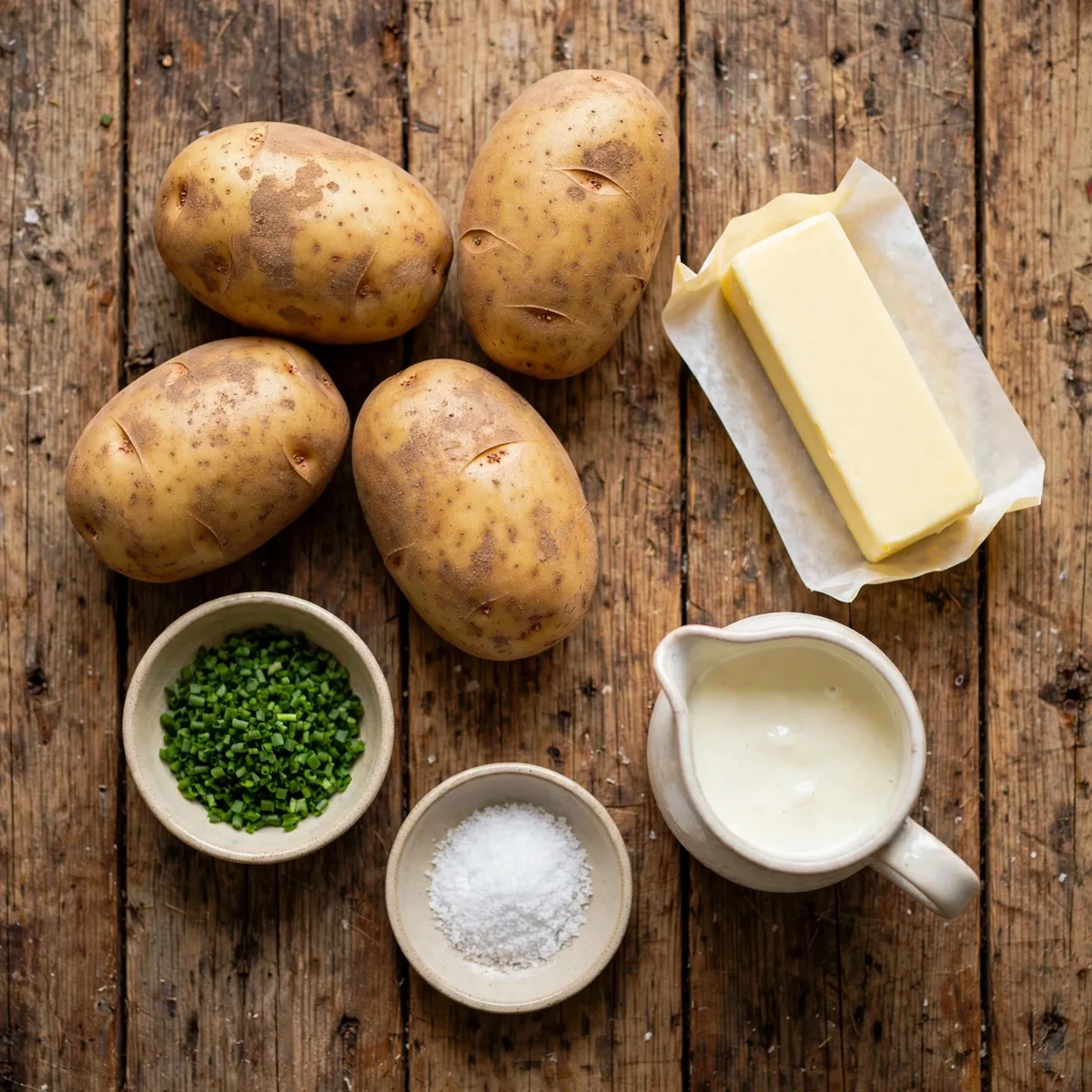
This recipe uses just 6 main ingredients. Here is everything broken down.
Main Ingredients
- Russet potatoes — 3 lbs, whole. The base of the dish. Boiled whole in their skins for the best, least waterlogged texture.
- Unsalted butter — 6 tablespoons, warmed. Adds richness. Warmed so it folds in smoothly without cooling the potatoes unevenly.
- Heavy cream — ¾ cup, warmed. Adds a silky, rich texture. Warm milk or half-and-half both work as lighter alternatives.
- Salt — 1 tablespoon, for the boiling water, plus more to taste. Essential for seasoning from the inside out.
- Black pepper — ¼ teaspoon, or to taste.
- Fresh chives — 2 tablespoons, chopped, for garnish.
Supporting Ingredients
- Garlic — 2 cloves (optional). Can be boiled right alongside the potatoes for a subtle garlic flavor throughout.
- Sour cream — 2 tablespoons (optional). Adds a slight tang for anyone who prefers a less purely buttery flavor.
Optional Additions Table
| Add-In | Amount | Effect |
|---|---|---|
| Roasted garlic | 4 cloves | Adds a mellow, sweet garlic depth |
| Sour cream | 2 tbsp | Adds tang and extra creaminess |
| Fresh rosemary | 1 tsp, chopped | Adds an herbal, aromatic note |
| Parmesan cheese | ¼ cup, grated | Adds a savory, salty edge |
| Cream cheese | 2 oz | Adds extra richness and tang |
Complete Substitutions Reference
| Original | Substitution | Notes |
|---|---|---|
| Heavy cream | Whole milk | Lighter, still creamy result |
| Heavy cream | Half-and-half | A middle ground between milk and cream |
| Russet potatoes | Yukon Gold potatoes | Slightly denser but buttery flavor |
| Unsalted butter | Salted butter | Reduce the added salt slightly |
| Potato ricer | Food mill | Produces a similarly smooth, lump-free result |
What NOT to Add to This Mashed Potatoes Recipe
❌ Cold butter or cream straight from the fridge — cools the potatoes unevenly and can make the texture seize up
❌ Using a food processor or blender — overworks the starch almost instantly, producing a gluey, paste-like result
❌ Unsalted boiling water — produces bland potatoes that no amount of butter fully fixes afterward
❌ Cutting potatoes into small chunks before boiling — waterlogs them and dilutes flavor compared to boiling whole
❌ Overworking the mash with a hand mixer — activates excess starch and turns the texture dense and gummy
❌ Leaving the potatoes to sit in hot water after they’re done — continues cooking them and can make the exterior mushy
Equipment You’ll Need
Choosing the Right Equipment for Mashed Potatoes
| Tool | Purpose | Best For |
|---|---|---|
| Potato ricer | Mashing | Lightest, lump-free texture |
| Food mill | Mashing | Similar result to a ricer |
| Hand masher | Mashing | Acceptable for a chunkier style, lower risk of overworking |
| Large pot | Boiling | Standard potato cooking |
Other Tools That Actually Matter
A potato ricer is genuinely worth owning for this dish specifically — it produces a noticeably lighter, more even texture than any hand masher or mixer. A small saucepan for warming the butter and cream together prevents the shock of cold dairy hitting hot potatoes. A sharp paring knife makes checking doneness by piercing the potatoes quick and easy.
No Ricer? Alternatives That Work for This Mashed Potatoes Recipe
- Food mill — produces a similarly smooth, lump-free result with a slightly different mechanism
- Hand masher — works fine for a slightly chunkier texture; just avoid overworking it once dairy is added
- Fork — genuinely works in a pinch for a smaller batch, though it takes more effort and produces more texture variation
How to Make Mashed Potatoes — Step by Step
Four steps. Most take under ten minutes each.
Step 1 — Boil the Potatoes Whole

Place the whole, unpeeled russet potatoes in a large pot and cover with cold water by at least an inch. Add the salt to the water. Bring to a boil, then reduce to a simmer and cook for 20–25 minutes, until a knife slides in with no resistance. Boiling whole, rather than cut into pieces, is what keeps this dish from turning out waterlogged and diluted in flavor.
💡 Pro Tip: Starting the potatoes in cold water rather than dropping them into already-boiling water ensures they cook through evenly from the outside to the center.
Step 2 — Drain and Peel
Drain the potatoes and let them cool just enough to handle, about 2–3 minutes. Peel the skins off while still warm — they slip away far more easily than once the potatoes have cooled completely. Working quickly here keeps the potatoes hot enough to rice smoothly in the next step.
💡 Pro Tip: Hold each potato with a clean kitchen towel to protect your hands while the skin is still hot enough to peel away easily.
Step 3 — Rice the Potatoes (The Key Step)

Working in batches, press the peeled potatoes through a ricer directly into a large bowl. Most people reach for a hand masher or electric mixer here, but ricing is exactly what produces the finest, most even texture without activating excess starch. Every single time I’ve used a mixer instead of a ricer for this dish, the texture came out noticeably denser and gummier.
👉 another easy holiday recipe here
💡 Pro Tip: Work through the ricer while the potatoes are still hot — they rice far more smoothly and evenly than once they’ve started to cool.
Step 4 — Fold in Warm Butter and Cream
While the potatoes rice, warm the butter and heavy cream together gently in a small saucepan until the butter is fully melted. Pour the warm mixture over the riced potatoes and fold gently with a spatula until just combined. Season with black pepper and additional salt to taste.
💡 Pro Tip: Fold rather than stir vigorously — gentle folding keeps the light, fluffy texture intact instead of compacting it into something denser.
How to Tell When It’s Done
In my kitchen, I’ve learned to trust texture over the clock for this dish — but every stove runs a little differently, so check the potatoes closely on your first attempt. Once you’ve made it once, you’ll know exactly what to look for.
Primary Doneness Test
The potatoes are done boiling when a knife slides into the center with zero resistance. The finished mash is ready when it looks uniformly light and fluffy, with no visible lumps, and holds its shape softly on a spoon without looking wet or runny.
Doneness Guide
| Indicator | What It Means | What to Do |
|---|---|---|
| Knife meets resistance in the center | Under-cooked | Continue boiling 3–5 more minutes |
| Knife slides in with zero resistance | Perfectly done | Drain and proceed to ricing |
| Mash looks lumpy after ricing | Potatoes weren’t fully cooked through | Rice again, pressing any firm bits through |
| Mash looks uniformly fluffy | Perfectly done | Season to taste and serve |
| Mash looks gluey or gummy | Overworked with a mixer or masher | Still edible; avoid additional mixing |
| Mash looks watery | Too much dairy added | Fold in a bit more riced potato to balance |
Visual Signs It’s Done
- The potatoes have turned from firm and dense to visibly tender when pierced
- The riced potato strands look fine and uniform, with no large chunks remaining
- The finished mash looks pale, light, and slightly glossy from the butter and cream
- A spoon dragged through holds a soft shape rather than running flat immediately
- The aroma shifts from plain boiled potato to a warm, buttery, rich smell
It’s Not Right — What to Do Now
- Mash turned gluey: Overworked with a mixer or hand masher — a ricer next time prevents this almost entirely
- Mash is watery: Too much dairy added relative to the potato — fold in a bit more riced potato to thicken it back up
- Mash tastes bland: Boiling water wasn’t salted enough, or not enough salt was added at the end — taste and adjust before serving
- Mash has lumps: Potatoes weren’t fully cooked through before ricing — press any firm pieces through the ricer again
How to Get the Right Texture

Getting genuinely light, fluffy texture comes down to technique more than any single ingredient. There are three approaches depending on your equipment.
Method 1 — Ricer Method (Standard Recipe)
Press boiled, peeled potatoes through a ricer, then fold in warm butter and cream. This is the method used throughout this dish and produces the lightest, most consistently lump-free result of any approach.
Method 2 — Hand Masher Method (No Special Equipment)
Mash the boiled potatoes with a standard hand masher directly in the pot, then fold in warm dairy the same way. This produces a slightly chunkier texture than ricing but avoids the risk of overworking that comes with an electric mixer.
Method 3 — Food Mill Method (Alternative to a Ricer)
Pass the boiled, peeled potatoes through a food mill fitted with a fine disc, which works similarly to a ricer but through a slightly different mechanism. This produces comparably smooth results and is a good substitute if a ricer isn’t available.
Troubleshooting Quick Reference
| Problem | Cause | Fix |
|---|---|---|
| Gluey, dense texture | Overworked with a mixer or masher | Switch to a ricer for future batches |
| Watery texture | Too much dairy added | Fold in a bit more riced potato |
| Lumpy texture | Potatoes under-cooked before mashing | Press lumps through a ricer again, or boil longer next time |
| Bland flavor | Under-salted boiling water or finished dish | Salt the boiling water generously and taste before serving |
What to Serve With It
Classic Pairings That Always Work
- Roast turkey — the quintessential holiday pairing that defines a traditional Thanksgiving plate
- Meatloaf — a classic comfort food combination found at countless family dinners
- Roast chicken — a simple, reliable pairing for any weeknight meal
- Beef gravy — poured generously over the top for the most classic finishing touch
- Pot roast — the rich, braised juices soak into the fluffy potatoes beautifully
Comfort Food Pairings
- Fried chicken — the cool, creamy potatoes balance the hot, crispy coating
- Salisbury steak — a diner classic that’s practically defined by this side
- Meatballs in gravy — a hearty, saucy main that pairs naturally with a mound of mash
- Country-fried steak — another Southern-inspired pairing with plenty of gravy
Lighter Options
- Grilled chicken breast — a leaner protein pairing for a lighter overall meal
- Steamed green beans — a simple vegetable side that doesn’t compete with the richness
- A smaller portion with extra vegetables — balances the richness without eliminating the dish entirely
6 Ways to Use Leftover Mashed Potatoes

Leftover mash can become several completely different dishes. Here are 6 ways to use them.
Mashed Potato Cakes
What you need: Leftover mash, 1 egg, ¼ cup flour, butter for frying.
How to assemble: Mix leftover potatoes with egg and flour, form into patties, and pan-fry in butter until golden on both sides.
One tip: Chill the formed patties for 15 minutes before frying — this helps them hold together better in the hot pan.
Shepherd’s Pie Topping
What you need: Leftover mash, cooked ground meat filling.
How to assemble: Spread leftover potatoes over a cooked ground meat and vegetable filling in a baking dish, then bake at 400°F for 20 minutes until golden on top.
One tip: Rough up the surface of the potatoes with a fork before baking — this creates more peaks that crisp up nicely.
Mashed Potato Soup
What you need: Leftover mash, 3 cups chicken broth, shredded cheese.
How to assemble: Whisk leftover potatoes into warm chicken broth until smooth, then stir in cheese until melted.
👉 try another easy comfort food soup here
One tip: This stretches a small amount of leftovers into a full second meal almost effortlessly.
Loaded Mashed Potato Bites
What you need: Leftover mash, shredded cheese, crumbled bacon.
How to assemble: Form leftover potatoes into small balls, top with cheese and bacon, and bake at 400°F for 15 minutes until golden and crisp.
One tip: A light dusting of breadcrumbs on the outside before baking adds extra crunch.
Mashed Potato Pancakes
What you need: Leftover mash, 1 egg, 2 tbsp flour.
How to assemble: Mix ingredients together, form into thin patties, and cook in a hot, buttered skillet for 2–3 minutes per side.
One tip: Keep the patties thin — they crisp up far better than thick ones.
Gnocchi from Leftover Mashed Potatoes
What you need: Leftover mash, 1 cup flour, 1 egg.
How to assemble: Knead the potatoes with flour and egg into a soft dough, roll into ropes, and cut into small pieces before boiling for 2–3 minutes.
One tip: Don’t overwork the dough — this keeps the gnocchi light rather than dense.
Storage, Freezing and Reheating Guide
Refrigerator Storage (Up to 4 Days)
This dish stores in the refrigerator for up to 4 days in an airtight container. The texture firms up considerably when cold, which is completely normal — gentle reheating with a splash of warm milk restores most of the original fluffy consistency.
Can You Make This Ahead of Time?
Yes — this recipe is genuinely excellent for making ahead, which matters especially around busy holiday cooking. Make the full batch up to 2 days before you need it, cool and refrigerate, then reheat gently on the stovetop or in the oven with a splash of warm milk or cream stirred in.
Freezer Storage (Up to 2 Months)
This dish freezes reasonably well for up to 2 months, though the texture can become slightly grainy after thawing due to the dairy content. Freeze in an airtight container, thaw overnight in the refrigerator, and whisk in a bit of extra warm cream when reheating to restore smoothness.
This Recipe Works as a Make-Ahead Holiday Side
Make the full batch the day before a holiday meal, cool completely, and refrigerate. Reheat gently in the oven at 350°F, covered with foil and a splash of milk or cream stirred in, for about 20–25 minutes.
👉 see more make-ahead holiday sides here
How to Reheat Without Ruining It
| Method | Setting | Time | Notes |
|---|---|---|---|
| Stovetop | Low | 8–10 min | Best method; stir in warm milk as needed |
| Oven | 350°F | 20–25 min | Covered with foil; good for larger batches |
| Microwave | 70% power | 2–3 min | Stir halfway through with a splash of milk |
Weekly Prep Strategy
Make a batch at the start of the week and portion into containers for quick reheating. This dish reheats well enough within a few days to be a genuinely practical side for multiple meals without remaking it from scratch.
Recipe Variations Worth Trying
Same technique. Completely different flavor profiles. Master this base recipe first — then try one of these.
Most Popular — Garlic Mashed Potatoes
Boil 4–6 peeled garlic cloves right alongside the potatoes, then rice them together. The garlic mellows and sweetens as it boils, making this the most requested variation of this dish for anyone who wants extra flavor without any added prep steps.
International — Colcannon (Irish Mashed Potatoes)
Fold in 2 cups of sautéed shredded cabbage or kale along with the butter and cream, following the traditional Irish approach to mashed potatoes. The result is a heartier, more textured version that’s deeply rooted in Irish comfort food tradition.
Lighter — Reduced Dairy Version
Replace the heavy cream with warm chicken or vegetable broth and reduce the butter to 3 tablespoons. Therefore, you get a noticeably lighter version that still tastes rich and satisfying for this mashed potatoes recipe without quite as much saturated fat.
Quick Shortcut — Skip-the-Peel Version
Leave the potato skins on and mash them directly with a hand masher instead of ricing, producing a rustic, more textured result. This cuts out the peeling step entirely while still delivering a flavorful, if slightly chunkier, side dish.
Fresh and Elevated — Brown Butter Mashed Potatoes
Brown the butter first: melt in a light-colored pan over medium heat, stirring constantly, until golden and nutty-smelling, about 4–5 minutes. Use this browned butter in place of regular melted butter. The browned butter adds a deep, caramel-like complexity that elevates this everyday side into something genuinely more sophisticated.
Nutrition Information
Per Serving Breakdown (Based on 6 Servings)
| Nutrient | Amount | % Daily Value |
|---|---|---|
| Calories | ~260 | — |
| Total Fat | 15g | 19% |
| Saturated Fat | 9g | 45% |
| Cholesterol | 40mg | 13% |
| Sodium | 420mg | 18% |
| Total Carbohydrates | 28g | 10% |
| Dietary Fiber | 2g | 7% |
| Total Sugars | 2g | — |
| Protein | 4g | 8% |
| Vitamin C | 20% DV | — |
According to USDA FoodData Central, one medium russet potato provides a meaningful source of potassium — making this mashed potatoes recipe a genuinely nutrient-contributing side alongside its rich, buttery flavor.
Dietary Compatibility
| Diet | Compatible | Notes |
|---|---|---|
| Gluten-Free | ✅ | Naturally gluten-free as written |
| Dairy-Free | ❌ | Replace butter and cream with dairy-free alternatives |
| Paleo | ❌ | Dairy excluded from strict Paleo guidelines |
| Keto | ❌ | High in carbohydrates from the potatoes themselves |
| Vegetarian | ✅ | No meat in this recipe |
| Vegan | ❌ | Requires dairy-free butter and cream substitutes to adapt |
To reduce sodium in this mashed potatoes recipe, use less salt in the boiling water and season primarily at the end, tasting as you go — this gives more direct control over the final amount.
8 Mistakes That Ruin Mashed Potatoes
Every one of these mistakes is fixable. Know them before you start — not after.
❌ Mistake 1: Using a Mixer or Food Processor
Why it happens: Wanting a fast, hands-off mashing method. What goes wrong: These tools overwork the potato starches almost instantly, producing a gluey, paste-like texture instead of fluffy. The fix: Use a ricer or hand masher instead, both of which are far gentler on the starch structure.
❌ Mistake 2: Adding Cold Butter and Cream
Why it happens: Not thinking to warm the dairy first. What goes wrong: Cold dairy cools the hot potatoes unevenly and can cause the texture to seize up. The fix: Always warm the butter and cream together before folding them in.
❌ Mistake 3: Not Salting the Boiling Water
Why it happens: Planning to salt the finished dish instead. What goes wrong: Potatoes boiled in unsalted water taste bland no matter how much salt is added afterward, since the seasoning never penetrates the potato itself. The fix: Always salt the boiling water generously.
❌ Mistake 4: Cutting Potatoes Into Small Pieces Before Boiling
Why it happens: Assuming smaller pieces cook faster. What goes wrong: More surface area exposed to water means more waterlogging and diluted flavor throughout. The fix: Boil potatoes whole, in their skins, then peel after cooking.
❌ Mistake 5: Overworking the Mash
Why it happens: Trying to eliminate every last lump. What goes wrong: Excessive mixing or mashing activates starch and turns the texture dense and gummy. The fix: Rice or mash just until smooth, then stop — don’t continue mixing after dairy is added.
❌ Mistake 6: Letting Potatoes Sit in Hot Water After They’re Done
Why it happens: Getting distracted with other parts of the meal. What goes wrong: Continued exposure to hot water keeps cooking the potatoes and can make the exterior mushy. The fix: Drain promptly the moment a knife slides in with no resistance.
❌ Mistake 7: Peeling Potatoes After They’ve Fully Cooled
Why it happens: Waiting until it’s more comfortable to handle them. What goes wrong: Cooled skins stick far more stubbornly than warm ones, making peeling slower and messier. The fix: Peel while the potatoes are still warm, using a towel to protect your hands.
❌ Mistake 8: Not Tasting Before Serving
Why it happens: Assuming the recipe amounts are automatically correct. What goes wrong: Salt and seasoning needs vary slightly depending on the exact potatoes and dairy used. The fix: Always taste the finished mash and adjust salt or pepper before bringing it to the table.
Frequently Asked Questions
Why are my mashed potatoes gluey?
The most common cause is overworking the potatoes with a mixer, food processor, or too much vigorous mashing, all of which activate excess starch and turn the texture dense and sticky. Using a ricer instead, which breaks the potatoes into fine strands without the same aggressive agitation, almost entirely prevents this issue. Folding in the butter and cream gently, rather than beating them in, also helps preserve the light, fluffy result this mashed potatoes recipe is built for.
What potatoes are best for mashed potatoes?
Russet potatoes are the best choice for this recipe since their high starch content and low moisture produce the lightest, fluffiest texture once riced or mashed. Yukon Gold potatoes work as a good substitute, offering a slightly creamier, more buttery result due to their medium starch content. Waxy potatoes like red or new potatoes are not recommended, since their lower starch content tends to produce a gluier, less fluffy mash.
Should you boil potatoes whole or cut up for mashed potatoes?
Boiling potatoes whole, in their skins, is the better method for this mashed potatoes recipe, since it exposes less surface area to the boiling water and prevents the waterlogging that cutting them into pieces causes. Whole potatoes also retain more of their natural starch and flavor compared to chunks, which can leach some of their flavor directly into the cooking water. The slight extra boiling time required for whole potatoes is well worth the improvement in final texture and taste.
Can you make mashed potatoes ahead of time?
Yes — this recipe genuinely works well made ahead, which is especially useful for holiday cooking when oven and stovetop space gets tight. Make the full batch up to 2 days before you need it, cool completely, and refrigerate, then reheat gently with a splash of warm milk or cream stirred in to restore the original texture.
What do you serve with mashed potatoes?
Roast turkey and gravy are the most classic holiday pairing, defining countless Thanksgiving tables. Meatloaf, roast chicken, and pot roast all work beautifully as everyday main dishes alongside this creamy side. For something more indulgent, fried chicken or Salisbury steak both pair naturally with a generous mound of fluffy potatoes.
Can you freeze mashed potatoes?
Yes — they freeze reasonably well for up to 2 months, though the texture can turn slightly grainy after thawing due to the dairy content. Freeze in an airtight container, thaw overnight in the refrigerator, and whisk in a bit of extra warm cream or butter during reheating to help smooth the texture back out.
How long do mashed potatoes last in the fridge?
This mashed potatoes recipe lasts up to 4 days in the refrigerator stored in an airtight container. The texture firms up considerably when cold, which is completely normal, and gentle reheating with a splash of warm milk restores most of the original fluffy consistency.
Why are my mashed potatoes watery?
This usually means too much dairy was added relative to the amount of potato, diluting the texture beyond what the starch can absorb and hold together. Folding in a bit more riced potato to rebalance the ratio typically fixes a batch that’s turned out too thin. Adding the warm butter and cream gradually, tasting the texture as you go, rather than pouring in the full amount all at once, also helps avoid overshooting the right consistency.
Can you make mashed potatoes without a mixer?
Yes — in fact, this recipe specifically avoids a mixer entirely, since mixers tend to overwork the potato starch and produce a gluey result. A potato ricer is the recommended tool, though a standard hand masher also works well and carries a lower risk of overworking the texture than an electric mixer would.
Why do my mashed potatoes taste bland?
The most common cause is under-salted boiling water, since seasoning added only at the end never fully penetrates the potato the way salt dissolved into the cooking water does. Using too little butter or cream, or forgetting to taste and adjust the finished dish before serving, can also leave the flavor feeling flat. Salting the boiling water generously and tasting the finished mash before bringing it to the table usually resolves a bland batch.
You Might Also Like
Best Cheeseburger Soup
Mashed Potatoes — Recipe Card

MASHED POTATOES
Ingredients
Equipment
Method
- Place whole potatoes in a large pot, cover with cold water, and add salt. Boil, then simmer 20–25 minutes until a knife slides in easily.
- Drain and let cool 2–3 minutes. Peel while still warm.
- Press peeled potatoes through a ricer into a large bowl.
- Warm butter and cream together in a saucepan until melted. Pour over riced potatoes and fold gently until just combined. Season with pepper and additional salt to taste. Garnish with chives.
Notes
— David | The Gilded Skillet