

Best Cheeseburger Soup (Creamy, Cheesy, Ready in 35 Minutes)
⭐⭐⭐⭐⭐ Rate this recipe
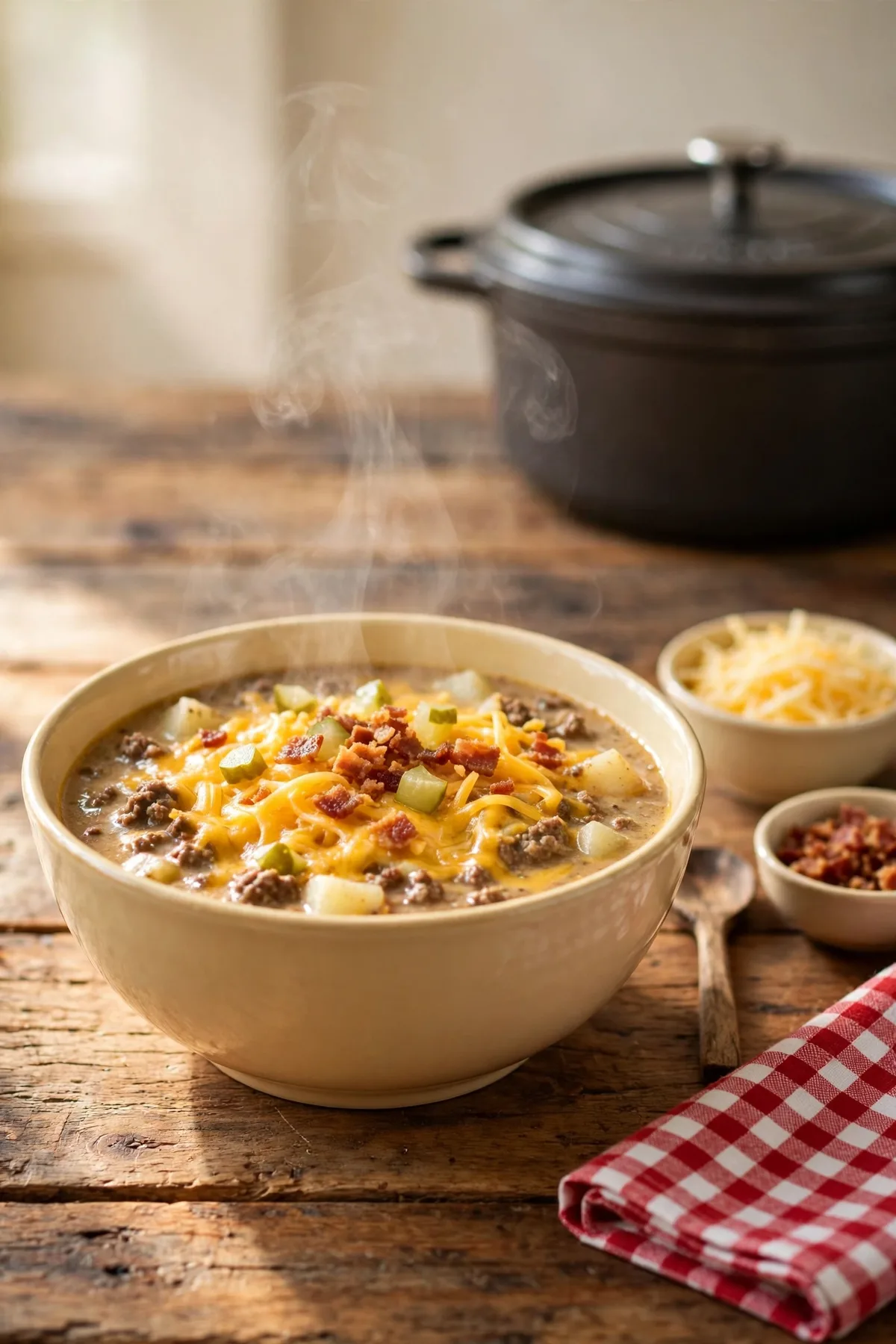
Cheeseburger soup delivers everything you love about a cheeseburger — savory ground beef, melted cheddar, and that familiar comfort-food flavor — in a thick, creamy soup instead of a sandwich. This cheeseburger soup recipe uses a proper roux-based thickening method and a specific cheese-melting technique that keeps the texture smooth instead of grainy or broken. The entire pot comes together in one Dutch oven in just 35 minutes.
This recipe is built for anyone who’s had a batch curdle or turn grainy and wants a version that works every single time. If you’ve ever ended up with a soup that separated into an oily, clumped mess — every one of those problems has a specific fix here. It works for a cold weeknight dinner, a family-friendly comfort meal, or a potluck dish that disappears fast.
Made this already? Scroll down and leave a ⭐⭐⭐⭐⭐ rating below — it helps more than you know.
Once you nail the technique for this soup, it becomes a permanent part of the cold-weather dinner rotation.
⏱ Prep Time: 15 minutes
🕐 Cook Time: 20 minutes
⏳ Total Time: 35 minutes
🍽 Servings: 6
📊 Difficulty: Easy
💰 Estimated Cost: ~$12 total / ~$2.00 per serving
🧀 Main Item: Creamy ground beef and potato soup with cheddar cheese
Table of Contents
Why This Cheeseburger Soup Recipe Works
- A proper roux instead of just flour dumped in. Most recipes stir flour directly into hot liquid, which clumps and never fully smooths out. This recipe cooks butter and flour together first into a true roux, which dissolves cleanly into the broth for a lump-free base.
👉 another easy comfort food recipe here
- Cheese added off heat, in stages. Dumping cold, cubed cheese into boiling liquid is the single biggest cause of grainy, broken cheese soup. Adding it gradually off heat keeps the proteins from seizing up.
- Potatoes simmered separately from the dairy. Here’s the truth: potatoes need real simmering time to turn tender, but dairy breaks down if it simmers that long. Cooking the potatoes in broth first, then adding dairy at the end, solves both problems at once.
- Browning the beef with real seasoning first. Plain, unseasoned ground beef tastes flat no matter how good the soup base is. Seasoning it while it browns builds flavor all the way through.
- A splash of pickle juice stirred in at the end. This small, unexpected addition genuinely replicates the tangy flavor a cheeseburger gets from pickles, tying the whole concept together.
Understanding the Key Ingredient

I’ve made this soup recipe more times than I can count — always for real family dinners, never just for testing. The one step I never skip, no matter how rushed I am, is the key technique in Step 4. Every single time I’ve tried cutting corners on it, the final soup suffered. Every time I followed it properly, the result was exactly right.
Why Freshly Grated Cheddar Is the Right Choice
Freshly grated cheddar melts into a smooth, cohesive texture because it hasn’t been coated in the anti-caking starches that pre-shredded bags contain, which is exactly why this soup recipe calls for grating a block yourself. Those starches, while convenient, create a slightly gritty, less smooth melt that works against the creamy texture this soup depends on. Additionally, a sharp cheddar specifically provides a more pronounced, tangy flavor that holds up against the richness of the beef and cream rather than getting lost.
Cheese Comparison Guide
| Type | Melt Quality | Flavor | Best For |
|---|---|---|---|
| Freshly grated sharp cheddar | Smooth, no additives | Bold, tangy | Best overall result |
| Pre-shredded cheddar | Slightly grainy from starch | Milder | Acceptable but less smooth |
| Mild cheddar, freshly grated | Smooth | Milder | Good for a gentler flavor |
| Velveeta | Very smooth, melts easily | Very mild, processed | Convenient shortcut, different flavor |
How to Choose the Best at the Store
- Buy a block, not pre-shredded bags, whenever possible. This single choice significantly improves the final texture of this cheeseburger soup recipe.
- Sharp or extra-sharp cheddar holds up best. Milder cheddar can get lost against the richness of the beef and cream.
- Check the fat content. Full-fat cheddar melts more smoothly than reduced-fat versions, which can turn rubbery.
- Grate it yourself right before using. Pre-grated cheese that’s sat out can dry out slightly and melt less evenly.
- Buy slightly more than the recipe calls for. Extra cheese for garnishing on top is always worth having on hand.
How Much Do You Need?
| Servings | Ground Beef | Cheddar Cheese |
|---|---|---|
| 4 | ½ lb | 1½ cups |
| 6 | ¾ lb | 2 cups |
| 8 | 1 lb | 3 cups |
| 12 | 1½ lbs | 4½ cups |
Double Batch — How to Scale This Cheeseburger Soup Recipe
Doubling works cleanly as long as you use a large enough pot — an 8-quart Dutch oven or stockpot handles a doubled batch without overflowing. Make the roux in the same proportional increase, since the thickening ratio doesn’t change with volume. Add the cheese in slightly smaller, more frequent additions when doubling, since a larger volume of hot liquid can cause the cheese to seize up faster if added too quickly.
Ingredients You’ll Need

This soup recipe uses straightforward pantry and fresh ingredients. Here is everything broken down.
Main Ingredients
- Ground beef — 1 lb. The savory base of the soup. Browned and seasoned separately for the deepest flavor.
- Russet potatoes — 3 cups, diced. Adds heartiness and body. Holds its shape well through simmering.
- Sharp cheddar cheese — 2 cups, freshly grated. The defining flavor of this cheeseburger soup. Grated fresh for the smoothest melt.
- Butter — 3 tablespoons. Used for the roux that thickens the soup base.
- All-purpose flour — 3 tablespoons. Combined with butter to create a smooth, lump-free thickener.
- Beef broth — 4 cups. The liquid base. Low-sodium preferred so you control salt.
- Heavy cream — 1 cup. Added at the end for the rich, creamy finish.
- Yellow onion — ½ cup, diced. Builds the aromatic base alongside the carrot.
Supporting Ingredients
- Carrot — ¼ cup, finely diced. Adds subtle sweetness and color.
- Garlic — 2 cloves, minced. Adds depth alongside the onion.
- Pickle juice — 1 tablespoon. The secret ingredient that ties the flavor back to a classic cheeseburger.
- Salt and black pepper — to taste.
- Crumbled bacon and diced pickles — for garnish.
Optional Additions Table
| Add-In | Amount | Effect |
|---|---|---|
| Worcestershire sauce | 1 tsp | Adds deeper savory umami |
| Diced tomato | ¼ cup | Adds a burst of fresh, classic burger flavor |
| Hot sauce | 1 tsp | Adds a subtle kick |
| Dijon mustard | 1 tsp | Adds tang that echoes classic burger condiments |
| Green onion, sliced | 2 tbsp | Fresh, sharp garnish on top |
Complete Substitutions Reference
| Original | Substitution | Notes |
|---|---|---|
| Ground beef | Ground turkey | Leaner, slightly milder flavor |
| Heavy cream | Half-and-half | Less rich but still creamy |
| Russet potatoes | Yukon gold potatoes | Slightly creamier texture |
| Sharp cheddar | Velveeta (half the amount) | Very smooth melt, milder flavor |
| Beef broth | Chicken broth | Works fine, slightly lighter flavor |
What NOT to Add to This Cheeseburger Soup Recipe
- ❌ Cold cheese dumped in all at once — the single most common cause of grainy, broken cheese soup
- ❌ Flour added directly to hot liquid without a roux — clumps instead of dissolving smoothly
- ❌ Boiling the soup after cream and cheese are added — can cause the dairy to curdle or separate
- ❌ Pre-shredded cheese straight from the bag — the anti-caking starch produces a less smooth melt
- ❌ Overcooking the potatoes before adding dairy — they’ll turn mushy by the time the soup is finished
- ❌ Skipping the pickle juice — it’s a small addition but genuinely contributes to the authentic cheeseburger flavor
Equipment You’ll Need
Choosing the Right Equipment for Cheeseburger Soup
| Tool | Purpose | Best For |
|---|---|---|
| Dutch oven | Cooking everything | Even heat, holds a full batch easily |
| Large stockpot | Cooking everything | Works just as well for larger batches |
| Box grater | Grating cheese | Quick, even shredding |
| Whisk | Making the roux | Smooth, lump-free thickening |
Other Tools That Actually Matter
A Dutch oven holds heat evenly, which matters for cooking the roux without scorching it. A whisk is essential for the roux step, since it works the flour and butter together far more smoothly than a spoon. A box grater makes quick work of shredding a block of cheddar, which produces a noticeably smoother melt than buying pre-shredded bags.
No Dutch Oven? Alternatives That Work for This Cheeseburger Soup Recipe
- Large stockpot — works identically; just make sure it’s heavy-bottomed enough to prevent scorching the roux
- Slow cooker — brown the beef and make the roux separately first, then transfer everything to the slow cooker and cook on low for 4–5 hours, adding cream and cheese in the last 30 minutes
- Large saucepan — works for a smaller batch, though a wider pot makes stirring and whisking easier
How to Make Cheeseburger Soup — Step by Step
Six steps. Most take under five minutes each.
Step 1 — Brown the Beef
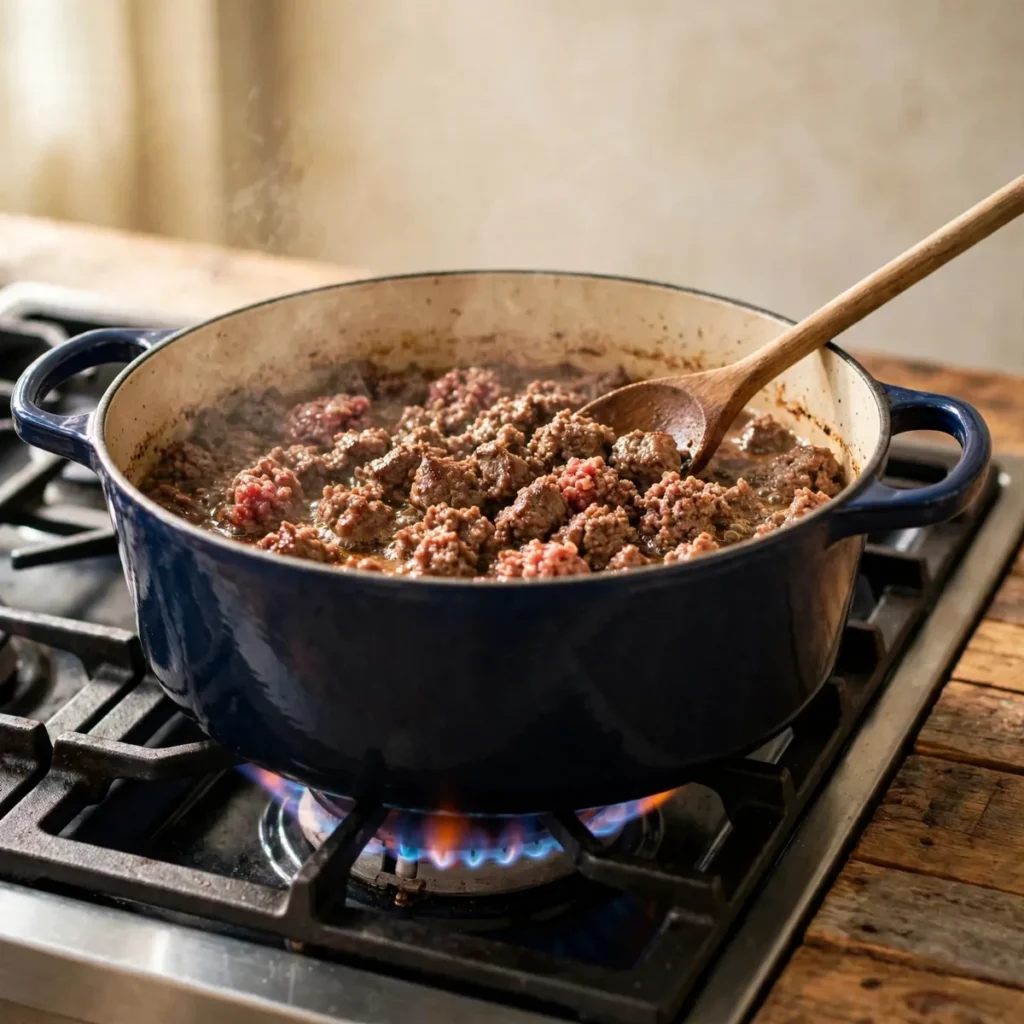
Heat the Dutch oven over medium-high heat. Add the ground beef and break it into small crumbles with a spoon as it cooks. Brown for 6–7 minutes, stirring occasionally, until no pink remains. Season with salt and pepper. Remove the beef to a plate, leaving any rendered fat in the pot. Browning and seasoning the beef on its own first is what builds the savory foundation this entire soup recipe depends on.
💡 Pro Tip: Resist draining all the fat after browning — a small amount left in the pot helps the onion and carrot sauté with more flavor in the next step.
Step 2 — Sauté the Vegetables and Make the Roux
In the same pot, add the diced onion and carrot and cook for 4–5 minutes until softened. Add the garlic and cook 30 seconds more. Push the vegetables to one side, add the butter to melt, then whisk in the flour and cook for 1–2 minutes, stirring constantly, until it smells slightly nutty and turns a pale golden color. This roux is what thickens the soup smoothly instead of leaving lumps of raw flour throughout.
💡 Pro Tip: Cook the roux just until it smells toasty, not deeply browned — a lightly golden roux thickens effectively without adding an overly dark, bitter flavor.
Step 3 — Add Broth and Potatoes

Gradually whisk in the beef broth, a cup at a time, until fully smooth with no lumps. Add the diced potatoes, bring to a boil, then reduce to a simmer and cook for 12–15 minutes, until the potatoes are fork-tender.
👉 another easy family dinner here
As a result, whisking the broth in gradually rather than all at once is what keeps the roux from seizing into clumps.
💡 Pro Tip: Cut the potatoes into small, even pieces — this ensures they cook through at the same rate without needing an excessively long simmer.
Step 4 — Return the Beef and Add Cream (The Key Step)
Reduce the heat to low and return the browned beef to the pot. Stir in the heavy cream. Add the grated cheddar cheese gradually, in small handfuls, stirring until each addition fully melts before adding more. Most recipes dump all the cheese in at once, but this soup recipe adds it gradually and off a low simmer specifically to prevent the proteins from seizing into a grainy, broken texture. Every single time I’ve rushed this step, the cheese separated instead of melting smoothly.
💡 Pro Tip: Keep the heat low and patient here — rushing the cheese-melting step is the single fastest way to end up with a grainy, broken soup.
Step 5 — Finish with Pickle Juice

Stir in the pickle juice off heat. Taste and adjust salt and pepper as needed. This small addition is what ties the entire soup back to the actual flavor of a classic cheeseburger, rounding out the richness with a touch of tang.
Step 6 — Ladle and Garnish
Ladle into bowls and top generously with extra shredded cheddar, crumbled bacon, and diced pickles. Serve immediately while hot and creamy.
How to Tell When It’s Done
In my kitchen, I’ve learned to trust the texture over the clock for this soup recipe — but every stove runs a little differently, so check the potatoes closely on your first attempt. Once you’ve made it once, you’ll know exactly what to look for.
Primary Doneness Test
The potatoes are done when a fork slides in with no resistance. The soup itself is ready when the cheese has fully melted into a smooth, glossy texture with no visible graininess or separation, and the overall consistency coats the back of a spoon.
Doneness Guide
| Indicator | What It Means | What to Do |
|---|---|---|
| Potatoes still firm in the center | Under-cooked | Simmer 3–5 more minutes |
| Potatoes fork-tender | Perfectly done | Proceed to adding cream and cheese |
| Cheese looks grainy or clumped | Added too fast or heat too high | Reduce heat and stir patiently, or whisk in a splash of cream |
| Cheese fully smooth and glossy | Perfectly done | Finish with pickle juice and serve |
| Soup too thin | Roux wasn’t cooked long enough or not enough was used | Simmer a bit longer to reduce |
| Soup too thick | Too much roux or reduced too long | Thin with a splash more broth |
Visual Signs It’s Done
- The potatoes look tender and slightly translucent at the edges rather than opaque and firm
- The cheese has melted into a completely smooth, glossy texture with no visible lumps or grain
- The soup coats the back of a spoon in an even layer rather than running off thin
- The color is a rich, uniform golden-orange throughout
- The aroma has shifted from raw onion and garlic to a warm, cheesy, savory smell
It’s Not Right — What to Do Now
- Soup turned grainy: Cheese was added too fast or at too high a heat — reduce heat, add cheese slowly, and whisk in a splash of cream to help smooth it back out
- Soup curdled: Dairy was boiled after being added — always keep heat low once cream and cheese go in
- Soup is too thin: Roux wasn’t cooked long enough, or not enough was used — simmer longer to reduce or make an extra small batch of roux to stir in
- Potatoes are mushy: Simmered too long before adding dairy — check doneness a few minutes earlier next time
How to Get the Right Consistency
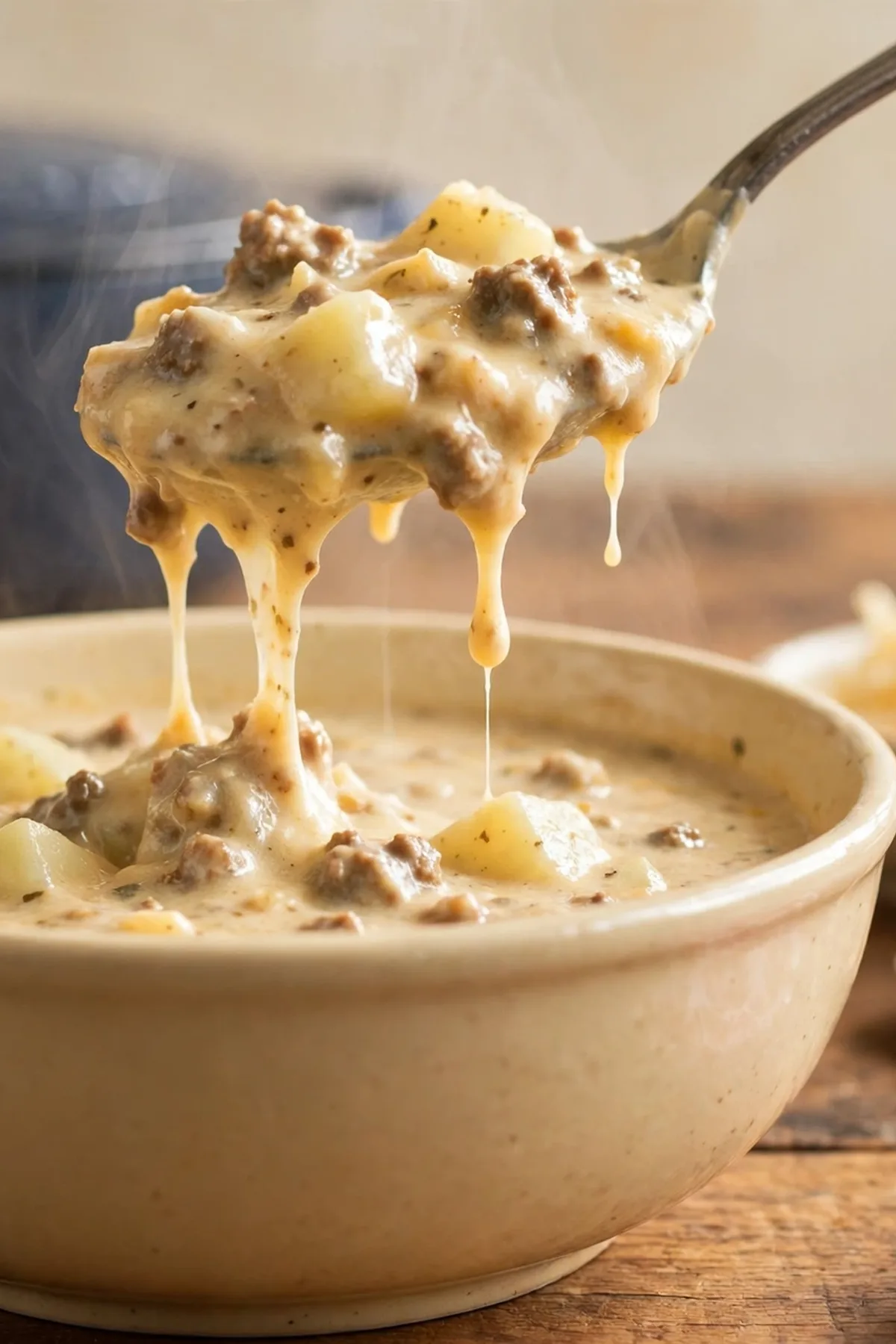
Getting the right thick, creamy consistency comes down to the roux and the cheese-melting technique more than any single ingredient. There are three approaches depending on your preference.
Method 1 — Classic Roux Method (Standard Recipe)
Cook butter and flour into a roux, whisk in broth gradually, then finish with cream and cheese added slowly off a low simmer. This is the method used throughout this soup recipe and produces the most reliably smooth, thick result.
Method 2 — Cornstarch Slurry Method (Gluten-Free Alternative)
Skip the flour-based roux entirely and instead thicken the finished soup with a cornstarch slurry — 2 tablespoons cornstarch whisked with 2 tablespoons cold water, stirred in during the last few minutes of simmering. This produces a similarly thick result while keeping the recipe gluten-free.
Method 3 — Extra Thick Method (Heartier Version)
Increase the roux to 4 tablespoons each of butter and flour, and reduce the broth slightly to 3½ cups. This produces a noticeably thicker, stew-like consistency that some people prefer for an extra hearty, cold-weather version.
Troubleshooting Quick Reference
| Problem | Cause | Fix |
|---|---|---|
| Grainy, broken texture | Cheese added too fast or at too high heat | Reduce heat, add slowly, whisk in a splash of cream |
| Too thin | Roux under-cooked or insufficient amount | Simmer longer or make a small extra batch of roux |
| Too thick | Too much roux used | Thin with a splash more broth |
| Curdled appearance | Boiled after dairy was added | Keep heat low; whisk vigorously to try to recombine |
What to Serve With It
Classic Pairings That Always Work
- Crusty bread or dinner rolls — perfect for scooping up every bit of the creamy soup
- A simple green salad — adds freshness alongside the rich, hearty soup
- Extra pickles on the side — doubles down on the classic cheeseburger flavor theme
- Oyster crackers — a classic, crunchy addition to any creamy soup
- Grilled cheese sandwiches — a fitting, indulgent pairing for a cheese-forward soup
Comfort Food Pairings
- French fries on the side — leans fully into the cheeseburger theme
- Onion rings — another classic burger-adjacent side
- Baked potato wedges — a hearty, starchy pairing alongside the already potato-rich soup
- Buttermilk biscuits — a Southern-leaning comfort pairing that works beautifully with this soup
Lighter Options
- Steamed green beans — a simple vegetable side that doesn’t compete with the rich flavor
- A side of fresh fruit — balances the richness with something light and sweet
- Smaller portion sizes with extra salad — a simple way to lighten the overall meal
6 Ways to Use Leftover Cheeseburger Soup
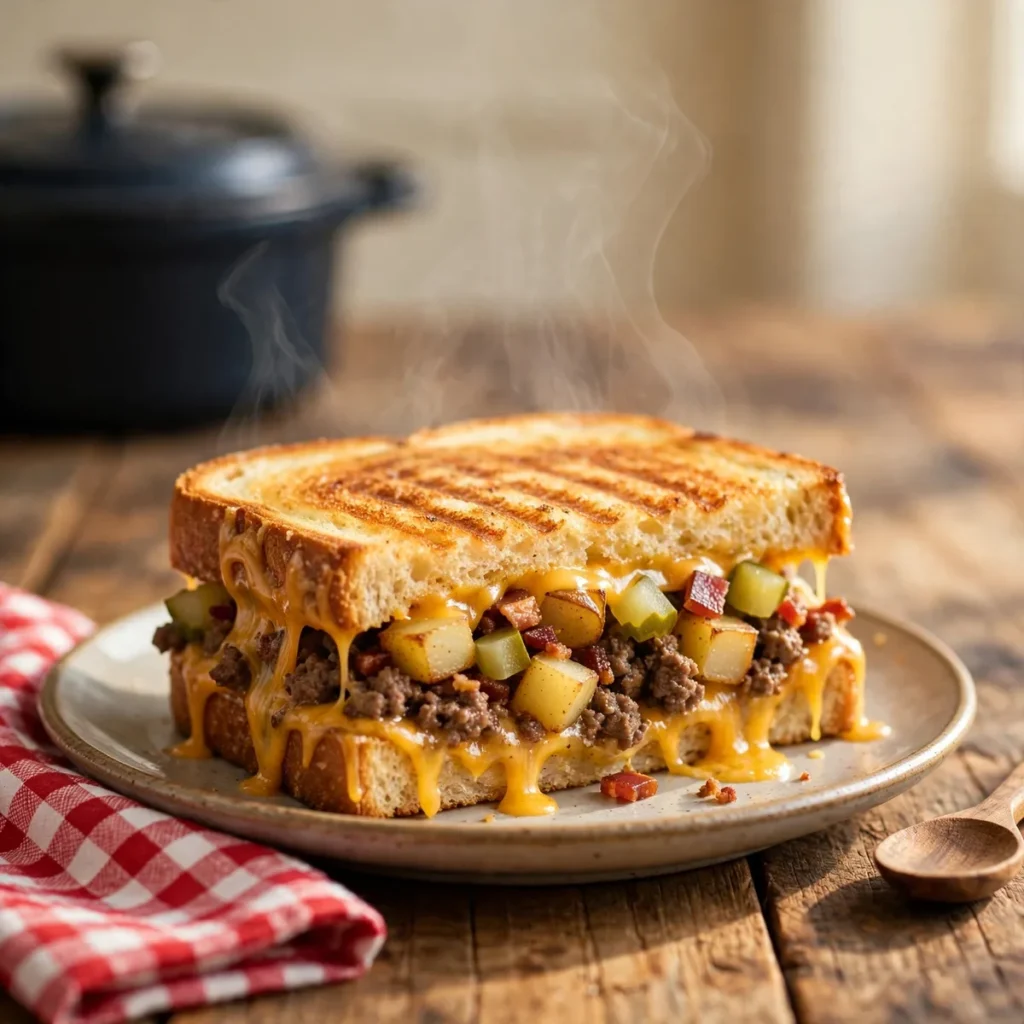
Leftover soup can become several completely different meals. Here are 6 ways to use it.
Cheeseburger Soup Melt Sandwich
What you need: Leftover soup (thickened, drained slightly), 2 slices bread, butter.
How to assemble: Spread thickened leftover soup between two slices of bread and grill in butter over medium heat until golden on both sides.
One tip: Let the leftover soup chill in the fridge first — it thickens enough to spread like a filling rather than running out the sides.
Cheeseburger Soup Baked Potato Topping
What you need: Leftover soup, baked potatoes.
How to assemble: Split open baked potatoes and ladle the leftover soup directly over the top.
One tip: This works especially well since the soup is already thick and cheesy enough to function as a loaded potato topping on its own.
Cheeseburger Soup Casserole
What you need: Leftover soup, cooked egg noodles or tater tots, extra cheese.
How to assemble: Combine leftover soup with cooked noodles or tater tots in a baking dish, top with extra cheese, and bake at 375°F for 20 minutes until bubbly.
👉 try another easy casserole recipe here
One tip: Tater tots add a fun, crispy texture contrast to the creamy soup base underneath.
Cheeseburger Soup Stuffed Bell Peppers
What you need: Leftover soup (drained slightly), bell peppers, halved and seeded.
How to assemble: Fill pepper halves with drained leftover soup and bake at 375°F for 20 minutes until the peppers are tender.
One tip: Drain any excess liquid from the leftovers first — too much liquid makes the peppers watery once baked.
Cheeseburger Soup Dip
What you need: Leftover soup, tortilla chips.
How to assemble: Reheat leftover soup until thick, then serve warm as a dip alongside sturdy tortilla chips.
One tip: The thicker the leftovers, the better this works — a thin batch won’t cling to the chips well.
Cheeseburger Soup Pasta Bake
What you need: Leftover soup, cooked pasta, extra cheese.
How to assemble: Toss cooked pasta with leftover soup, transfer to a baking dish, top with extra cheese, and bake at 375°F for 15 minutes until bubbly.
One tip: This transforms a smaller amount of leftovers into a completely different, heartier meal with very little extra effort.
Storage, Freezing and Reheating Guide
Refrigerator Storage (Up to 4 Days)
This soup recipe stores in the refrigerator for up to 4 days in an airtight container. The soup thickens further once chilled, which is completely normal — gentle reheating with a splash of broth restores the original creamy consistency.
Can You Make This Ahead of Time?
Yes — this recipe reheats well, making it a solid make-ahead option. Make the full batch up to 2 days before you need it, refrigerate, and reheat gently on the stovetop, stirring frequently and adding a splash of broth if needed.
Freezer Storage (Not Recommended)
This soup recipe does not freeze particularly well, since the dairy-based sauce can separate and turn grainy once thawed. If freezing is necessary, freeze the soup before adding the cream and cheese, then add those fresh during reheating for a better final texture.
This Recipe Works Best Made Fresh or Reheated Within a Few Days
Unlike some soups, this one genuinely holds its texture best within the first few days after cooking rather than after an extended freezer stay. For meal prep, making a batch early in the week and portioning it into the fridge works more reliably than freezing.
👉 see more easy make-ahead dinners here
How to Reheat Without Ruining It
| Method | Setting | Time | Notes |
|---|---|---|---|
| Stovetop | Low | 8–10 min | Best method; stir frequently and add a splash of broth |
| Microwave | 50% power | 2–3 min | Stir every 60 seconds to prevent separation |
| Slow cooker | Low | 1–2 hrs | Good for keeping a large batch warm |
Weekly Prep Strategy
Make a full batch at the start of the week and portion into containers for quick reheating. This soup recipe reheats well enough within a few days to be a genuinely practical dinner for multiple nights without remaking it from scratch.
Recipe Variations Worth Trying
Same technique. Completely different flavor profiles. Master this base soup recipe first — then try one of these.
Most Popular — Bacon Cheeseburger Soup
Stir in ¼ cup of crumbled cooked bacon along with the beef in Step 4, reserving extra to sprinkle on top. The smoky, salty bacon makes this the most requested variation of this soup recipe at any family gathering.
International — Southwest Cheeseburger Soup
Add 1 teaspoon of chili powder and ½ teaspoon of cumin to the roux step, and stir in a 4 oz can of diced green chiles along with the potatoes. This gives the dish a Southwest-inspired twist that pairs the familiar comfort of this dish with a bit of Mexican-inspired warmth.
Lighter — Reduced Cream Version
Replace half the heavy cream with whole milk and use a reduced-fat cheddar. Therefore, you get a noticeably lighter version that still tastes creamy and satisfying for this soup recipe without quite as much richness.
Quick Shortcut — Instant Potato Version
Use 2 cups of frozen diced hash browns instead of fresh potatoes, adding them directly to the broth — they cook through faster than raw diced potatoes. This cuts the simmer time down by several minutes while still delivering a hearty, potato-forward result.
Fresh and Elevated — Caramelized Onion Cheeseburger Soup
Caramelize the diced onion slowly over low heat for 15–20 minutes before proceeding with the rest of the recipe, rather than a quick 4–5 minute sauté. The deeply caramelized onion adds a rich, sweet complexity that elevates this comfort food classic into something more sophisticated.
Nutrition Information
Per Serving Breakdown (Based on 6 Servings)
| Nutrient | Amount | % Daily Value |
|---|---|---|
| Calories | ~460 | — |
| Total Fat | 30g | 38% |
| Saturated Fat | 16g | 80% |
| Cholesterol | 110mg | 37% |
| Sodium | 680mg | 30% |
| Total Carbohydrates | 22g | 8% |
| Dietary Fiber | 2g | 7% |
| Total Sugars | 3g | — |
| Protein | 25g | 50% |
| Vitamin A | 40% DV | — |
According to USDA FoodData Central, cheddar cheese provides a meaningful source of calcium per serving — meaning this soup recipe contributes real nutritional value alongside its rich, comforting flavor.
Dietary Compatibility
| Diet | Compatible | Notes |
|---|---|---|
| Gluten-Free | ❌ | Use the cornstarch slurry method above to adapt |
| Dairy-Free | ❌ | Requires dairy-free cream and cheese substitutes to adapt |
| Paleo | ❌ | Flour, dairy, and potatoes all excluded |
| Keto | ❌ | Omit potatoes and use cauliflower, plus a low-carb thickener |
| Vegetarian | ❌ | Replace ground beef with a plant-based ground meat substitute |
| Vegan | ❌ | Same substitution plus dairy-free cream and cheese needed |
To reduce sodium in this soup recipe, use low-sodium beef broth and reduce the added salt — the cheddar cheese already carries meaningful sodium on its own.
8 Mistakes That Ruin Cheeseburger Soup
Every one of these mistakes in this soup is fixable. Know them before you start — not after.
❌ Mistake 1: Adding Cheese Too Fast
Why it happens: Wanting to speed through the final step. What goes wrong: Cheese dumped in all at once over high heat seizes up into a grainy, broken texture instead of melting smoothly. The fix: Add cheese gradually, in small handfuls, over low heat.
❌ Mistake 2: Boiling the Soup After Dairy Is Added
Why it happens: Not adjusting the heat down after adding cream and cheese. What goes wrong: High heat causes the dairy to curdle or separate, ruining the smooth texture. The fix: Always reduce to low heat before adding cream and cheese, and keep it there.
❌ Mistake 3: Skipping the Roux
Why it happens: Trying to thicken with flour added directly to the liquid. What goes wrong: Flour added straight to hot liquid clumps instead of dissolving smoothly, leaving lumps throughout. The fix: Always cook butter and flour together into a proper roux before adding any liquid.
❌ Mistake 4: Using Pre-Shredded Cheese
Why it happens: Convenience, since it’s already shredded. What goes wrong: The anti-caking starch coating on bagged cheese produces a slightly grainy melt instead of a smooth one. The fix: Grate a block of cheese yourself right before using it.
❌ Mistake 5: Overcooking the Potatoes Before Adding Dairy
Why it happens: Not checking doneness before moving to the next step. What goes wrong: Potatoes that are already fully soft turn mushy by the time the soup finishes simmering with the dairy added. The fix: Check potatoes at the fork-tender stage and move to the next step promptly.
❌ Mistake 6: Skipping the Pickle Juice
Why it happens: Not realizing how much it matters to the final flavor. What goes wrong: Without it, the soup tastes rich but misses the tangy note that ties it back to an actual cheeseburger. The fix: Always stir in the pickle juice at the end, even though it seems like a small addition.
❌ Mistake 7: Not Seasoning the Beef Separately
Why it happens: Assuming the broth and cheese will carry enough flavor. What goes wrong: Unseasoned beef tastes flat throughout the finished soup, regardless of how flavorful the base is. The fix: Season the beef with salt and pepper while it browns, before it ever goes back into the pot.
❌ Mistake 8: Reheating at Too High a Temperature
Why it happens: Wanting leftovers hot quickly. What goes wrong: High heat reheating can cause the previously smooth cheese sauce to separate and turn grainy. The fix: Reheat gently over low heat, stirring frequently, rather than blasting it on high.
Frequently Asked Questions
Why did my cheeseburger soup curdle?
The most common cause is boiling the soup after the cream and cheese have already been added, since high heat breaks the emulsion between the fat and the dairy proteins. This cheeseburger soup recipe specifically calls for low heat once dairy goes in, and keeping it there through the rest of cooking prevents this problem almost entirely. If a batch does curdle, whisking vigorously off heat sometimes helps bring it back together, though prevention is far more reliable than fixing it after the fact.
What potatoes are best for cheeseburger soup?
Russet potatoes are the best choice for this recipe since they hold their shape well through simmering while still becoming genuinely tender. Yukon gold potatoes work as a substitute and produce a slightly creamier texture due to their naturally higher moisture content. Waxy potatoes like red potatoes can work too, though they stay a bit firmer than russets throughout the cooking process.
How do you thicken cheeseburger soup?
The standard method in this recipe uses a roux — butter and flour cooked together before any liquid is added — which thickens the broth smoothly without lumps. For a gluten-free alternative, a cornstarch slurry whisked separately and stirred in during the last few minutes of simmering achieves a similar thick consistency. If the finished soup still seems thinner than desired, simmering it a bit longer, uncovered, also helps reduce and thicken it naturally.
Can you make cheeseburger soup ahead of time?
Yes — this cheeseburger soup recipe reheats reasonably well, making it a solid option for making ahead. Make the full batch up to 2 days before you need it, store covered in the refrigerator, and reheat gently on the stovetop over low heat, stirring frequently and adding a splash of broth if the texture has thickened too much.
What do you serve with cheeseburger soup?
Crusty bread or dinner rolls are the most classic pairing, perfect for scooping up every bit of the creamy soup. A simple green salad adds freshness alongside the rich, hearty flavor. For a more indulgent spread, French fries or onion rings on the side lean fully into the cheeseburger theme that inspired the soup in the first place.
Can you freeze cheeseburger soup?
Freezing isn’t ideal for this recipe once it’s fully made, since the dairy-based sauce can separate and turn grainy after thawing. If freezing is necessary, the best approach is to freeze the soup before adding the cream and cheese, then stir those in fresh during reheating for a noticeably better final texture than freezing the complete dish.
How long does cheeseburger soup last in the fridge?
This cheeseburger soup recipe lasts up to 4 days in the refrigerator stored in an airtight container. The soup thickens further once chilled, which is completely normal, and gentle reheating with a splash of extra broth restores most of its original creamy consistency.
Can you make cheeseburger soup in a slow cooker?
Yes — brown the beef and make the roux on the stovetop first, since a slow cooker doesn’t handle either of those steps well, then transfer everything including the broth and potatoes to the slow cooker. Cook on low for 4–5 hours until the potatoes are tender, then stir in the cream and cheese gradually during the last 30 minutes on low heat, finishing with the pickle juice off heat.
Why is my cheeseburger soup grainy?
This almost always means the cheese was added too quickly or at too high a heat, which causes the proteins in the cheese to seize up rather than melt smoothly into the liquid. Reducing the heat to low before adding any cheese, and adding it gradually in small handfuls, solves this issue in nearly every batch. Using freshly grated cheese instead of pre-shredded bags also helps, since pre-shredded cheese contains starches that can contribute to a grainier texture.
Why does my cheeseburger soup taste bland?
The most common cause is not seasoning the ground beef separately while it browns, which leaves the entire dish tasting underdeveloped even with a flavorful broth. Skipping the pickle juice at the end also removes a key tangy note that genuinely ties the flavor back to an actual cheeseburger. Tasting the finished soup and adjusting salt, along with making sure the pickle juice was added, usually identifies what a bland batch is missing.
You Might Also Like
Best Beef and Broccoli
Cheeseburger Soup — Recipe Card

CHEESEBURGER SOUP
Ingredients
Equipment
Method
- Brown ground beef in a Dutch oven over medium-high heat, 6–7 minutes, until no pink remains. Season with salt and pepper. Remove to a plate.
- In the same pot, sauté onion and carrot 4–5 minutes. Add garlic, cook 30 seconds. Melt butter in the pot, whisk in flour, cook 1–2 minutes until lightly golden.
- Gradually whisk in beef broth. Add potatoes. Bring to a boil, reduce to simmer, cook 12–15 minutes until fork-tender.
- Reduce heat to low. Return beef to the pot. Stir in heavy cream. Add cheese gradually in small handfuls, stirring until melted before adding more.
- Remove from heat. Stir in pickle juice. Taste and adjust seasoning.
- Ladle into bowls and top with extra cheddar, bacon, and pickles. Serve immediately.
Notes
✅ Add cheese gradually over low heat — this is what keeps the texture smooth instead of grainy.
🔄 No heavy cream? Half-and-half works as a lighter substitute.
❄️ Refrigerate up to 4 days. Freezing is not recommended once fully made with dairy.
📌 Grate your own cheese from a block — pre-shredded cheese melts less smoothly due to added starches. Make Ahead + Freezer Notes: Make up to 2 days ahead and refrigerate; reheat gently on low with a splash of broth. For freezing, make the base without cream and cheese, freeze, then add dairy fresh during reheating. Nutrition Per Serving: Calories: ~460 | Protein: 25g | Fat: 30g | Carbs: 22g | Fiber: 2g | Sodium: ~680mg Dietary Info: ❌ Gluten-Free | ❌ Dairy-Free | ❌ Paleo | ❌ Keto | ❌ Vegetarian | ❌ Vegan Did You Make This? Tag @thegildedskillet and leave a ⭐⭐⭐⭐⭐ rating below.
— David | The Gilded Skillet





3 Comments