
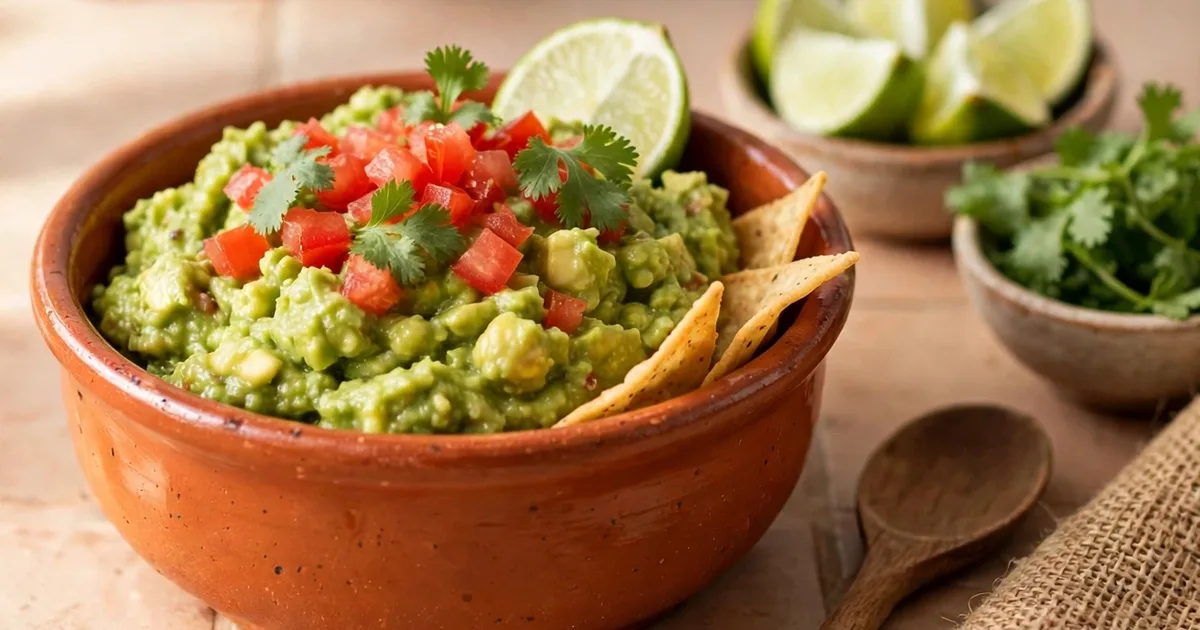
Best Guacamole Recipe (Fresh, Chunky, Ready in 10 Minutes)
⭐⭐⭐⭐⭐ Rate this recipe

This guacamole recipe gives you chunky, genuinely fresh guacamole with bright lime, sharp onion, and just enough heat — not a mushy, bland paste that tastes like plain mashed avocado. The method here uses a specific mashing technique and a precise ratio of lime to salt that keeps every batch tasting balanced, plus a trick that actually slows down browning. The entire bowl comes together in 10 minutes with zero cooking required.
This recipe is built for anyone who’s had guacamole turn out either too watery or completely flavorless and wants a version that works every single time. If you’ve ever made a batch that turned brown within an hour, or tasted like nothing but avocado — every one of those problems has a specific fix here. It works for taco night, a game-day spread, or a simple snack with chips whenever the craving hits. It’s the guacamole recipe I reach for whenever I want a batch that works the first time.
Made this already? Scroll down and leave a ⭐⭐⭐⭐⭐ rating below — it helps more than you know.
Once you nail the ratio for this guacamole recipe, store-bought tubs stop making sense.
Table of Contents
Why This Guacamole Recipe Works
- Lime juice added before mashing, not after. Most recipes mash the avocado first and squeeze lime on top as an afterthought. This recipe mixes the lime in while mashing, which distributes the acid evenly and slows oxidation far more effectively.
another easy appetizer recipe here
- Salt added to the onion and jalapeño first. Salting these aromatics before combining with the avocado draws out their sharp edge and softens the raw bite, producing a more balanced final flavor.
- Leaving the mixture genuinely chunky. Here’s the truth: over-mashed guacamole turns into a paste that doesn’t taste like anything distinct. Leaving visible avocado chunks keeps every bite interesting.
- Pressing plastic wrap directly onto the surface. This simple trick creates a physical barrier against oxygen, which is the real cause of browning — far more effective than just leaving the pit in the bowl.
- No cooking, no special equipment, genuinely ready in 10 minutes. This entire guacamole recipe comes together with a bowl and a fork faster than it takes to drive to a restaurant.
Understanding the Key Ingredient

I’ve made this guacamole recipe more times than I can count — always for real gatherings, never just for testing. The one step I never skip, no matter how rushed I am, is the key technique in Step 2. Every single time I’ve tried cutting corners on it, the final result suffered. Every time I followed it properly, the flavor was exactly right.
Why Properly Ripe Avocados Are the Right Choice
A properly ripe avocado yields slightly to gentle pressure without feeling mushy, and that exact texture is what allows this guacamole recipe to mash into a creamy base while still holding distinct chunks. Underripe avocados stay too firm and taste bland and grassy, while overripe ones turn stringy and brown-tinged even before oxidation sets in. Additionally, properly ripe avocados release their natural creaminess more evenly, which means less added fat or liquid is needed to achieve the right consistency.
Avocado Ripeness Guide
| Stage | Feel | Color | Best For |
|---|---|---|---|
| Underripe | Very firm, no give | Bright green | Not ready — wait 1-2 more days |
| Perfectly ripe | Yields to gentle pressure | Dark green to near-black | Best overall result |
| Overripe | Very soft, mushy | Dark with soft spots | Still usable but check for brown spots inside |
| Rotten | Collapses under light pressure | Black with sunken spots | Discard — don’t use |
How to Choose the Best at the Store
- Press gently near the stem end. A ripe avocado gives slightly without feeling soft or mushy.
- Check under the stem cap if possible. Removing the small stem reveals green underneath on a ripe one; brown means overripe.
- Buy a few days ahead if they’re firm. Avocados ripen at room temperature over 3-5 days; buying ripe ones for same-day use saves that wait.
- Avoid any with visible dents or soft spots. These often indicate bruising or early spoilage inside.
- A paper bag speeds up ripening. Store firm avocados in a paper bag with a banana to ripen faster if needed in a hurry.
How Much Do You Need?
| Servings | Avocados | Lime | Red Onion |
|---|---|---|---|
| 4 | 2 | 1 | ¼ cup diced |
| 6 | 3 | 1–2 | ⅓ cup diced |
| 8 | 4 | 2 | ½ cup diced |
| 12 | 6 | 3 | ¾ cup diced |
Double Batch — How to Scale This Guacamole Recipe
Doubling works cleanly as long as you have a bowl large enough to mash comfortably — an overcrowded bowl makes it hard to mix everything evenly without spilling. Taste and adjust salt and lime separately for a doubled batch rather than simply doubling every measurement exactly, since avocado size and ripeness can vary enough to throw off the balance. The texture and chunkiness stay the same regardless of batch size.
Ingredients You’ll Need

This guacamole recipe uses just 6 main ingredients. Here is everything broken down.
Main Ingredients
- Avocados — 3 large, ripe. The entire base of the dish. Properly ripe is essential for the right texture.
- Lime juice — 2 tablespoons, fresh. The primary acid that brightens the flavor and slows browning.
- Red onion — ¼ cup, finely diced. Adds sharp, aromatic bite throughout.
- Jalapeño — 1, seeded and minced. The main source of heat, adjustable to taste.
- Fresh cilantro — ¼ cup, chopped. A defining herbal flavor in classic guacamole.
- Kosher salt — ¾ teaspoon, or to taste. Essential for balancing and rounding out every other flavor.
Supporting Ingredients
- Garlic — 1 small clove, minced (optional). Adds a subtle savory depth.
- Diced tomato — ¼ cup, seeds removed (optional). Adds color and a fresh, juicy bite.
Optional Additions Table
| Add-In | Amount | Effect |
|---|---|---|
| Diced tomato, seeded | ¼ cup | Adds color and fresh juiciness |
| Garlic, minced | 1 small clove | Subtle savory depth |
| Ground cumin | ¼ tsp | Warm, earthy background note |
| Queso fresco, crumbled | 2 tbsp | Adds a salty, creamy element |
| Pomegranate seeds | 2 tbsp | Festive crunch and tartness |
Complete Substitutions Reference
| Original | Substitution | Notes |
|---|---|---|
| Red onion | White onion | Slightly sharper, more pungent flavor |
| Fresh lime juice | Fresh lemon juice | Slightly different acidity, still works |
| Fresh cilantro | Flat-leaf parsley | For anyone who dislikes cilantro’s flavor |
| Jalapeño | Serrano pepper | Hotter; use less |
| Jalapeño | Omit entirely | Mild version with zero heat |
What NOT to Add to This Guacamole Recipe
❌ Bottled lime juice — lacks the bright, genuine acidity of fresh limes and tastes noticeably flatter
❌ Mayonnaise or sour cream — these turn the dish into something else entirely, not authentic guacamole
❌ Too much salt all at once — add gradually and taste, since it’s easy to over-salt and hard to fix afterward
❌ Overripe, blackened avocados — produces a dull color and off flavor instead of bright, fresh taste
❌ Overmashing into a smooth paste — loses the chunky texture that makes guacamole distinct from avocado puree
❌ Letting it sit uncovered on the counter — exposed surface area browns within 30 minutes without protection
Equipment You’ll Need
Choosing the Right Equipment for Guacamole
| Tool | Purpose | Best For |
|---|---|---|
| Molcajete (stone mortar) | Mashing and mixing | Traditional method, great texture control |
| Large mixing bowl | Mashing and mixing | Easy alternative, works just as well |
| Potato masher | Mashing | Quick, even mashing without a fork |
| Pastry cutter | Mashing | Fast chunky mashing in a flat bowl |
Other Tools That Actually Matter
A sharp knife makes quick work of the onion, jalapeño, and cilantro, and dull knives tend to bruise these delicate ingredients rather than cleanly cutting them. A fork works perfectly fine for mashing if a molcajete or masher isn’t available — just mash directly in the bowl. A citrus juicer extracts more juice from each lime than squeezing by hand alone, which matters when you need every bit of that fresh acidity.
No Molcajete? Alternatives That Work for This Guacamole Recipe
- Large mixing bowl and fork — the most common substitute; works just as well for achieving a chunky texture
- Potato masher — produces a slightly more uniform mash, still leaving some texture if you don’t overdo it
- Pastry cutter — presses down in a flat bowl for quick, controlled chunky mashing
How to Make Guacamole — Step by Step
Four steps. Most take under three minutes each. This guacamole recipe really is that simple from start to finish.
Step 1 — Prep the Aromatics

Finely dice the red onion and mince the seeded jalapeño. Place both in a small bowl with a pinch of the salt and let sit for 2–3 minutes while you prep the avocados. Salting these aromatics first softens their raw, sharp edge before they go into the guacamole, which builds a more balanced flavor than adding them completely raw.
💡 Pro Tip: Rinse the diced onion briefly under cold water after salting if you want an even milder bite — this removes some of the sharpest raw onion flavor.
Step 2 — Mash the Avocado with Lime (The Key Step)
Halve and pit the avocados, then scoop the flesh into a bowl or molcajete. Add the lime juice immediately and begin mashing with a fork, mixing the lime in as you go rather than mashing first and adding it after. Most recipes squeeze lime on top as a finishing touch, but mixing it in during the mash coats every piece of avocado in acid right away, which genuinely slows oxidation far more effectively. Every single time I’ve added lime after mashing instead of during, the guacamole browned noticeably faster. That one habit makes this guacamole recipe far more forgiving than most.
💡 Pro Tip: Leave the mixture visibly chunky at this stage — a few larger pieces of avocado are exactly what separates great guacamole from a smooth paste.
Step 3 — Fold In the Remaining Ingredients
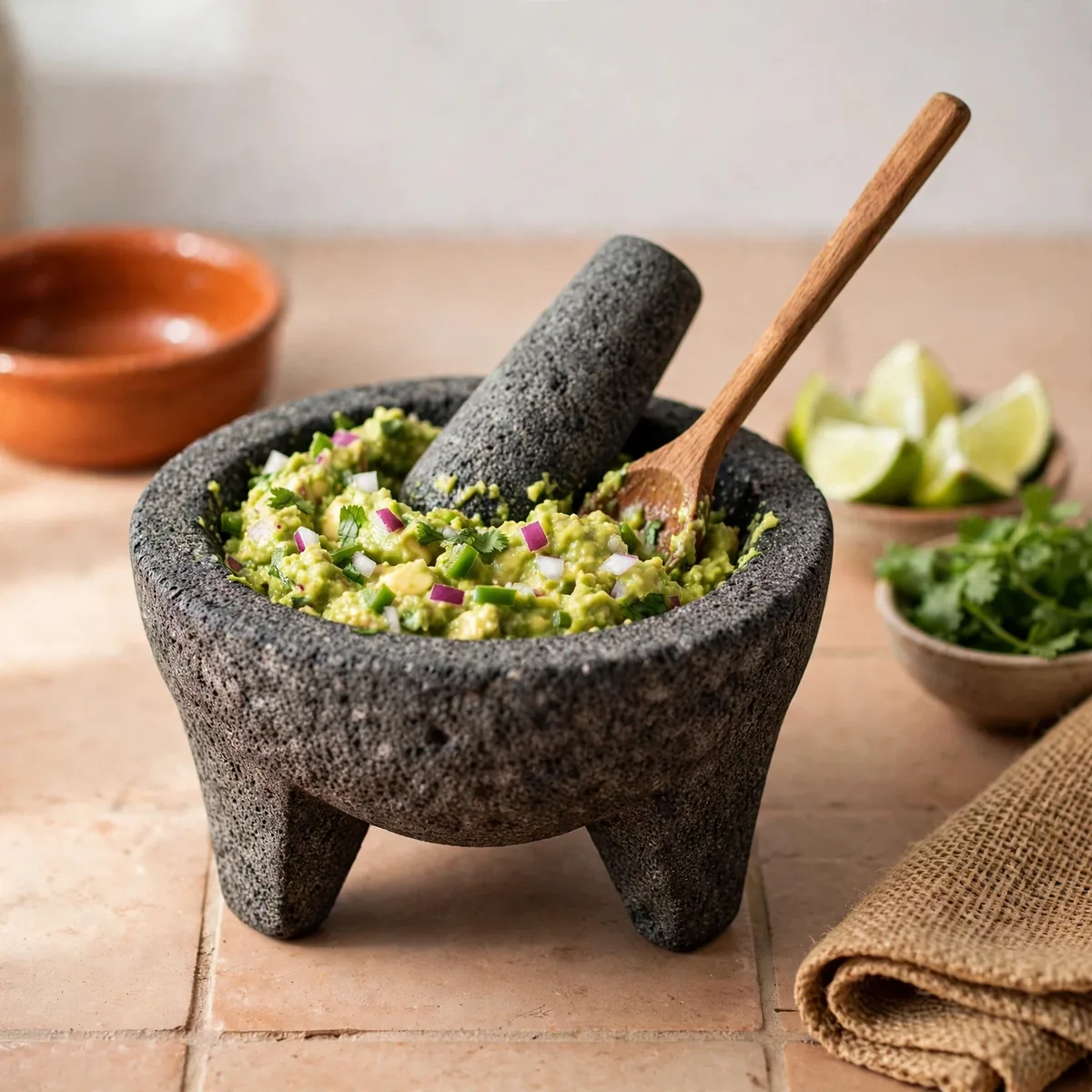
Add the salted onion and jalapeño, chopped cilantro, and remaining salt to the mashed avocado. Fold gently with a spoon until just combined, keeping the mixture chunky rather than stirring it smooth.
another great taco night recipe here
As a result, properly folded guacamole should look evenly speckled with color throughout, with distinct avocado chunks still visible rather than a uniform green paste.
💡 Pro Tip: Taste before adding any extra salt — the amount needed varies depending on how salty you made the onion mixture in Step 1.
Step 4 — Taste and Adjust
Taste the finished guacamole and adjust salt, lime, or jalapeño to your preference. This guacamole recipe is genuinely forgiving at this stage, since every batch of avocados has slightly different natural flavor depending on ripeness and variety.
💡 Pro Tip: If the guacamole tastes flat even after adding more salt, it’s almost always missing acid — add another small squeeze of lime rather than more salt.
How to Tell When It’s Done
In my kitchen, I’ve learned to trust taste and texture over any strict rule for this guacamole recipe — but every batch of avocados is slightly different, so taste as you go on your first attempt. Once you’ve made it once, you’ll know exactly what balance you’re after.
Primary Doneness Test
Guacamole is ready when it’s chunky but cohesive — meaning it holds together as a scoopable mass rather than falling apart, while still showing distinct pieces of avocado rather than a smooth puree. The flavor should taste bright and balanced, with lime, salt, and heat all noticeable but none overpowering the others. When that balance is right, this guacamole recipe is ready to serve.
Doneness Guide
| Indicator | What It Means | What to Do |
|---|---|---|
| Tastes flat, one-note | Needs more lime or salt | Add a small amount of each and retaste |
| Too salty | Over-seasoned | Add more mashed avocado to dilute |
| Too spicy | Too much jalapeño | Add more avocado, or remove visible pepper pieces |
| Perfectly balanced flavor | Done | Cover and serve or refrigerate |
| Too smooth, no texture | Overmashed | Can’t be undone; note for next batch to mash less |
| Mixture too wet | Tomato added without draining | Drain excess liquid before serving |
Visual Signs It’s Done
- The mixture shows distinct chunks of avocado rather than a uniform smooth texture
- The color is a vibrant, even green with visible flecks of red onion and cilantro
- A spoon dragged through leaves defined ridges rather than collapsing flat immediately
- No large pools of liquid are visible at the surface or bottom of the bowl
- The aroma is bright with lime and fresh cilantro, not flat or purely “avocado”
It’s Not Right — What to Do Now
- Tastes bland: Usually missing salt or lime — add a small amount of each, taste, and repeat until balanced
- Turned brown quickly: Lime wasn’t mixed in during mashing, or it sat uncovered — press plastic wrap directly on the surface next time
- Too watery: Tomato was added without removing the seeds and excess juice first — drain thoroughly before adding
- Too mushy, no chunks: Overmashed — mash more gently and stop sooner next batch
How to Get the Right Texture

Getting the exact right texture comes down to technique more than any single ingredient. There are three approaches depending on your preference.
Method 1 — Chunky Method (Standard Recipe)
Mash with a fork just until the mixture holds together, leaving visible pieces throughout. This is the method used in this guacamole recipe and produces the most texturally interesting result, closest to what’s served at most authentic taquerias.
Method 2 — Smooth Method (For Dipping)
Mash thoroughly with a fork or potato masher until completely smooth, with no visible chunks remaining. This produces a texture closer to a spread, which some people prefer for sandwiches or as a smoother dip for very thin chips. The smooth version of this guacamole recipe also spreads beautifully on toast.
Method 3 — Molcajete Method (Most Traditional)
Grind the onion, jalapeño, and cilantro together in a molcajete first to release their oils and flavor, then add the avocado and lime and mash directly in the stone bowl. This traditional Mexican method produces the most aromatic, deeply flavored result since the stone grinding releases more essential oils than simple chopping.
Troubleshooting Quick Reference
| Problem | Cause | Fix |
|---|---|---|
| Too chunky, hard to scoop | Avocado pieces too large | Mash a bit more before combining |
| Too smooth, no texture | Overmashed | Can’t undo; mash less next batch |
| Watery texture | Tomato added with too much juice | Drain and seed tomato thoroughly first |
| Separated, oily look | Avocado was overripe | Still edible; stir to recombine |
What to Serve With It
Classic Pairings That Always Work
- Tortilla chips — the single most classic pairing, sturdy enough for a generous scoop
- Tacos — a traditional topping that adds creaminess to any filling
- Grilled fajitas — the cooling guacamole balances the char and spice of fajita fillings
- Quesadillas — serve alongside for dipping each bite
- Burrito bowls — a standard topping that rounds out the whole meal
Comfort Food Pairings
- Nachos — layer guacamole over loaded nachos for extra richness
- Burgers — spread in place of mayonnaise for a Mexican-inspired twist
- Grilled chicken sandwiches — adds creaminess and brightness to a simple sandwich
- Breakfast tacos — a classic morning pairing alongside eggs and salsa
Lighter Options
- Cucumber slices — a low-carb, crunchy dipper that works surprisingly well
- Jicama sticks — a traditional Mexican pairing with a satisfying crunch
- Bell pepper strips — adds color and crunch without extra calories
6 Ways to Use Leftover Guacamole

Leftover guacamole can become several completely different dishes. Here are 6 ways to use it. It’s one more reason this guacamole recipe is worth making as a full batch.
Guacamole Toast
What you need: Leftover guacamole, thick-cut bread, a fried or boiled egg.
How to assemble: Toast the bread, spread leftover guacamole generously on top, and finish with a sliced or fried egg.
One tip: A sprinkle of red pepper flakes and a squeeze of fresh lime brings the leftover guacamole back to life on top of warm toast.
Guacamole Stuffed Burger
What you need: Leftover guacamole, cooked burger patties, buns.
How to assemble: Spread leftover guacamole directly onto the burger in place of standard condiments.
One tip: This works especially well with a slightly spicy batch, since the heat balances the richness of the burger.
Guacamole Deviled Eggs
What you need: Leftover guacamole, hard-boiled eggs, halved with yolks removed.
How to assemble: Mash the egg yolks with a spoonful of leftover guacamole and refill the egg white halves.
try another easy appetizer from this site
One tip: This works best with a smoother leftover batch — very chunky guacamole doesn’t pipe or spoon as neatly into the egg whites.
Guacamole Salad Dressing
What you need: Leftover guacamole, 2 tbsp water or lime juice.
How to assemble: Thin leftover guacamole with water or extra lime juice until pourable, then toss with a simple green salad.
One tip: Thin it gradually, a tablespoon at a time — it’s easy to add too much liquid at once and end up with a dressing that’s too watery.
Guacamole Grilled Cheese
What you need: Leftover guacamole, 2 slices bread, cheese, butter.
How to assemble: Spread leftover guacamole on one slice of bread, add cheese, close the sandwich, and grill in butter until golden on both sides.
One tip: Add the guacamole after grilling instead, tucking it inside just before serving, if you want to preserve more of its fresh flavor and bright green color.
Guacamole Soup Garnish
What you need: Leftover guacamole, any Mexican-inspired soup like tortilla soup.
How to assemble: Spoon a dollop of leftover guacamole directly on top of a hot bowl of soup just before serving.
One tip: This is one of the fastest ways to use up a small amount of leftover guacamole without any extra cooking at all.
Storage, Freezing and Reheating Guide
Refrigerator Storage (Up to 2 Days)
This guacamole recipe stores in the refrigerator for up to 2 days, though the color and texture are genuinely best within the first 24 hours. Press plastic wrap directly onto the surface before sealing the container to minimize browning.
Can You Make This Ahead of Time?
Somewhat — this is one recipe where same-day preparation is genuinely best. If you need to prep a few hours ahead, press plastic wrap directly onto the surface and refrigerate, then stir well and taste again right before serving, adjusting salt and lime as needed. A guacamole recipe like this one rewards being made close to serving time.
Freezer Storage (Not Recommended)
This guacamole recipe does not freeze well, since avocados lose their creamy texture and turn watery and grainy once thawed. If you do need to freeze a batch, omit the onion, tomato, and cilantro first, since those ingredients break down even more poorly than the avocado itself during freezing.
This Recipe Works Best Made Fresh
Unlike many dips, this one genuinely tastes and looks its best within the first few hours of making it. For a party, consider making it in smaller batches throughout the event rather than one large batch that sits out for hours.
see more fresh party appetizer ideas here
How to Revive Guacamole That’s Started to Brown
| Method | Setting | Time | Notes |
|---|---|---|---|
| Stir in fresh lime juice | N/A | — | Brightens color and flavor immediately |
| Scrape off the top layer | N/A | — | Remove only the browned surface, rest is fine |
| Add fresh diced avocado | N/A | — | Mix in a small amount of newly mashed avocado |
Weekly Prep Strategy
This guacamole recipe isn’t ideal for a full week of meal prep since it’s best fresh, but prepping the diced onion, jalapeño, and cilantro ahead of time and storing them separately cuts the active prep time down to just mashing the avocado when you’re ready to serve.
Recipe Variations Worth Trying
Same technique. Completely different flavor profiles. Master this base guacamole recipe first — then try one of these.
Most Popular — Bacon Guacamole
Stir in ¼ cup of crumbled cooked bacon along with the other mix-ins in Step 3. The smoky, salty crunch makes this one of the most requested variations of this guacamole recipe at any gathering, especially for a game-day spread.
International — Mango Guacamole
Fold in ½ cup of diced fresh mango along with the standard ingredients. The sweetness of the mango against the creamy avocado and spicy jalapeño creates a tropical-leaning flavor profile that’s especially popular in warmer months. It’s a fun twist on the base guacamole recipe when mangoes are in season.
Spicy — Roasted Jalapeño Version
Roast the jalapeño over a gas flame or under the broiler until blackened, then peel, seed, and mince before adding. The roasting process mellows the raw heat while adding a smoky depth that a raw jalapeño simply doesn’t have. It gives this guacamole recipe a whole new layer of smoky flavor.
Quick Shortcut — Pre-Made Salsa Mix-In
Stir ¼ cup of your favorite store-bought salsa into the mashed avocado instead of chopping onion, jalapeño, and tomato separately. This cuts the prep time down significantly while still delivering a well-rounded, flavorful result.
Fresh and Elevated — Pomegranate and Feta Guacamole
Fold in 2 tablespoons of pomegranate seeds and 2 tablespoons of crumbled feta cheese along with the standard ingredients. The tart pomegranate bursts and salty feta add an unexpected, elegant twist that works especially well for a holiday appetizer spread.
Nutrition Information
Per Serving Breakdown (Based on 6 Servings)
| Nutrient | Amount | % Daily Value |
|---|---|---|
| Calories | ~140 | — |
| Total Fat | 12g | 15% |
| Saturated Fat | 1.5g | 8% |
| Cholesterol | 0mg | 0% |
| Sodium | 290mg | 13% |
| Total Carbohydrates | 9g | 3% |
| Dietary Fiber | 6g | 21% |
| Total Sugars | 1g | — |
| Protein | 2g | 4% |
| Vitamin C | 15% DV | — |
According to USDA FoodData Central, a single avocado provides nearly 10 grams of fiber — meaning this guacamole recipe delivers real nutritional value alongside its fresh, bright flavor.
Dietary Compatibility
| Diet | Compatible | Notes |
|---|---|---|
| Gluten-Free | ✅ | Naturally gluten-free as written |
| Dairy-Free | ✅ | No dairy in the base recipe |
| Paleo | ✅ | Fits naturally within Paleo guidelines |
| Keto | ✅ | Naturally low-carb and keto-friendly as written |
| Vegetarian | ✅ | No meat in this recipe |
| Vegan | ✅ | No animal products in the base recipe |
To reduce sodium in this guacamole recipe, cut the salt to ½ teaspoon and rely more on the lime juice and jalapeño for flavor — the dish still tastes well-balanced with less added salt.
8 Mistakes That Ruin Guacamole
Every one of these mistakes is fixable. Know them before you start — not after. Avoid them and this guacamole recipe turns out right every time.
❌ Mistake 1: Using Underripe or Overripe Avocados
Why it happens: Not planning ahead for ripening time. What goes wrong: Underripe avocados taste bland and won’t mash properly, while overripe ones turn stringy and can have brown spots inside. The fix: Press gently near the stem — it should yield slightly without feeling mushy.
❌ Mistake 2: Adding Lime After Mashing Instead of During
Why it happens: Treating lime as a finishing garnish rather than a core ingredient. What goes wrong: The avocado browns faster since the acid never gets evenly distributed through the mixture. The fix: Add lime juice while mashing, not as an afterthought on top.
❌ Mistake 3: Overmashing Into a Smooth Paste
Why it happens: Wanting a perfectly uniform texture. What goes wrong: The guacamole loses the chunky texture that makes it distinct and interesting, turning into something closer to avocado puree. The fix: Mash just until it holds together, stopping well before it’s completely smooth.
❌ Mistake 4: Skipping the Onion and Jalapeño Salt Step
Why it happens: Not realizing this small step matters. What goes wrong: Raw onion and jalapeño keep a sharp, harsh edge that doesn’t mellow into the rest of the dish. The fix: Salt them separately for a few minutes before combining with the avocado.
❌ Mistake 5: Adding Too Much Tomato or Liquid
Why it happens: Wanting more color and freshness. What goes wrong: Excess tomato juice makes the entire bowl watery and dilutes the flavor. The fix: Seed and drain tomato thoroughly, and add it in moderation.
❌ Mistake 6: Leaving It Uncovered
Why it happens: Setting it out for a party and forgetting to cover it. What goes wrong: Exposed surface area browns within 30 minutes to an hour, even with lime added. The fix: Press plastic wrap directly onto the surface whenever it’s not actively being served.
❌ Mistake 7: Using Bottled Lime Juice
Why it happens: Convenience, especially when fresh limes aren’t on hand. What goes wrong: Bottled juice tastes noticeably flatter and less bright than fresh-squeezed. The fix: Always use fresh limes — the flavor difference is significant in a dish this simple.
❌ Mistake 8: Not Tasting and Adjusting
Why it happens: Assuming the recipe amounts are automatically correct for every batch. What goes wrong: Avocado size and ripeness vary enough that the same exact measurements can taste different from batch to batch. The fix: Always taste before serving and adjust salt, lime, or jalapeño as needed.
Frequently Asked Questions
How do you keep guacamole from turning brown?
The most effective method for this guacamole recipe is mixing lime juice in during the mashing process rather than adding it afterward, since this coats every piece of avocado in acid immediately. Pressing plastic wrap directly onto the surface of the finished guacamole, eliminating any air pockets, creates a physical barrier that slows oxidation significantly better than simply leaving the pit in the bowl, which is a popular myth with limited actual effect.
How do you know when an avocado is ripe for guacamole?
A perfectly ripe avocado yields slightly to gentle pressure near the stem end without feeling mushy or soft throughout. If you can remove the small stem cap, green underneath indicates ripeness, while brown suggests it’s overripe. Avocados that are still very firm with no give at all need another day or two at room temperature before they’re ready for this guacamole recipe.
Should guacamole be chunky or smooth?
Traditional, authentic guacamole is chunky, with distinct pieces of avocado still visible throughout rather than a completely smooth paste. This texture is what separates genuine guacamole from a simple avocado spread or dip. That said, personal preference varies, and a smoother version works fine for anyone who prefers it, achieved simply by mashing longer and more thoroughly.
Can you make guacamole ahead of time?
Only a few hours ahead is realistic for the best quality — this guacamole recipe genuinely tastes and looks best within the first 24 hours, and ideally within the first few hours of making it. If you do need to prep slightly ahead, press plastic wrap directly onto the surface, refrigerate, and taste again right before serving to adjust the seasoning if needed.
What do you serve with guacamole?
Tortilla chips are the single most classic pairing, sturdy enough for a generous scoop without breaking. It’s also a standard topping for tacos, burrito bowls, and fajitas, where its creaminess balances spicier or char-grilled elements. For a lighter option, cucumber slices, jicama sticks, and bell pepper strips all provide a crunchy, low-carb alternative to chips.
Can you freeze guacamole?
Freezing isn’t recommended for this guacamole recipe, since avocados lose their creamy texture and turn watery and grainy once thawed. If freezing is absolutely necessary, omit the onion, tomato, and cilantro beforehand, since those ingredients fare even worse through the freezing and thawing process than the avocado alone.
How long does guacamole last in the fridge?
This guacamole recipe lasts up to 2 days in the refrigerator, though the color and texture are genuinely at their best within the first 24 hours. Press plastic wrap directly onto the surface before sealing the container in an airtight lid to minimize browning during storage.
Why does my guacamole taste bland?
The most common cause is not enough salt or lime juice, both of which are essential for bringing out the avocado’s natural flavor rather than leaving it tasting flat and grassy. Tasting as you go and adjusting both, rather than relying solely on the exact measurements, usually solves this since avocado flavor varies noticeably by ripeness and variety. A pinch more salt, a small squeeze more lime, or both together typically fix a bland batch.
Can you make guacamole without cilantro?
Yes — cilantro is traditional but entirely optional, especially since a noticeable portion of people find its flavor unpleasantly soapy due to a genetic taste sensitivity. Flat-leaf parsley works as a milder substitute that adds some fresh, green flavor without cilantro’s distinctive taste, or you can simply omit it entirely for a version that relies more on the lime, onion, and jalapeño for flavor.
Does the avocado pit keep guacamole from browning?
This is a widely repeated kitchen myth with very limited actual effect — the pit only protects the small area of avocado directly beneath it, leaving the rest of the surface exposed to oxygen and still prone to browning. Pressing plastic wrap directly onto the entire surface of the guacamole, eliminating all air pockets, is a far more effective method for slowing oxidation across the whole bowl.
You Might Also Like
Best Spinach Artichoke Dip
Guacamole Recipe — Recipe Card
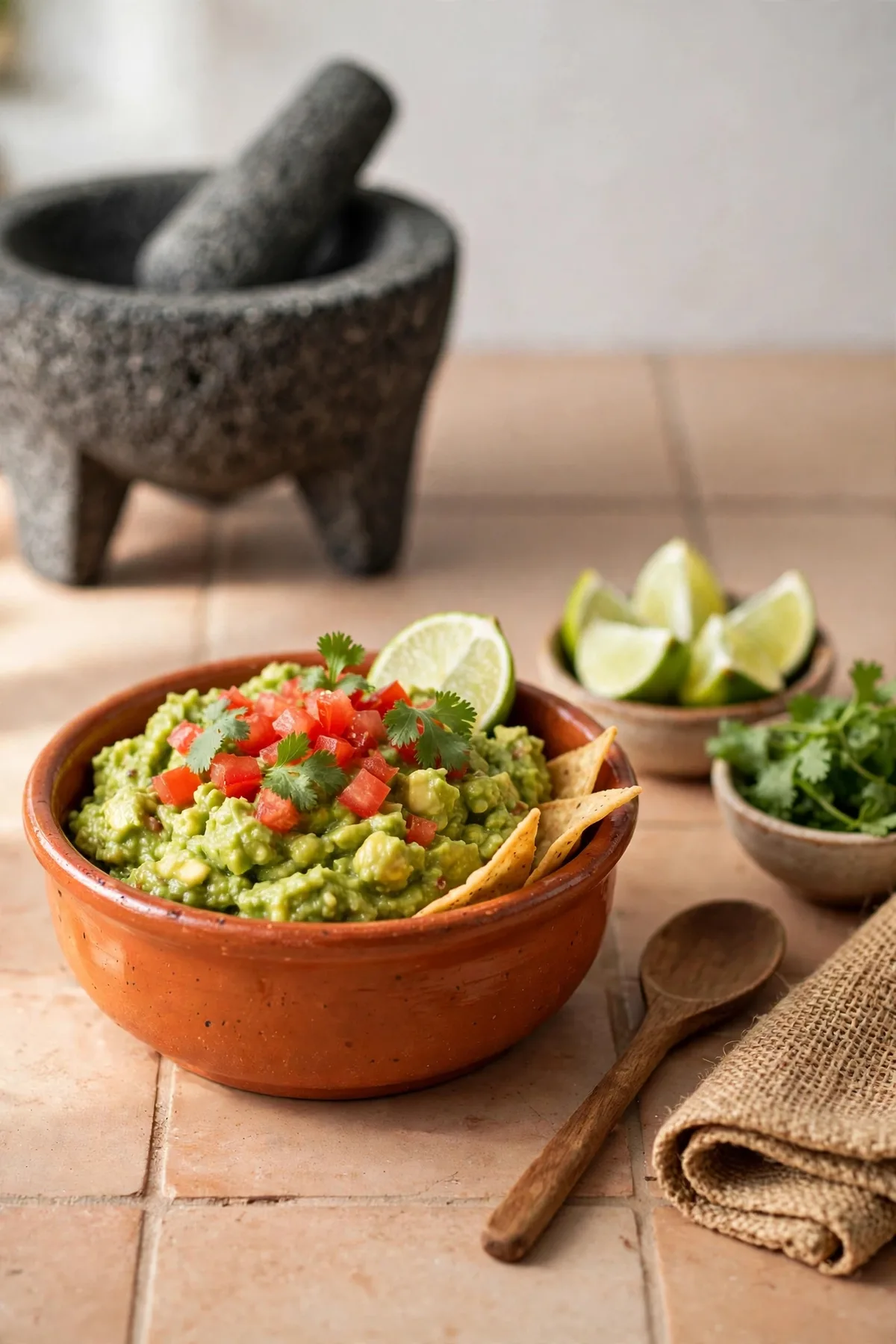
Guacamole Recipe
Ingredients
Equipment
Method
- Dice onion and mince jalapeño. Place in a small bowl with a pinch of salt; let sit 2–3 minutes.
- Halve and pit avocados, scoop into a bowl. Add lime juice immediately and mash together, leaving the mixture chunky.
- Fold in salted onion, jalapeño, cilantro, and remaining salt until just combined.
- Taste and adjust salt, lime, or jalapeño as needed. Serve immediately.


3 Comments