
Best French Toast Casserole (Ready in 55 Minutes)
⭐⭐⭐⭐⭐ Rate this recipe
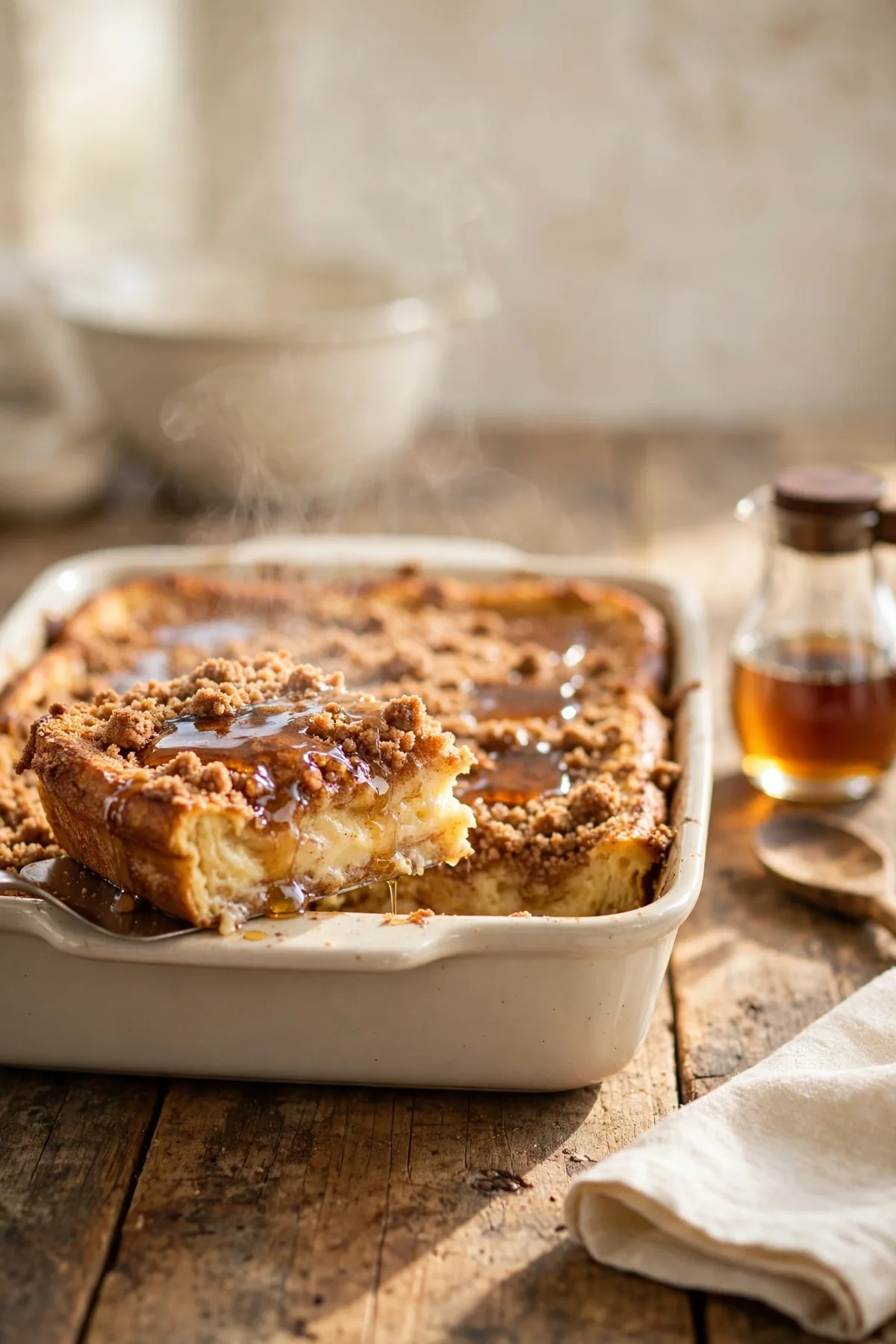
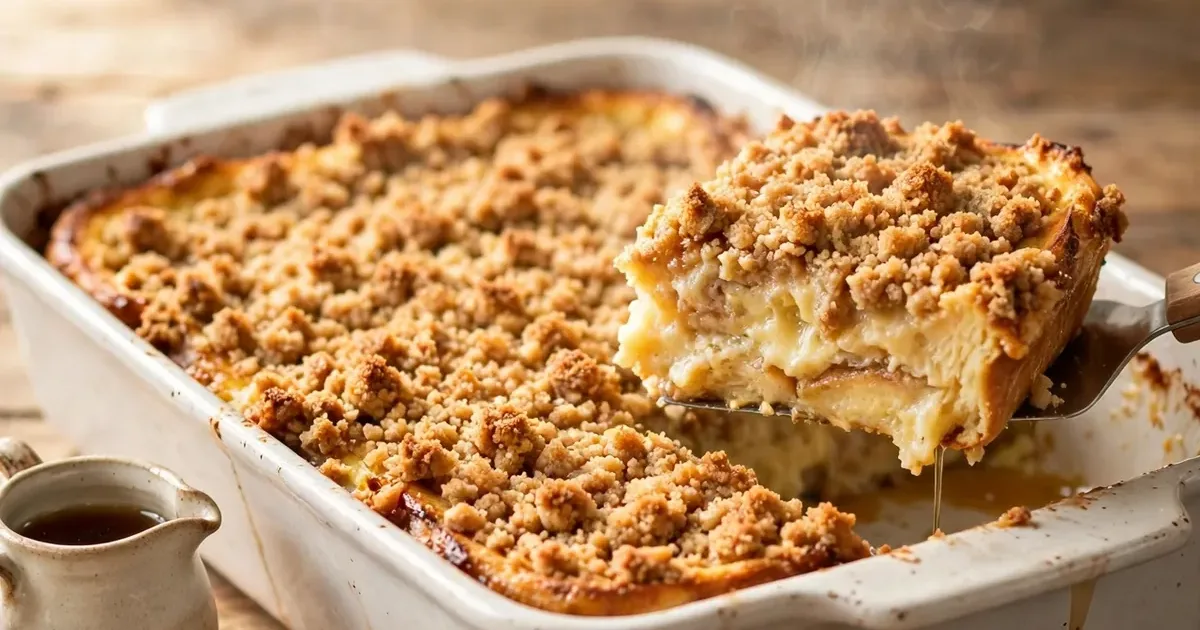
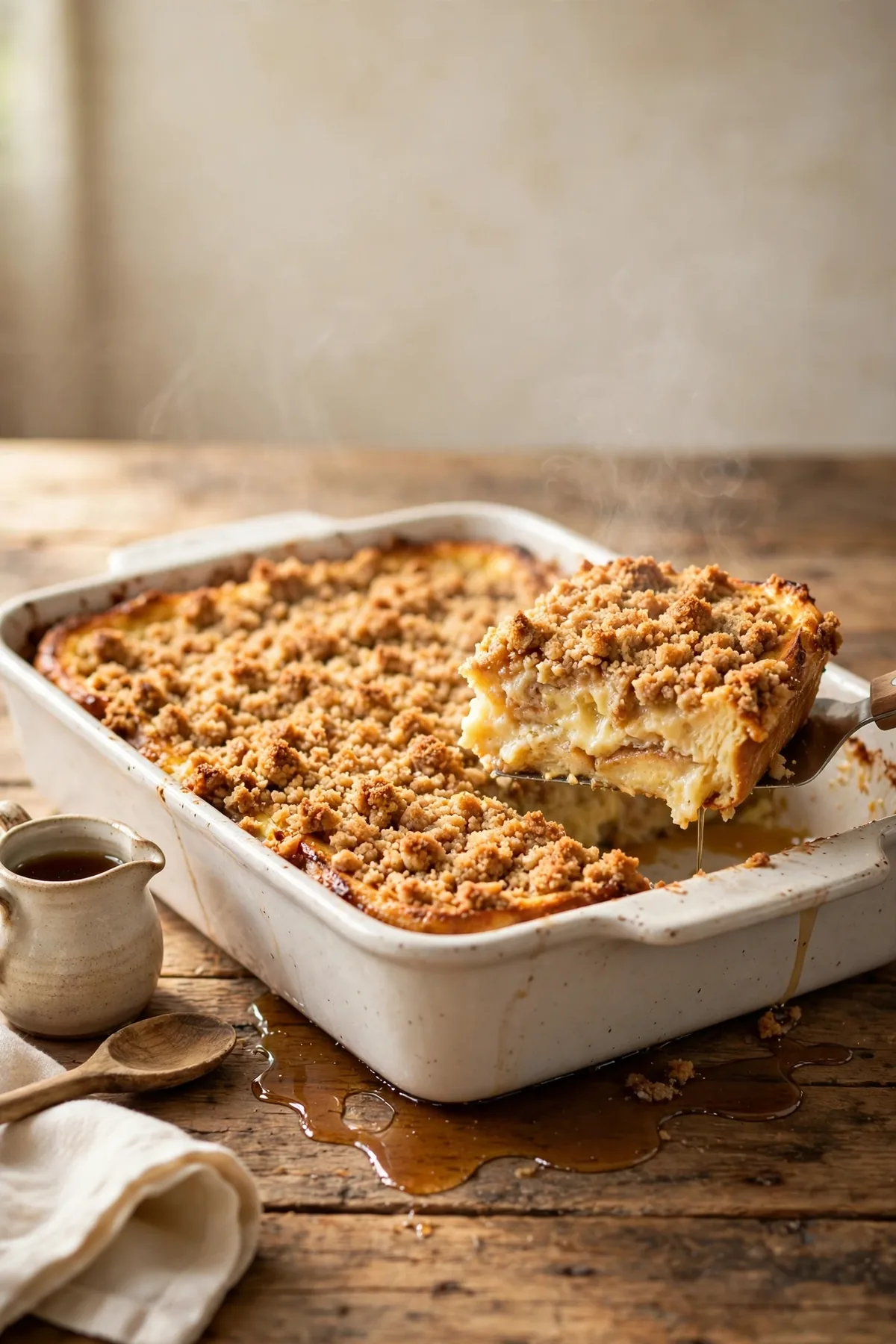
French toast casserole done right comes out of the oven genuinely custardy throughout, with a crisp, golden streusel topping and never a soggy, waterlogged bottom layer — not a dense, eggy dish that tastes more like a wet sponge than baked French toast. This French toast casserole recipe uses a specific bread-soaking ratio plus an overnight resting technique that lets every layer absorb the custard evenly without turning mushy. The dish comes together in about 55 minutes of active and baking time, though it genuinely benefits from resting overnight in the fridge first.
This recipe is built for anyone who’s pulled a soggy, bland casserole from the oven and wants a version that turns out custardy and flavorful every single time. If you’ve ever cut into a dish with a wet, undercooked center, or one that tasted like nothing more than scrambled eggs with bread mixed in — every one of those problems has a specific fix here. It works for a holiday morning spread, a weekend brunch with guests, or a make-ahead breakfast that feeds a crowd with minimal morning effort.
Made this already? Scroll down and leave a ⭐⭐⭐⭐⭐ rating below — it helps more than you know.
Once the overnight soak in this recipe clicks, the dry, bland version most people grew up eating stops being acceptable.
⏱ Prep Time: 15 minutes
🕐 Cook Time: 40 minutes
⏳ Total Time: 55 minutes (plus overnight refrigeration for best results)
🍽 Servings: 8
📊 Difficulty: Easy
💰 Estimated Cost: ~$10 total / ~$1.25 per serving
🍞 Main Item: Custard-soaked brioche with a cinnamon-sugar streusel topping
Table of Contents
Why This French Toast Casserole Recipe Works
- An overnight soak in the refrigerator. Most recipes bake the casserole immediately after assembling, which leaves the bread in the center still dry and underdone by the time the custard sets. This French toast casserole recipe rests overnight, giving the bread time to fully absorb the egg mixture.
👉 another easy make-ahead breakfast here
- Day-old, slightly stale brioche instead of fresh. Fresh bread turns to mush almost instantly once soaked in custard. Stale bread holds its structure while still absorbing plenty of flavor.
- A specific egg-to-milk ratio. Too much milk produces a watery, loose casserole, while too little leaves it dense. This recipe uses a tested ratio that bakes into a custardy, set texture every time.
- A streusel topping added right before baking, not mixed in ahead of time. This keeps the topping genuinely crisp rather than soggy from sitting in the wet custard overnight.
- Checking doneness with a knife in the center, not just the edges. The edges of a casserole always cook faster than the middle, so testing only the outer portion can lead to an undercooked center that looks deceptively done.
Understanding the Key Ingredient
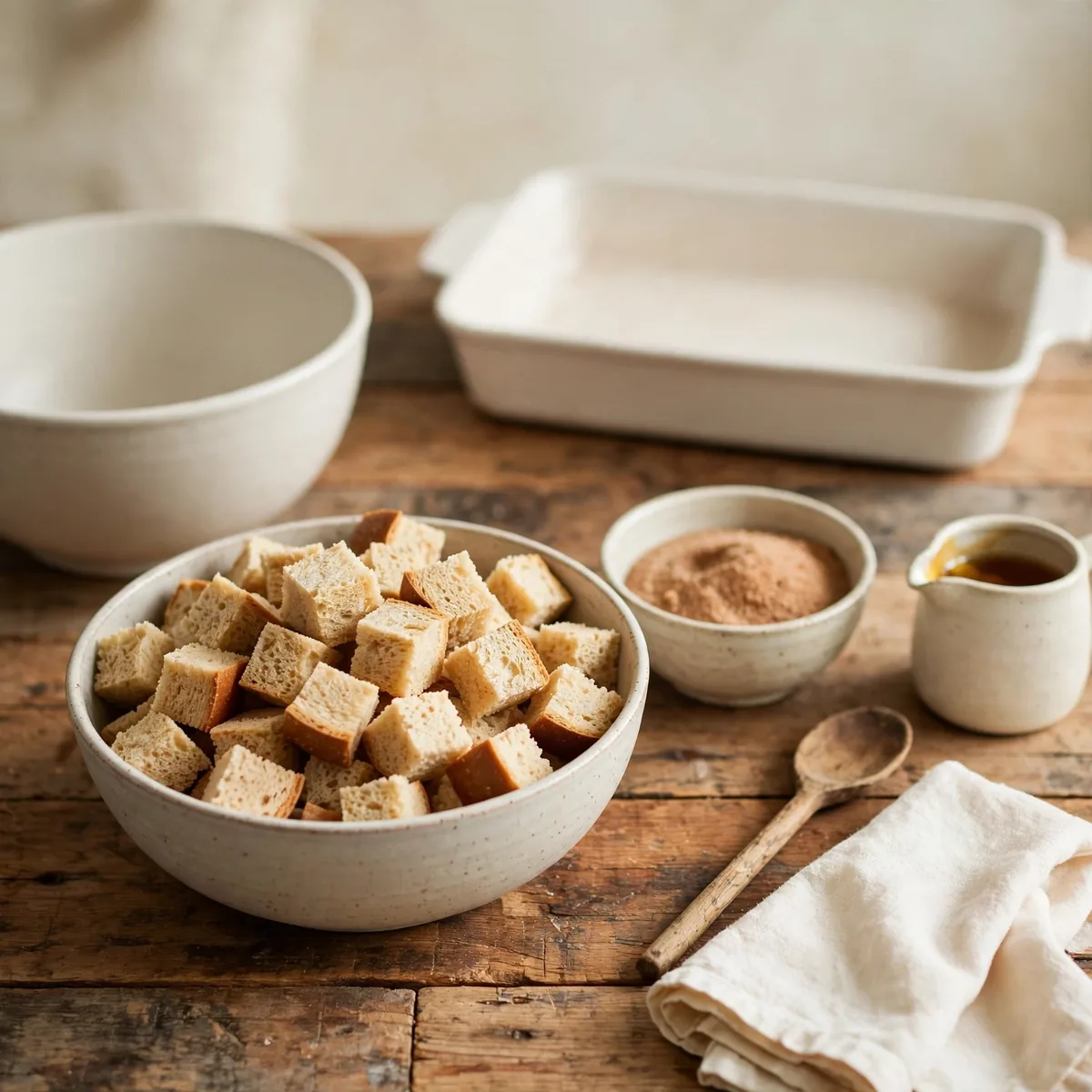
The one step worth never skipping in this French toast casserole recipe, no matter how busy the week is, is the key technique in Step 1. Skipping it is the most common reason the finished dish comes out soggy or unevenly cooked. Followed properly, the result comes out right every time.
Why Day-Old Brioche Is the Right Choice
Day-old, slightly stale brioche has already lost some of its surface moisture, which is exactly what allows it to absorb the custard evenly without immediately breaking down into mush in this recipe. Fresh brioche, by contrast, is already saturated with its own moisture and enriched with butter and eggs, leaving far less room to soak up the custard before it becomes oversaturated and soggy. Additionally, brioche’s naturally rich, slightly sweet flavor complements the cinnamon and vanilla in the custard far better than a plain sandwich bread would.
Bread Comparison Guide
| Type | Moisture Level | Texture Result | Best For |
|---|---|---|---|
| Day-old brioche, cubed | Low | Custardy, holds shape | Best overall result |
| Fresh brioche, cubed | High | Breaks down, turns mushy | Not recommended |
| Day-old French bread | Low | Sturdy but less rich flavor | Good alternative |
| Challah, day-old | Low | Similar richness to brioche | Good alternative |
How to Choose the Best at the Store
- A sturdy, enriched bread like brioche or challah works best. Either holds up better than a very soft, plain sandwich loaf.
- Buy bread a day or two ahead specifically for this recipe. Letting it sit out, loosely covered, speeds up the staling process.
- Avoid very fresh, soft bread straight from the bakery. It breaks down too quickly once soaked.
- Toast slightly fresh bread if day-old isn’t available. A quick toast in the oven mimics the dried-out texture needed.
- Cut the bread into even cubes. Consistent sizing helps the casserole bake and absorb liquid uniformly.
How Much Do You Need?
| Servings | Brioche Cubes | Eggs |
|---|---|---|
| 4 | 4 cups | 4 large |
| 8 | 8 cups | 8 large |
| 12 | 12 cups | 12 large |
| 16 | 16 cups | 16 large |
Double Batch — How to Scale This French Toast Casserole Recipe
Doubling works cleanly as long as you use two separate baking dishes rather than one oversized one, since an overcrowded dish bakes unevenly, with the center staying undercooked while the edges finish too quickly. Make the streusel topping in a single larger batch, since it doesn’t require any special scaling considerations. The overnight soaking time stays the same regardless of batch size.
Ingredients You’ll Need
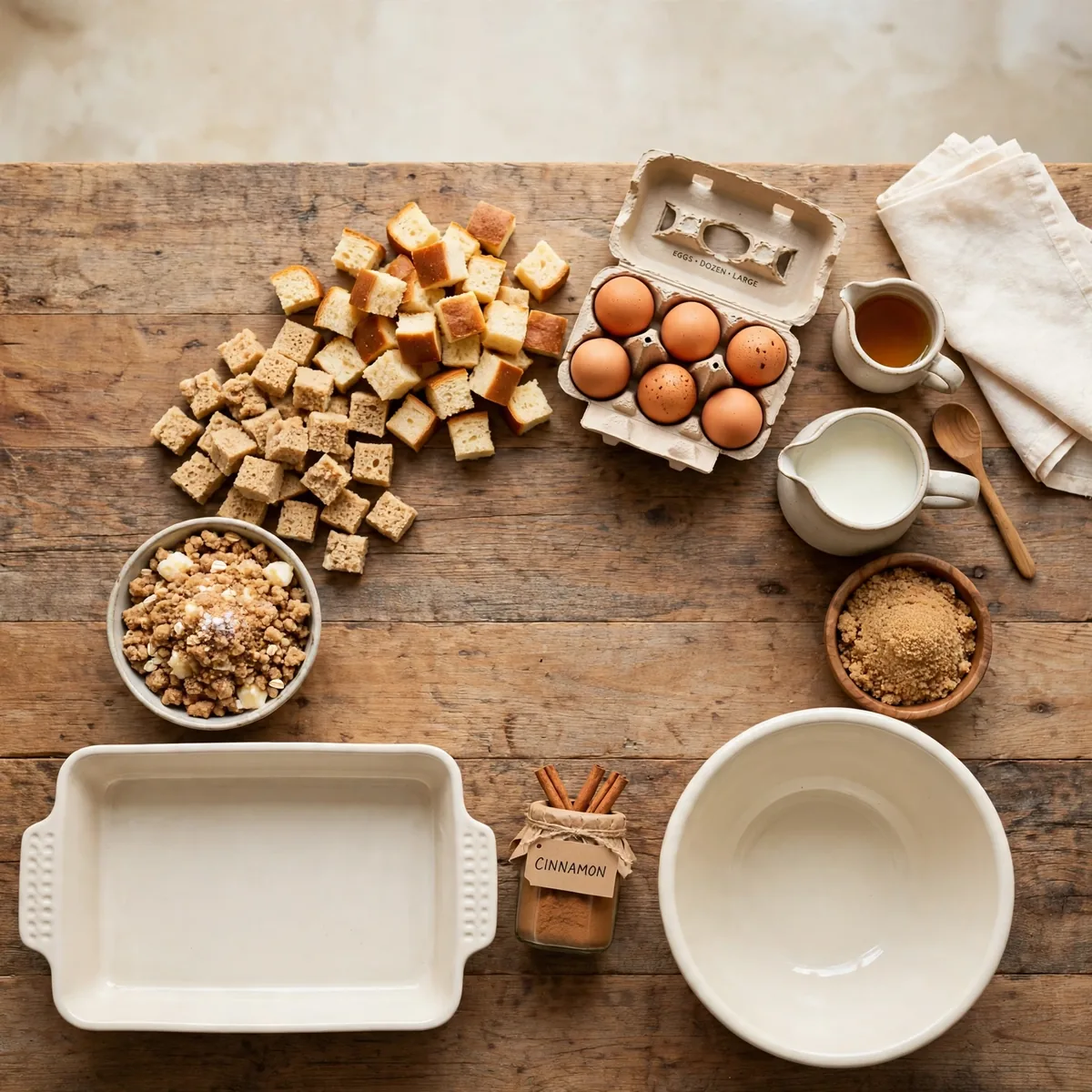
This recipe uses one main group of ingredients plus a simple streusel topping. Here is everything broken down.
Main Ingredients
- Day-old brioche bread — 8 cups, cubed. The base layer. Slightly stale bread absorbs the custard without turning mushy.
- Eggs — 8 large. The custard-like binding layer that holds the casserole together.
- Whole milk — 2 cups. Combined with the eggs for the right custardy, set texture.
- Heavy cream — ½ cup. Adds extra richness to the custard.
- Brown sugar — ⅓ cup. Sweetens the custard with a subtle caramel note.
- Vanilla extract — 2 teaspoons. The defining warm flavor of a classic French toast custard.
- Ground cinnamon — 1 teaspoon. Adds warmth throughout the custard base.
Supporting Ingredients
- Salt — a pinch.
- For the streusel topping: ½ cup flour, ½ cup brown sugar, ½ teaspoon cinnamon, 6 tablespoons cold butter, cubed.
- Maple syrup and powdered sugar — for serving.
Optional Additions Table
| Add-In | Amount | Effect |
|---|---|---|
| Fresh blueberries | 1 cup | Adds bursts of fresh fruit throughout |
| Chopped pecans | ½ cup | Adds crunch mixed into the streusel |
| Cream cheese, cubed | 4 oz | Adds pockets of tangy richness throughout |
| Orange zest | 1 tsp | Adds a bright, citrusy note to the custard |
| Mini chocolate chips | ½ cup | Adds sweetness and richness throughout |
Complete Substitutions Reference
| Original | Substitution | Notes |
|---|---|---|
| Brioche bread | Challah | Similar rich, enriched texture |
| Heavy cream | Half-and-half | Slightly less rich, still works |
| Whole milk | 2% milk | Slightly less rich, still functional |
| Brown sugar | Granulated sugar | Less caramel depth, still sweet |
| Fresh vanilla extract | Vanilla bean paste | Richer flavor, visible specks |
What NOT to Add to This French Toast Casserole Recipe
- ❌ Fresh, soft brioche straight from the bakery — breaks down too quickly and produces a mushy result
- ❌ Skipping the overnight soak — leaves the center of the bread dry and undercooked even after a full bake
- ❌ Too much milk relative to eggs — produces a watery, loose texture instead of a properly set custard
- ❌ Mixing the streusel topping in ahead of time — the butter softens too much and the topping loses its crisp texture
- ❌ Checking doneness only at the edges — the center always cooks slower and can look deceptively done from the outside
- ❌ Baking straight from the fridge with no adjustment — a cold dish needs a few extra minutes compared to one closer to room temperature
Equipment You’ll Need
Choosing the Right Equipment for French Toast Casserole
| Tool | Purpose | Best For |
|---|---|---|
| 9×13 ceramic or glass baking dish | Assembling and baking | Standard batch, even heat |
| Large mixing bowl | Whisking eggs and milk | Easy to combine without spilling |
| Pastry cutter | Making the streusel | Even, crumbly topping texture |
| Whisk | Combining the custard | Smooth, evenly combined mixture |
Other Tools That Actually Matter
A 9×13 ceramic or glass baking dish distributes heat more evenly than a metal pan, which matters for this dish since uneven heat can leave the edges overcooked while the center lags behind. A pastry cutter breaks the cold butter into the streusel topping more evenly than fingers alone, producing a consistent, crumbly texture. A whisk combines the eggs and milk far more smoothly than a fork, producing a more uniform custard.
No Pastry Cutter? Alternatives That Work for This French Toast Casserole Recipe
- Two forks — crisscross them through the flour and butter to break it into small pieces
- Your fingers — work quickly, rubbing the cold butter into the flour before it warms too much
- A food processor — pulse the streusel ingredients together in short bursts until crumbly
How to Make French Toast Casserole — Step by Step
Five steps, plus an overnight rest for the best texture.
Step 1 — Prep the Bread and Make the Custard
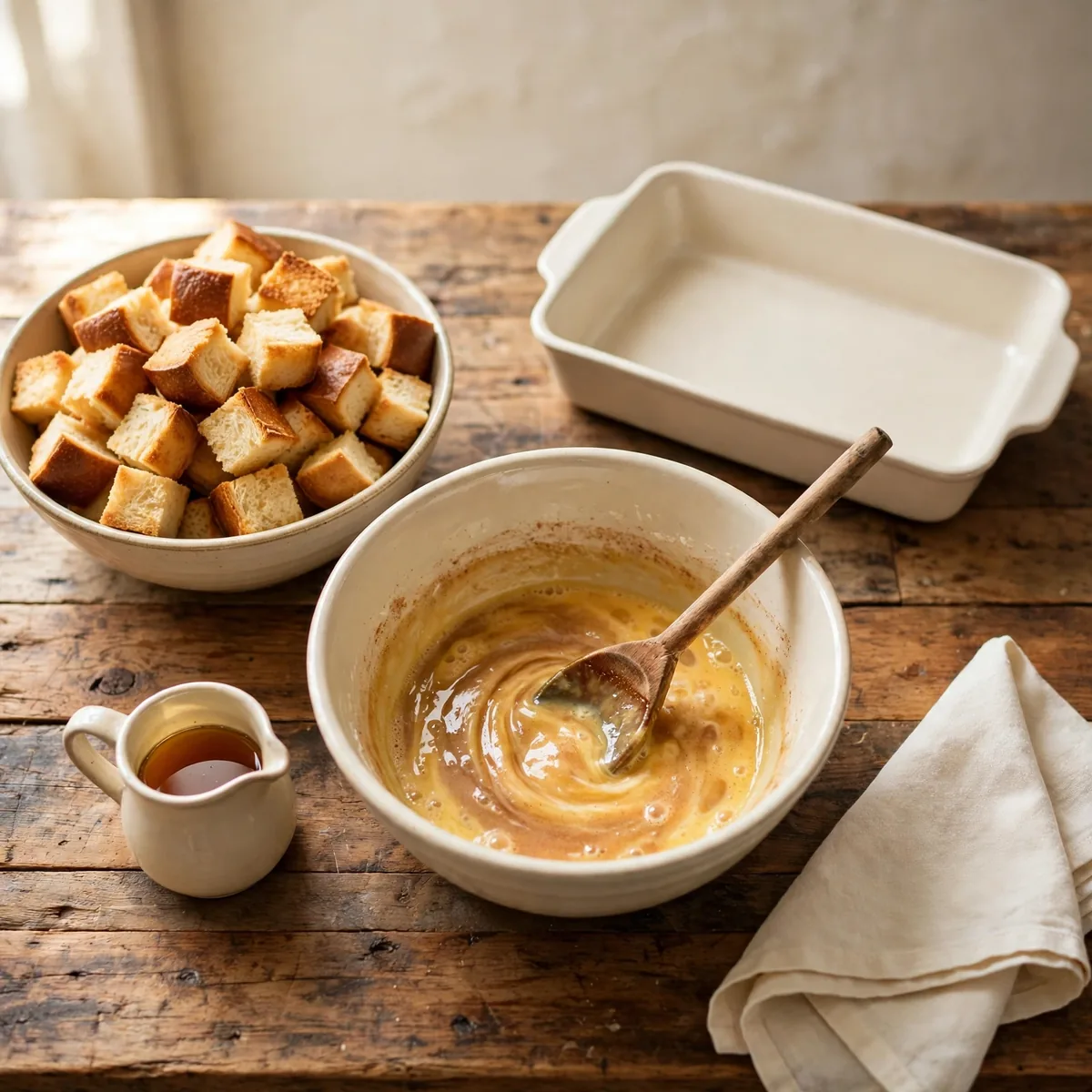
Cube the day-old brioche into roughly 1-inch pieces and place in a greased 9×13 baking dish. Whisk together the eggs, milk, heavy cream, brown sugar, vanilla extract, cinnamon, and salt in a large bowl until fully combined. Using properly stale bread here, rather than fresh, is what keeps this dish from turning soggy once the custard is poured over it.
💡 Pro Tip: Spread the cubed bread evenly in the dish before pouring the custard — an even layer helps every piece soak up liquid consistently.
Step 2 — Pour the Custard Over the Bread
Pour the custard mixture evenly over the cubed bread, making sure every piece gets some coverage. Press down gently on the bread with a spatula to help submerge any pieces still poking above the liquid.
💡 Pro Tip: Pour slowly and evenly, rather than dumping it all in one spot, to help the custard reach every corner of the dish instead of pooling unevenly.
Step 3 — Refrigerate Overnight (The Key Step)
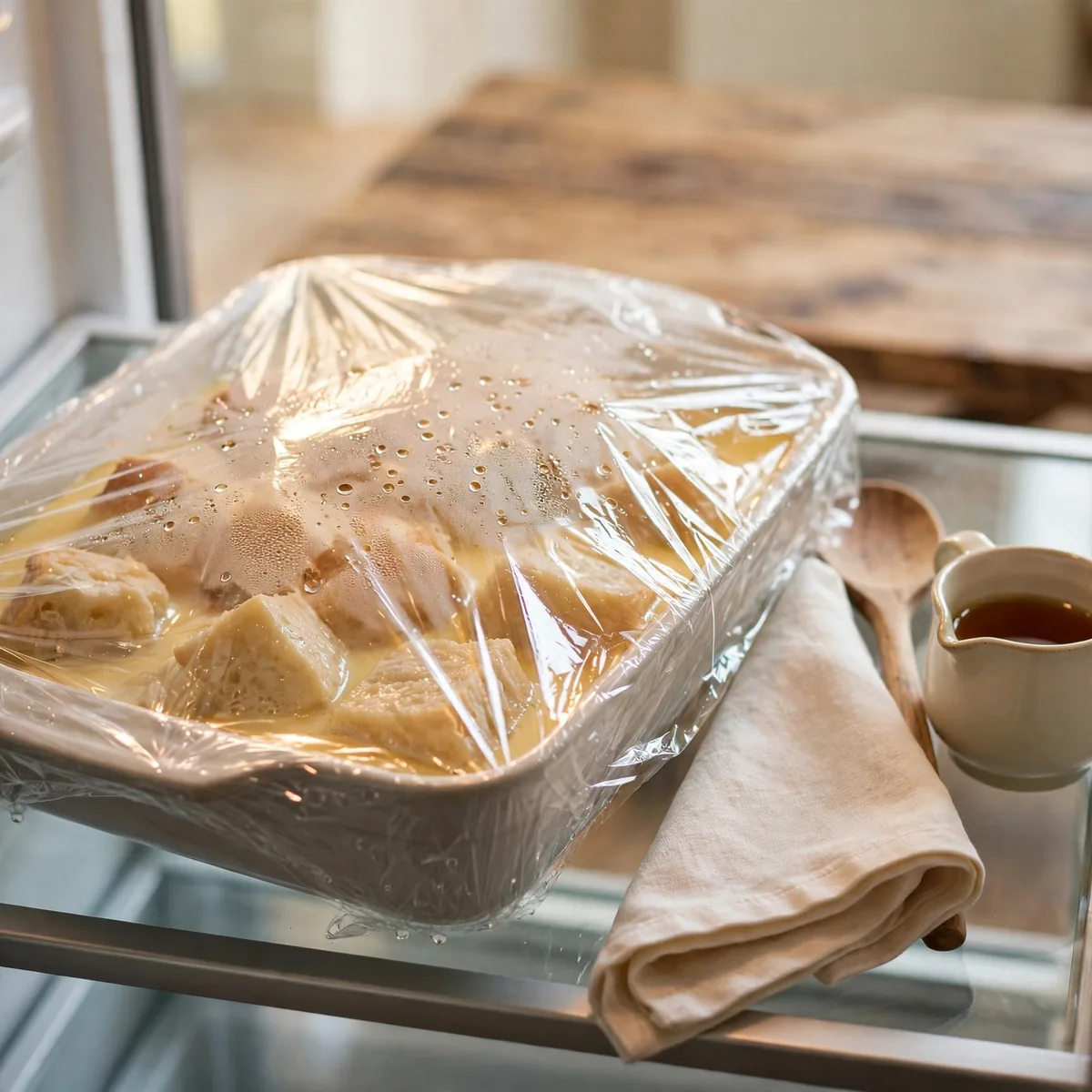
Cover the dish tightly and refrigerate for at least 4 hours, though overnight is genuinely ideal. Most recipes skip this resting period entirely, but it’s exactly what allows the bread to fully absorb the custard, producing a tender, evenly set texture rather than a dry center surrounded by soggy edges.
👉 another great holiday brunch recipe here
💡 Pro Tip: If short on time, a minimum of 2 hours still helps noticeably, though overnight remains the most reliable way to guarantee even texture throughout.
Step 4 — Make the Streusel Topping
While the casserole chills, combine the flour, brown sugar, and cinnamon for the streusel in a bowl. Cut in the cold, cubed butter using a pastry cutter until the mixture looks crumbly, with pea-sized pieces of butter remaining. Store this topping separately in the refrigerator until ready to bake.
💡 Pro Tip: Making the streusel ahead but keeping it separate from the soaking bread is what preserves its crisp texture once baked.
Step 5 — Bake
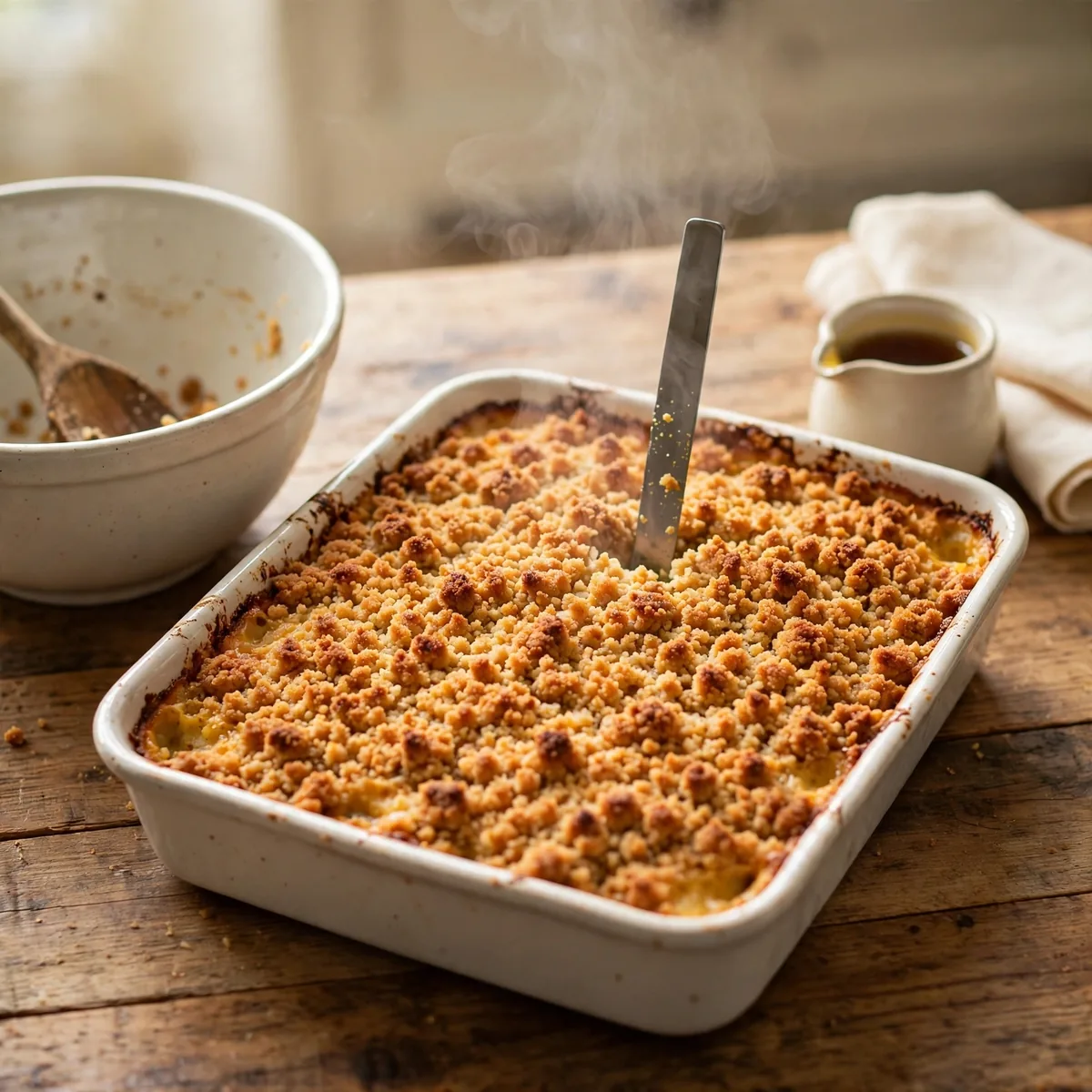
Remove the casserole from the refrigerator about 20 minutes before baking. Preheat the oven to 350°F. Sprinkle the streusel topping evenly over the soaked bread and bake uncovered for 35–40 minutes, until the center is set and a knife inserted comes out clean. Let rest for 5 minutes before serving with maple syrup.
How to Tell When It’s Done
Every oven runs a little differently, so start checking the center a few minutes early on the first attempt with this recipe. Once it’s been made once, the exact timing for that specific oven becomes easy to predict.
Primary Doneness Test
The casserole is done when a knife inserted into the very center comes out clean, with no wet custard clinging to it, and the streusel topping looks golden and crisp rather than pale.
Doneness Guide
| Indicator | What It Means | What to Do |
|---|---|---|
| Center jiggly, knife comes out wet | Under-baked | Continue baking 5–10 more minutes |
| Center set, knife comes out clean | Perfectly done | Remove and rest 5 minutes |
| Streusel very dark, edges dry | Over-baked | Reduce bake time next round |
| Edges set but center still loose | Needs more time | Tent loosely with foil and continue baking |
| Bottom feels soggy after baking | Bread wasn’t dry enough or overnight soak skipped | Still edible; use staler bread next time |
| Streusel on top burnt | Oven too hot or left in too long | Check a few minutes earlier next time |
Visual Signs It’s Done
- The streusel topping has turned from pale and crumbly to a deep golden-brown color
- The center looks set and slightly puffed rather than wet and jiggly
- A knife inserted into the middle comes out completely clean
- The edges of the dish show the custard pulling away slightly, a sign it’s fully set
- The aroma has shifted from raw egg and dairy to a warm, cinnamon-forward, toasted smell
It’s Not Right — What to Do Now
- Casserole turned out soggy: Fresh bread was used instead of day-old, or the custard ratio was off — use properly stale bread and stick to the recipe’s ratio
- Center stayed undercooked while edges finished: Didn’t check the true center with a knife — always test the middle specifically, not just the outer portion
- Dish tastes bland: Not enough cinnamon or vanilla, or the custard wasn’t tasted before pouring — taste the custard before pouring and season generously
- Casserole turned rubbery: Overbaked past the point of a clean knife test — pull it as soon as the center sets, rather than baking further “to be safe”
How to Get the Right Texture
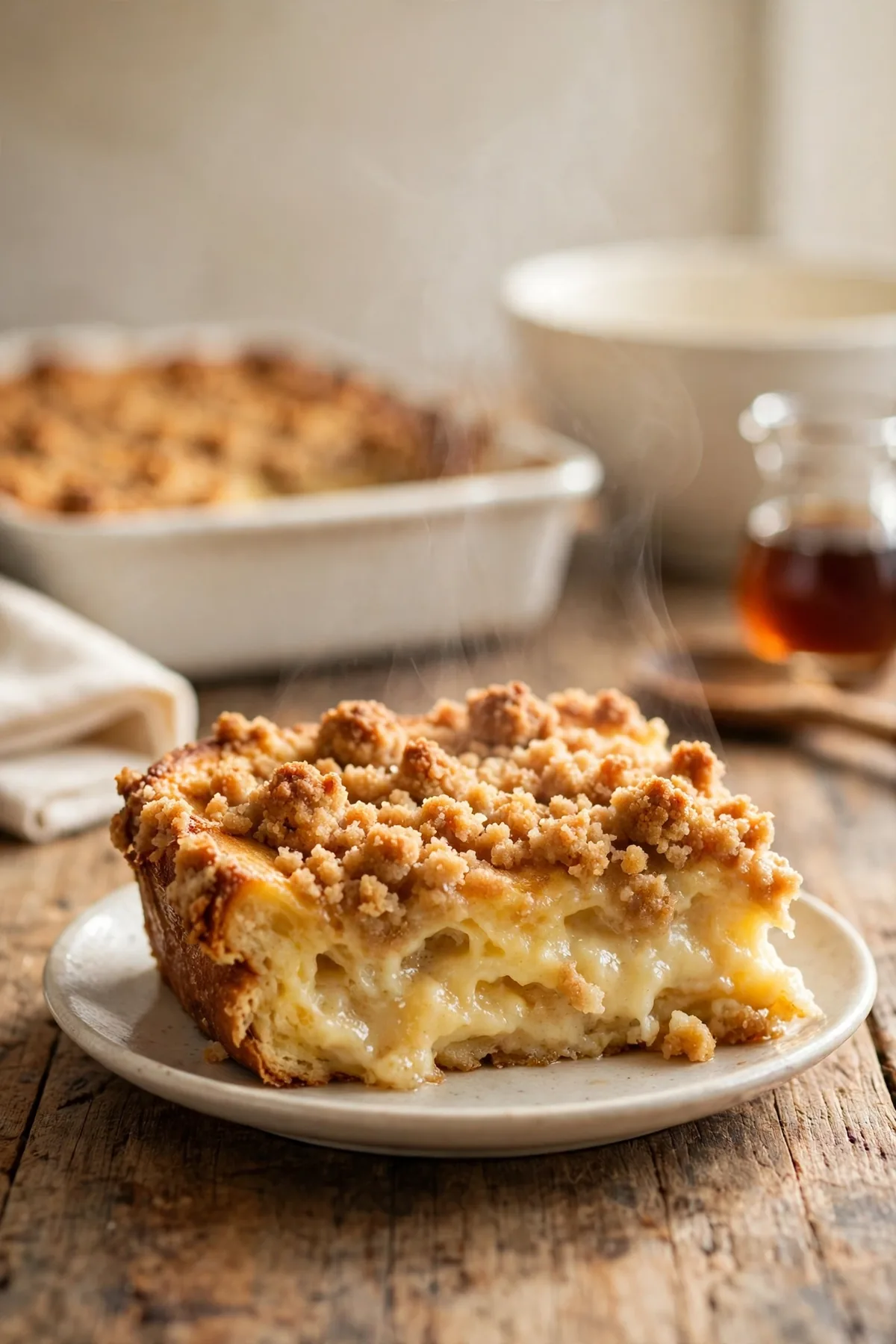
Getting a genuinely custardy, evenly set texture comes down to a few key techniques. There are three approaches depending on your timeline.
Method 1 — Overnight Soak Method (Standard Recipe)
Assemble the casserole the night before, refrigerate overnight, then bake fresh in the morning. This is the method used throughout this recipe and produces the most evenly textured, custardy result.
Method 2 — Same-Day Method (Shorter Rest)
Assemble and bake the same day, allowing a minimum 2-hour rest in the refrigerator rather than a full overnight soak. This works in a pinch, though the texture won’t be quite as evenly absorbed as the standard method.
Method 3 — No-Rest Method (Fastest, Less Ideal)
Assemble and bake immediately with no resting time at all, though this is the least reliable approach and more likely to produce an unevenly textured result with a drier center. This method works best only with pre-toasted bread cubes that have already dried out significantly.
Troubleshooting Quick Reference
| Problem | Cause | Fix |
|---|---|---|
| Soggy bottom | Custard ratio off or fresh bread used | Use properly stale bread and the exact ratio |
| Dry, undercooked center | Skipped the overnight soak | Always allow at least a few hours of resting time |
| Rubbery texture | Overbaked | Pull as soon as a knife comes out clean |
| Streusel soggy instead of crisp | Mixed into the wet custard too early | Keep streusel separate until just before baking |
What to Serve With It
Classic Pairings That Always Work
- Maple syrup — the standard topping that pairs naturally with the cinnamon custard
- Fresh fruit salad — adds a light, refreshing contrast to the rich casserole
- Orange juice or coffee — the standard breakfast beverage pairing
- Crispy bacon on the side — a savory contrast to the sweet dish
- Whipped cream — an indulgent topping for a special occasion morning
Comfort Food Pairings
- Breakfast sausage — adds protein alongside the sweeter casserole
- Hash brown patties — a hearty, savory side to round out the plate
- Hot chocolate — a cozy beverage pairing for a holiday morning
- Extra streusel on the side — for anyone who wants more crunch
Lighter Options
- Fresh berries instead of syrup — a lighter way to add sweetness
- A dollop of Greek yogurt — a tangy, protein-forward topping
- Smaller portions with extra fruit — balances the richness of the dish
6 Ways to Use Leftover French Toast Casserole

Leftover French toast casserole can become several completely different treats. Here are 6 ways to use them.
French Toast Casserole Bites
What you need: Leftover casserole, cubed, butter.
How to assemble: Cube leftover casserole and pan-fry in butter over medium heat until crispy on the outside and heated through.
One tip: Press the cubes down with a spatula while frying to encourage more even crisping.
French Toast Casserole Sandwich
What you need: Leftover casserole, a slice, peanut butter.
How to assemble: Reheat a slice of leftover casserole and spread with peanut butter for a quick, sweet sandwich.
👉 try another easy breakfast recipe here
One tip: A drizzle of extra maple syrup inside brightens up the leftovers nicely.
French Toast Casserole Milkshake
What you need: Leftover casserole, crumbled, 1 cup milk, 2 scoops vanilla ice cream.
How to assemble: Blend crumbled leftover casserole with milk and ice cream until smooth.
One tip: This works especially well with leftovers that have gotten a bit too soft to serve as a traditional slice.
French Toast Casserole Parfait
What you need: Leftover casserole, crumbled, vanilla yogurt, fresh berries.
How to assemble: Layer crumbled leftover casserole with yogurt and berries in a glass for a quick parfait.
One tip: This is a fast way to repackage leftovers into something that feels freshly made.
French Toast Casserole Trifle
What you need: Leftover casserole, crumbled, whipped cream, caramel sauce.
How to assemble: Layer crumbled leftover casserole with whipped cream and a drizzle of caramel sauce in a glass.
One tip: This transforms a smaller amount of leftovers into a completely different dessert-style treat.
French Toast Casserole Bread Pudding Style
What you need: Leftover casserole, 1 egg, splash of milk.
How to assemble: Whisk the egg and milk, pour over cubed leftover casserole in a baking dish, and bake at 350°F for 15–20 minutes to re-set it into a fresh bread pudding.
One tip: This revives leftovers that have dried out slightly, giving them a second custardy life.
Storage, Freezing and Reheating Guide
Refrigerator Storage (Up to 5 Days)
This recipe stores in the refrigerator for up to 5 days in an airtight container. The flavor actually holds up remarkably well throughout that window, making it a genuinely practical dish for multiple breakfasts.
Can You Make This Ahead of Time?
Yes — this recipe is specifically designed to be made ahead, since the overnight soak is a built-in part of the process rather than an optional step. Assemble it the night before, refrigerate, and bake fresh the next morning for the best possible texture.
Freezer Storage (Up to 2 Months)
This recipe freezes reasonably well for up to 2 months, either baked or unbaked. If freezing unbaked, thaw completely in the refrigerator before baking as directed. If freezing already-baked portions, thaw overnight before reheating.
This Recipe Works as a Freezer Meal
Assemble a double batch specifically for the freezer, baking one fresh and freezing the second unbaked. This means a completely homemade casserole is ready for a future holiday morning or gathering without any extra work on the day itself.
👉 see more easy freezer breakfast ideas here
How to Reheat Without Ruining It
| Method | Setting | Time | Notes |
|---|---|---|---|
| Oven | 325°F | 15–20 min | Best method; covered with foil to prevent drying out |
| Microwave | 70% power | 1–2 min | Good for individual portions |
| Air fryer | 325°F | 6–8 min | Good for crisping individual slices |
Weekly Prep Strategy
Assemble the casserole over the weekend, bake it once, and portion it for reheating throughout the week. This recipe makes weekday mornings significantly easier when breakfast is already prepped and waiting.
Recipe Variations Worth Trying
Same technique. Completely different flavor profiles. Master this base recipe first — then try one of these.
Most Popular — Blueberry French Toast Casserole
Fold 1 cup of fresh blueberries into the bread before pouring the custard over the top. The bursts of fresh fruit make this one of the most requested variations of this recipe for a weekend brunch spread.
International — French-Inspired Brioche Pain Perdu Style
Reduce the bread slightly and increase the heavy cream to ¾ cup, following a lighter, more custard-forward French approach. This produces a silkier, less bread-forward texture that leans closer to traditional pain perdu than a heavier American-style casserole.
Lighter — Egg White Version
Replace half the whole eggs with egg whites, using roughly 1½ cups of egg whites in place of 4 whole eggs, and reduce the brown sugar slightly. Therefore, you get a noticeably lighter version of this recipe without sacrificing much of the overall custardy texture.
Quick Shortcut — No-Rest Version with Pre-Toasted Bread
Toast the bread cubes in the oven at 350°F for 10 minutes until dried out before layering, which allows the casserole to be assembled and baked the same day without the usual overnight rest. This cuts the total timeline down significantly for anyone needing it ready faster.
Fresh and Elevated — French Toast Casserole with Cream Cheese Swirl
Dot cubes of softened cream cheese throughout the bread layer before pouring the custard over the top, letting it swirl slightly as it bakes. The pockets of tangy, melted cream cheese add a richer, more indulgent dimension that elevates this everyday dish into something more special for a holiday morning.
Nutrition Information
Per Serving Breakdown (Based on 8 Servings)
| Nutrient | Amount | % Daily Value |
|---|---|---|
| Calories | ~410 | — |
| Total Fat | 21g | 27% |
| Saturated Fat | 11g | 55% |
| Cholesterol | 230mg | 77% |
| Sodium | 310mg | 13% |
| Total Carbohydrates | 42g | 15% |
| Dietary Fiber | 1g | 4% |
| Total Sugars | 20g | — |
| Protein | 11g | 22% |
| Vitamin A | 15% DV | — |
According to USDA FoodData Central, eggs provide a meaningful source of complete protein and essential vitamins — meaning this dish delivers substantial nutritional value alongside its rich, custardy flavor.
Dietary Compatibility
| Diet | Compatible | Notes |
|---|---|---|
| Gluten-Free | ❌ | Use gluten-free brioche-style bread to adapt |
| Dairy-Free | ❌ | Replace milk, cream, and butter with dairy-free alternatives |
| Paleo | ❌ | Bread, dairy, and sugar all excluded |
| Keto | ❌ | High in carbohydrates from both the bread and sugar |
| Vegetarian | ✅ | No meat in this recipe |
| Vegan | ❌ | Requires egg, dairy, and bread substitutions to adapt |
To reduce sugar in this recipe, cut the brown sugar in the custard to ¼ cup and rely on maple syrup drizzled at serving time to add sweetness instead.
8 Mistakes That Ruin French Toast Casserole
Every mistake with this French toast casserole recipe is fixable. Know them before you start — not after.
❌ Mistake 1: Using Fresh Bread Instead of Day-Old
Why it happens: Not planning ahead for stale bread. What goes wrong: Fresh bread is already saturated with moisture and breaks down into mush once soaked in the custard. The fix: Use genuinely day-old brioche, or toast fresh bread briefly to dry it out first.
❌ Mistake 2: Skipping the Overnight Soak
Why it happens: Wanting to bake immediately without waiting. What goes wrong: The bread doesn’t have enough time to absorb the custard evenly, leaving a dry center even after a full bake. The fix: Always allow at least a few hours, ideally overnight, before baking.
❌ Mistake 3: Checking Doneness Only at the Edges
Why it happens: Assuming the whole dish cooks at the same rate. What goes wrong: The center of a casserole always cooks slower than the edges, so checking only the outer portion can miss an undercooked middle. The fix: Always test with a knife specifically in the center of the dish.
❌ Mistake 4: Using Too Much Milk
Why it happens: Assuming more liquid produces a creamier result. What goes wrong: Excess milk relative to eggs produces a watery, loose texture that never sets properly. The fix: Stick to the recipe’s tested egg-to-milk ratio.
❌ Mistake 5: Mixing the Streusel Topping In Too Early
Why it happens: Trying to prep everything at once. What goes wrong: Butter in the streusel softens too much if mixed in ahead of time, losing its crisp texture once baked. The fix: Keep the streusel separate and sprinkle it on just before baking.
❌ Mistake 6: Overbaking Past a Clean Knife Test
Why it happens: Baking longer “just to be safe.” What goes wrong: Extended baking past the point of doneness dries out the custard and produces a rubbery texture. The fix: Pull the casserole as soon as a knife inserted into the center comes out clean.
❌ Mistake 7: Not Pressing the Bread Down Into the Custard
Why it happens: Pouring and walking away without checking. What goes wrong: Bread pieces poking above the custard don’t soak evenly and can dry out on top. The fix: Gently press down on the bread with a spatula after pouring the custard.
❌ Mistake 8: Baking Straight From the Fridge With No Adjustment
Why it happens: Forgetting the dish has been chilling overnight. What goes wrong: A cold dish straight into the oven can need noticeably longer to bake through than the recipe’s stated time. The fix: Let the dish sit out for about 20 minutes before baking, or add a few extra minutes to the bake time.
Frequently Asked Questions
Why is my French toast casserole soggy?
The most common cause is using fresh bread instead of properly day-old bread, since fresh bread can’t absorb the custard as cleanly and tends to break down into a mushy texture. Using too much milk relative to eggs is the second major cause, since excess liquid produces a watery result that never sets properly. Using stale bread and sticking to the recipe’s tested ratio solves this issue in nearly every batch of this recipe.
Should you make French toast casserole the night before?
Yes, genuinely — this is one of the few dishes where making it ahead actually produces a better result than baking it immediately. The overnight rest allows the bread to fully absorb the custard, which is what creates the evenly custardy texture this recipe is known for, rather than a dry center surrounded by soggy edges.
What bread works best for French toast casserole?
Brioche or challah, cut into cubes and left to go slightly stale for a day, work best for this recipe. Both have a rich, enriched texture and flavor that complements the cinnamon custard far better than a plain sandwich loaf. The key factor is moisture level rather than any specific type, so any enriched bread that’s had a chance to dry out slightly will perform well.
Can you freeze French toast casserole?
Yes — this recipe freezes reasonably well for up to 2 months, whether baked or unbaked. For the best texture, freezing it unbaked and thawing completely before baking as directed tends to produce a slightly better result than freezing and reheating an already-baked portion.
What do you serve with French toast casserole?
Maple syrup is the classic topping that pairs naturally with the cinnamon custard base. Fresh fruit salad adds a light, refreshing contrast to the richness, while orange juice or coffee round out a standard breakfast pairing. For a heartier brunch spread, crispy bacon or breakfast sausage both work well alongside the sweeter casserole.
How long does French toast casserole last in the fridge?
This recipe lasts up to 5 days in the refrigerator stored in an airtight container. The flavor holds up remarkably well throughout that window, making it a genuinely practical dish for multiple mornings without needing to remake it from scratch.
Why is my French toast casserole rubbery?
This almost always means the casserole was overbaked past the point where a knife test would have shown it was already done, since extended baking time continues to dry out and firm up the custard well beyond a tender, custardy texture. Pulling the dish from the oven as soon as a knife inserted into the center comes out clean, rather than baking further out of caution, solves this issue in nearly every case.
Can you make French toast casserole without bread going stale first?
Toasting fresh bread cubes in a 350°F oven for about 10 minutes mimics the dried-out texture of day-old bread reasonably well, allowing the casserole to be assembled and baked the same day without waiting for the bread to naturally stale. This shortcut won’t produce quite as consistent a result as genuinely stale bread, but it’s a reliable fallback when time is short.
How do you know when French toast casserole is fully cooked?
The most reliable test is inserting a knife directly into the center of the dish, not just the edges, and confirming it comes out completely clean with no wet custard clinging to it. Visually, the streusel topping should look golden and crisp, and the center should look set and slightly puffed rather than wet and jiggly.
Why does my French toast casserole taste bland?
The most common cause is under-seasoning the custard itself, since cinnamon and vanilla whisked directly into the eggs and milk distribute far more evenly than seasoning added only on top after baking. Using too little brown sugar, or stale spices that have lost their potency, can also leave the flavor tasting flatter than intended. Tasting the custard before pouring it over the bread, and using fresh spices, usually catches whatever a bland batch is missing.
You Might Also Like
Best Gingerbread Cookies
🍽 FRENCH TOAST CASSEROLE
Ingredients
Equipment
Method
- Cube brioche and place in a greased 9×13 dish. Whisk eggs, milk, cream, brown sugar, vanilla, cinnamon, and salt.
- Pour custard evenly over the bread, pressing down gently to submerge.
- Cover and refrigerate at least 4 hours, ideally overnight.
- Combine flour, brown sugar, and cinnamon for the streusel. Cut in cold butter until crumbly. Store separately in the fridge.
- Let sit 20 minutes at room temperature. Preheat oven to 350°F. Top with streusel and bake uncovered 35–40 minutes until set and a knife comes out clean. Rest 5 minutes before serving with maple syrup.