
Best Gingerbread Cookies (Soft, Spiced, Ready in 30 Minutes)
⭐⭐⭐⭐⭐ Rate this recipe
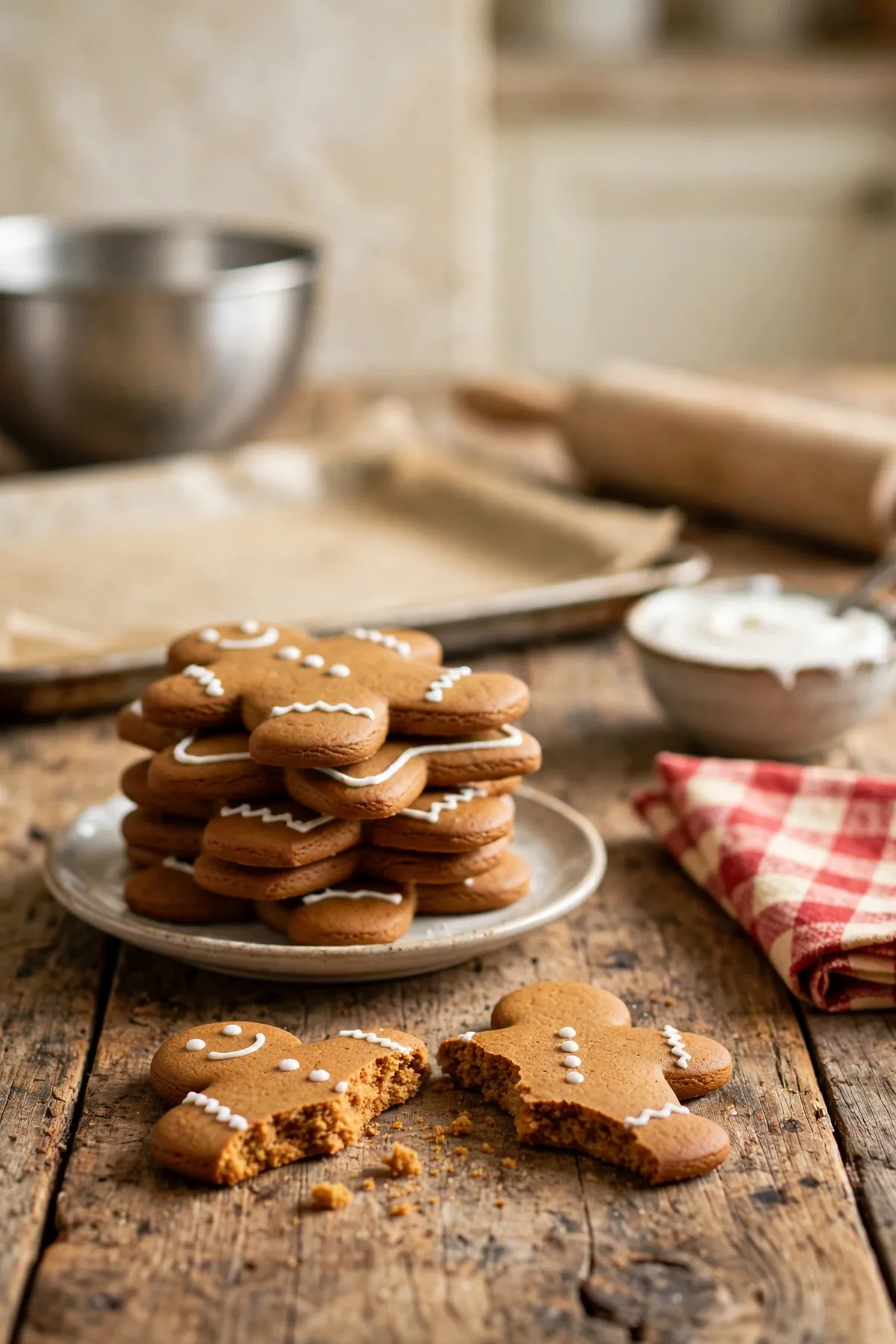
Gingerbread cookies done right hold genuinely sharp, clean edges after baking and stay soft in the center — not puffy, rounded shapes that lose all their crisp detail, or dry, cakey cookies that crumble the moment they’re picked up. This gingerbread cookies recipe uses a specific chilling technique plus a precise molasses-to-flour ratio that keeps the dough firm enough to hold its shape through baking. The entire batch comes together in about 30 minutes of active time, plus chilling.
This recipe is built for anyone who’s pulled a tray of spread-out, shapeless cookies from the oven and wants a version that holds every detail every single time. If you’ve ever rolled out dough only to watch your carefully cut shapes puff and blur in the oven, or ended up with dry, bland cookies instead of warmly spiced ones — every one of those problems has a specific fix here. It works for a holiday baking afternoon, a decorated cookie exchange, or a simple family tradition that gets better every year.
Made this already? Scroll down and leave a ⭐⭐⭐⭐⭐ rating below — it helps more than you know.
Once the chilling technique in this recipe clicks, puffy, shapeless cookies stop happening.
⏱ Prep Time: 20 minutes
🕐 Cook Time: 10 minutes
⏳ Total Time: 30 minutes (plus 1 hour to chill)
🍽 Servings: 24 cookies
📊 Difficulty: Easy
💰 Estimated Cost: ~$5 total / ~$0.21 per cookie
🍪 Main Item: Soft, spiced molasses cookies with sharp decorative edges
Table of Contents
Why This Gingerbread Cookies Recipe Works
- Chilling the dough twice, not just once. Most recipes chill the dough only before rolling, which isn’t enough to prevent spreading. This gingerbread cookies recipe chills once before rolling and again after cutting shapes, which is exactly what locks in sharp edges through baking.
👉 another easy holiday baking recipe here
- A precise molasses-to-flour ratio. Too much molasses produces a dough that spreads no matter how well it’s chilled, while too little leaves the cookies bland and dry. This recipe balances the two for both flavor and structure.
- Rolling the dough to a consistent thickness. Here’s the truth: uneven thickness bakes unevenly, leaving thin spots overdone while thicker areas stay soft and underbaked.
- Baking at a slightly lower temperature. This gives the cookies time to set their shape before the edges brown too quickly, which helps preserve crisp detail.
- Pulling the cookies the moment the edges firm up. Overbaking even slightly turns these from soft and chewy into dry and snappable.
Understanding the Key Ingredient
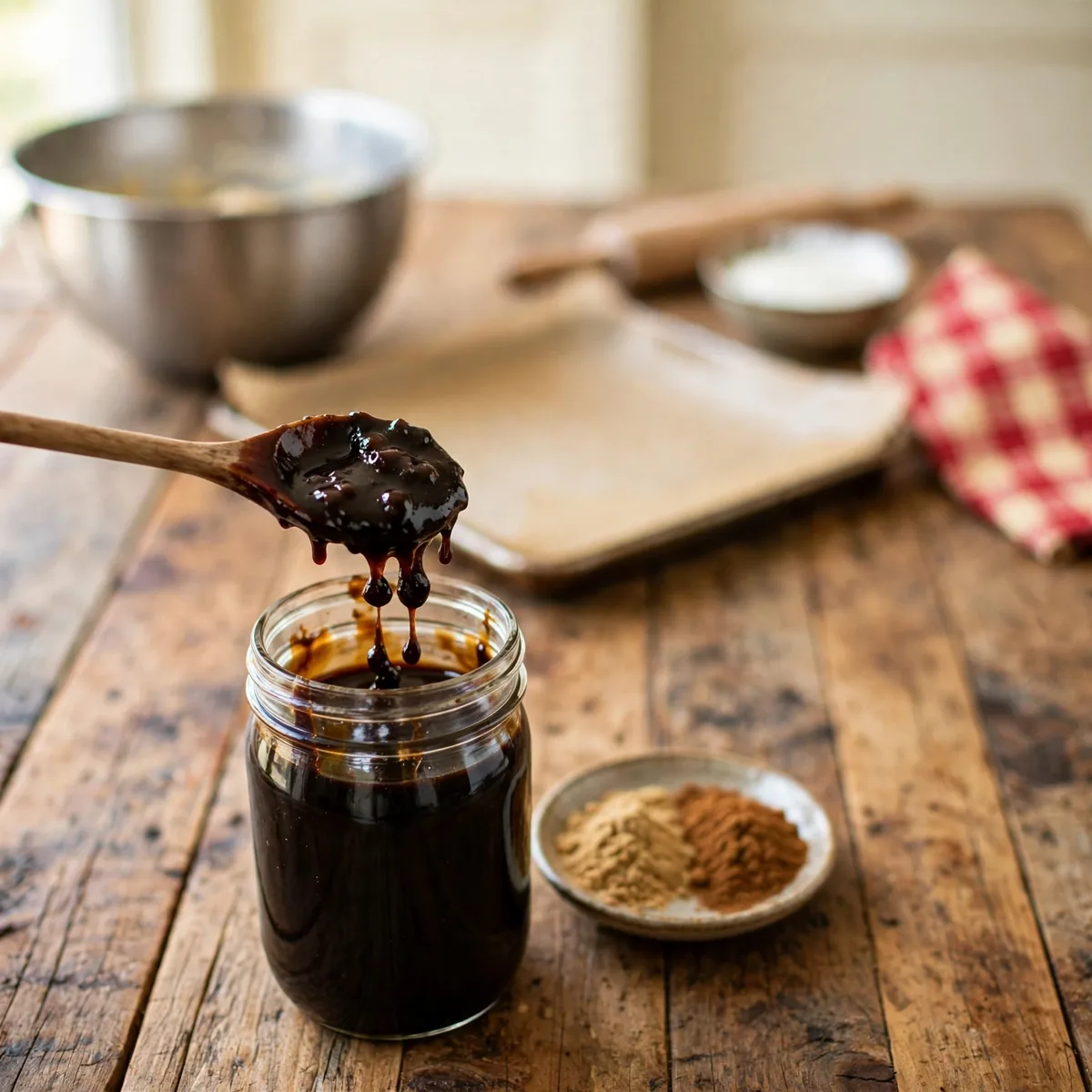
The one step worth never skipping in this recipe, no matter how tempting it is to rush, is chilling the dough twice: once after mixing, and again after cutting the shapes. Skipping either chill is the fastest way to lose those clean edges.
Why Dark Molasses Is the Right Choice
Dark, unsulfured molasses carries a deeper, more pronounced flavor than lighter varieties, and that intensity is exactly what gives this gingerbread cookies recipe its characteristic rich, warm taste rather than a flat, one-note sweetness. Molasses also contributes meaningfully to the dough’s structure, since its thick, sticky consistency helps bind the dry ingredients together in a way that plain sugar alone can’t replicate. Additionally, the slight acidity in molasses reacts with the baking soda in the recipe, contributing to the right amount of lift without causing the cookies to puff excessively.
Molasses Comparison Guide
| Type | Flavor Intensity | Color | Best For |
|---|---|---|---|
| Dark, unsulfured | Strong, rich | Deep brown | Best overall result |
| Light molasses | Milder | Lighter brown | Acceptable, less traditional flavor |
| Blackstrap molasses | Very strong, slightly bitter | Very dark | Too intense for most palates in this recipe |
| Golden syrup (substitute) | Mild, different flavor profile | Light gold | Works in a pinch, less traditional taste |
How to Choose the Best at the Store
- Check the label for “unsulfured.” This typically indicates a cleaner, more traditional molasses flavor.
- Avoid blackstrap unless a very intense flavor is wanted. It’s considerably stronger and slightly more bitter than standard dark molasses.
- A thick, glossy consistency is a good sign. Thin, watery molasses may be past its prime.
- Buy a size appropriate for how often you bake with it. Molasses keeps well, but a smaller jar avoids excess sitting in the pantry.
- Store tightly sealed in a cool, dark place. This preserves both flavor and texture longest.
How Much Do You Need?
| Servings | Dark Molasses | All-Purpose Flour |
|---|---|---|
| 12 cookies | ¼ cup | 1½ cups |
| 24 cookies | ½ cup | 3 cups |
| 36 cookies | ¾ cup | 4½ cups |
| 48 cookies | 1 cup | 6 cups |
Double Batch — How to Scale This Gingerbread Cookies Recipe
Doubling works cleanly as long as you have a large enough bowl to mix without spilling, since the dough becomes quite thick once fully combined. Chill the doubled batch in two separate portions rather than one large mass, since a bigger lump of dough takes noticeably longer to chill through evenly. Rolling and cutting time naturally takes longer with a doubled batch, but the chilling and baking times themselves stay the same.
Ingredients You’ll Need
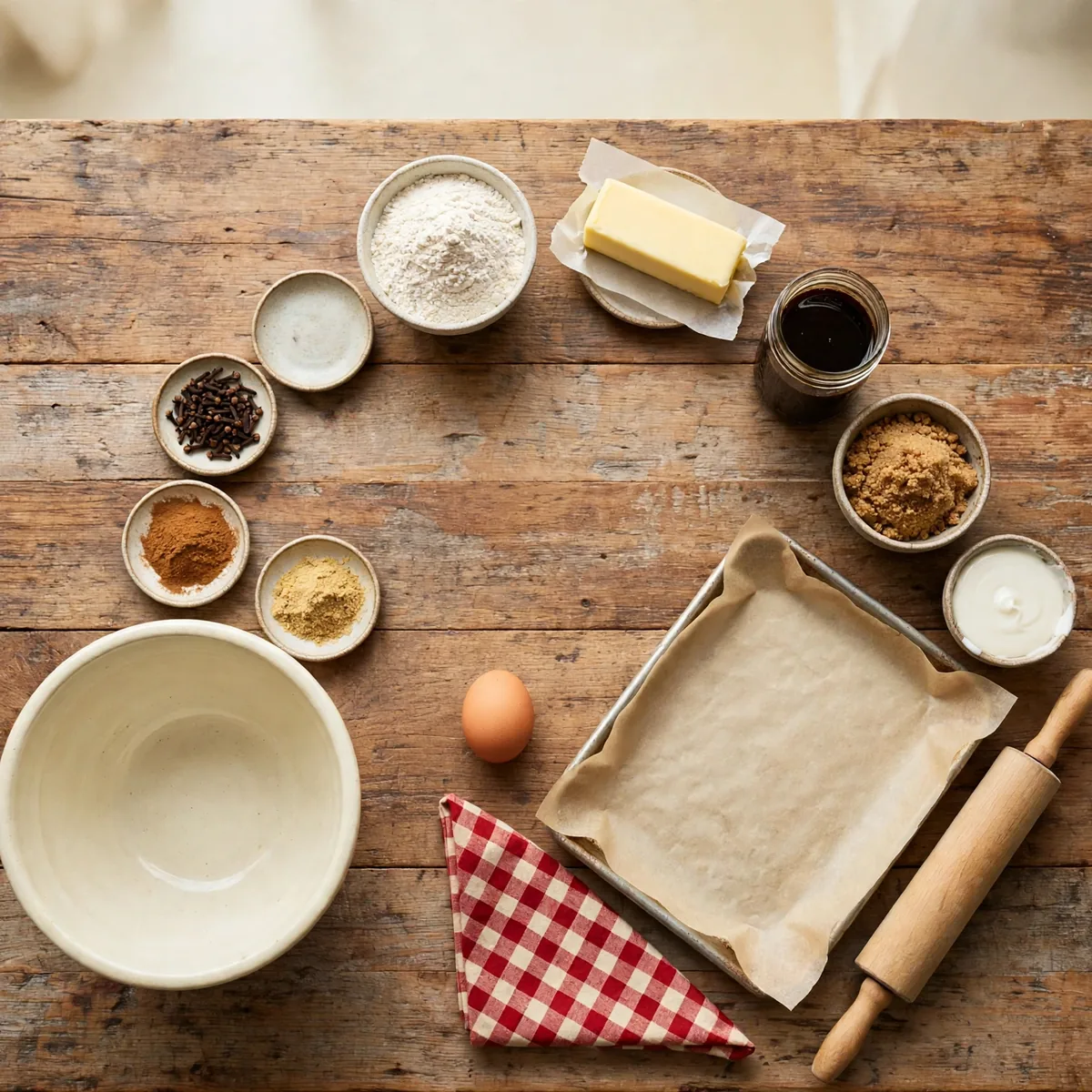
This recipe uses straightforward pantry ingredients. Here is everything broken down, including what each one does:
Main Ingredients
- All-purpose flour — 3 cups. The structural base of the dough.
- Unsalted butter — ¾ cup, softened. Adds richness and tenderness.
- Dark molasses — ½ cup. The defining flavor of this cookie, also contributing to structure.
- Brown sugar — ¾ cup, packed. Adds moisture and a deep, caramel-like sweetness.
- Egg — 1 large. Binds the dough together.
- Ground ginger — 2 teaspoons. The signature warm spice of this cookie.
- Ground cinnamon — 1 teaspoon. Adds warmth alongside the ginger.
Supporting Ingredients
- Baking soda — 1 teaspoon. The leavener, reacting with the molasses for a light rise.
- Ground cloves — ¼ teaspoon. Adds a deep, aromatic warmth.
- Salt — ½ teaspoon. Balances the sweetness and enhances the spices.
- Royal icing — for decorating (optional).
Optional Additions Table
| Add-In | Amount | Effect |
|---|---|---|
| Orange zest | 1 tsp | Adds a bright, citrusy note |
| Ground nutmeg | ¼ tsp | Adds an additional layer of warm spice |
| Turbinado sugar | for rolling | Adds a sparkly, crunchy coating |
| Mini chocolate chips | ¼ cup | Adds pockets of chocolate throughout |
| Candied ginger, minced | 2 tbsp | Adds extra ginger intensity and a chewy texture |
Complete Substitutions Reference
| Original | Substitution | Notes |
|---|---|---|
| Dark molasses | Light molasses | Milder flavor, still works |
| Ground cloves | Allspice | Similar warm, aromatic quality |
| Brown sugar | Dark brown sugar | Even deeper molasses flavor |
| All-purpose flour | A 1:1 gluten-free blend | Works with some texture differences |
| Royal icing | Powdered sugar glaze | Simpler, less structured decorating option |
What NOT to Add to This Gingerbread Cookies Recipe
- ❌ Skipping either chill step — the dough spreads and loses its sharp shape in the oven
- ❌ Rolling the dough unevenly — produces inconsistent baking, with thin spots overdone and thick spots underbaked
- ❌ Too much molasses beyond the recipe’s ratio — makes the dough too soft and prone to spreading regardless of chilling
- ❌ Overbaking past firm edges — turns the texture from soft and chewy to dry and snappable
- ❌ Decorating with icing before the cookies are fully cooled — the icing melts and slides instead of setting properly
- ❌ Using blackstrap molasses as a direct substitute — produces an overly intense, slightly bitter flavor most people don’t expect
Equipment You’ll Need
Choosing the Right Equipment for Gingerbread Cookies
| Tool | Purpose | Best For |
|---|---|---|
| Rolling pin | Rolling the dough | Even, consistent thickness |
| Cookie cutters | Shaping | Classic gingerbread shapes |
| Large mixing bowl | Combining ingredients | Standard mixing |
| Baking sheet | Baking | Even heat distribution |
Other Tools That Actually Matter
A rolling pin with thickness guides or rings genuinely helps achieve consistent thickness across the whole batch, which matters for even baking. A sturdy set of cookie cutters, ideally metal rather than plastic, cuts cleaner edges that hold their shape better through baking. Parchment paper on the baking sheet prevents sticking and makes transferring cut shapes significantly easier without distorting them.
No Rolling Pin With Guides? Alternatives That Work for This Gingerbread Cookies Recipe
- Wooden dowels or rulers — place two same-thickness dowels on either side of the dough and roll the pin across them for an even result
- A standard rolling pin with careful visual checks — roll slowly, checking thickness in multiple spots with a ruler as you go
- A pasta roller, on a wider setting — works for smaller batches of dough, producing a very even thickness
How to Make Gingerbread Cookies — Step by Step
Five steps, plus two separate chilling periods for the best shape retention.
Step 1 — Cream the Butter, Sugar, and Molasses
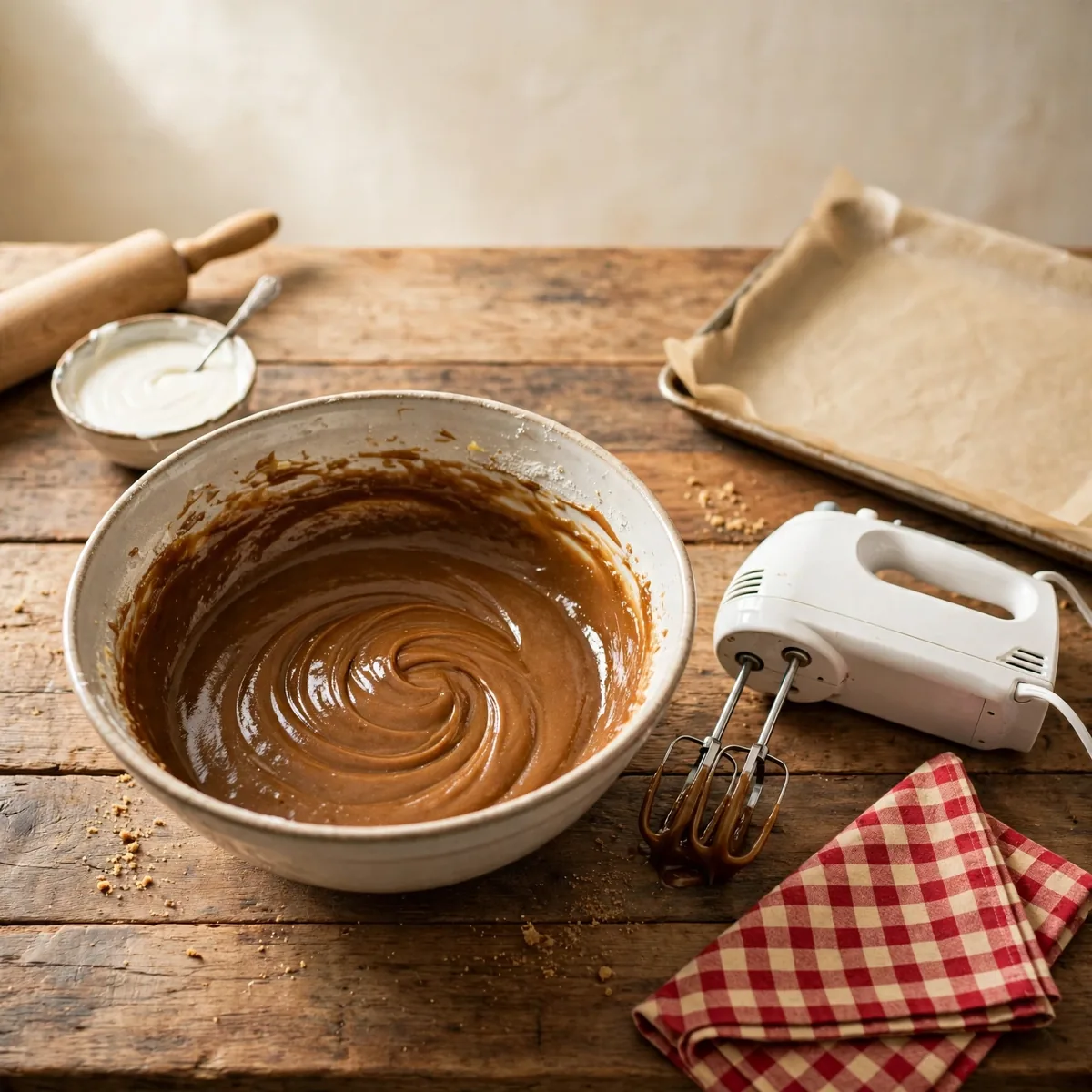
Beat the softened butter and brown sugar together until light and fluffy, about 2 minutes. Add the molasses and egg, beating until fully combined.
💡 Pro Tip: Scrape down the sides of the bowl at least once during this step — molasses can cling to the edges and leave unmixed pockets if not scraped down properly.
Step 2 — Add the Dry Ingredients
Whisk together the flour, ginger, cinnamon, baking soda, cloves, and salt in a separate bowl. Gradually add this dry mixture to the wet ingredients, mixing on low speed just until combined into a thick, slightly sticky dough.
💡 Pro Tip: Add the dry ingredients in two or three additions rather than all at once — this helps them incorporate evenly without overworking the dough.
Step 3 — Chill the Dough (The Key Step)
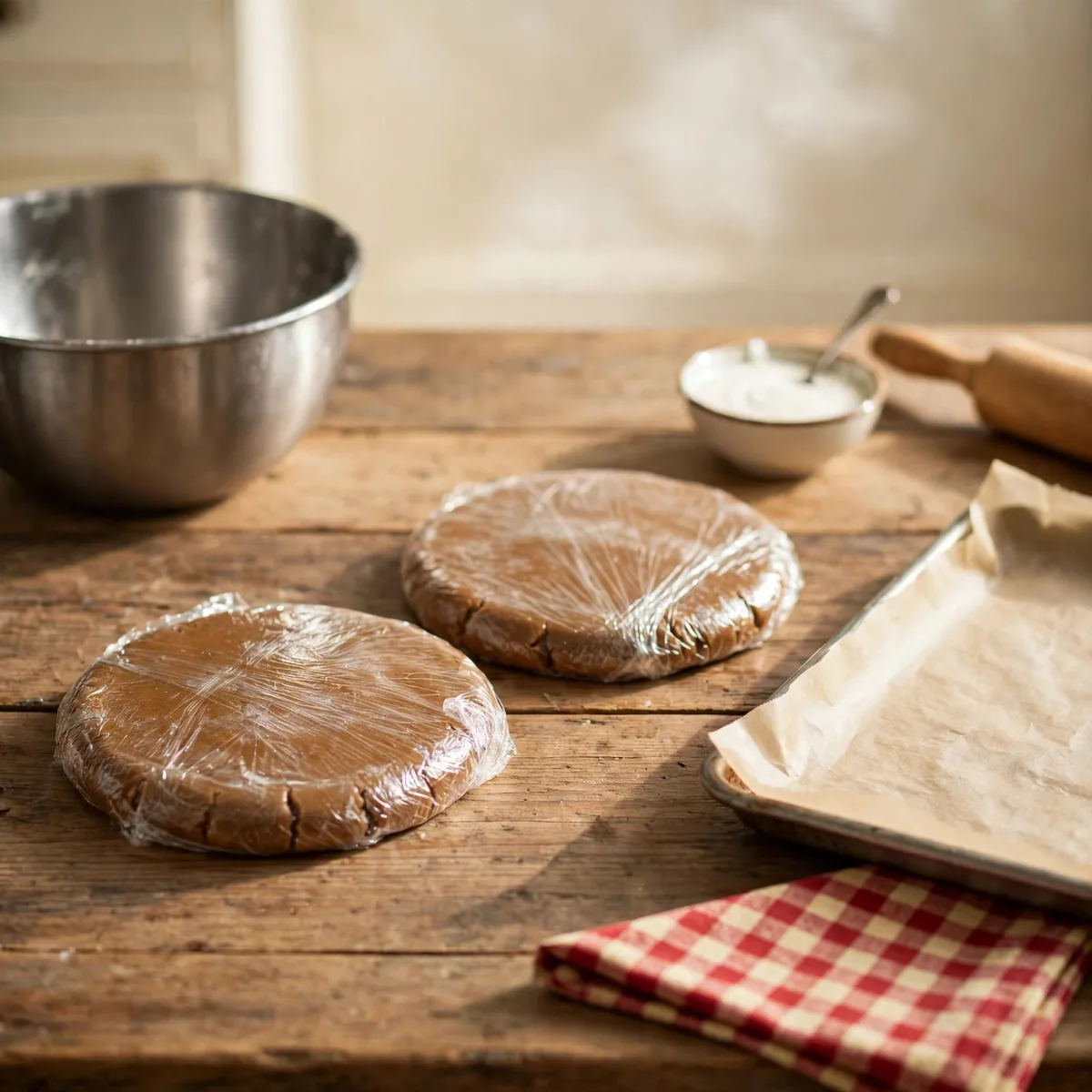
Divide the dough into two flattened discs, wrap tightly in plastic wrap, and refrigerate for at least 1 hour, or up to 2 days. Most people skip or shorten this step, but this first chill is exactly what firms the dough enough to roll cleanly and handle without excessive sticking. Every batch where this step was rushed came out noticeably harder to roll evenly and more prone to spreading later.
👉 another great Christmas cookie recipe here
💡 Pro Tip: Flattening the dough into discs before chilling, rather than leaving it in one large ball, speeds up how evenly it chills through to the center.
Step 4 — Roll, Cut, and Chill Again
Preheat the oven to 325°F. On a lightly floured surface, roll one disc of dough to about ¼-inch thickness. Cut into shapes with cookie cutters and transfer to a parchment-lined baking sheet. Chill the cut shapes on the sheet in the freezer for 10 minutes before baking.
💡 Pro Tip: This second chill right before baking is what locks in the sharp edges from the cookie cutter, preventing the shapes from softening and spreading once they hit the hot oven.
Step 5 — Bake and Decorate
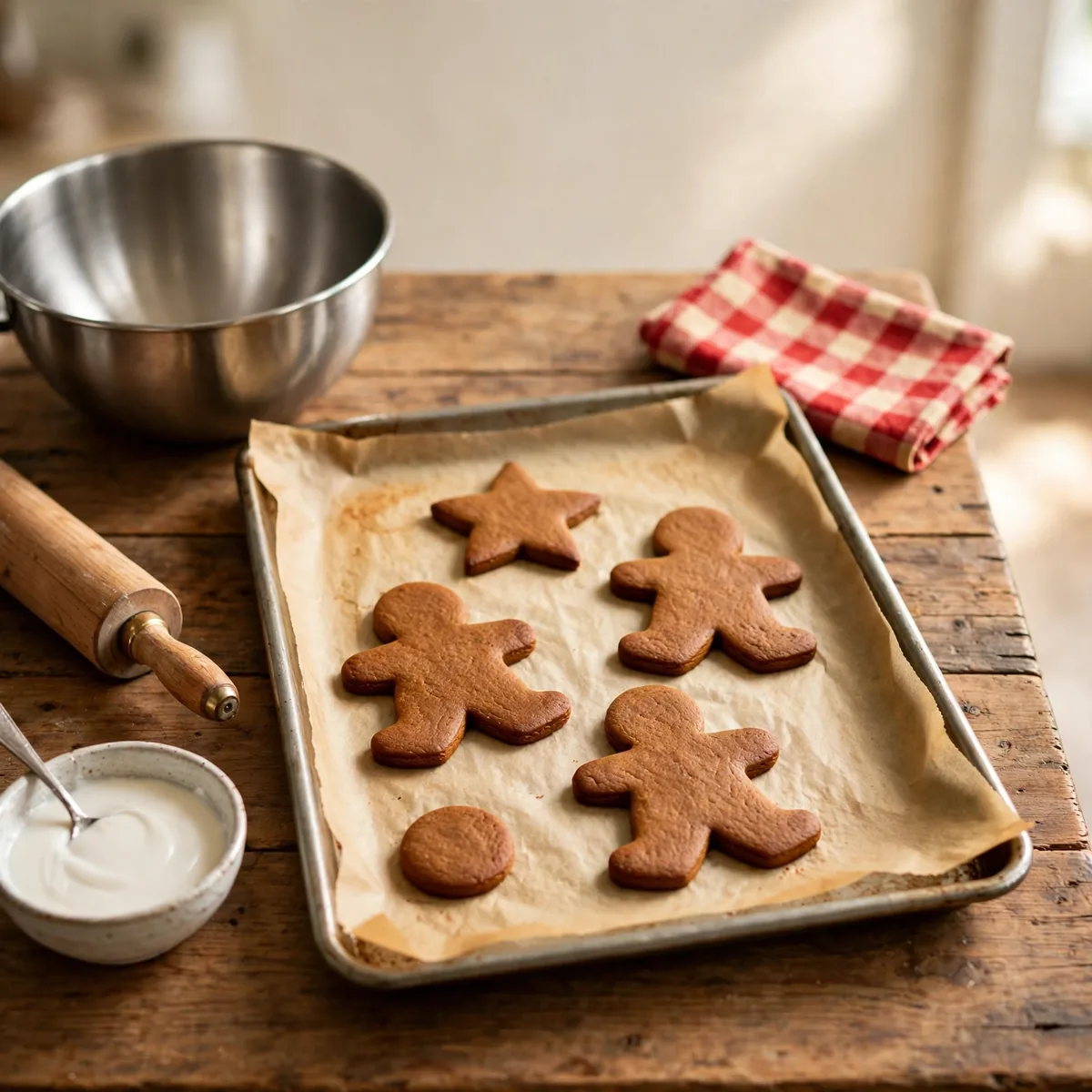
Bake for 8–10 minutes, until the edges are firm and just beginning to darken slightly. Let cool completely on the baking sheet before decorating with royal icing, if using.
How to Tell When It’s Done
Every oven runs a little differently, so start checking 1–2 minutes early on the first attempt with this gingerbread cookies recipe. Once it’s been made once, the exact timing for that specific oven becomes easy to predict.
Primary Doneness Test
The cookies are done when the edges look firm and have just begun to darken slightly, while the centers still look a touch soft — they’ll continue setting as they cool on the baking sheet.
Doneness Guide
| Indicator | What It Means | What to Do |
|---|---|---|
| Edges still pale and soft | Under-baked | Continue baking 1–2 more minutes |
| Edges firm, slightly darker | Perfectly done | Remove and cool on the tray |
| Edges very dark, cracked | Over-baked | Reduce bake time next round |
| Shapes puffed and rounded | Dough wasn’t chilled enough before baking | Chill longer next time |
| Shapes held crisp, clean edges | Perfectly done | Ready to decorate once cooled |
| Cookies spread into each other | Not enough spacing or insufficient chilling | Space further apart and chill longer |
Visual Signs It’s Done
- The edges have turned from soft and pale to firm with a slightly deeper brown color
- The cut shapes still show crisp, clean lines rather than puffed, rounded edges
- The surface looks matte rather than glossy or wet
- A light touch to the edge feels set rather than soft and giving
- The aroma has shifted from raw dough to a warm, spiced, toasted smell
It’s Not Right — What to Do Now
- Cookies lost their shape: Dough wasn’t chilled enough before rolling or after cutting — always complete both chilling steps fully
- Cookies turned dry: Overbaked past the point of firm edges with slightly soft centers — pull them a bit earlier next time
- Shapes spread into each other: Not spaced far enough apart on the tray, or dough was too warm when it went into the oven — space more generously and chill longer
- Icing melted or slid off: Applied before the cookies were fully cooled — always wait until completely cool before decorating
How to Get Sharp, Clean Edges
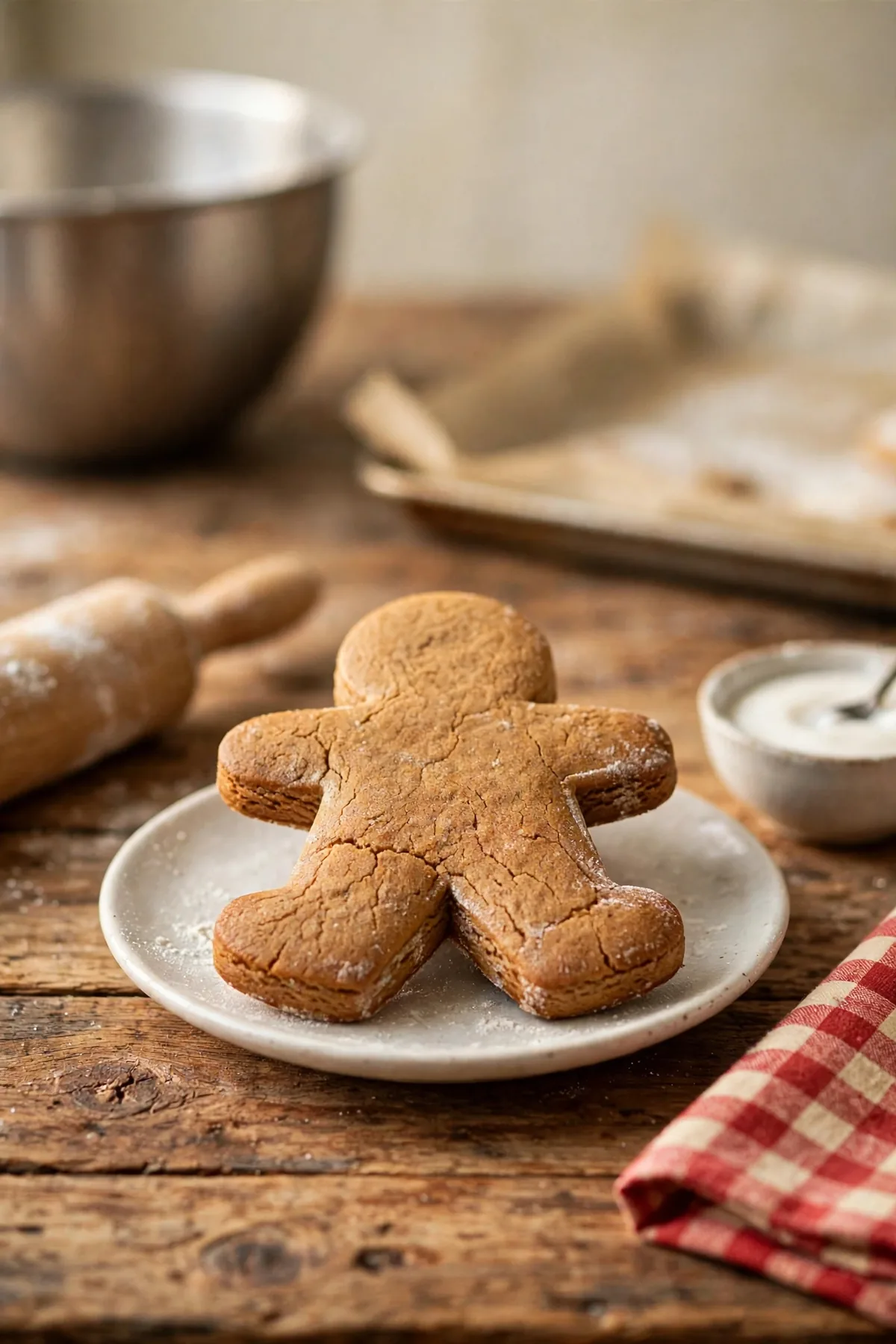
Getting genuinely sharp, decoration-ready edges comes down to a few key techniques. There are three approaches depending on your timeline.
Method 1 — Double Chill Method (Standard Recipe)
Chill the dough once before rolling and again after cutting shapes. This is the method used throughout this gingerbread cookies recipe and produces the most reliably sharp, clean edges.
Method 2 — Overnight Chill Method (Most Reliable)
Chill the mixed dough overnight instead of just 1 hour before rolling, which firms the fat even more thoroughly and makes rolling noticeably easier the next day. This variation works especially well when planning baking a day in advance.
Method 3 — Single Chill Method (Faster, Less Reliable)
Skip the second chill after cutting shapes and go straight into the oven, accepting that the edges may soften slightly more during baking than the standard method. This works in a pinch when time is short, though the shapes won’t hold quite as crisply.
Troubleshooting Quick Reference
| Problem | Cause | Fix |
|---|---|---|
| Edges rounded, not sharp | Skipped or shortened the second chill | Always chill cut shapes for the full 10 minutes |
| Dough too sticky to roll | Not chilled long enough initially | Chill longer, or lightly flour the surface more |
| Shapes distorted when transferring | Dough too soft when moved | Chill briefly again before transferring to the tray |
| Cookies cracked at the edges | Dough was overworked or too dry | Handle gently and avoid adding excess flour |
What to Serve With Them
Classic Pairings That Always Work
- Hot apple cider — the quintessential holiday pairing alongside spiced cookies
- Hot chocolate — a classic cozy pairing for any gingerbread cookie
- Eggnog — a traditional holiday beverage that complements the warm spices
- Royal icing for decorating — the classic finishing touch for these cookies
- Fresh whipped cream on the side — a simple, light addition for dipping
Comfort Food Pairings
- Mulled wine — an adult-friendly pairing for a holiday gathering
- Spiced tea — doubles down on the warm spice profile already in the cookie
- Vanilla ice cream — a cold contrast to the warmly spiced cookie
- A full holiday dessert spread — alongside pie, cake, and other seasonal treats
Lighter Options
- Smaller cookie sizes — using a smaller cutter reduces the portion naturally
- Skip the icing decoration — reduces added sugar while keeping the core flavor
- Fresh fruit on the side — adds lightness alongside a smaller portion of cookies
6 Ways to Use Leftover Gingerbread Cookies
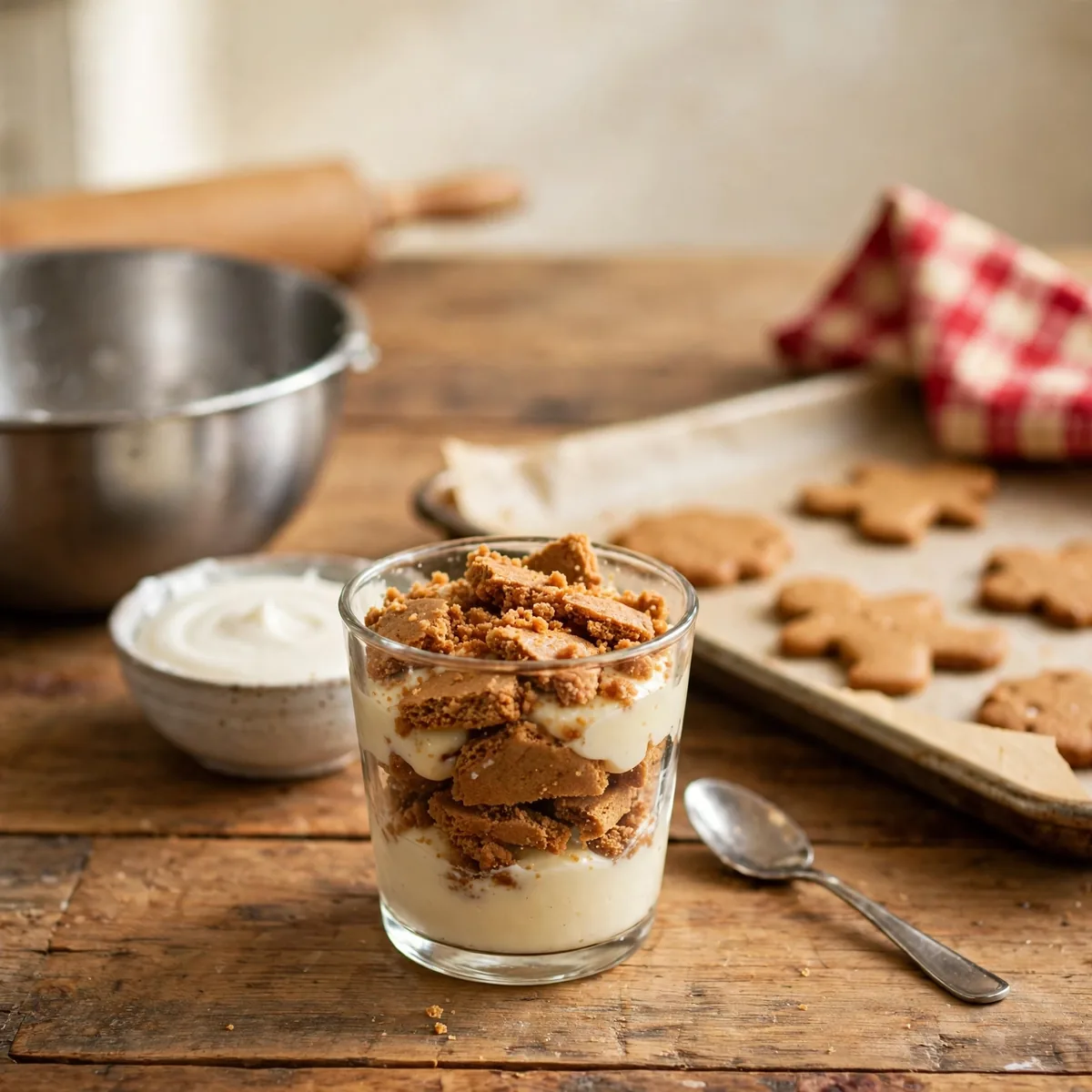
Leftover cookies can become several completely different treats. Here are 6 ways to use them up:
Gingerbread Cookie Pudding Parfait
What you need: Crumbled leftover cookies, vanilla pudding or yogurt.
How to assemble: Layer crumbled leftover cookies with pudding or yogurt in a glass for a quick, festive parfait.
One tip: This works especially well with slightly stale leftover cookies, since they hold their crumble texture longer.
Gingerbread Cookie Pie Crust
What you need: 10–12 crumbled leftover cookies, 2 tbsp melted butter.
How to assemble: Mix crumbled cookies with melted butter until it holds together, press into a pie dish, and chill for 20 minutes before filling.
One tip: This crust works especially well under a pumpkin or cheesecake filling for a holiday-themed dessert.
Gingerbread Cookie Milkshake
What you need: 2–3 crumbled leftover cookies, 2 scoops vanilla ice cream, ½ cup milk.
How to assemble: Blend all ingredients together until smooth and pour into a glass.
👉 see more easy holiday dessert ideas here
One tip: Freeze the cookies for 15 minutes before blending — it keeps the milkshake thick instead of watery.
Gingerbread Cookie Trifle
What you need: Crumbled leftover cookies, whipped cream, caramel sauce.
How to assemble: Layer crumbled cookies with whipped cream and a drizzle of caramel sauce in a glass for a quick trifle-style dessert.
One tip: This is one of the fastest ways to use up a few leftover cookies without any extra baking.
Gingerbread Cookie Ice Cream Sandwich
What you need: Two leftover cookies, a scoop of vanilla ice cream.
How to assemble: Sandwich a scoop of softened ice cream between two leftover cookies and freeze briefly before eating.
One tip: Freeze the assembled sandwich for 15 minutes before eating — it holds together much better once firm.
Gingerbread Cookie Breakfast Bowl
What you need: 1–2 crumbled leftover cookies, milk, sliced fruit.
How to assemble: Crumble the cookies into a bowl like cereal, pour milk over the top, and add sliced fruit.
One tip: This works best with slightly stale leftover cookies, which hold their shape in milk longer than fresh, soft ones.
Storage, Freezing and Reheating Guide
Room Temperature Storage (Up to 2 Weeks)
This recipe stores at room temperature for up to 2 weeks in an airtight container, so you can bake ahead with confidence. For best results, layer them between parchment paper to protect the icing.
Can You Make This Ahead of Time?
Yes — this recipe is genuinely excellent for making ahead, since the dough itself can be refrigerated for up to 2 days before rolling, or frozen for much longer storage. Baking fresh whenever needed, rather than all at once, means warm cookies are always a short bake away during a busy holiday season.
Freezer Storage (Up to 3 Months)
This recipe freezes exceptionally well for both baked cookies and raw dough. Freeze baked cookies in a single layer, then transfer them to a freezer bag for up to 3 months. Raw dough discs freeze equally well — thaw overnight in the refrigerator before rolling.
This Recipe Works as a Make-Ahead Holiday Baking Staple
Make a double batch of dough specifically to keep some in the freezer. Having pre-chilled, frozen dough discs on hand means a fresh batch of decorated cookies is always within reach throughout the holiday season without starting entirely from scratch.
👉 see more make-ahead holiday desserts here
How to Reheat Without Ruining It
| Method | Setting | Time | Notes |
|---|---|---|---|
| Room temperature | N/A | — | Simply let sit out; these cookies stay soft on their own |
| Microwave | Low power | 5–10 sec | Restores a touch of warmth if desired, though not necessary |
| Oven | 300°F | 3–4 min | Good for a slightly fresher-tasting warm-up |
Weekly Prep Strategy
Make a double batch of dough at the start of the holiday season, freezing half for later. This gingerbread cookies recipe stays convenient throughout the season since fresh-baked, decorated cookies are always just a short bake away.
Recipe Variations Worth Trying
Same technique. Completely different flavor profiles. Master this base gingerbread cookies recipe first — then try one of these.
Most Popular — Gingerbread Men Cookies
Use a classic gingerbread man-shaped cutter and decorate each one with simple white royal icing details, following the most traditional presentation of this cookie. The nostalgic shape makes this the most requested variation of this gingerbread cookies recipe during the holiday season.
International — German-Inspired Lebkuchen Style
Add 1 teaspoon of orange zest and ¼ teaspoon each of ground cardamom and nutmeg to the spice blend, following the flavor profile of traditional German lebkuchen. This produces a more complex, citrus-forward spice profile distinct from the standard American gingerbread flavor.
Lighter — Reduced Sugar Version
Cut the brown sugar to ½ cup and rely more on the natural sweetness and flavor of the molasses to carry the cookie. Therefore, you get a noticeably less sweet, more intensely spiced version that still bakes up properly for this gingerbread cookies recipe.
Quick Shortcut — Drop Cookie Version
Skip rolling and cutting shapes entirely, instead dropping rounded scoops of chilled dough directly onto the baking sheet. This cuts the shaping time down significantly, though the cookies will look more rustic and less suited to decorative icing than the traditional cut-out version.
Fresh and Elevated — Gingerbread Cookies with Browned Butter
Brown the butter first: melt in a light-colored pan over medium heat, stirring constantly, until golden and nutty-smelling, about 4–5 minutes, then let it solidify again before using in the recipe. The browned butter adds a deep, caramel-like complexity that elevates this holiday classic into something more sophisticated.
Nutrition Information
Per Serving Breakdown (Based on 24 Cookies)
| Nutrient | Amount | % Daily Value |
|---|---|---|
| Calories | ~130 | — |
| Total Fat | 5g | 6% |
| Saturated Fat | 3g | 15% |
| Cholesterol | 15mg | 5% |
| Sodium | 80mg | 3% |
| Total Carbohydrates | 19g | 7% |
| Dietary Fiber | 0.5g | 2% |
| Total Sugars | 10g | — |
| Protein | 1g | 2% |
| Iron | 4% DV | — |
According to USDA FoodData Central, molasses contains a meaningful amount of iron compared to most other sweeteners — meaning this gingerbread cookies recipe contributes a small nutritional benefit alongside its rich, spiced flavor.
Dietary Compatibility
| Diet | Compatible | Notes |
|---|---|---|
| Gluten-Free | ❌ | Use a 1:1 gluten-free flour blend to adapt |
| Dairy-Free | ❌ | Replace butter with a dairy-free alternative |
| Paleo | ❌ | Flour and refined sugar both excluded |
| Keto | ❌ | High in carbohydrates from flour and sugar |
| Vegetarian | ✅ | No meat in this recipe |
| Vegan | ❌ | Requires an egg substitute and dairy-free butter to adapt |
To reduce sugar in this gingerbread cookies recipe, cut the brown sugar to ½ cup and let the molasses carry more of the sweetness and flavor instead.
8 Mistakes That Ruin Gingerbread Cookies
Every mistake with this gingerbread cookies recipe is fixable. Know them before you start — not after.
❌ Mistake 1: Skipping the Chill Before Rolling
Why it happens: Wanting to roll and bake immediately. What goes wrong: Warm, soft dough is difficult to roll evenly and sticks excessively to the surface. The fix: Always chill the dough for at least 1 hour before rolling.
❌ Mistake 2: Skipping the Chill After Cutting Shapes
Why it happens: Not realizing this second chill matters as much as the first. What goes wrong: Shapes that go straight from cutting into a hot oven puff and lose their sharp, clean edges. The fix: Always chill cut shapes for 10 minutes in the freezer before baking.
❌ Mistake 3: Rolling the Dough Unevenly
Why it happens: Not using thickness guides or checking carefully. What goes wrong: Thin spots bake faster than thick ones, leading to some cookies overdone while others stay underbaked. The fix: Use thickness guides or check with a ruler in multiple spots while rolling.
❌ Mistake 4: Overbaking Past Firm Edges
Why it happens: Wanting the centers to look completely set before pulling the cookies. What goes wrong: Cookies baked until fully firm throughout dry out and lose their soft, chewy texture. The fix: Pull them once the edges are firm, even if centers still look slightly soft.
❌ Mistake 5: Using Too Much Molasses
Why it happens: Assuming more molasses means more flavor. What goes wrong: Excess molasses makes the dough too soft to hold its shape, regardless of how thoroughly it’s chilled. The fix: Stick to the exact ratio called for in the recipe.
❌ Mistake 6: Decorating Before Cookies Are Fully Cooled
Why it happens: Impatience to start decorating. What goes wrong: Royal icing applied to warm cookies melts and slides instead of setting into clean, crisp lines. The fix: Always wait until the cookies are completely cool before icing.
❌ Mistake 7: Overworking the Dough
Why it happens: Rolling and re-rolling scraps repeatedly. What goes wrong: Excessive handling develops the flour’s gluten, toughening the final texture. The fix: Gather scraps gently and re-roll only once or twice, rather than repeatedly.
❌ Mistake 8: Storing Cookies Uncovered
Why it happens: Leaving them out on a plate for easy snacking. What goes wrong: Exposed air dries the cookies out, turning a soft texture firm and less enjoyable within a day or two. The fix: Always store in an airtight container.
Frequently Asked Questions
Why do my gingerbread cookies lose their shape while baking?
The most common cause is skipping or shortening one of the two chilling steps, since warm dough spreads and puffs in a hot oven regardless of how carefully the shapes were cut. Using too much molasses relative to the flour is the second major cause, since excess molasses softens the dough beyond what chilling alone can fully correct. Completing both chilling steps fully and sticking to the recipe’s exact molasses measurement solves this issue in nearly every batch of this gingerbread cookies recipe.
How long should you chill gingerbread dough before rolling?
A minimum of 1 hour in the refrigerator is necessary before rolling, though chilling overnight produces even firmer, easier-to-handle dough. After cutting shapes, a brief additional 10-minute chill in the freezer right before baking locks in the sharp edges that make decorated gingerbread cookies look their best.
What molasses is best for gingerbread cookies?
Dark, unsulfured molasses is the best choice for this recipe, offering a rich, traditional flavor without the overly intense bitterness of blackstrap molasses. Light molasses works as a milder substitute if that’s what’s available, though the flavor will be noticeably less deep and complex than the standard dark variety this recipe calls for.
Can you make gingerbread cookie dough ahead of time?
Yes — this recipe is genuinely excellent for making ahead. The dough can be refrigerated for up to 2 days before rolling, or wrapped tightly and frozen for much longer storage, thawing in the refrigerator overnight before continuing with the rolling and cutting steps.
What do you decorate gingerbread cookies with?
Royal icing is the most traditional decorating medium, since it dries hard and holds crisp, detailed lines well. A simple powdered sugar glaze works as a less structured alternative for anyone wanting a quicker decorating option. Both should only be applied once the cookies have cooled completely, since warm cookies cause either topping to melt and slide instead of setting properly.
Can you freeze gingerbread cookies?
Yes — both baked, undecorated cookies and raw dough freeze exceptionally well for this recipe. Baked cookies can be frozen in an airtight container for up to 3 months, while the dough itself can be wrapped tightly in its discs and frozen before rolling, thawing overnight in the refrigerator when ready to use.
How long do gingerbread cookies last at room temperature?
This gingerbread cookies recipe lasts up to 2 weeks at room temperature stored in an airtight container, noticeably longer than many other cookie types thanks to the moisture molasses contributes. Keeping them well-sealed is the single biggest factor in maintaining their soft texture over that extended window.
Why are my gingerbread cookies puffy instead of flat?
This almost always means the dough wasn’t chilled thoroughly enough before baking, either skipping the initial chill before rolling or the second chill after cutting shapes. Using too little molasses relative to the leavening agents can also contribute to excessive puffing. Completing both recommended chilling steps and sticking to the recipe’s exact ingredient ratios solves this issue in nearly every case.
Can you make gingerbread cookies without molasses?
It’s challenging for a truly traditional result, since molasses contributes significantly to both the characteristic flavor and the dough’s structure in this recipe. Golden syrup can work as a substitute in a pinch, though the flavor profile shifts noticeably away from classic gingerbread toward something milder and less distinctly spiced. For anyone wanting the authentic taste this cookie is known for, molasses genuinely isn’t optional.
Why do my gingerbread cookies taste bland?
The most common cause is using too little of the warm spices, particularly ginger, or letting the spices sit too long in the pantry and lose potency before baking. Skipping the salt can also leave the overall flavor tasting flatter than intended, since salt enhances the perceived warmth of the spices and the richness of the molasses. Using fresh spices and not skipping the salt usually resolves a bland batch.
You Might Also Like
Best Beef Stroganoff

🍽 GINGERBREAD COOKIES
Ingredients
Equipment
Method
- Beat butter and brown sugar until fluffy. Add molasses and egg, beating until combined.
- Whisk flour, ginger, cinnamon, baking soda, cloves, and salt. Gradually mix into the wet ingredients.
- Divide dough into two discs, wrap, and refrigerate at least 1 hour.
- Preheat oven to 325°F. Roll dough to ¼-inch thickness. Cut into shapes and chill cut shapes in the freezer 10 minutes.
- Bake 8–10 minutes until edges are firm. Cool completely before decorating with royal icing.